

Kirjailija
Julia Neuberger
Kirjat ja teokset yhdessä paikassa: 6 kirjaa, julkaisuja vuosilta 2006-2020, suosituimpien joukossa Antisemitismus. Vertaile teosten hintoja ja tarkista saatavuus suomalaisista kirjakaupoista.
6 kirjaa
Kirjojen julkaisuhaarukka 2006-2020.
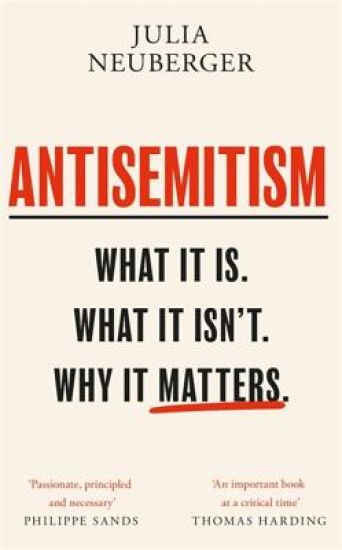
Antisemitism has been on the rise in recent years, with violent attacks, increased verbal insults, and an acceptability in some circles of what would hitherto have been condemned as outrageous antisemitic discourse. Yet despite the dramatic increase in debate and discussion around antisemitism, many of us remain confused. In this urgent and timely book, Rabbi Julia Neuberger uses contemporary examples, along with historical context, to unpack what constitutes antisemitism, building a powerful argument for why it is so crucial that we come to a shared understanding now.
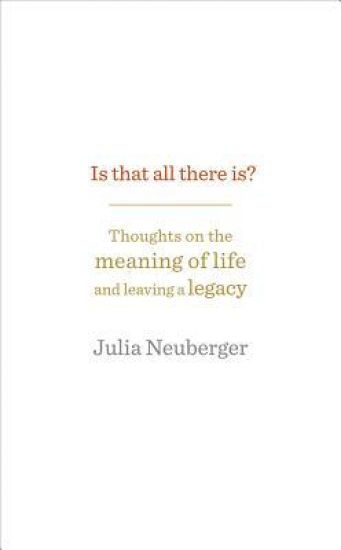
'If we focus on the meaning and purpose of our lives, we might acquire a better way of living.' In this insightful book, Julia Neuberger considers what it is that makes life worthwhile. Drawing upon her considerable experience as a religious leader and social reformer, passionately concerned with the issues that affect society's wellbeing, she offers practical ways to give our own lives a renewed sense of significance and direction.From celebrating friends and family, to surviving hardship and loss, to assessing the relative value of possessions, and the benefits of being as tough as we are kind to ourselves, Julia Neuberger shows how to reconnect with the things in life that really matter to us. It is, she explains, possible to live a life with few regrets, in which we get our priorities right and create a legacy which will live on long after we are gone - yet which will make life all the more rewarding here and now.
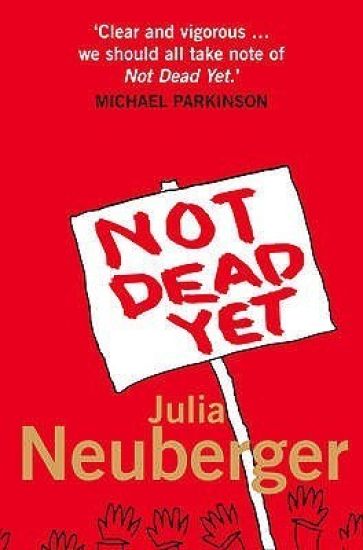
Why we need to be better at ageing… Julia Neuberger asks why we allow our older relatives to be treated so appallingly and in her 10-point manifesto demands that we change our attitudes and behaviour towards ageing. Parachuting into fields, running internet businesses, singing in rock groups at the age of 101 – some older people have never been so active. So why are others being so badly treated? In Not Dead Yet, Julia Neuberger asks the questions our society has shied away from – and demands answers. Why are older people increasingly marginalised, mistreated and patronised?Why are they allowed to die in hospital without food, water or pain relief?Why are we so bombarded with images of the young that older people are being driven from our TV screens?Why do the most experienced people find it so hard to get jobs?Isn’t there more to life than bingo, bowls and daytime television? In her furious 10-point manifesto for grey power, Julia confronts a shameful injustice and in doing so sets us on the road to change that benefits us all.
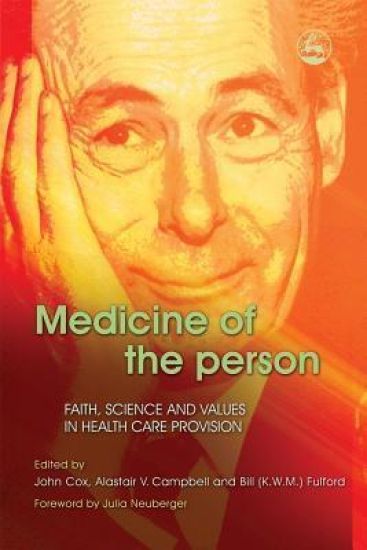
Medicine of the Person is an international, multi-faith exploration of the demonstrable need to integrate the scientific basis of healthcare more fully with spiritual, religious and ethical values.Informed by the principle of 'medicine of the person', the contributors argue for a medical practice which takes account of personal relationships, spirituality, ethics and theology in keeping with the ideas and beliefs of Paul Tournier, an influential Swiss general practitioner whose thinking has had a substantial impact on routine patient care relevant to national health services. Bridging the gap between the basic sciences and faith traditions, the contributors discuss notions of personhood in different faiths and its consideration in spirituality and mental health issues, general practice issues, public health, home care for the elderly and neuroscience.This volume offers a broad spectrum of approaches to the needs of patients and is a key text for students of the health disciplines, and practitioners and managers in these fields.

A study of the moral state of the nation – the acid test of this being how we treat the weakest among us. Rabbi Julia Neuberger assesses the situation in the UK from her own unique viewpoint and draws some challenging and thought-provoking conclusions. Just as Will Hutton looked at the political landscape at a turning point in Britain, Rabbi Julia will take the moral temperature of the nation by looking at the ways in which we treat the weakest amongst us. The National Health Service, government pensions and asylum seekers all make daily headlines, and here is a writer with the moral authority and mastery of the necessary information to undertake this timely project. The way we treat the weak and vulnerable members of society has long been an established way to judge how civilised a society is. In this book, Julia looks at the extent to which the elderly are thought a burden, the way we care for the mentally ill, attitudes to asylum seekers and support for ex-offenders, as well as the care of children and the future of society in the UK. Her straight-forward approach to what has elsewhere proven highly esoteric, is here written with ease and fluidity and with a style that is highly approachable for those interested in the state of their nation with purely social, rather than academic, motivations. With her uncomplicated but extremely intelligent and candid take on the issues that make daily headlines, and with Julia’s high media profile, this book is guaranteed to tap into the state of our nation. Includes exciting new sections, reviewing the past year’s events, reception to her book and what – if anything – has changed in the way she sees our nation’s moral predicament.