Kirjojen hintavertailu. Mukana 12 293 475 kirjaa ja 12 kauppaa.

Kirjailija

Julia Skelly

Kirjat ja teokset yhdessä paikassa: 8 kirjaa, julkaisuja vuosilta 2008-2026, suosituimpien joukossa Skin Crafts. Vertaile teosten hintoja ja tarkista saatavuus suomalaisista kirjakaupoista.

8 kirjaa

Kirjojen julkaisuhaarukka 2008-2026.

Skin Crafts

Skin Crafts

Julia Skelly

BLOOMSBURY PUBLISHING PLC
2023
nidottu
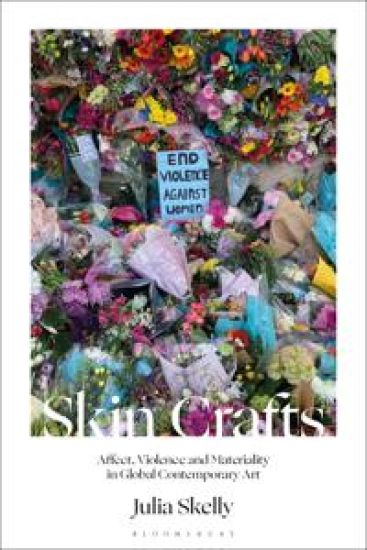
Skin Crafts discusses multiple artists from global contexts who employ craft materials in works that address historical and contemporary violence. These artists are deliberately embracing the fragility of textiles and ceramics to evoke the vulnerability of human skin and - in so doing - are demanding visceral responses from viewers. Drawing on a range of theories including affect theory, material feminism, skin studies, phenomenology and global art history, the book illuminates the various ways in which artists are harnessing the affective power of craft materials to address and cope with violence.Artists from Mexico, Africa, China, the Netherlands and Indigenous artists based in the unceded territory known as Canada are examined in relation to one another to illuminate the connections and differences across their bodies of work. Skin Crafts interrogates ongoing material violence towards women and marginalized others, and demonstrates the power of contemporary art to force viewers and scholars into facing their ethical responsibilities as human beings.
Skin Crafts

Skin Crafts

Julia Skelly

BLOOMSBURY PUBLISHING PLC
2022
sidottu
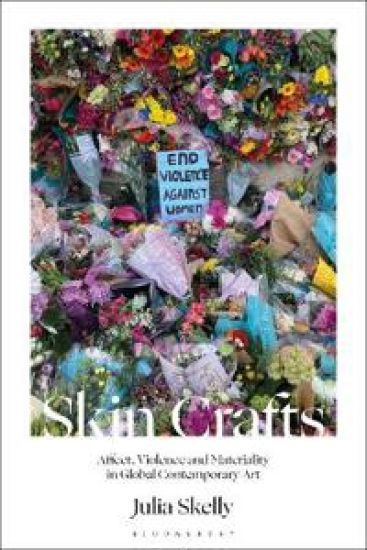
Skin Crafts discusses multiple artists from global contexts who employ craft materials in works that address historical and contemporary violence. These artists are deliberately embracing the fragility of textiles and ceramics to evoke the vulnerability of human skin and - in so doing - are demanding visceral responses from viewers. Drawing on a range of theories including affect theory, material feminism, skin studies, phenomenology and global art history, the book illuminates the various ways in which artists are harnessing the affective power of craft materials to address and cope with violence.Artists from Mexico, Africa, China, the Netherlands and Indigenous artists based in the unceded territory known as Canada are examined in relation to one another to illuminate the connections and differences across their bodies of work. Skin Crafts interrogates ongoing material violence towards women and marginalized others, and demonstrates the power of contemporary art to force viewers and scholars into facing their ethical responsibilities as human beings.
Intersecting Threads

Intersecting Threads

Julia Skelly

BLOOMSBURY PUBLISHING PLC
2026
sidottu
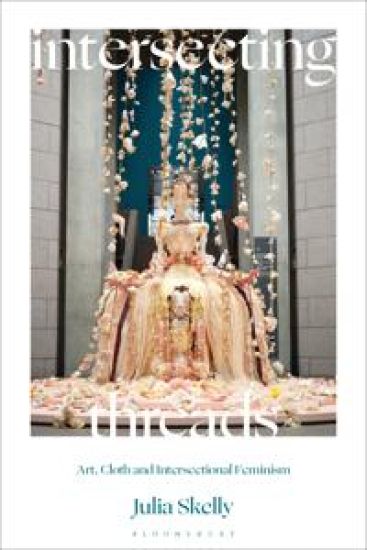
Examining the significance of cloth in the work of contemporary feminist artists, Intersecting Threads: Art, Cloth and Intersectional Feminism draws on Black feminist theories, queer theories, and anti-colonial theories such as opacity, as well as scholarship on the nonhuman turn in the humanities. In a world where intersectional feminist approaches are increasingly important, this book adds to the growing literature on contemporary feminist art, making a significant contribution to discussions on queer, feminist and anti-racist artists and their work. Through a close reading of both the art and writing of feminist artists including Faith Ringgold, Louise Bourgeois, Elisabeth Perrault, Tau Lewis, and Candice Lin, Julia Skelly shows how their work may be productively analysed through Black feminist scholar and activist Kimberlé W. Crenshaw’s theoretical framework of intersectional feminism. Writing as a Black feminist legal scholar, Crenshaw’s framework is dedicated to illuminating the different kinds of violence that women of colour experience, but it has become an indispensable analytic tool for feminist art historians concerned not only with gender, but also with race, class, and sexuality. Illustrated with over thirty-five images, Intersecting Threads demonstrates the overlaps amongst the political concerns of 20th- and 21st-century feminist artists and reveals the power of textiles in the context of ongoing racism and misogyny.
Radical Decadence

Radical Decadence

Julia Skelly

Bloomsbury Academic
2017
sidottu
This pioneering book explores the notion of 'radical decadence' as concept, aesthetic and lived experience, and as an analytical framework for the study of contemporary feminist textile art. Gendered discourses of decadence that perpetuate anxieties about women's power, consumption and pleasure are deconstructed through images of drug use, female sexuality and 'excessive' living, in artworks by several contemporary textile artists including Orly Cogan, Tracey Emin, Allyson Mitchell, and Rozanne Hawksley.Perceptions of decadence are invariably bound to the negative connotations of decay and degradation, particularly with regard to the transgression of social norms related to femininity and the female body. Excessive consumption by women has historically been represented as grotesque, and until now, women's pleasure in relation to drug and alcohol use has largely gone unexamined in feminist art history and craft studies. Here, representations of female consumption, from cupcakes to alcohol and cocaine, are opened up for critical discussion. Drawing on feminist and queer theories, Julia Skelly considers portrayals of 'bad girls' in artworks that explore female sexuality - performative pieces designed to subvert and exceed feminine roles. In this provocative book, decadence is understood not as a destructive force but as a liberating aesthetic.
Radical Decadence

Radical Decadence

Julia Skelly

Bloomsbury Academic
2017
nidottu
This pioneering book explores the notion of 'radical decadence' as concept, aesthetic and lived experience, and as an analytical framework for the study of contemporary feminist textile art. Gendered discourses of decadence that perpetuate anxieties about women's power, consumption and pleasure are deconstructed through images of drug use, female sexuality and 'excessive' living, in artworks by several contemporary textile artists including Orly Cogan, Tracey Emin, Allyson Mitchell, and Rozanne Hawksley.Perceptions of decadence are invariably bound to the negative connotations of decay and degradation, particularly with regard to the transgression of social norms related to femininity and the female body. Excessive consumption by women has historically been represented as grotesque, and until now, women's pleasure in relation to drug and alcohol use has largely gone unexamined in feminist art history and craft studies. Here, representations of female consumption, from cupcakes to alcohol and cocaine, are opened up for critical discussion. Drawing on feminist and queer theories, Julia Skelly considers portrayals of 'bad girls' in artworks that explore female sexuality - performative pieces designed to subvert and exceed feminine roles. In this provocative book, decadence is understood not as a destructive force but as a liberating aesthetic.
Addiction and British Visual Culture, 1751-1919
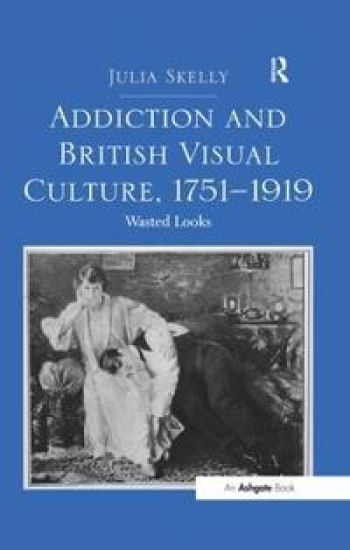
Highly innovative and long overdue, this study analyzes the visual culture of addiction produced in Britain during the long nineteenth century. The book examines well-known images such as William Hogarth's Gin Lane (1751), as well as lesser-known artworks including Alfred Priest's painting Cocaine (1919), in order to demonstrate how visual culture was both informed by, and contributed to, discourses of addiction in the period between 1751 and 1919. Through her analysis of more than 30 images, Julia Skelly deconstructs beliefs and stereotypes related to addicted individuals that remain entrenched in the popular imagination today. Drawing upon both feminist and queer methodologies, as well as upon extensive archival research, Addiction and British Visual Culture, 1751-1919 investigates and problematizes the long-held belief that addiction is legible from the body, thus positioning visual images as unreliable sources in attempts to identify alcoholics and drug addicts. Examining paintings, graphic satire, photographs, advertisements and architectural sites, Skelly explores such issues as ongoing anxieties about maternal drinking; the punishment and confinement of addicted individuals; the mobility of female alcoholics through the streets and spaces of nineteenth-century London; and soldiers' use of addictive substances such as cocaine and tobacco to cope with traumatic memories following the First World War.
Addiction and British Visual Culture, 1751-1919

Addiction and British Visual Culture, 1751-1919

Julia Skelly

Ashgate Publishing Limited
2014
sidottu
Highly innovative and long overdue, this study analyzes the visual culture of addiction produced in Britain during the long nineteenth century. The book examines well-known images such as William Hogarth's Gin Lane (1751), as well as lesser-known artworks including Alfred Priest's painting Cocaine (1919), in order to demonstrate how visual culture was both informed by, and contributed to, discourses of addiction in the period between 1751 and 1919. Through her analysis of more than 30 images, Julia Skelly deconstructs beliefs and stereotypes related to addicted individuals that remain entrenched in the popular imagination today. Drawing upon both feminist and queer methodologies, as well as upon extensive archival research, Addiction and British Visual Culture, 1751-1919 investigates and problematizes the long-held belief that addiction is legible from the body, thus positioning visual images as unreliable sources in attempts to identify alcoholics and drug addicts. Examining paintings, graphic satire, photographs, advertisements and architectural sites, Skelly explores such issues as ongoing anxieties about maternal drinking; the punishment and confinement of addicted individuals; the mobility of female alcoholics through the streets and spaces of nineteenth-century London; and soldiers' use of addictive substances such as cocaine and tobacco to cope with traumatic memories following the First World War.