Kirjojen hintavertailu. Mukana 12 530 820 kirjaa ja 12 kauppaa.

Kirjailija

Julian Brown

Kirjat ja teokset yhdessä paikassa: 7 kirjaa, julkaisuja vuosilta 2001-2024, suosituimpien joukossa Marikana. Vertaile teosten hintoja ja tarkista saatavuus suomalaisista kirjakaupoista.

7 kirjaa

Kirjojen julkaisuhaarukka 2001-2024.

Marikana

Marikana

Julian Brown

James Currey
2024
pokkari
In-depth account of the Marikana massacre, based on the voices of the miners and their families themselves, from the build up to the strike to attempts to hold the state to account and its lasting significance. In August 2012 the South African police - at the encouragement of mining capital, and with the support of the political state - intervened to end a week-long strike at the Lonmin platinum mine in Marikana, in South Africa's NorthWest Province. On the afternoon of Thursday, 16 August, the police shot and killed 34 men. Hundreds more were injured, some shot as they fled. None posed a threat to any police officer. Recognised by many as an event of international significance in stories of global politics and labour relations, the perspectives of the miners has however been almost missing from published accounts. This book, for the first time, brings into focus the mens' lives - and deaths - telling the stories of those who embarked on the strike, those who were killed, and of the family members who have survived to fight for the memories of their loved ones. It places the strike in the context of South Africa's long history of racial and economic exclusion, explaining how the miners came to be in Marikana, how their lives were ordinarily lived, and the substance of their complaints. It shows how the strike developed from an initial gathering into a mass movement of more than 3,000 workers. It discusses the violence of the strike and explores the political context of the state's response, and the eagerness of the police to collaborate in suppressing the strike. Recounting the events of the massacre in unprecedented detail, the book sets out how each miner died and everything we know about the police operation. Finally, Brown traces the aftermath: the attempts of the families of the deceased to identify and bury their dead, and then the state's attempts to spin a narrative that placed all blame on the miners; the subsequent Commission of Inquiry - and its failure to resolve any real issues; and the solidarity politics that have emerged since. Southern Africa (South Africa, Namibia, Lesotho, Swaziland and Botswana): Jacana.
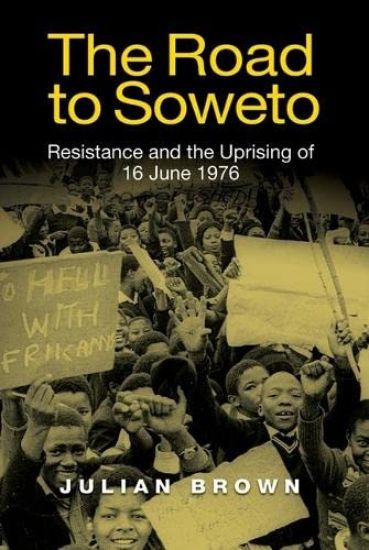
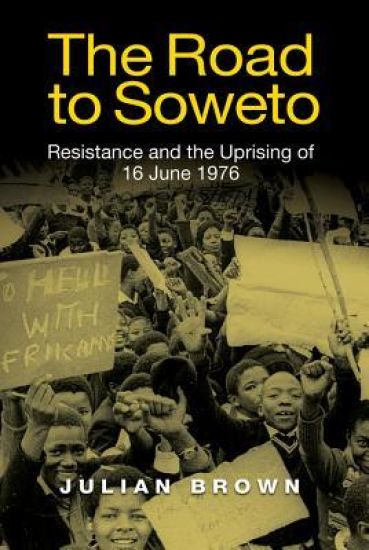
The Road to Soweto

The Road to Soweto

Julian Brown

James Currey
2023
pokkari
A new history of the 1976 Soweto Uprising and the events leading to it in the preceding decade, that will transform our understanding of the historical evolution of the struggle against apartheid. This revisionary account of the Soweto Uprising of June 1976 and the decade preceding it transforms our understanding of what led to this crucial flashpoint of South Africa's history. Brown argues that far from there being "quiescence" following the Sharpeville Massacre and the suppression of African opposition movements, during which they went underground, this period was marked by experiments in resistance and attempts to develop new forms of politics that prepared the ground for the Uprising. Students at South Africa's segregated universities began to re-organise themselves as a political force; new ideas about race reinvigorated political thought; debates around confrontation shaped the development of new forms of protest. The protest then began to move off university campuses and onto the streets: through the independent actions of workers in Durban, and attempts by students to link their struggles with a broader agenda. These actions made protest public once again, and helped establish the patterns of popular action and state response that would come to shape the events in Soweto on 16 June 1976. Julian Brown is a Lecturer in the Department of Political Studies at the University of the Witwatersrand, Johannesburg. Southern Africa (South Africa, Namibia, Lesotho, Swaziland & Botswana): Jacana 'throws new light on the background to the Soweto Uprising, providing insight into white and black student politics, worker protest and broader dissent' - William Beinart, University of Oxford 'an extremely important contribution to the historiography on protest in South Africa. It links black and white student protests (too often studied in isolation from one another) to workers' movements by looking at the changing forms of protest during the 1960s and 1970s, and the apartheid government's changing responses.' - Anne Heffernan, University of the Witwatersrand 'By showing how the Soweto Uprising served as a precursor for later historical and political events, the author convincingly shows the continuity from one from one protest and decade to the next.' - Dawne Curry, University of Nebraska-Lincoln
Marikana

Marikana

Julian Brown

James Currey
2022
sidottu
In-depth account of the Marikana massacre, based on the voices of the miners and their families themselves, from the build up to the strike to attempts to hold the state to account and its lasting significance. In August 2012 the South African police - at the encouragement of mining capital, and with the support of the political state - intervened to end a week-long strike at the Lonmin platinum mine in Marikana, in South Africa's NorthWest Province. On the afternoon of Thursday, 16 August, the police shot and killed 34 men. Hundreds more were injured, some shot as they fled. None posed a threat to any police officer. Recognised by many as an event of international significance in stories of global politics and labour relations, the perspectives of the miners has however been almost missing from published accounts. This book, for the first time, brings into focus the mens' lives - and deaths - telling the stories of those who embarked on the strike, those who were killed, and of the family members who have survived to fight for the memories of their loved ones. It places the strike in the context of South Africa's long history of racial and economic exclusion, explaining how the miners came to be in Marikana, how their lives were ordinarily lived, and the substance of their complaints. It shows how the strike developed from an initial gathering into a mass movement of more than 3,000 workers. It discusses the violence of the strike and explores the political context of the state's response, and the eagerness of the police to collaborate in suppressing the strike. Recounting the events of the massacre in unprecedented detail, the book sets out how each miner died and everything we know about the police operation. Finally, Brown traces the aftermath: the attempts of the families of the deceased to identify and bury their dead, and then the state's attempts to spin a narrative that placed all blame on the miners; the subsequent Commission of Inquiry - and its failure to resolve any real issues; and the solidarity politics that have emerged since. Southern Africa (South Africa, Namibia, Lesotho, Swaziland and Botswana): Jacana.
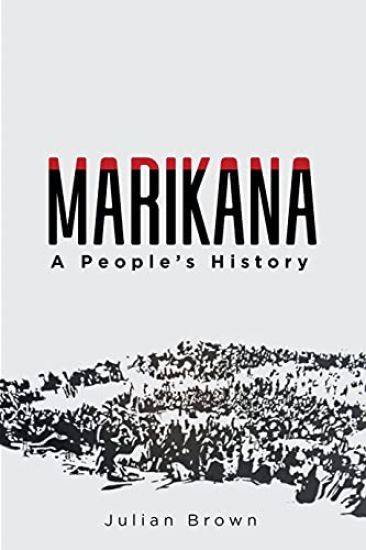
The Road to Soweto

The Road to Soweto

Julian Brown

James Currey
2016
sidottu
A new history of the 1976 Soweto Uprising and the events leading to it in the preceding decade, that will transform our understanding of the historical evolution of the struggle against apartheid. This revisionary account of the Soweto Uprising of June 1976 and the decade preceding it transforms our understanding of what led to this crucial flashpoint of South Africa's history. Brown argues that far from there being "quiescence" following the Sharpeville Massacre and the suppression of African opposition movements, during which they went underground, this period was marked by experiments in resistance and attempts to develop new forms of politics that prepared the ground for the Uprising. Students at South Africa's segregated universities began to re-organise themselves as a political force; new ideas about race reinvigorated political thought; debates around confrontation shaped the development of new forms of protest. The protest then began to move off university campuses and onto the streets: through the independent actions of workers in Durban, and attempts by students to link their struggles with a broader agenda. These actions made protest public once again, and helped establish the patterns of popular action and state response that would come to shape the events in Soweto on 16 June 1976. Julian Brown is a Lecturer in the Department of Political Studies at the University of the Witwatersrand, Johannesburg. Southern Africa (South Africa, Namibia, Lesotho, Swaziland & Botswana): Jacana 'throws new light on the background to the Soweto Uprising, providing insight into white and black student politics, worker protest and broader dissent' - William Beinart, University of Oxford 'an extremely important contribution to the historiography on protest in South Africa. It links black and white student protests (too often studied in isolation from one another) to workers' movements by looking at the changing forms of protest during the 1960s and 1970s, and the apartheid government's changing responses.' - Anne Heffernan, University of the Witwatersrand 'By showing how the Soweto Uprising served as a precursor for later historical and political events, the author convincingly shows the continuity from one from one protest and decade to the next.' - Dawne Curry, University of Nebraska-Lincoln
Vehicle Maintenance and Repair Level 1

Vehicle Maintenance and Repair Level 1

Patrick Hamilton; John Rooke; Julian Brown

Cengage Learning EMEA
2012
nidottu
This new edition of the highly successful Vehicle Maintenance and Repair Level 1 workbook provides complete coverage of the QCF National Occupational Standards at Level 1 as set by the IMI and is in-line with VRQ and NVQ qualifications. Learners will be inspired by the full-colour diagrams and images illustrating key techniques and the Tip Boxes, weblinks, activities and questions will ensure learners have full understanding of all the essential information. This easy to use, easy to follow workbook ensures learners have all the theoretical and practice knowledge in preparation for further study or the world of work.
Minds, Machines, and the Multiuniverse

Minds, Machines, and the Multiuniverse

Julian Brown

Simon Schuster
2002
pokkari
The traditional and ubiquitous digital computer has changed the world by processing series of binary ones and zeroes...very fast. Like the sideshow juggler spinning plates on billiard cues, the classical computer moves fast enough to keep the plates from falling off. As computers become faster and faster, more and more plates are being added to more and more cues. Imagine, then, a computer in which speed is increased not because it runs faster, but because it has a limitless army of different jugglers, one for each billiard cue. Imagine the quantum computer. Julian Brown's record of the quest for the Holy Grail of computing -- a computer that could, in theory, take seconds to perform calculations that would take today's fastest supercomputers longer than the age of the universe -- is an extraordinary tale, populated by a remarkable cast of characters, including David Deutsch of Oxford University, who first announced the possibility of computation in the Alice-in-Wonderland world of quantum mechanics; Ed Fredkin, who developed a new kind of logic gate as a true step toward universal computation; and the legendary Richard Feynman, who reasoned from the inability to model quantum mechanics on a classical computer the logical inevitability of quantum computing. For, in the fuzzily indeterminate world of the quantum, new computing power is born. "Minds, Machines, and the Multiverse" details the remarkable uses for quantum computing in code breaking, for quantum computers will be able to crack many of the leading methods of protecting secret information, while offering new unbreakable codes. Quantum computers will also be able to model nuclear and subatomic reactions; offer insights into nanotechnology, teleportation, and time travel; and perhaps change the way chemists and biotechnologists design drugs and study the molecules of life. Farthest along the trail blazed by these pioneers is the ability to visualize the multiple realities of the quantum world not as a mathematical abstraction, but as a real map to a world of multiple universes...a "multiverse" where every possible event -- from a particular chess move to a comet striking the Earth -- not only can happen, but "does." Incorporating lively explanations of ion trap gates, nuclear magnetic resonance computers, quantum dots, quantum algorithms, Fourier transforms, and puzzles of quantum physics, and illustrated with dozens of vivid diagrams, "Minds, Machines, and the Multiverse" is a mind-stretching look at the still-unbuilt but fascinating machines that, in the words of physicist Stanley Williams, "will reshape the face of science" and offer a new window into the secrets of an infinite number of potential universes.