

Kirjailija
Julian Wright
Kirjat ja teokset yhdessä paikassa: 20 kirjaa, julkaisuja vuosilta 2003-2026, suosituimpien joukossa Become the Person You Trust. Vertaile teosten hintoja ja tarkista saatavuus suomalaisista kirjakaupoista.
20 kirjaa
Kirjojen julkaisuhaarukka 2003-2026.


'I'm owed a drink.''That really is all you've got, isn't it?' 'There's bugger all else to do.'Archie doesn't realise it yet, but his world is about to spin before his eyes faster than it ever has before. When he joins the newly-arrived Jim for a rambunctious adventure, he's about to find out that meeting a deer called Dave is only the start of his problems.Jim, for his part, marches firmly across this strange new world with his new companions. He cares not, for he knows he has a purpose. If only he knew what it was.In this rip-roaring tale, J. S. Wright is at his finest, conjuring a madcap world filled with equally mad characters. A narrative where laughter can turn to tears and joy to fear in an instant; this novel is a triumph of storytelling that turns fantasy on its head.

In this quirky single act comedy from J. S. Wright, three men from three completely different walks of life meet for the first time in the waiting room of their local police station. As their evening wears on, however, they all will discover that they're perhaps not as disconnected as it may first appear.

When Jack Westbrook takes a trip to the countryside to meet old friends, he has no idea that he's in for the worst party of his life.With Henry's Last Party, Julian Wright has created something truly unique: a murder mystery that somehow defies the usual trappings of the genre. This play is well suited to professionals and amateurs alike, needing only a small cast and a single setting.Well, what are you waiting for? Come and join the party!

Containing a selection of verse that varies from the macabre to the whimsical, this collection invites you to join the author and follow his first tentative steps into a darkly merry world.

With just a slim volume of verse, J. S. Wright manages to say more than most manage in a lifetime. The verses within this little tome speak loudly, beating their breasts with verve and excitement and bearing naked emotion without a hint of shame. An excellent addition to the bookshelf of any poetry lover, and likely to convert those who treat the medium with disdain.

The Sanctuary: my place. A place where those in need could find shelter from the various harms that lurk in society s darker regions. The only rule I had in place was that of respecting one another: simple, effective, and downright apt for the purpose at hand. Apart from his amnesia, his cadre of suspicious friends, and the threat of a hooded thug roaming the streets, Edgar Northwood is dead right. Will he ever recover his memory, or will he be beholden to the angry whims of the very society he is trying to save? J. S. Wright steps his writing up to another level with this riotously funny account of an eccentric millionaire; one that would sit easily beside the novels of Wodehouse or Wilde.

Another book of verse from the prolific and talented Mr Wright. Ebbing Twilight shows the author taking a turn for the morose, with diatribes and tracts about the human condition melting gently into thoughtful and composed works.

A WORLD FULL OF HUMANS, BUT DEVOID OF LIFEDeath has finally hung up his scythe: all the souls have been gathered, the Earth just a museum piece for the machines.Now, he spends his time relaxing in the void with the one andonly machine-built soul - a soul that cannot enter paradise.All is peaceful until one soul escapes from heaven, forcing Death and his ghostlike companion on a journey that may destroy the very concept of what it means to be alive.The second novel in J. S. Wright's ever-increasing collection, Soul Searching throws a fresh perspective on the eternal philosophical questions of life, death, freewill and whether a red dress is practical attire for reaping.Whilst he has been unable to get hold of people famous enough to quote on the front cover, Julian's works have been highly recommended by his editor, at least one of his friends, and his mother.

A collection of poems from the author of The Flood, this is the final volume in the collection, and that is readily seen through the depth of the verse contained within these pages.

Continuing on from the first volume's strong debut, this edition demonstrates the power of the author's control over words, phrases, and emotions.

From the author of The Flood and The Drought comes this charming collection of verse. Within this elegant volume Wright demonstrates his prowess, showing thereOs a lot more to autumn than simply falling leaves.

A splendid twist on an ethereal theme, An Ill-Timed Hideaway throws convention to the wind. Death, tired of eternal work, switches places with a mortal and looks forward to a weekend of peace and quiet - or so he has been led to believe... A two act play set in one room of a large country house, this is an excellent play for both amateur troupes and professional stages alike. A true masterclass in the farce of English manners G. Reaper


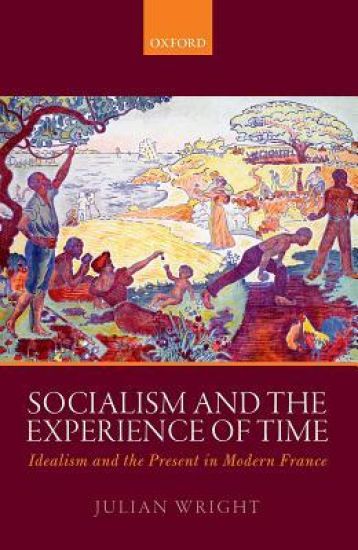
How do we make social democracy? Should we seize the unknown possibilities offered by the future, or does real change develop when we focus our attention on the immediate present? The modern tradition of social revolution suggested that the present is precisely the time that needs to be surpassed, but can society change without an intimate focus on today's experience of social injustice? In Socialism and the Experience of Time, Julian Wright asks how socialists in France from the mid-nineteenth to the mid-twentieth century tried to follow a democratic commitment to the present. The debate about time that emerged in French socialism lay beneath the surface of political arguments within the left. But how did this focus on the present relate to the tradition of revolution in France? What did socialism have to say about social experience in the present, and how did this discussion shape socialism as a movement? Wright examines French socialism's fascination with modern history, through a new reading of Jean Jaurès' multi-authored project to write a 'socialist history' of France since 1789. Then, in four interlocking biographical essays, he analyses the reformist and idealist socialism of the Third Republic, long side-lined in the historical literature. With a sometimes emotional focus on the present times of Benoît Malon, Georges Renard, Marcel Sembat, and Léon Blum, a personal history unfolds that allows us to revisit the traditional narrative of French socialism. This is not so much a story of the future hope for revolution, as an intimate account of socialism, intellectual engagement, and the human present.
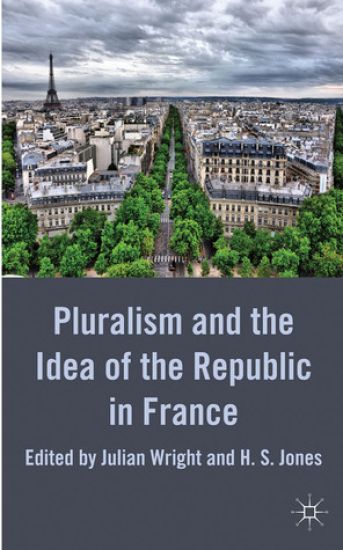
The idea of the centralized State has played a powerful role in shaping French republicanism. But for two hundred years, many have tried to find other ways of being French and Republican. These essays challenge the traditional account, bringing together new insights from leading scholars.

The idea of the centralized State has played a powerful role in shaping French republicanism. But for two hundred years, many have tried to find other ways of being French and Republican. These essays challenge the traditional account, bringing together new insights from leading scholars.

This is the first full academic study of the political thought of the French regionalist movement in the Belle Epoque. Julian Wright has examined the private papers of Jean Charles-Brun, founder of the Fédération Régionaliste Française, in detail. He has rethought the conceptual basis of regionalism through Charles-Brun's intellectual biography, showing that it penetrated the political debates of the period as a commonplace in Republican arguments about state reform. Despite the often made association of regionalism with the right, Dr Wright reveals the diversity of political views expressed, and demonstrates that the connection to left-wing federalism ws emphatically present in the intellectual background. Interwoven with this discussion is an examination of the personal mission of Charles-Brun. He saw himself as a reconciler, using his regionalism within a mission to heal the divisions of French politics and society. He argued that France's instability stemmed from an obsession with reforms that followed a priori political models, and that politicians who sought to rethink the shape of the Republic needed to attend to the cultural or economic realities expressed in France's regions. Charles-Brun and his regionalist movement continue to have resonance in current debates about decentralization in France.