Kirjojen hintavertailu. Mukana 12 595 353 kirjaa ja 12 kauppaa.

Kirjailija

Juliane Fürst

Kirjat ja teokset yhdessä paikassa: 7 kirjaa, julkaisuja vuosilta 2006-2023, suosituimpien joukossa Flowers Through Concrete. Vertaile teosten hintoja ja tarkista saatavuus suomalaisista kirjakaupoista.

Mukana myös kirjoitusasut: Juliane Furst

7 kirjaa

Kirjojen julkaisuhaarukka 2006-2023.

Tsvety, probivshie asfalt. Puteshestvie v Sovetskuju Khippljandiju
Juliane Fjurst predlagaet sovershit puteshestvie v andergraundnyj mir sovetskikh khippi, sozdavshikh v SSSR versiju zapadnoj kontrkultury, adaptirovannuju k uslovijam zhizni v obschestve epokhi pozdnego sotsializma. Eto ne tolko zakhvatyvajuschaja istorija stanovlenija i vyzhivanija obschin khippi, kotorykh presledovali militsija i druzhinniki, pomeschali v psikhiatricheskie bolnitsy vrachi, videvshie v projavlenijakh nonkonformizma simptomy shizofrenii, no i rasskaz o tom, kak mir khippi i mir sovetskoj povsednevnosti vstupali v vynuzhdennyj dialog, paradoksalnym obrazom neplokho sochetajas drug s drugom. V konechnom schete ne KGB, a prikhod kapitalizma v 1990 e gody polozhil konets "Khippljandii" v Sovetskom Sojuze. Rassmatrivaja fenomen khippi v kontekste izuchenija transnatsionalnoj molodezhnoj kultury i globalizatsionnykh protsessov 1960-1970 kh godov, avtor pokazyvaet, kak nakhodjaschiesja v samom serdtse sovetskogo isteblishmenta soobschestva khippi obedinilis, sozdav vpechatljajuschuju set ("Sistemu") so slozhnymi obychajami i ritualami, kotorye pozvolili ej prosuschestvovat bolee dvukh desjatiletij. Issledovanie osnovano na bolee chem sotne intervju, rassekrechennykh dokumentakh spetssluzhb i materialakh iz chastnykh arkhivov, dolgoe vremja ostavavshikhsja nedostupnymi. Juliane Fjurst - istorik, zavedujuschaja otdelom "Kommunizm i obschestvo" v "Lejbnits-tsentre" sovremennoj istorii (Potsdam).Perevodchik: Kosals I.
Flowers Through Concrete

Flowers Through Concrete

Juliane Fürst

Oxford University Press
2022
nidottu
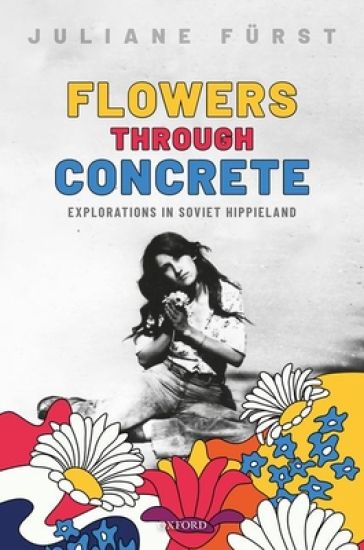
Flowers through Concrete: Explorations in Soviet Hippieland does what the title promises. It takes readers on a journey into a world few knew existed: the lives and thoughts of Soviet hippies, who in the face of disapproval and repression created a version of Western counterculture, skilfully adapting, manipulating, and shaping it to their late socialist environment. As a quasi-guide into the underground hippieland, readers are situated in the world of hippies firmly in late Soviet reality and are offered an unusual history of the last Soviet decades as well as a case study in the power of transnational youth cultures. Flowers through Concrete recounts not only a compelling story of survival against the odds-hippies were harassed by police, shorn of their hair by civilian guards, and confined in psychiatric hospitals by doctors who believed non-conformism was a symptom of schizophrenia. It also advances a surprising argument: despite obvious antagonism the land of Soviet hippies and the world of late socialism were not incompatible. Indeed, Soviet hippies and late socialist reality meshed so well that the hostile, yet stable, relationship that emerged was in many ways symbiotic. Ultimately, it was not the KGB but the arrival of capitalism in the 1990s that ended the Soviet hippie sistema.
Flowers Through Concrete

Flowers Through Concrete

Juliane Fürst

Oxford University Press
2021
sidottu
Flowers through Concrete: Explorations in Soviet Hippieland takes the reader on a journey into the lives and thoughts of Soviet hippies. In the face of disapproval and repression, they created a version of Western counterculture, skillfully adapting to, manipulating, and shaping their late socialist environment. Flowers through Concrete takes its readers into the underground hippieland and beyond, situating the world of hippies firmly in late Soviet reality and offering both an unusual history of the last Soviet decades as well as a case study of transnational youth culture and East-West globalization. Flowers through Concrete is based on over a hundred interviews, declassified documents, and private archives hidden for many decades. It tells the almost forgotten story of how hippie communities sprang up across the Soviet Union in the late-60s, often under the tutelage of the rebellious offspring of privileged households at the heart of the Soviet establishment. It charts how these communities linked up to create an impressive network with elaborate customs and rituals, ensuring its survival for more than two decades. Flowers through Concrete recounts not only a compelling story of survival against the odds - hippies who were harassed by police, shorn of their hair by civilian guards, and confined in psychiatric hospitals by doctors who believed non-conformism was a symptom of schizophrenia - but also advances a surprising argument. It suggests that the land of Soviet hippies and the world of late socialism were not entirely incompatible, but in fact meshed surprisingly well. Ultimately, it was not the KGB but the arrival of capitalism in the 1990s that ended the Soviet hippie sistema.
Stalin's Last Generation

Stalin's Last Generation

Juliane Fürst

Oxford University Press
2012
nidottu
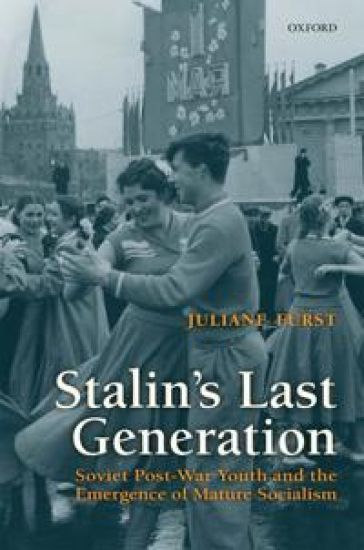
Stalin's last generation' was the last generation to come of age under Stalin, yet it was also the first generation to be socialized in the post-war period. Its young members grew up in a world that still carried many of the hallmarks of the Soviet Union's revolutionary period, yet their surroundings already showed the first signs of decay, stagnation, and disintegration. Stalin's last generation still knew how to speak 'Bolshevik', still believed in the power of Soviet heroes, and still wished to construct socialism, yet they also liked to dance and dress in Western styles, they knew how to evade boring lectures and lessons in Marxism-Leninism, and they were keen to forge identities that were more individual than those offered by the state. Juliane Fürst creates a detailed picture of late Stalinist youth and youth culture, looking at young people from a variety of perspectives: as children of the war, as recipients and creators of propaganda, as perpetrators of crime, as representatives of fledgling subcultures, as believers, as critics, and as drop-outs. In the process, she illuminates not only the complex relationship between the Soviet state and its youth, but also provides a new interpretative framework for understanding late Stalinism - the impact of which on Soviet society's subsequent development has hitherto been underestimated, including its role in the ultimate demise of the USSR.
Stalin's Last Generation

Stalin's Last Generation

Juliane Fürst

Oxford University Press
2010
sidottu
'Stalin's last generation' was the last generation to come of age under Stalin, yet it was also the first generation to be socialized in the post-war period. Its young members grew up in a world that still carried many of the hallmarks of the Soviet Union's revolutionary period, yet their surroundings already showed the first signs of decay, stagnation, and disintegration. Stalin's last generation still knew how to speak 'Bolshevik', still believed in the power of Soviet heroes and still wished to construct socialism, yet they also liked to dance and dress in Western styles, they knew how to evade boring lectures and lessons in Marxism-Leninism, and they were keen to forge identities that were more individual than those offered by the state. In this book, Juliane Fürst creates a detailed picture of late Stalinist youth and youth culture, looking at young people from a variety of perspectives: as children of the war, as recipients and creators of propaganda, as perpetrators of crime, as representatives of fledgling subcultures, as believers, as critics, and as drop-outs. In the process, she illuminates not only the complex relationship between the Soviet state and its youth, but also provides a new interpretative framework for understanding late Stalinism - the impact of which on Soviet society's subsequent development has hitherto been underestimated, including its role in the ultimate demise of the USSR.
Late Stalinist Russia

Late Stalinist Russia

Juliane Fürst

Routledge
2009
nidottu
The late Stalinist period, long neglected by researchers more interested in the high-profile events of the 1930s, has recently become the focus of much new research by people keen to understand the enormous impact of the war on Soviet society and to understand Soviet life under 'mature socialism'. Written by top scholars from high profile universities, this impressive work brings together much new, cutting edge research on a wide range of aspects of late Stalinist society. Filling a gap in the literature, it focuses above all on the experience of the Soviet people and their interaction with ideology, state policy and national and international politics.
Late Stalinist Russia

Late Stalinist Russia

Juliane Fürst

Routledge
2006
sidottu
The late Stalinist period, long neglected by researchers more interested in the high-profile events of the 1930s, has recently become the focus of much new research by people keen to understand the enormous impact of the war on Soviet society and to understand Soviet life under 'mature socialism'. Written by top scholars from high profile universities, this impressive work brings together much new, cutting edge research on a wide range of aspects of late Stalinist society. Filling a gap in the literature, it focuses above all on the experience of the Soviet people and their interaction with ideology, state policy and national and international politics.