Kirjojen hintavertailu. Mukana 12 390 323 kirjaa ja 12 kauppaa.

Kirjailija

Julie Rak

Kirjat ja teokset yhdessä paikassa: 7 kirjaa, julkaisuja vuosilta 2004-2022, suosituimpien joukossa Boom!. Vertaile teosten hintoja ja tarkista saatavuus suomalaisista kirjakaupoista.

7 kirjaa

Kirjojen julkaisuhaarukka 2004-2022.

The Routledge Introduction to Auto/biography in Canada

The Routledge Introduction to Auto/biography in Canada

Sonja Boon; Laurie McNeill; Julie Rak; Candida Rifkind

TAYLOR FRANCIS LTD
2022
sidottu
The Routledge Introduction to Auto/biography in Canada explores the exciting world of nonfiction writing about the self, designed to give teachers and students the tools they need to study both canonical and lesser-known works. The volume introduces important texts and contexts for interpreting life narratives, demonstrates the conceptual tools necessary to understand what life narratives are and how they work, and offers an historical overview of key moments in Canadian auto/biography. Not sure what life writing in Canada is, or how to study it? This critical introduction covers the tools and approaches you require in order to undertake your own interpretation of life writing texts. You will encounter nonfictional writing about individual lives and experiences—including biography, autobiography, letters, diaries, comics, poetry, plays, and memoirs. The volume includes case studies to provide examples of how to study and research life narratives and toolkits to help you apply what you learn. The Routledge Introduction to Auto/biography in Canada provides instructors and students with the contexts and the critical tools to discover the power of life writing, and the skills to study any kind of nonfiction, from Canada and around the world.
The Routledge Introduction to Auto/biography in Canada

The Routledge Introduction to Auto/biography in Canada

Sonja Boon; Laurie McNeill; Julie Rak; Candida Rifkind

TAYLOR FRANCIS LTD
2022
nidottu
The Routledge Introduction to Auto/biography in Canada explores the exciting world of nonfiction writing about the self, designed to give teachers and students the tools they need to study both canonical and lesser-known works. The volume introduces important texts and contexts for interpreting life narratives, demonstrates the conceptual tools necessary to understand what life narratives are and how they work, and offers an historical overview of key moments in Canadian auto/biography. Not sure what life writing in Canada is, or how to study it? This critical introduction covers the tools and approaches you require in order to undertake your own interpretation of life writing texts. You will encounter nonfictional writing about individual lives and experiences—including biography, autobiography, letters, diaries, comics, poetry, plays, and memoirs. The volume includes case studies to provide examples of how to study and research life narratives and toolkits to help you apply what you learn. The Routledge Introduction to Auto/biography in Canada provides instructors and students with the contexts and the critical tools to discover the power of life writing, and the skills to study any kind of nonfiction, from Canada and around the world.
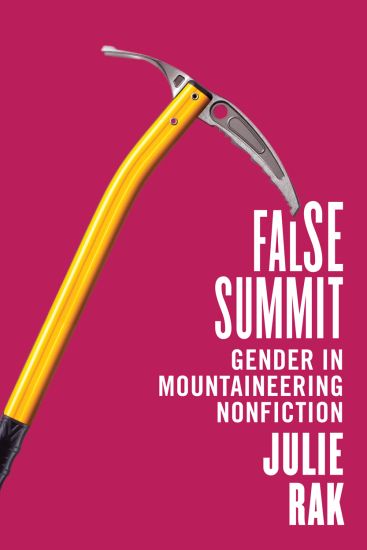
False Summit

False Summit

Julie Rak

McGill-Queen's University Press
2021
nidottu
The race to climb Everest catapulted mountain climbing, with its accompanying images of conquest and sport, into the public sphere on a global scale. But as a metaphor for the pinnacle of human achievement, mountaineering remains the preserve of traditional white male heroism.False Summit unpacks gender politics in the expedition narratives and memoirs of mountaineers in the Himalayas and the Karakoram. Why are women still a minority in the world's highest places? Julie Rak proposes that the genre has itself reached a "false summit" – a peak that proves not to be the pinnacle – and that mountaineering is not ready to welcome other ways of climbing or other kinds of climbers. For more than two centuries mountaineering, as an activity and as an ideal, has helped shape how the self is understood within the context of conquest, adventure, and proximity to risk. As climbing shows signs of becoming more diverse, Rak asks why change is so hard to achieve and why gender bias and other inequities exist in climbing at all.Exploring classic and lesser-known expedition accounts from Everest, K2, and Annapurna, False Summit helps us understand why mountaineering remains one of the most important ways to articulate gender identities and politics.
False Summit

False Summit

Julie Rak

McGill-Queen's University Press
2021
sidottu
The race to climb Everest catapulted mountain climbing, with its accompanying images of conquest and sport, into the public sphere on a global scale. But as a metaphor for the pinnacle of human achievement, mountaineering remains the preserve of traditional white male heroism.False Summit unpacks gender politics in the expedition narratives and memoirs of mountaineers in the Himalayas and the Karakoram. Why are women still a minority in the world's highest places? Julie Rak proposes that the genre has itself reached a "false summit" – a peak that proves not to be the pinnacle – and that mountaineering is not ready to welcome other ways of climbing or other kinds of climbers. For more than two centuries mountaineering, as an activity and as an ideal, has helped shape how the self is understood within the context of conquest, adventure, and proximity to risk. As climbing shows signs of becoming more diverse, Rak asks why change is so hard to achieve and why gender bias and other inequities exist in climbing at all.Exploring classic and lesser-known expedition accounts from Everest, K2, and Annapurna, False Summit helps us understand why mountaineering remains one of the most important ways to articulate gender identities and politics.
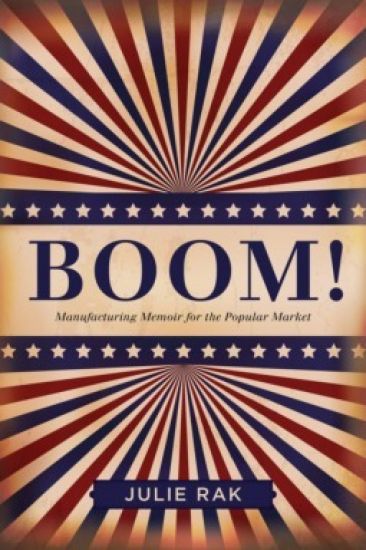
Boom!

Boom!

Julie Rak

Wilfrid Laurier University Press
2013
nidottu
Since the early 1990s, tens of thousands of memoirs by celebrities and unknown people have been published, sold, and read by millions of American readers. The memoir boom, as the explosion of memoirs on the market has come to be called, has been welcomed, vilified, and dismissed in the popular press. But is there really a boom in memoir production in the United States? If so, what is causing it? Are memoirs all written by narcissistic hacks for an unthinking public, or do they indicate a growing need to understand world events through personal experiences? This study seeks to answer these questions by examining memoir as an industrial product like other products, something that publishers and booksellers help to create. These popular texts become part of mass culture, where they are connected to public events. The genre of memoir, and even genre itself, ceases to be an empty classification category and becomes part of social action and consumer culture at the same time. From James Frey's controversial A Million Little Pieces to memoirs about bartending, Iran, the liberation of Dachau, computer hacking, and the impact of 9/11, this book argues that the memoir boom is more than a publishing trend. It is becoming the way American readers try to understand major events in terms of individual experiences. The memoir boom is one of the ways that citizenship as a category of belonging between private and public spheres is now articulated.
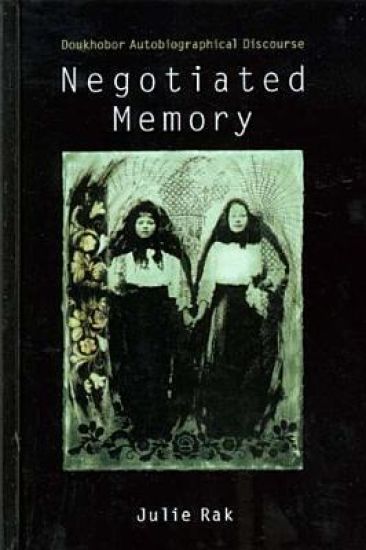
Negotiated Memory

Negotiated Memory

Julie Rak

University of British Columbia Press
2005
pokkari
The Doukhobors, Russian-speaking immigrants who arrived in Canada beginning in 1899, are known primarily to the Canadian public through the sensationalist images of them as nude protestors, anarchists, and religious fanatics – representations largely propagated by government commissions and the Canadian media. In Negotiating Memory, Julie Rak examines the ways in which autobiographical strategies have been employed by the Doukhobors themselves in order to retell and reclaim their own history.Drawing from oral interviews, court documents, government reports, prison diaries, and media accounts, Rak demonstrates how the Doukhobors employed both "classic" and alternative forms of autobiography to communicate their views about communal living, vegetarianism, activism, and spiritual life, as well as to pass on traditions to successive generations. More than a historical work, this book brings together recent theories concerning subjectivity, autobiography, and identity, and shows how Doukhobor autobiographical discourse forms a series of ongoing negotiations for identity and collective survival that are sometimes successful and sometimes not.An innovative study, Negotiating Memory will appeal to those interested in autobiography studies as well as to historians, literary critics, and students and scholars of Canadian cultural studies.
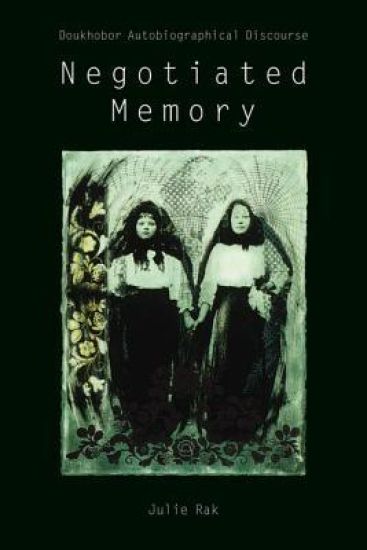
Negotiated Memory

Negotiated Memory

Julie Rak

University of British Columbia Press
2004
sidottu
The Doukhobors, Russian-speaking immigrants who arrived in Canada beginning in 1899, are known primarily to the Canadian public through the sensationalist images of them as nude protestors, anarchists, and religious fanatics – representations largely propagated by government commissions and the Canadian media. In Negotiating Memory, Julie Rak examines the ways in which autobiographical strategies have been employed by the Doukhobors themselves in order to retell and reclaim their own history.Drawing from oral interviews, court documents, government reports, prison diaries, and media accounts, Rak demonstrates how the Doukhobors employed both "classic" and alternative forms of autobiography to communicate their views about communal living, vegetarianism, activism, and spiritual life, as well as to pass on traditions to successive generations. More than a historical work, this book brings together recent theories concerning subjectivity, autobiography, and identity, and shows how Doukhobor autobiographical discourse forms a series of ongoing negotiations for identity and collective survival that are sometimes successful and sometimes not.An innovative study, Negotiating Memory will appeal to those interested in autobiography studies as well as to historians, literary critics, and students and scholars of Canadian cultural studies.