Kirjojen hintavertailu. Mukana 12 390 323 kirjaa ja 12 kauppaa.

Kirjailija

Julie S. Snyder

Kirjat ja teokset yhdessä paikassa: 7 kirjaa, julkaisuja vuosilta 2019-2026, suosituimpien joukossa Clinical Reasoning Cases in Nursing. Vertaile teosten hintoja ja tarkista saatavuus suomalaisista kirjakaupoista.

7 kirjaa

Kirjojen julkaisuhaarukka 2019-2026.

Clinical Reasoning Cases in Nursing

Clinical Reasoning Cases in Nursing

Mariann M. Harding; Julie S. Snyder

Elsevier - Health Sciences Division
2023
nidottu
**Selected for Doody’s Core Titles® 2024 with "Essential Purchase" designation in Perioperative** Learn to make sound clinical nursing judgments with the concept-based, case study approach in Harding & Snyder’s Clinical Reasoning Cases in Nursing, 8th Edition. Awarded second place in the 2019 AJN Book of the Year Awards in the Medical-Surgical category, this time-tested case study resource is highly regarded for its clinically relevant and thought-provoking cases. Approximately150 true-to-life case studies cover all four clinical practice areas - medical-surgical, pediatric, OB/maternity, and psychiatric-mental health nursing - all organized to facilitate a conceptual approach to teaching and learning. Each case covers a common patient problem drawn from actual clinical experiences and written by nurses who are clinical experts and includes a strong focus on interprofessional collaboration competencies. Cases include integrated content on pharmacology, nutrition, and diagnostic/laboratory tests to encourage you to think critically about all aspects of patient care. The 8th edition has been updated throughout to reflect the most current standards of clinical practice, including readiness for practice in the COVID-19 era. Also new to this edition, concepts and terminology related to the Next Generation NCLEX® Exam (NGN) are introduced in the Preface and integrated throughout to help you prepare for the new exam. Approximately 150 case studies draw from actual clinical experiences in medical-surgical, pediatric, OB/maternity, and psychiatric-mental health clinical areas to help you learn to think clinically, prioritize, and deliver proactive nursing care. UNIQUE! Concept-based organization mirrors the growing popularity of concept-based curricula and conceptual approaches to teaching and learning in nursing education. Clinical judgment approach helps you learn to identify changes, anticipate possible complications, and initiate therapeutic interventions. Progressive case complexity builds on previous learning to help you gradually develop clinical judgment skills. Strong QSEN safety emphasis is highlighted with an icon to communicate "caution" or "safety." Icons identify questions that resemble new NCLEX-RN® item types. Strong emphasis on sepsis and antibiotic resistance addresses the growing problem of sepsis (a recent Joint Commission "core measure") and antibiotic resistance, where appropriate. UNIQUE! Concepts and terminology related to the Next Generation NCLEX® Exam (NGN) are introduced in the Preface and integrated throughout to help you prepare for the new exam. All questions for the NGN are highlighted with a special icon for quick reference. UPDATED! Content reflects the latest evidence-based clinical practice, including national and international treatment guidelines and the latest guidelines for COVID-19 and other infectious diseases. NEW! Additional case studies and expanded content in key areas includes breastfeeding, obstetric emergency (umbilical cord prolapse or abruptio placentae) with emergency C-section, sickle cell pain crisis, and head/neck trauma with tracheostomy. Expanded pharmacology content reflects the importance of a clear understanding of drug therapy on patient safety. Additional illustrations and expanded use of image-related question types visually reinforce the material, while also promoting clinical utility and patient diversity in a sensitive and clinically relevant way. Enhanced interprofessional collaboration content emphasizes the importance of identifying opportunities for collaboration with other health professions.
Pharmacology and the Nursing Process

Pharmacology and the Nursing Process

Linda Lane Lilley; Shelly Rainforth Collins; Julie S. Snyder

Elsevier - Health Sciences Division
2022
nidottu
Gain the pharmacology knowledge and skills you need to administer medications safely! Pharmacology and the Nursing Process, 10th Edition provides practical, easy-to-use pharmacology information, emphasizing the application of the nursing process and prioritization throughout the book. Coverage begins with pharmacology basics, then discusses drugs by body systems and drug functions. Hundreds of full-color illustrations show how drugs work in the body and depict key steps in medication administration. Written by pharmacology experts Linda Lane Lilley, Shelly Rainforth Collins, and Julie S. Snyder, this bestselling textbook makes it easy to understand and apply pharmacology concepts and provide safe, quality nursing care. Focus on need-to-know information includes discussions of what nurses may encounter during drug administration in a variety of health care settings, providing accounts of real-life medication errors and tips for avoiding those errors. The Nursing Process is applied to each category of drugs, ensuring that you administer medications accurately and safely, and includes the steps of assessment, human need statements, planning, implementation, and evaluation. Emphasis on drug classes describes key similarities and differences among the drugs in each class, making it easier to understand how individual drugs work in the body. Consistent presentation for each drug group includes the mechanism of action, indications, contraindications, adverse effects, interactions, and dosages, concluding with drug profiles of individual drugs in the class or group. High-alert icons identify medications that pose a greater risk to patient safety. Focus on prioritization includes prioritized nursing diagnoses along with a corresponding prioritization of goals and outcomes, to help you learn to connect nursing diagnoses with goals and outcomes. Ease of readability makes difficult content more understandable. Photo atlas features more than 100 drawings and photographs showing drug administration techniques. Dosages tables summarize generic and trade names, pharmacologic class, normal dosage ranges, and indications for the drugs. Learning features at the beginning of each chapter include objectives and key terms, and at the end of each chapter, key points, critical thinking questions, review questions, and a list of resources available on the Evolve website. QSEN coverage includes the use of human need theory with human need statements, case studies featuring collaboration and teamwork content, Preventing Medication Errors boxes, and a discussion of the QSEN initiative as it relates to the safety and quality of patient care. NEW! Updated drug content reflects the latest FDA drug approvals, withdrawals, and therapeutic uses, and includes updated nursing content.
Study Guide for Pharmacology and the Nursing Process

Study Guide for Pharmacology and the Nursing Process

Linda Lane Lilley; Julie S. Snyder; Shelly Rainforth Collins

Elsevier - Health Sciences Division
2022
nidottu
Use this practical study guide to get more out of Lilley's Pharmacology and the Nursing Process, 10th Edition textbook! With chapters corresponding to the chapters in the textbook, this workbook helps you review and understand the key terms, key concepts, and pharmacology that nurses need to know. Exercises include NCLEX-RN® examination-style review questions, critical thinking and application questions, and case studies. It provides the review and practice you need to master the nursing process and nursing pharmacology! Application-based NCLEX® exam practice questions include at least one alternate item question per chapter. Review questions in each chapter are divided into sections: Chapter Review and NCLEX® Examination Preparation, Matching, Critical Thinking and Application, and Case Study. Focus on prioritization features prioritization exercises in which you must evaluate a clinical scenario and answer the question: What is the nurse's best action? Overview of drug calculation concepts helps you correctly perform mathematical problems when calculating drug dosages, and includes practice problems and a practice quiz. Sample drug labels are shown. Learning strategies expand upon the unique, cartoon-illustrated study strategies in the Lilley textbook, and offer additional information and learning tips. Answers for all questions are provided at the back of the book. NEW! Expanded NCLEX® focus includes one to two additional NCLEX examination-style questions for each chapter, including additional alternate item format types. NEW! Updated review questions reflect the updated content in the 10th edition of the Lilley textbook.
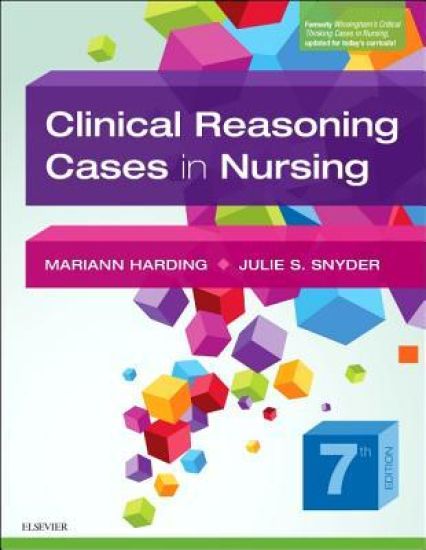
Clinical Reasoning Cases in Nursing

Clinical Reasoning Cases in Nursing

Mariann M. Harding; Julie S. Snyder

Mosby
2019
nidottu
Hone your ability to make sound clinical nursing judgment via a conceptual approach to teaching and learning with Harding & Snyder's Clinical Reasoning Cases in Nursing, 7th Edition. This time-tested case study approach is highly regarded for its clinically relevant and thought-provoking cases. With each adoption, you'll be able to tap into 150 unique case studies covering all four clinical practice areas: medical-surgical, pediatric, OB/maternity, and psychiatric nursing, all newly organized to facilitate a conceptual approach to teaching and learning. Each case covers a common patient problem, drawn from actual clinical experiences and written by nurses who are clinical experts. Cases include integrated content on pharmacology, nutrition, and diagnostic/laboratory tests to encourage you to think critically about all aspects of patient care. The 7th edition features a new concept-based organization, an enhanced focus on interprofessional collaboration and QSEN, 20 all-new case studies, and updated content throughout to reflect the most current standards of clinical practice. Awarded second place in the 2019 AJN Book of the Year Awards in Medical-Surgical category. Comprehensive assortment of 150 case studies draws from actual clinical experiences in medical-surgical, pediatric, OB/maternity, and psychiatric clinical areas to help you think critically, prioritize, and deliver proactive nursing care. Critical thinking approach helps you learn to identify changes, anticipate possible complications, and initiate therapeutic interventions. Progressive case complexity builds on previous learning to help you gradually develop more and more expertise. NEW & UNIQUE! Concept-based organization mirrors the growing use of concept-based curricula and conceptual approaches to teaching and learning in nursing education. NEW! 20 all-new cases and four extensively-revised cases that address important contemporary healthcare issues and allow for better coordination with Giddens, HESI, and other exemplar lists. NEW! Updated content throughout reflects the latest evidence-based clinical practice, including national and international treatment guidelines. NEW! Enhanced focus on interprofessional collaboration identifies opportunities for interprofessional collaboration are discussed. NEW! Greater consistency with the NCLEX Exam includes revisions like the elimination of most drug trade names and the inclusion of Canadian lab values. Enhanced QSEN safety emphasis is highlighted with a "target" icon to communicate "caution" or "safety." NEW! Increased emphasis on sepsis and antibiotic resistance throughout that addresses the growing problem of sepsis (a new Joint Commission "core measure") and antibiotic resistance where appropriate throughout. NEW! Improved answer spacing ensures that space left for answers reflects what is actually needed.
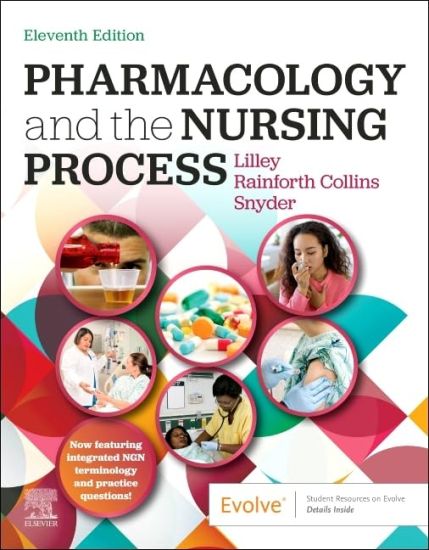
Pharmacology and the Nursing Process

Pharmacology and the Nursing Process

Linda Lane Lilley; Shelly Rainforth Collins; Julie S. Snyder

Elsevier Health Sciences
2026
nidottu
Gain the pharmacology knowledge and skills you need to administer medications safely! Pharmacology and the Nursing Process, 11th Edition, provides practical, easy-to-use pharmacology information, emphasizing the application of the nursing process, the NCSBN Clinical Judgment Measurement Model, and prioritization throughout the book. Coverage begins with pharmacology basics, then discusses drugs by body systems and drug functions. Hundreds of full-color illustrations show how drugs work in the body and depict key steps in medication administration. Written by pharmacology experts Linda Lane Lilley, Shelly Rainforth Collins, and Julie S. Snyder, this bestselling textbook makes it easy to understand and apply pharmacology concepts and provide safe, quality nursing care. ?????NEW! Updated drug content reflects the latest FDA drug approvals, withdrawals, and therapeutic uses. NEW! The 6 cognitive skills of NCSBN’s Clinical Judgment Measurement Model (NCJMM) are now identified in headings along with the corresponding steps of the nursing process. NEW! Integration of International Classification of Nursing Practice (ICNP) nursing diagnoses facilitates interprofessional collaboration with standardized terminology. UPDATED! Culture content reflects a greater sensitivity to issues of cultural humility and fosters patient-centered care. The Nursing Process is applied to each category of drugs, and includes the steps of assessment, diagnosis, planning, implementation, and evaluation. Consistent presentation for each drug group includes mechanism of action, indications, contraindications, adverse effects, interactions, and dosages, ending with drug profiles of individual drugs in the class or group. UNIQUE! Photo Atlas of Drug Administration features more than 100 drawings and photographs showing drug administration techniques. UNIQUE! Key drug approach focuses on need-to-know drug content and related nursing care for the drugs that nurses will most commonly encounter in clinical practice. Emphasis on drug classes describes key similarities and differences among the drugs in each class, making it easier for you to understand how individual drugs work in the body and to incorporate new drug information into your knowledge base as new drugs are approved. High-alert drug icons identify medications that pose a greater risk to patient safety. Focus on prioritization includes prioritized patient problems, along with a corresponding prioritization of goals and outcomes, to help you learn to connect patient problems with goals and outcomes of drug therapy. Practical focus on medication safety includes discussions of what nurses may encounter during drug administration in a variety of health care settings, providing accounts of real-life medication errors and tips for avoiding those errors. Ease of readability makes pharmacology content more understandable. Dosages tables summarize generic and trade names, pharmacologic classes, normal dosage ranges, and indications for drugs. Focus on quality and safety includes case studies that feature collaboration and teamwork content, as well as Preventing Medication Errors boxes. Learning features at the beginning of each chapter include objectives and key terms. Learning features at the end of each chapter include key points, clinical judgment exercises, and review questions. UPDATED! Content reflects the latest FDA drug approvals and therapeutic uses. NEW! The 6 cognitive skills of NCSBN’s Clinical Judgment Measurement Model (CJMM) are now identified in headings along with the corresponding steps of the nursing process. NEW! Integration of International Classification of Nursing Practice (ICNP) nursing diagnoses instead of the less-widely-used Human Needs Statements. UPDATED! Culture content reflects a greater sensitivity to issues of cultural humility, diversity, and inclusion. NEW! Enhanced emphasis on nursing self-care and health equity (including new Social Determinants of Health boxes) reflects greater alignment with the 2021 AACN Essentials and the 2020-2030 Future of Nursing report. NEW! Clinical judgment exercises are now incorporated into the textbook for enhanced preparation for the Next-Generation NCLEX® Exam (NGN). EXPANDED! Additional NGN-style questions are now provided on the Evolve companion website.
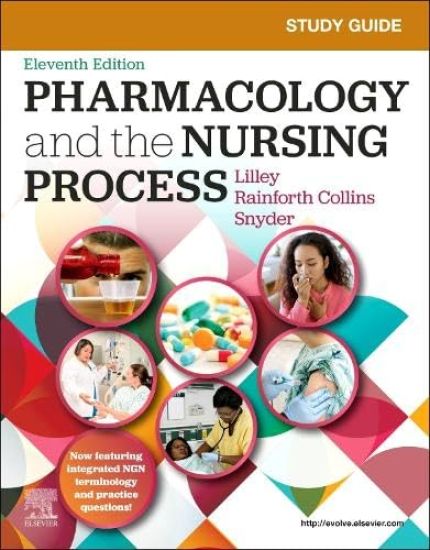
Study Guide for Pharmacology and the Nursing Process

Study Guide for Pharmacology and the Nursing Process

Linda Lane Lilley; Shelly Rainforth Collins; Julie S. Snyder

Elsevier Health Sciences
2026
nidottu
Get more out of Lilley’s Pharmacology and the Nursing Process, 11th Edition, with this practical study guide! Matching the chapters in the textbook, this workbook helps you review and understand the key terms, key concepts, and pharmacology that nurses need to know. Exercises include NCLEX Examination-style review questions, critical thinking and application questions, and case studies. It provides the review and practice you need to master the nursing process and nursing pharmacology! Study guide chapters correspond to each chapter in the textbook to help you review and understand the key terms, key concepts, and pharmacology and nursing content you need to know. Learning exercises include NCLEX®-style review questions, matching questions, clinical judgment and application questions, and clinical judgment case studies. Application-based NCLEX®-style practice questions include at least one alternate item question per chapter. Focus on Prioritization features prioritization exercises in which you must evaluate a clinical scenario and answer the question: What is the nurse’s best action? Overview of drug calculation concepts helps you correctly solve mathematical problems when calculating drug dosages, and includes practice problems and a practice quiz. Sample drug labels provide authentic practice in preparing for drug administration. Learning strategies expand upon the unique, cartoon-illustrated study strategies in the textbook and offer additional information and learning tips. Answers for all questions are provided at the back of the book. UPDATED content throughout reflects the enhanced content in the 11th edition of the Lilley textbook NEW Next-Generation NCLEX® Exam (NGN)-style case studies and question types help prepare you for the NGN as you learn key pharmacology and related nursing content
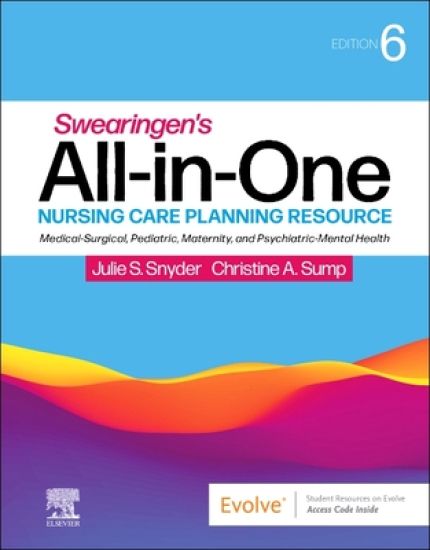
Swearingen's All-in-One Nursing Care Planning Resource

Swearingen's All-in-One Nursing Care Planning Resource

Julie S. Snyder; Christine A. Sump

Elsevier - Health Sciences Division
2023
nidottu
With more than 100 evidence-based, customizable care plans, Swearingen's All-in-One Nursing Care Planning Resource: Medical-Surgical, Pediatric, Maternity, and Psychiatric-Mental Health is an easy-to-use, curriculum-wide reference to guide the development of patient-centered nursing care plans. The only nursing care planning reference book that covers all four core clinical areas, it features care plans for medical-surgical, maternity/OB, pediatrics, and psychiatric?mental health to help you learn to care for patients in any setting. The interprofessional patient problems focus teaches you how to communicate patient problems using the standard terminology of the health professions rather than in nursing-specific language. Safety icons highlight assessments and interventions that focus on safety measures supported by national patient safety standards and goals. Care plans have been updated throughout to reflect the latest evidence-based treatment guidelines and protocols. Care plan components are now labeled as appropriate with the six cognitive skills identified in the National Council of State Boards of Nursing (NCSBN) Clinical Judgment Measurement Model (CJMM) to help you identify, develop, and implement the clinical judgment skills needed for success on the Next-Generation NCLEX® Exam (NGN) and in clinical practice. With new care plans on Infection, Breastfeeding, and Delirium, a clear, focused approach, an easy-to-use format, and straightforward rationales, this one book will meet your care planning needs throughout your entire nursing program and into clinical practice! UNIQUE! Care plans cover all four major clinical areas: medical-surgical, OB/maternity, pediatrics, and psychiatric-mental health nursing. UNIQUE! Colorful design makes the book more user friendly and includes color-coded tabs and improved cross-referencing and navigation aids for faster information retrieval. UNIQUE! Updated care plan focused on support of LGBTQ+ patients ensures sensitive, professional nursing care. Consistent format for each care plan facilitates more efficient planning, with headings for Overview/Pathophysiology, Health Care Setting, and more. Interprofessional patient problems focus equips users to communicate with other health professionals in the interprofessional language of patient problems, rather than in the nursing-specific language of nursing diagnosis. Safety icons highlight assessments and interventions that focus on safety measures supported by national patient safety standards and goals. Patient problems are prioritized in order of importance and physiologic patient needs are included to help users focus on the most important assessments and interventions. Detailed rationales for each nursing intervention help users apply concepts to specific patient situations in clinical practice. NEW and UNIQUE! Care plan components are now labeled as appropriate with the six cognitive skills identified in the National Council of State Boards of Nursing (NCSBN) Clinical Judgment Measurement Model (CJMM) to help students identify, develop, and implement the clinical judgment skills needed for success on the Next-Generation NCLEX® Exam (NGN) and in clinical practice. NEW! Additional care plans on Infection, Delirium, and Breastfeeding. UPDATED! Content throughout reflects the latest evidence-based treatment guidelines and national and international treatment protocols.