
Kirjailija
Julien Mailland
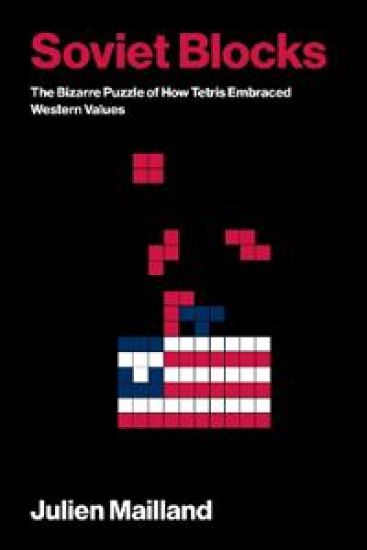
Kirjat ja teokset yhdessä paikassa: 3 kirjaa, julkaisuja vuosilta 2017-2026, suosituimpien joukossa Soviet Blocks. Vertaile teosten hintoja ja tarkista saatavuus suomalaisista kirjakaupoista.
3 kirjaa
Kirjojen julkaisuhaarukka 2017-2026.

A guide to the fascinating legal history of the videogame industry, written for nonlawyers. Why did a judge recall FIFA 15, a nonviolent soccer game, from French shelves in 2014? Why was Vodka Drunkenski, a character in Nintendo-Japan's Punch-Out , renamed Soda Popinski in the US and then in Western Europe, where the pun made no sense? Why was a Dutch-American company barred by US courts from distributing a clone of Pac-Man? Julien Mailland answers all these questions and more in The Game That Never Ends, an inside look at the legal history that undergirds our favorite videogames. Drawing on a series of case studies as vignettes of the human comedy, Mailland sheds light on why and how the role of lawyers is key for understanding the videogame industry. Each chapter in The Game That Never Ends is a mini-puzzle that pieces together how an important legal issue arose, was resolved, and impacted the industry and the experience of gamers in real time. These chapters are interspersed with shorter chapters called "The Lawyer's Corner," opportunities to dive deeper into individual cases. Lightly footnoted, these interludes connect the previous chapters together by providing a conceptual meta-analysis. Offering a comprehensive overview of the global legal history of videogames, The Game That Never Ends will leave readers with a nuanced, in-depth, and more global understanding of the videogame industry.
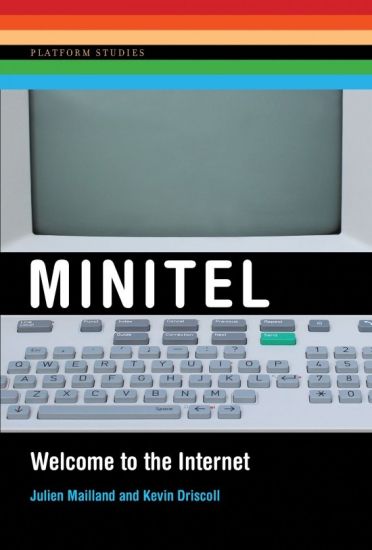
The first scholarly book in English on Minitel, the pioneering French computer network, offers a history of a technical system and a cultural phenomenon.A decade before the Internet became a medium for the masses in the United States, tens of millions of users in France had access to a network for e-mail, e-commerce, chat, research, game playing, blogging, and even an early form of online porn. In 1983, the French government rolled out Minitel, a computer network that achieved widespread adoption in just a few years as the government distributed free terminals to every French telephone subscriber. With this volume, Julien Mailland and Kevin Driscoll offer the first scholarly book in English on Minitel, examining it as both a technical system and a cultural phenomenon. Mailland and Driscoll argue that Minitel was a technical marvel, a commercial success, and an ambitious social experiment. Other early networks may have introduced protocols and software standards that continue to be used today, but Minitel foretold the social effects of widespread telecomputing. They examine the unique balance of forces that enabled the growth of Minitel: public and private, open and closed, centralized and decentralized. Mailland and Driscoll describe Minitel's key technological components, novel online services, and thriving virtual communities. Despite the seemingly tight grip of the state, however, a lively Minitel culture emerged, characterized by spontaneity, imagination, and creativity. After three decades of continuous service, Minitel was shut down in 2012, but the history of Minitel should continue to inform our thinking about Internet policy, today and into the future.