Kirjojen hintavertailu. Mukana 12 292 814 kirjaa ja 12 kauppaa.

Kirjailija

Juliet McMaster

Kirjat ja teokset yhdessä paikassa: 6 kirjaa, julkaisuja vuosilta 1971-2023, suosituimpien joukossa James Clarke Hook. Vertaile teosten hintoja ja tarkista saatavuus suomalaisista kirjakaupoista.

6 kirjaa

Kirjojen julkaisuhaarukka 1971-2023.

James Clarke Hook

James Clarke Hook

Juliet McMaster; Robin Simon

MCGILL-QUEEN'S UNIVERSITY PRESS
2023
sidottu
Though his father had faced bankruptcy, James Clarke Hook (1819–1907) nevertheless managed to paint himself into country-gentlemanhood, becoming famous for his landscapes of British coastal scenes and his ability to evoke not just the sights but also the sounds and even the smell of the sea.James Clarke Hook, Juliet McMaster’s lively biography of the brilliant but underappreciated Victorian painter, brings the reader through Hook’s rigorous training at the Royal Academy Schools, his travelling studentship in Florence and Venice, and his work as a historical painter, to the discovery of his métier as a painter of contemporary rural and coastal scenes. Part of the secret of Hook’s success was his resolution to paint the final large canvas of his seascapes onsite, braving wind and weather – for which he invented an easel that was adaptable to uneven terrain. McMaster’s research led her to retrace the painter’s footsteps to the rocky headlands and sheltered bays where, over a hundred years ago, Hook had set up his easel to capture the tang of sea. McMaster connects Hook, an academician for half a century, with the major figures and movements of Victorian art – including the Pre-Raphaelites John Everett Millais and Holman Hunt, the etcher Samuel Palmer, and the painter and sculptor G.F. Watts.James Clarke Hook worked alongside the fishermen and rural families who populate and enliven his canvases; this book reinvigorates our understanding of his artistic process and unique sense of place.
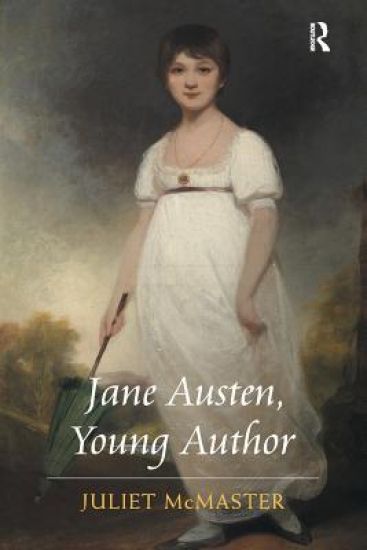
Jane Austen, Young Author

Jane Austen, Young Author

Juliet McMaster

Routledge
2015
nidottu
In her lively and accessibly written book, Juliet McMaster examines Jane Austen’s acute and frequently uproarious juvenile works as important in their own right and for the ways they look forward to her novels. Exploring the early works both collectively and individually, McMaster shows how young Austen’s fictional world, peopled by guzzlers and unashamed self-seekers, operates by an ethic of energy rather than the sympathy that dominates the novels. A fully self-conscious artist, young Jane experimented freely with literary modes - the epistolary, the omniscient, the drama. Early on, she developed brilliantly pointed dialogue to match her characters. Literary parody impels her creativity, and McMaster’s sustained study of Love and Friendship shows the same intricate relation of the parody to the work it parodies that we later see with Northanger Abbey and the Gothic novel. As an illustrator herself, McMaster is especially attuned to the explicit and sometimes hilarious descriptions of bodies that preceded Austen’s famous reticence about physicality. Rather than focusing on the immaturities of the juvenilia, McMaster maps the gradual shifts in tone and emphasis that signpost Austen’s journey as a writer. She shows, for instance, how the shameless husband-hunting in The Three Sisters and the vigorous partisanship of The History of England lead on to Pride and Prejudice. Her book will appeal to Austen’s critics and to passionate general readers, as well as to scholars working in the fields of juvenilia, children’s literature, and childhood studies.
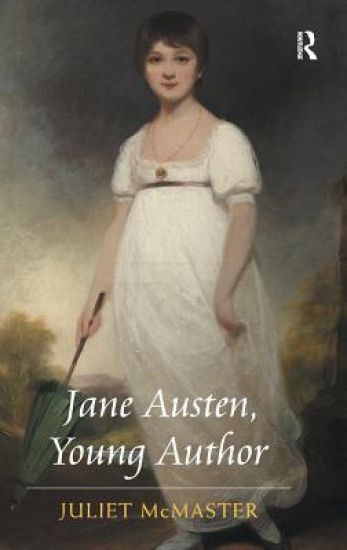
Jane Austen, Young Author

Jane Austen, Young Author

Juliet McMaster

Routledge
2015
sidottu
In her lively and accessibly written book, Juliet McMaster examines Jane Austen’s acute and frequently uproarious juvenile works as important in their own right and for the ways they look forward to her novels. Exploring the early works both collectively and individually, McMaster shows how young Austen’s fictional world, peopled by guzzlers and unashamed self-seekers, operates by an ethic of energy rather than the sympathy that dominates the novels. A fully self-conscious artist, young Jane experimented freely with literary modes - the epistolary, the omniscient, the drama. Early on, she developed brilliantly pointed dialogue to match her characters. Literary parody impels her creativity, and McMaster’s sustained study of Love and Friendship shows the same intricate relation of the parody to the work it parodies that we later see with Northanger Abbey and the Gothic novel. As an illustrator herself, McMaster is especially attuned to the explicit and sometimes hilarious descriptions of bodies that preceded Austen’s famous reticence about physicality. Rather than focusing on the immaturities of the juvenilia, McMaster maps the gradual shifts in tone and emphasis that signpost Austen’s journey as a writer. She shows, for instance, how the shameless husband-hunting in The Three Sisters and the vigorous partisanship of The History of England lead on to Pride and Prejudice. Her book will appeal to Austen’s critics and to passionate general readers, as well as to scholars working in the fields of juvenilia, children’s literature, and childhood studies.
Thackeray

Thackeray

Juliet McMaster

University of Toronto Press
1971
pokkari
Although few critics deny Thackeray’s position as a major novelist, he has had comparatively little of the kind of critical attention that has been devoted to Jane Austen, Charles Dickens, George Eliot, or Henry James in the last thirty years. His curious combinations of satire and sentiment, geniality and deviousness, snobbery and anti-snobbery, and his habits of retreating from one disguise to another, have made him difficult to deal with, and his practice of exposing his stories as fictions has evoked hostility in many critics who are none the less fascinated by him. In this original and revealing study of the major novels, Juliet McMaster contends that Thackery is a consummate artist and a highly sophisticated ironist, exploiting to the full the potential of the various personae he adopts, and introducing ambiguity deliberately, to sharpen the reader’s moral perceptions and to evoke the complexity of experience itself.