Kirjojen hintavertailu. Mukana 12 595 353 kirjaa ja 12 kauppaa.

Kirjailija

Juliet Pietsch

Kirjat ja teokset yhdessä paikassa: 6 kirjaa, julkaisuja vuosilta 2014-2025, suosituimpien joukossa Migration and Integration in Europe, Southeast Asia, and Australia. Vertaile teosten hintoja ja tarkista saatavuus suomalaisista kirjakaupoista.

6 kirjaa

Kirjojen julkaisuhaarukka 2014-2025.

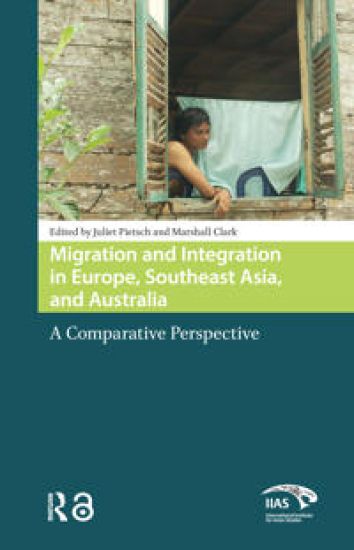
Migration and Integration in Europe, Southeast Asia, and Australia

Migration and Integration in Europe, Southeast Asia, and Australia

Juliet Pietsch; Marshall Clark

TAYLOR FRANCIS LTD
2025
nidottu
This volume brings together a group of scholars from a wide range of disciplines to address crucial questions of migration flows and integration in Europe, Southeast Asia, and Australia. Comparative analysis of the three regions and their differing approaches and outcomes yields important insights for each region, as well as provokes new questions and suggests future avenues of study.
Temporary Migrants from Southeast Asia in Australia

Temporary Migrants from Southeast Asia in Australia

Juliet Pietsch

Cambridge University Press
2022
pokkari
Much of the scholarship in development studies focuses on developing countries. However, many of the same issues can be seen in developed countries, where migrants now constitute a sizeable proportion of the poor and politically disenfranchised. In immigrant receiving countries such as Australia, temporary migrants in low-income households are most at risk of poor social and health outcomes. This research explores the experiences of temporary migrant workers from Southeast Asia in Australia, demonstrating that migrant workers, on the whole, live without a political voice or clear pathway to permanent residency and citizenship. The research is informed by Amartya Sen and Martha Nussbaum's theoretical framework of capabilities. One of the most critical capabilities is having a sense of political agency and control over one's environment. Given the significant increase in temporary migration flows around the world, this Element draws attention to the necessity of migrants to be provided with political capabilities.
Race, Ethnicity, and the Participation Gap

Race, Ethnicity, and the Participation Gap

Juliet Pietsch

University of Toronto Press
2018
sidottu
Race, Ethnicity, and the Participation Gap begins with the argument that political institutions in settler and culturally diverse societies such as Australia, the United States, and Canada should mirror their culturally diverse populations. Compared to the United States and Canada, however, Australia has very low rates of immigrant and ethnic minority political representation in the Commonwealth Parliament, particularly in the House of Representatives. The overall existence of racial hierarchies within formal political institutions represents an inconsistency with the democratic ideals of representation and accountability in pluralist societies. Drawing on findings from the United States, Canada, and Australia, Juliet Pietsch reveals that the lack of political representation in Australia is significant when compared to the United States and Canada, revealing a serious democratic deficit. Her book is devoted to exploring this central puzzle: why is it that, despite having a similar history to other settler countries, Australia shows such comparatively low rates of political participation among its immigrant and ethnic minority populations from non-British and European backgrounds? In addressing this crucial question, Race, Ethnicity, and the Participation Gap examines the impact of Australia’s alternative path on the political representation of immigrants and ethnic minorities.
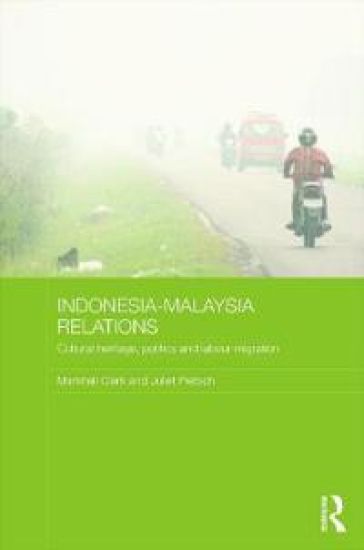
Indonesia-Malaysia Relations

Indonesia-Malaysia Relations

Marshall Clark; Juliet Pietsch

Routledge
2016
nidottu
Drawing on social media, cinema, cultural heritage and public opinion polls, this book examines Indonesia and Malaysia from a comparative postcolonial perspective. The Indonesia–Malaysia relationship is one of the most important bilateral relationships in Southeast Asia, especially because Indonesia, the world’s fourth most populous country and third largest democracy, is the most populous and powerful nation in the region. Both states are committed to the relationship, especially at the highest levels of government, and much has been made of their ‘sibling’ identity. The relationship is built on years of interaction at all levels of state and society, and both countries draw on their common culture, religion and language in managing political tensions. In recent years, however, several issues have seriously strained the once cordial bilateral relationship. Among these are a strong public reaction to maritime boundary disputes, claims over each country’s cultural forms, the treatment of Indonesian workers in Malaysia, and trans-border issues such as Indonesian forest fire haze. Comparing the two nations’ engagement with cultural heritage, religion, gender, ethnicity, citizenship, democracy and regionalism, this book highlights the social and historical roots of the tensions between Indonesia and Malaysia, as well as the enduring sense of kinship.
Migration and Integration in Europe, Southeast Asia, and Australia

Migration and Integration in Europe, Southeast Asia, and Australia

Juliet Pietsch; Marshall Clark

Amsterdam University Press
2015
sidottu
This volume brings together a group of scholars from a wide range of disciplines to address crucial questions of migration flows and integration in Europe, Southeast Asia, and Australia. Comparative analysis of the three regions and their differing approaches and outcomes yields important insights for each region, as well as provokes new questions and suggests future avenues of study.
Indonesia-Malaysia Relations

Indonesia-Malaysia Relations

Marshall Clark; Juliet Pietsch

Routledge
2014
sidottu
Drawing on social media, cinema, cultural heritage and public opinion polls, this book examines Indonesia and Malaysia from a comparative postcolonial perspective. The Indonesia–Malaysia relationship is one of the most important bilateral relationships in Southeast Asia, especially because Indonesia, the world’s fourth most populous country and third largest democracy, is the most populous and powerful nation in the region. Both states are committed to the relationship, especially at the highest levels of government, and much has been made of their ‘sibling’ identity. The relationship is built on years of interaction at all levels of state and society, and both countries draw on their common culture, religion and language in managing political tensions. In recent years, however, several issues have seriously strained the once cordial bilateral relationship. Among these are a strong public reaction to maritime boundary disputes, claims over each country’s cultural forms, the treatment of Indonesian workers in Malaysia, and trans-border issues such as Indonesian forest fire haze. Comparing the two nations’ engagement with cultural heritage, religion, gender, ethnicity, citizenship, democracy and regionalism, this book highlights the social and historical roots of the tensions between Indonesia and Malaysia, as well as the enduring sense of kinship.