Kirjojen hintavertailu. Mukana 12 595 353 kirjaa ja 12 kauppaa.

Kirjailija

Juliet Wilson-Bareau

Kirjat ja teokset yhdessä paikassa: 4 kirjaa, julkaisuja vuosilta 1992-2016, suosituimpien joukossa Goya in the Norton Simon Museum. Vertaile teosten hintoja ja tarkista saatavuus suomalaisista kirjakaupoista.

4 kirjaa

Kirjojen julkaisuhaarukka 1992-2016.

Goya in the Norton Simon Museum

Goya in the Norton Simon Museum

Juliet Wilson-Bareau

Yale University Press
2016
sidottu
During his lifetime, the industrialist and collector Norton Simon (1907–1993) amassed a trove of European paintings, drawings, and prints by Rembrandt, Picasso, Degas, and others. Simon occasionally became fascinated with a particular artist's oeuvre, and that passion inspired him to assemble monographic holdings of work by several masters, chief among them Francisco de Goya (1746–1828). This book is the first to examine the extraordinary Goya collection—which includes more than 1,400 prints, a drawing, and three paintings—in the founder's namesake museum. Simon's enduring interest in serial images led him to acquire prints from various series and editions treating a range of subjects, such as religious iconography, landscapes, portraits, and social satire. Spotlighting rare proofs and single prints, the catalogue also presents a complete set each of Los Caprichos, Disasters of War, and other seminal series. Lushly illustrated and authored by a distinguished Goya scholar, this catalogue is an essential guide to a treasure trove of the artist’s works. Distributed for the Norton Simon Art Foundation
Goya

Goya

Stephanie Buck; Juliet Wilson-Bareau

Paul Holberton Publishing
2015
pokkari
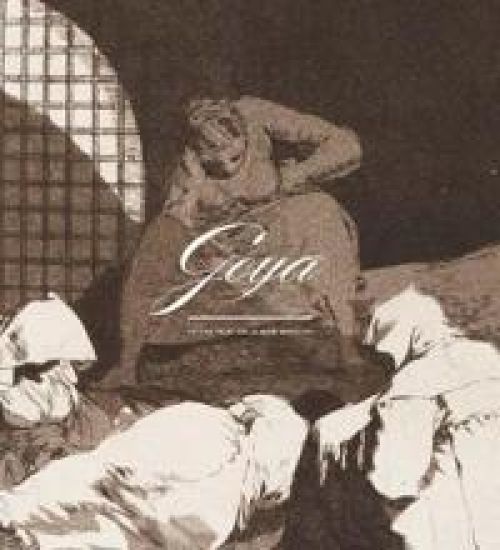
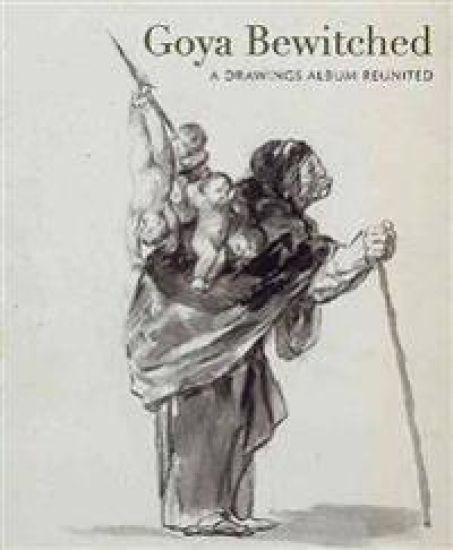
One of the masterpieces of The Courtauld Gallery’s collection of Spanish drawings is a sheet known as Cantar y bailar (Singing and dancing), page 3 from Goya’s Album D, also known as the ‘Witches and Old Women’ album. Bringing together all the extant album pages, currently numbered up to 23, this catalogue proposes a reconstruction of the album that would include the sheets from which Goya’s page numbers have been erased or trimmed away. Goya began to create ‘journal albums’ of drawings relatively late in life, after the shattering illness that left him stone deaf before the age of fifty. It was a practice he would sustain until his death, creating eight albums (named with letters A to H) that originally included a total of some 550 drawings. Visually, technically and intellectually coherent, these albums are unified in their discrete techniques and types of support, and paginated (after the first). In these album pages Goya committed to paper his views, with or without written comments, on human nature and the world around him. Each album has its own distinctive subject matter, style and technique. The later history of the eight albums, already expertly chronicled, remains under investigation. The disbound album sheets were remounted in large volumes by Goya’s son, then sold en bloc by his grandson. Following their final dispersal by Federico de Madrazo and Valentín Carderera in the 1860s and 1870s, many gaps remain in all the albums. This exhibition and the research underpinning it on Album D are the pilot for an international project for the reconstruction of Goya’s graphic oeuvre. The publication will test the extent of Album D and explore the possible sequence and thematic coherence of the sheets. The individual Album D drawings will be reproduced as a proposed reconstructed sequence, each with detailed catalogue entry and technical information. In addition, the publication will define the context of the album by including a number of closely related works by Goya.
Division and Revision

Division and Revision

Juliet Wilson-Bareau

Paul Holberton Publishing
2008
pokkari
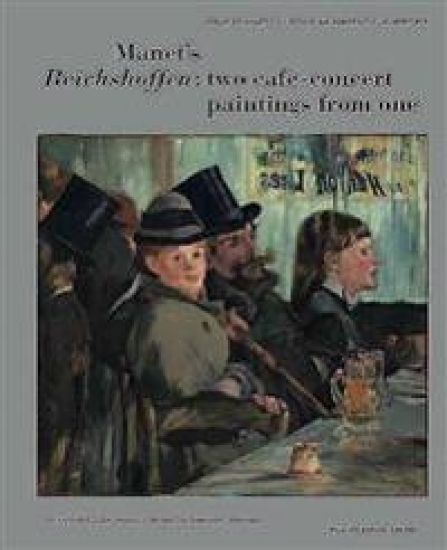
Manet's well-known painting in the National Gallery London of a café-concert – a kind of cabaret performance and music-making that was the latest fashion in Paris of the 1870s – has a peculiar history. The painter initially planned an ambitious canvas with which he grew dissatisfied, then cut it in two, one half being the painting in the National Gallery and the other half now in Winterthur in Switzerland. He repainted both fragments to make each work as a picture in their own right, but modern technology has discovered and reconstructed the original greater work. New research has also identified the café, the Reichshoffen, and even the Folies-Bergère performance that is advertised on a poster represented in the picture.