
Kirjailija
Jun'ichiro Tanizaki
Kirjat ja teokset yhdessä paikassa: 35 kirjaa, julkaisuja vuosilta 1997-2026, suosituimpien joukossa Lamanij khrest. Vertaile teosten hintoja ja tarkista saatavuus suomalaisista kirjakaupoista.
Mukana myös kirjoitusasut: Jun'ichiro. Tanizaki, Jun'ichiro¯ Tanizaki
35 kirjaa
Kirjojen julkaisuhaarukka 1997-2026.
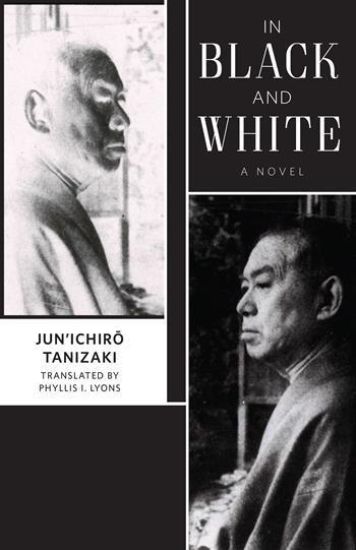
Jun'ichiro Tanizaki's In Black and White is a literary murder mystery in which the lines between fiction and reality are blurred. The writer Mizuno is working on a story about the perfect murder. His fictional victim is modeled on an acquaintance, a fellow writer. When he notices that this man's real name has crept into his manuscript, he becomes terrified that an actual murder will take place-and that he will be the main suspect. Mizuno goes to great lengths to establish an alibi, venturing into the city's underworld. But he finds himself only more entangled as his paranoid fantasies, including a mysterious "Shadow Man" out to entrap him, intrude into real life. A sophisticated psychological and metafictional mystery, In Black and White is a masterful yet little-known novel from a great writer at the height of his powers. The year 1928 was a remarkable one for Tanizaki. He wrote three exquisite novels, but while two of them-Some Prefer Nettles and Quicksand-became famous, In Black and White disappeared from view. All three were serialized in Osaka and Tokyo newspapers and magazines, but In Black and White was never published as an independent volume. This translation restores it to its rightful place among Tanizaki's works and offers a window into the author's life at a crucial point in his career. A critical afterword explains the novel's context and importance for Tanizaki and Japan's literary and cultural scene in the 1920s, connecting autobiographical elements with the novel's key concerns, including Tanizaki's critique of Japanese literary culture and fiction itself.

Jun'ichiro Tanizaki's In Black and White is a literary murder mystery in which the lines between fiction and reality are blurred. The writer Mizuno is working on a story about the perfect murder. His fictional victim is modeled on an acquaintance, a fellow writer. When he notices that this man's real name has crept into his manuscript, he becomes terrified that an actual murder will take place-and that he will be the main suspect. Mizuno goes to great lengths to establish an alibi, venturing into the city's underworld. But he finds himself only more entangled as his paranoid fantasies, including a mysterious "Shadow Man" out to entrap him, intrude into real life. A sophisticated psychological and metafictional mystery, In Black and White is a masterful yet little-known novel from a great writer at the height of his powers. The year 1928 was a remarkable one for Tanizaki. He wrote three exquisite novels, but while two of them-Some Prefer Nettles and Quicksand-became famous, In Black and White disappeared from view. All three were serialized in Osaka and Tokyo newspapers and magazines, but In Black and White was never published as an independent volume. This translation restores it to its rightful place among Tanizaki's works and offers a window into the author's life at a crucial point in his career. A critical afterword explains the novel's context and importance for Tanizaki and Japan's literary and cultural scene in the 1920s, connecting autobiographical elements with the novel's key concerns, including Tanizaki's critique of Japanese literary culture and fiction itself.
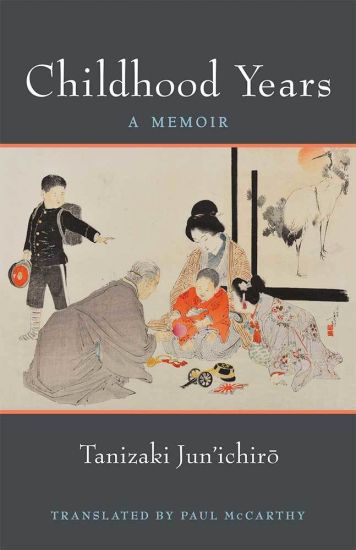
In Childhood Years, originally published serially in a literary magazine between 1955 and 1956, Tanizaki Jun’ichiro (1886–1965) takes a meandering look back on his early life in Tokyo. He reflects on his upbringing, family, and the capital city with a conversational—and not necessarily honest—eye, offering insights into his later life and his writing.

In Childhood Years, originally published serially in a literary magazine between 1955 and 1956, Tanizaki Jun’ichiro (1886–1965) takes a meandering look back on his early life in Tokyo. He reflects on his upbringing, family, and the capital city with a conversational—and not necessarily honest—eye, offering insights into his later life and his writing.
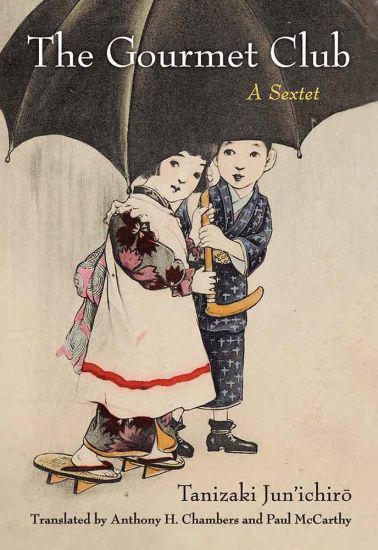
The decadent tales in this collection span 45 years in the extraordinary career of Japan’s master storyteller, Tanizaki Jun’ichiro¯ (1886–1965), the author of Naomi, A Cat, a Man, and Two Women, and The Makioka Sisters. Made accessible in English by the expertise of translators Anthony H. Chambers and Paul McCarthy, the stories in The Gourmet Club vividly explore an array of human passions. In “The Children,” three mischievous friends play sadomasochistic games in a mysterious Western-style mansion. The sybaritic narrator of “The Secret” experiments with cross-dressing as he savors the delights of duplicity. “The Two Acolytes” evokes the conflicting attractions of spiritual fulfillment and worldly pleasure in medieval Kyoto. In the title story, the seductive tastes, aromas, and textures of outlandish Chinese dishes blend with those of the seductive hands that proffer them to blindfolded gourmets. In “Mr. Bluemound,” Tanizaki, who wrote for a film studio in the early 1920s, considers the relationship between a flesh-and-blood actress and her image fixed on celluloid, which one memorably degenerate admirer is obsessed with. And, finally, “Manganese Dioxide Dreams” offers a tantalizing insight into the author’s mind as he weaves together the musings of an old man very like Tanizaki himself-Chinese and Japanese cuisine, a French murder movie, Chinese history, and the contents of a toilet bowl. These beautifully translated stories will intrigue and entertain readers who are new to Tanizaki, as well as those who have already explored the bizarre world of his imagination.

The decadent tales in this collection span 45 years in the extraordinary career of Japan’s master storyteller, Tanizaki Jun’ichiro¯ (1886–1965), the author of Naomi, A Cat, a Man, and Two Women, and The Makioka Sisters. Made accessible in English by the expertise of translators Anthony H. Chambers and Paul McCarthy, the stories in The Gourmet Club vividly explore an array of human passions. In “The Children,” three mischievous friends play sadomasochistic games in a mysterious Western-style mansion. The sybaritic narrator of “The Secret” experiments with cross-dressing as he savors the delights of duplicity. “The Two Acolytes” evokes the conflicting attractions of spiritual fulfillment and worldly pleasure in medieval Kyoto. In the title story, the seductive tastes, aromas, and textures of outlandish Chinese dishes blend with those of the seductive hands that proffer them to blindfolded gourmets. In “Mr. Bluemound,” Tanizaki, who wrote for a film studio in the early 1920s, considers the relationship between a flesh-and-blood actress and her image fixed on celluloid, which one memorably degenerate admirer is obsessed with. And, finally, “Manganese Dioxide Dreams” offers a tantalizing insight into the author’s mind as he weaves together the musings of an old man very like Tanizaki himself-Chinese and Japanese cuisine, a French murder movie, Chinese history, and the contents of a toilet bowl. These beautifully translated stories will intrigue and entertain readers who are new to Tanizaki, as well as those who have already explored the bizarre world of his imagination.

Tanizaki Jun'ichiro (1886–1965), the author of Naomi; A Cat, a Man, and Two Women; and The Makioka Sisters, was one of the great writers of the twentieth century. The four stories in this volume date from the first and second decades of Tanizaki’s long career and reflect themes that appear throughout his work: exoticism, sexuality, sadomasochism, contrasts between traditional and modern societies, disparities between appearance and reality, the power of dreams, amorality, an interest in cinema, and a fascination with the techniques of storytelling. The stories—translated into English here for the first time—are: “The Strange Case of Tomoda and Matsunaga” (“Tomoda to Matsunaga no hanashi,” 1926), “A Night in Qinhuai” (“Shinwai no yo,” 1919), “The Magician” (“Majutsushi,” 1917), and “Red Roofs” (“Akai yane,” 1925).
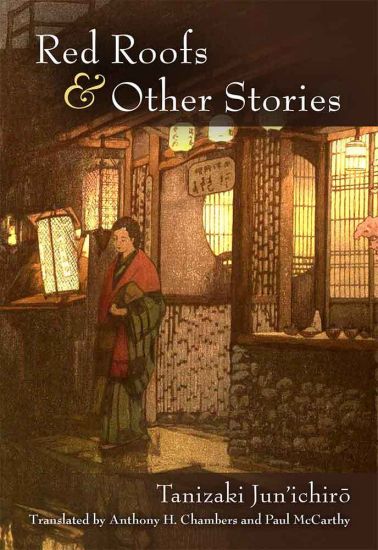
Tanizaki Jun'ichiro (1886–1965), the author of Naomi; A Cat, a Man, and Two Women; and The Makioka Sisters, was one of the great writers of the twentieth century. The four stories in this volume date from the first and second decades of Tanizaki’s long career and reflect themes that appear throughout his work: exoticism, sexuality, sadomasochism, contrasts between traditional and modern societies, disparities between appearance and reality, the power of dreams, amorality, an interest in cinema, and a fascination with the techniques of storytelling. The stories—translated into English here for the first time—are: “The Strange Case of Tomoda and Matsunaga” (“Tomoda to Matsunaga no hanashi,” 1926), “A Night in Qinhuai” (“Shinwai no yo,” 1919), “The Magician” (“Majutsushi,” 1917), and “Red Roofs” (“Akai yane,” 1925).


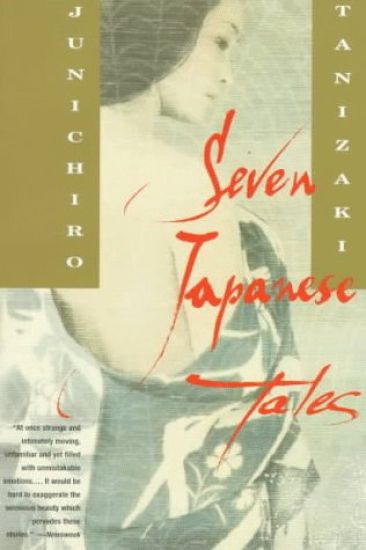
In these seven stories, the author of The Makioka Sisters explores the territory where love becomes self-annihilation, where the contemplation of beauty gives way to fetishism, and where tradition becomes an instrument of refined cruelty.