Kirjojen hintavertailu. Mukana 12 595 353 kirjaa ja 12 kauppaa.

Kirjailija

Jun Mitani

Kirjat ja teokset yhdessä paikassa: 9 kirjaa, julkaisuja vuosilta 2016-2026, suosituimpien joukossa Mathematics and Applications of Computer Graphics. Vertaile teosten hintoja ja tarkista saatavuus suomalaisista kirjakaupoista.

9 kirjaa

Kirjojen julkaisuhaarukka 2016-2026.

Everyday Life is Full of Math

Everyday Life is Full of Math

Jun Mitani

TAYLOR FRANCIS LTD
2026
sidottu
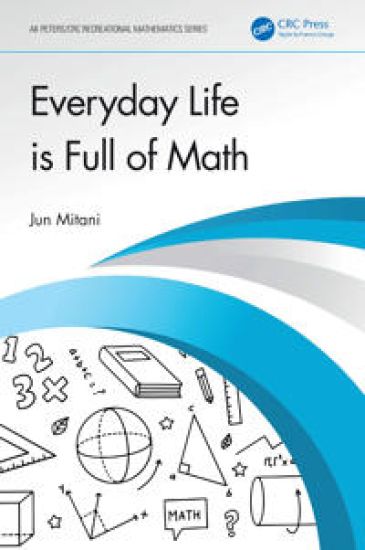
This book explores how mathematics appears in everyday life. It presents math in a fun and beautiful way using knowledge at the junior high and high school level. It is written for general readers, not for experts. The book avoids difficult math and instead focuses on how new ways of thinking and careful observation can reveal interesting math ideas. It is divided into 33 topics. These include familiar recreational math like tournament games, magic squares, and math tricks, as well as unique ideas like the geometry of origami and toy train tracks. Some of the topics in this book may be unfamiliar to readers outside Japan, as they are based on things the author has observed in daily life in Japan. However, this is also one of the unique features of the book. It offers readers a glimpse into everyday life in Japan. The goal is to help readers feel closer to math, rather than to provide deep academic content. Features • Easy to understand with junior high or high school level math knowledge • Introduces math found in real life, like origami • Includes many topics based on the author's popular social media posts (over 23,000 followers on X) • Connects math topics with hands-on activities and experiences • Helps readers see the world in a new way through a "mathematical way of thinking" • Focuses on intuitive and visual understanding, not difficult formulas or theories • Provide links (with QR codes) to puzzle apps developed by the author.
Everyday Life is Full of Math

Everyday Life is Full of Math

Jun Mitani

TAYLOR FRANCIS LTD
2026
nidottu
This book explores how mathematics appears in everyday life. It presents math in a fun and beautiful way using knowledge at the junior high and high school level. It is written for general readers, not for experts. The book avoids difficult math and instead focuses on how new ways of thinking and careful observation can reveal interesting math ideas. It is divided into 33 topics. These include familiar recreational math like tournament games, magic squares, and math tricks, as well as unique ideas like the geometry of origami and toy train tracks. Some of the topics in this book may be unfamiliar to readers outside Japan, as they are based on things the author has observed in daily life in Japan. However, this is also one of the unique features of the book. It offers readers a glimpse into everyday life in Japan. The goal is to help readers feel closer to math, rather than to provide deep academic content. Features • Easy to understand with junior high or high school level math knowledge • Introduces math found in real life, like origami • Includes many topics based on the author's popular social media posts (over 23,000 followers on X) • Connects math topics with hands-on activities and experiences • Helps readers see the world in a new way through a "mathematical way of thinking" • Focuses on intuitive and visual understanding, not difficult formulas or theories • Provide links (with QR codes) to puzzle apps developed by the author.
Design Techniques for Origami Tessellations

Design Techniques for Origami Tessellations

Yohei Yamamoto; Jun Mitani

TAYLOR FRANCIS LTD
2023
sidottu
Design Techniques for Origami Tessellations is both a collection of origami tessellations and a manual to design them.This book begins by explaining general design methods, the history and definitions of origami tessellations, and the geometric features of flat origami, before moving on to introduce a brand-new design method: the "twist-based design method." This method generates base parts that connect "twist patterns” (that can be folded with a twist) without using a lattice. Therefore, it can generate base parts such as regular pentagons, which cannot be generated with more conventional methods, and can generate new origami tessellations connected to them.Features:No proofs or formulas in the text and minimal jargon.Suitable for readers with a roughly middle school to high school level of mathematical background.Web application implementing the method described in this book is available, allowing the readers to design their own patterns.
Design Techniques for Origami Tessellations

Design Techniques for Origami Tessellations

Yohei Yamamoto; Jun Mitani

TAYLOR FRANCIS LTD
2023
nidottu
Design Techniques for Origami Tessellations is both a collection of origami tessellations and a manual to design them.This book begins by explaining general design methods, the history and definitions of origami tessellations, and the geometric features of flat origami, before moving on to introduce a brand-new design method: the "twist-based design method." This method generates base parts that connect "twist patterns” (that can be folded with a twist) without using a lattice. Therefore, it can generate base parts such as regular pentagons, which cannot be generated with more conventional methods, and can generate new origami tessellations connected to them.Features:No proofs or formulas in the text and minimal jargon.Suitable for readers with a roughly middle school to high school level of mathematical background.Web application implementing the method described in this book is available, allowing the readers to design their own patterns.
Curved-Folding Origami Design

Curved-Folding Origami Design

Jun Mitani

CRC Press
2019
nidottu
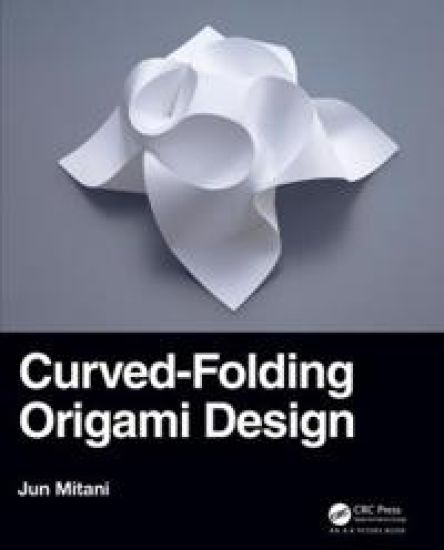
The origami introduced in this book is based on simple techniques. Some were previously known by origami artists and some were discovered by the author. Curved-Folding Origami Design shows a way to explore new area of origami composed of curved folds. Each technique is introduced in a step-by-step fashion, followed by some beautiful artwork examples. A commentary explaining the theory behind the technique is placed at the end of each chapter.Features Explains the techniques for designing curved-folding origami in seven chapters Contains many illustrations and photos (over 140 figures), with simple instructions Contains photos of 24 beautiful origami artworks, as well as their crease patterns Some basic theories behind the techniques are introduced
Curved-Folding Origami Design

Curved-Folding Origami Design

Jun Mitani

CRC Press
2019
sidottu
The origami introduced in this book is based on simple techniques. Some were previously known by origami artists and some were discovered by the author. Curved-Folding Origami Design shows a way to explore new area of origami composed of curved folds. Each technique is introduced in a step-by-step fashion, followed by some beautiful artwork examples. A commentary explaining the theory behind the technique is placed at the end of each chapter.Features Explains the techniques for designing curved-folding origami in seven chapters Contains many illustrations and photos (over 140 figures), with simple instructions Contains photos of 24 beautiful origami artworks, as well as their crease patterns Some basic theories behind the techniques are introduced
3D Origami Art

3D Origami Art

Jun Mitani

CRC Press
2017
sidottu
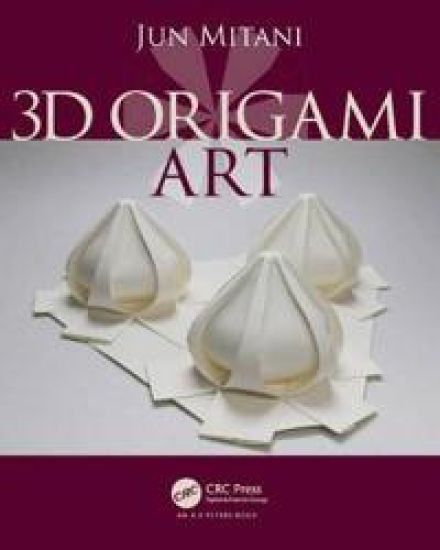
Easily Create Origami with Curved Folds and Surfaces Origami making shapes only through folding reveals a fascinating area of geometry woven with a variety of representations. The world of origami has progressed dramatically since the advent of computer programs to perform the necessary computations for origami design. 3D Origami Art presents the design methods underlying 3D creations derived from computation. It includes numerous photos and design drawings called crease patterns, which are available for download on the author‘s website. Through the book‘s clear figures and descriptions, readers can easily create geometric 3D structures out of a set of lines and curves drawn on a 2D plane. The author uses various shapes of sheets such as rectangles and regular polygons, instead of square paper, to create the origami. Many of the origami creations have a 3D structure composed of curved surfaces, and some of them have complicated forms. However, the background theory underlying all the creations is very simple. The author shows how different origami forms are designed from a common theory.
3D Origami Art

3D Origami Art

Jun Mitani

Productivity Press
2016
nidottu
Easily Create Origami with Curved Folds and SurfacesOrigami—making shapes only through folding—reveals a fascinating area of geometry woven with a variety of representations. The world of origami has progressed dramatically since the advent of computer programs to perform the necessary computations for origami design.3D Origami Art presents the design methods underlying 3D creations derived from computation. It includes numerous photos and design drawings called crease patterns, which are available for download on the author’s website. Through the book’s clear figures and descriptions, readers can easily create geometric 3D structures out of a set of lines and curves drawn on a 2D plane.The author uses various shapes of sheets such as rectangles and regular polygons, instead of square paper, to create the origami. Many of the origami creations have a 3D structure composed of curved surfaces, and some of them have complicated forms. However, the background theory underlying all the creations is very simple. The author shows how different origami forms are designed from a common theory.