Kirjojen hintavertailu. Mukana 12 595 353 kirjaa ja 12 kauppaa.

Kirjailija

Jun Sun

Kirjat ja teokset yhdessä paikassa: 12 kirjaa, julkaisuja vuosilta 2011-2026, suosituimpien joukossa Bioinformatic and Statistical Analysis of Microbiome Data. Vertaile teosten hintoja ja tarkista saatavuus suomalaisista kirjakaupoista.

12 kirjaa

Kirjojen julkaisuhaarukka 2011-2026.

Bioinformatic and Statistical Analysis of Microbiome Data

Bioinformatic and Statistical Analysis of Microbiome Data

Yinglin Xia; Jun Sun

Springer International Publishing AG
2024
nidottu
This unique book addresses the bioinformatic and statistical modelling and also the analysis of microbiome data using cutting-edge QIIME 2 and R software. It covers core analysis topics in both bioinformatics and statistics, which provides a complete workflow for microbiome data analysis: from raw sequencing reads to community analysis and statistical hypothesis testing. It includes real-world data from the authors’ research and from the public domain, and discusses the implementation of QIIME 2 and R for data analysis step-by-step. The data as well as QIIME 2 and R computer programs are publicly available, allowing readers to replicate the model development and data analysis presented in each chapter so that these new methods can be readily applied in their own research. Bioinformatic and Statistical Analysis of Microbiome Data is an ideal book for advanced graduate students and researchers in the clinical, biomedical, agricultural, and environmental fields, as well as those studying bioinformatics, statistics, and big data analysis.
Machine Learning for Microbiome Statistics

Machine Learning for Microbiome Statistics

Yinglin Xia; Jun Sun

TAYLOR FRANCIS LTD
2026
sidottu
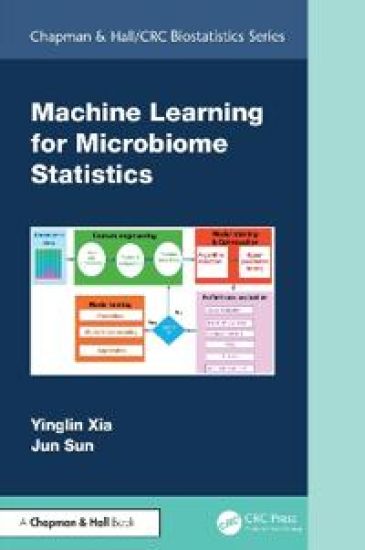
Machine learning fundamentally learns from the past experiences (seen data) to make predictions about future (unseen data). Predictions in nature are often uncertain. Microbiome data have unique characteristics, including high-dimensionality, over-dispersion, sparsity and zero-inflation, and heterogeneity. Thus, machine learning microbiome data for predicting the outcome of phenotypes is even more uncertain than learning those data from other fields. Machine Learning for Microbiome Statistics poses many challenges for evaluating the prediction performance using appropriate metrics and independent data validation. This unique book aims to address the challenges of machine learning statistics, emphasize the importance of performance valuation by appropriate metrics and independent data, and describe several important concepts of machine learning statistics, such as feature engineering and overfitting. It comprehensively reviews commonly used and newly developed machine learning models for microbiome research. Specifically, this book provides the step-by-step procedures to perform machine learning microbiome data, including feature engineering, algorithm selection and optimization, performance evaluation and model testing. It comments the benefits and limitations of using machine learning for microbiome statistics and remarks on the advantages and disadvantages of each machine learning algorithm. It will be an excellent reference book for students and academics in the field. Presents a thorough overview of machine learning algorithms for microbiome statistics. Performs step-by-step procedures to perform machine learning microbiome data, using important supervised learning algorithms, including classical, ensemble learning and tree-based models. Describes important concepts of machine learning, including bias and variance tradeoff, accuracy and precision, overfitting and underfitting, model complexity and interpretability, and feature engineering, Investigates and applies various cross-validation techniques step-by-step. Introduces confusion matrix and its derived measures. Comprehensively describes the properties of F1, Matthews’ correlation coefficient (MCC), area under the receiver operating characteristic curve (AUC-ROC), and area under the precision-recall curve (AUC-PR), as well as discusses their advantages and disadvantages when using for microbiome data. Offers all related R codes and the datasets from the authors’ first-hand microbiome research and publicly available data.
Electromagnetic Compatibility

Electromagnetic Compatibility

Yang Zhao; Wei Yan; Jun Sun; Mengxia Zhou; Zhaojuan Meng

SPRINGER VERLAG, SINGAPORE
2022
nidottu
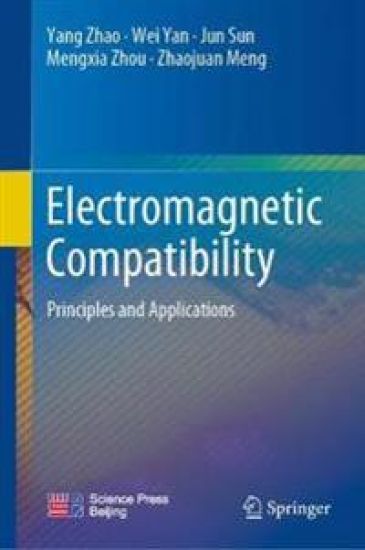
This book highlights principles and applications of electromagnetic compatibility (EMC). After introducing the basic concepts, research progress, standardizations and limitations of EMC, the book puts emphasis on presenting the generation mechanisms and suppression principles of conducted electromagnetic interference (EMI) noise, radiated EMI noise, and electromagnetic susceptibility (EMS) problems such as electrostatic discharge (ESD), electric fast transient (EFT) and surge. By showing EMC case studies and solved examples, the book provides effective solutions to practical engineering problems. Students and researchers will be able to use the book as practical reference for EMC-related measurements and problem- solution.
Electromagnetic Compatibility

Electromagnetic Compatibility

Yang Zhao; Wei Yan; Jun Sun; Mengxia Zhou; Zhaojuan Meng

SPRINGER VERLAG, SINGAPORE
2021
sidottu
This book highlights principles and applications of electromagnetic compatibility (EMC). After introducing the basic concepts, research progress, standardizations and limitations of EMC, the book puts emphasis on presenting the generation mechanisms and suppression principles of conducted electromagnetic interference (EMI) noise, radiated EMI noise, and electromagnetic susceptibility (EMS) problems such as electrostatic discharge (ESD), electric fast transient (EFT) and surge. By showing EMC case studies and solved examples, the book provides effective solutions to practical engineering problems. Students and researchers will be able to use the book as practical reference for EMC-related measurements and problem- solution.
Particle Swarm Optimisation

Particle Swarm Optimisation

Jun Sun; Choi-Hong Lai; Xiao-Jun Wu

CRC Press
2019
nidottu
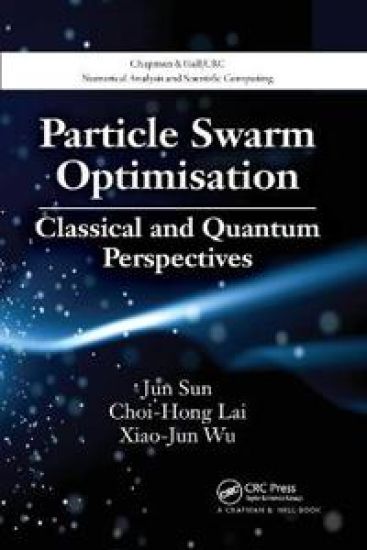
Although the particle swarm optimisation (PSO) algorithm requires relatively few parameters and is computationally simple and easy to implement, it is not a globally convergent algorithm. In Particle Swarm Optimisation: Classical and Quantum Perspectives, the authors introduce their concept of quantum-behaved particles inspired by quantum mechanics, which leads to the quantum-behaved particle swarm optimisation (QPSO) algorithm. This globally convergent algorithm has fewer parameters, a faster convergence rate, and stronger searchability for complex problems.The book presents the concepts of optimisation problems as well as random search methods for optimisation before discussing the principles of the PSO algorithm. Examples illustrate how the PSO algorithm solves optimisation problems. The authors also analyse the reasons behind the shortcomings of the PSO algorithm.Moving on to the QPSO algorithm, the authors give a thorough overview of the literature on QPSO, describe the fundamental model for the QPSO algorithm, and explore applications of the algorithm to solve typical optimisation problems. They also discuss some advanced theoretical topics, including the behaviour of individual particles, global convergence, computational complexity, convergence rate, and parameter selection. The text closes with coverage of several real-world applications, including inverse problems, optimal design of digital filters, economic dispatch problems, biological multiple sequence alignment, and image processing. MATLAB®, Fortran, and C++ source codes for the main algorithms are provided on an accompanying downloadable resources.Helping you numerically solve optimisation problems, this book focuses on the fundamental principles and applications of PSO and QPSO algorithms. It not only explains how to use the algorithms, but also covers advanced topics that establish the groundwork for understanding.
Statistical Analysis of Microbiome Data with R

Statistical Analysis of Microbiome Data with R

Yinglin Xia; Jun Sun; Ding-Geng Chen

Springer Verlag, Singapore
2018
nidottu
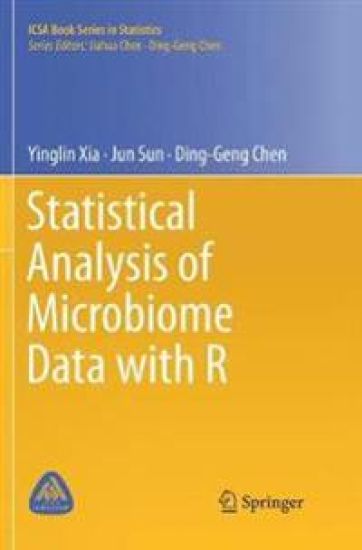
This unique book addresses the statistical modelling and analysis of microbiome data using cutting-edge R software. It includes real-world data from the authors’ research and from the public domain, and discusses the implementation of R for data analysis step by step. The data and R computer programs are publicly available, allowing readers to replicate the model development and data analysis presented in each chapter, so that these new methods can be readily applied in their own research. The book also discusses recent developments in statistical modelling and data analysis in microbiome research, as well as the latest advances in next-generation sequencing and big data in methodological development and applications. This timely book will greatly benefit all readers involved in microbiome, ecology and microarray data analyses, as well as other fields of research.
Particle Swarm Optimisation

Particle Swarm Optimisation

Jun Sun; Choi-Hong Lai; Xiao-Jun Wu

CRC Press Inc
2011
sidottu
Although the particle swarm optimisation (PSO) algorithm requires relatively few parameters and is computationally simple and easy to implement, it is not a globally convergent algorithm. In Particle Swarm Optimisation: Classical and Quantum Perspectives, the authors introduce their concept of quantum-behaved particles inspired by quantum mechanics, which leads to the quantum-behaved particle swarm optimisation (QPSO) algorithm. This globally convergent algorithm has fewer parameters, a faster convergence rate, and stronger searchability for complex problems.The book presents the concepts of optimisation problems as well as random search methods for optimisation before discussing the principles of the PSO algorithm. Examples illustrate how the PSO algorithm solves optimisation problems. The authors also analyse the reasons behind the shortcomings of the PSO algorithm.Moving on to the QPSO algorithm, the authors give a thorough overview of the literature on QPSO, describe the fundamental model for the QPSO algorithm, and explore applications of the algorithm to solve typical optimisation problems. They also discuss some advanced theoretical topics, including the behaviour of individual particles, global convergence, computational complexity, convergence rate, and parameter selection. The text closes with coverage of several real-world applications, including inverse problems, optimal design of digital filters, economic dispatch problems, biological multiple sequence alignment, and image processing. MATLAB®, Fortran, and C++ source codes for the main algorithms are provided on an accompanying downloadable resources.Helping you numerically solve optimisation problems, this book focuses on the fundamental principles and applications of PSO and QPSO algorithms. It not only explains how to use the algorithms, but also covers advanced topics that establish the groundwork for understanding.
Microbiome Statistics Set

Microbiome Statistics Set

Yinglin Xia; Jun Sun

TAYLOR FRANCIS LTD
2026
muu
Microbiome Statistics Set addresses the statistical analysis of correlation, association, interaction, and composition in microbiome research and talks about the challenges of machine learning statistics with an emphasis on the importance of performance valuation by appropriate metrics and independent data. The books define the study of the microbiome as a hypothesis-driven experimental science and investigate challenges for statistical analysis of microbiome data using the standard statistical methods while also providing the step-by-step procedures to perform machine learning microbiome data, including feature engineering, algorithm selection and optimization, performance evaluation and model testing. They comment on the benefits and limitations of using machine learning for microbiome statistics and remarks on the advantages and disadvantages of each machine learning algorithm. This set consists of 15 chapters on applied microbiome statistics and 19 chapters on machine learning for microbiome statistics and is an excellent reference for researchers, students, academics and data analysts in the field. Key Features: · Discusses the issues of statistical analysis of microbiome data: high dimensionality, compositionality, sparsity, overdispersion, zero-inflation, and heterogeneity. · Describes important concepts of machine learning, including bias and variance tradeoff, accuracy and precision, overfitting and underfitting, model complexity and interpretability, and feature engineering. · Investigates statistical methods on multiple comparisons and multiple hypothesis testing and applications to microbiome data. · Introduces a series of exploratory tools to visualize composition and correlation of microbial taxa by barplot, heatmap, and correlation plot. · Introduces confusion matrix and its derived measures. Comprehensively describes the properties of F1, Matthews’ correlation coefficient (MCC), area under the receiver operating characteristic curve (AUC-ROC), and area under the precision-recall curve (AUC-PR), as well as discusses their advantages and disadvantages when using for microbiome data. · Employs the Kruskal–Wallis rank-sum test to perform model selection for further multi-omics data integration. · Offers all related R codes and the datasets from the authors’ first-hand microbiome research and publicly available data.
Applied Microbiome Statistics

Applied Microbiome Statistics

Yinglin Xia; Jun Sun

TAYLOR FRANCIS LTD
2024
sidottu
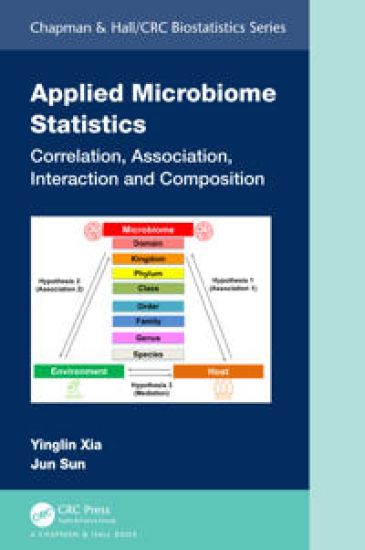
This unique book officially defines microbiome statistics as a specific new field of statistics and addresses the statistical analysis of correlation, association, interaction, and composition in microbiome research. It also defines the study of the microbiome as a hypothesis-driven experimental science and describes two microbiome research themes and six unique characteristics of microbiome data, as well as investigating challenges for statistical analysis of microbiome data using the standard statistical methods. This book is useful for researchers of biostatistics, ecology, and data analysts.Presents a thorough overview of statistical methods in microbiome statistics of parametric and nonparametric correlation, association, interaction, and composition adopted from classical statistics and ecology and specifically designed for microbiome research.Performs step-by-step statistical analysis of correlation, association, interaction, and composition in microbiome data.Discusses the issues of statistical analysis of microbiome data: high dimensionality, compositionality, sparsity, overdispersion, zero-inflation, and heterogeneity.Investigates statistical methods on multiple comparisons and multiple hypothesis testing and applications to microbiome data.Introduces a series of exploratory tools to visualize composition and correlation of microbial taxa by barplot, heatmap, and correlation plot.Employs the Kruskal–Wallis rank-sum test to perform model selection for further multi-omics data integration.Offers R code and the datasets from the authors’ real microbiome research and publicly available data for the analysis used.Remarks on the advantages and disadvantages of each of the methods used.
Bioinformatic and Statistical Analysis of Microbiome Data

Bioinformatic and Statistical Analysis of Microbiome Data

Yinglin Xia; Jun Sun

Springer International Publishing AG
2023
sidottu
This unique book addresses the bioinformatic and statistical modelling and also the analysis of microbiome data using cutting-edge QIIME 2 and R software. It covers core analysis topics in both bioinformatics and statistics, which provides a complete workflow for microbiome data analysis: from raw sequencing reads to community analysis and statistical hypothesis testing. It includes real-world data from the authors’ research and from the public domain, and discusses the implementation of QIIME 2 and R for data analysis step-by-step. The data as well as QIIME 2 and R computer programs are publicly available, allowing readers to replicate the model development and data analysis presented in each chapter so that these new methods can be readily applied in their own research. Bioinformatic and Statistical Analysis of Microbiome Data is an ideal book for advanced graduate students and researchers in the clinical, biomedical, agricultural, and environmental fields, as well as those studying bioinformatics, statistics, and big data analysis.
Statistical Analysis of Microbiome Data with R

Statistical Analysis of Microbiome Data with R

Yinglin Xia; Jun Sun; Ding-Geng Chen

Springer Verlag, Singapore
2018
sidottu
This unique book addresses the statistical modelling and analysis of microbiome data using cutting-edge R software. It includes real-world data from the authors’ research and from the public domain, and discusses the implementation of R for data analysis step by step. The data and R computer programs are publicly available, allowing readers to replicate the model development and data analysis presented in each chapter, so that these new methods can be readily applied in their own research. The book also discusses recent developments in statistical modelling and data analysis in microbiome research, as well as the latest advances in next-generation sequencing and big data in methodological development and applications. This timely book will greatly benefit all readers involved in microbiome, ecology and microarray data analyses, as well as other fields of research.