Kirjojen hintavertailu. Mukana 12 390 323 kirjaa ja 12 kauppaa.
Kirjailija
Jürgen Kocka
Kirjat ja teokset yhdessä paikassa: 14 kirjaa, julkaisuja vuosilta 1980-2026, suosituimpien joukossa Germany’s Struggle for Modernity. Vertaile teosten hintoja ja tarkista saatavuus suomalaisista kirjakaupoista.
In the historiography of modern Germany, the nineteenth century’s innovations mark a period of seismic change. From accelerating demographic growth to growing secularization and the rise of nationalism, it was a century which laid the foundations for both a civil society and the dictatorships of the twentieth century. In this comprehensive history of Germany from 1780 to 1918, Jürgen Kocka re-examines the transformative interactions that took place between society, economy, culture, and politics. Innovatively resituating these developments within a wider context of conflict and transformation in Europe, this book illuminates new ways to understand the emergence of classical modernity within the nineteenth century.
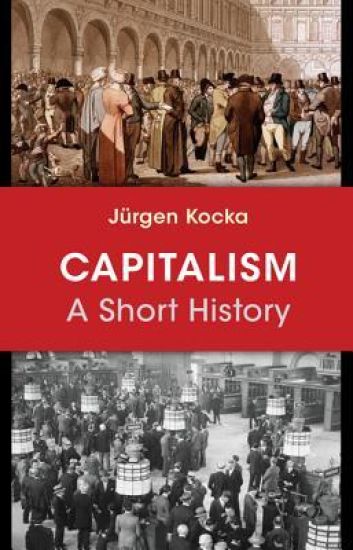
Siden finanskrisen rammet verden i 2008, har «kapitalismen» igjen vært gjenstand for kritikk. Etter Sovjetunionens fall, da det eneste «alternative systemet» brøt sammen, fremsto kapitalismen som overlegen alle andre økonomiske organisasjonsformer, og på sett og vis som historiens endestasjon. Omveltningene som fulgte med finans.krisen, og de uforutsigbare følgene av dem, har imidlertid gitt ny aktualitet til spørsmål vi trodde var avleggs: Hva er «kapitalismens» fortrinn og ulemper, hvilke motsetninger og utviklingsmuligheter bor i den? Jürgen Kocka, en av de ledende ekspertene på dette emnet i Tyskland og internasjonalt, leverer her en grundig innføring i kapitalismens opprinnelse og framvekst fra tidlig nytid og framover, samt dens globale utbredelse på 1800- og 1900-tallet. Han tar ikke bare for seg handels- og industrialiseringsprosesser, men også de varige endringene i arbeidsliv og levekår. Denne innføringen gir dermed både et suverent historisk overblikk og en kritisk analyse av det økonomiske regimet som i dag er med på å styre menneskers handlinger, selv i de mest avsidesliggende hjørner av verden.
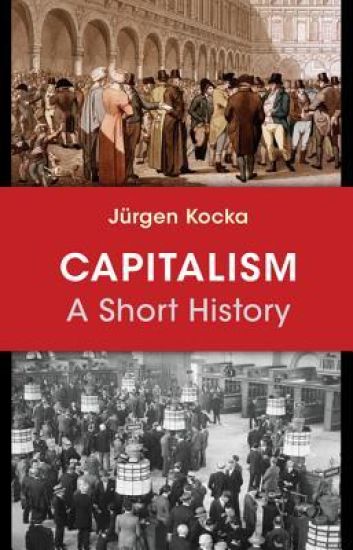
In this authoritative and accessible book, one of the world's most renowned historians provides a concise and comprehensive history of capitalism within a global perspective from its medieval origins to the 2008 financial crisis and beyond. From early commercial capitalism in the Arab world, China, and Europe, to nineteenth- and twentieth-century industrialization, to today's globalized financial capitalism, Jurgen Kocka offers an unmatched account of capitalism, one that weighs its great achievements against its great costs, crises, and failures. Based on intensive research, the book puts the rise of capitalist economies in social, political, and cultural context, and shows how their current problems and foreseeable future are connected to a long history. Sweeping in scope, the book describes how capitalist expansion was connected to colonialism; how industrialism brought unprecedented innovation, growth, and prosperity but also increasing inequality; and how managerialism, financialization, and globalization later changed the face of capitalism. The book also addresses the idea of capitalism in the work of thinkers such as Marx, Weber, and Schumpeter, and chronicles how criticism of capitalism is as old as capitalism itself, fed by its persistent contradictions and recurrent emergencies. Authoritative and accessible, Capitalism is an enlightening account of a force that has shaped the modern world like few others.
In this authoritative and accessible book, one of the world's most renowned historians provides a concise and comprehensive history of capitalism within a global perspective from its medieval origins to the 2008 financial crisis and beyond. From early commercial capitalism in the Arab world, China, and Europe, to nineteenth- and twentieth-century industrialization, to today's globalized financial capitalism, Jurgen Kocka offers an unmatched account of capitalism, one that weighs its great achievements against its great costs, crises, and failures. Based on intensive research, the book puts the rise of capitalist economies in social, political, and cultural context, and shows how their current problems and foreseeable future are connected to a long history. Sweeping in scope, the book describes how capitalist expansion was connected to colonialism; how industrialism brought unprecedented innovation, growth, and prosperity but also increasing inequality; and how managerialism, financialization, and globalization later changed the face of capitalism. The book also addresses the idea of capitalism in the work of thinkers such as Marx, Weber, and Schumpeter, and chronicles how criticism of capitalism is as old as capitalism itself, fed by its persistent contradictions and recurrent emergencies. Authoritative and accessible, Capitalism is an enlightening account of a force that has shaped the modern world like few others.
Globalization presents major challenges to scholars of history. Different variants of global history and world history compete with, and transform, more traditional approaches of national, regional, and local scope, accompanied by new forms of international and transcultural cooperation. However, as this book shows, these transnational trends in the historical discipline are not without precedent. Based on painstaking research, this volume reconstructs the history of the International Congresses of Historians from the first one in The Hague, 1898, to the nineteenth in Oslo, 2000. It also tells the story of the International Committee of the Historical Sciences, the world organization of historians, which was founded, with much American support, in 1926 and today includes 54 national committees and 28 affiliated international organizations from all parts of the world. Karl Dietrich Erdmann, former president of this organization, covered the story up to 1985. Wolfgang J. Mommsen continued it into the twenty-first century. This book traces and analyzes the changes of historians’ problems, topics, and methods, as reflected at their International Congresses and in the work of their international organization. It describes the cleavages, debates, and forging of ties among historians from different parts of the world and ideological camps. It demonstrates how historians fought against academic nationalism–or succumbed to its seduction. It shows how the Cold War polarized the world of historians whereas the International Congresses offered a platform for bridging the gap. Since 1990, they have helped to redefine the relationship between historians from the West and from other parts of the world. The internationalization of the study of history is reaching a new quality. Karl Dietrich Erdmann†’s book was first published in German in 1987. It has been translated, updated, and edited for an international audience of the twenty-first century.
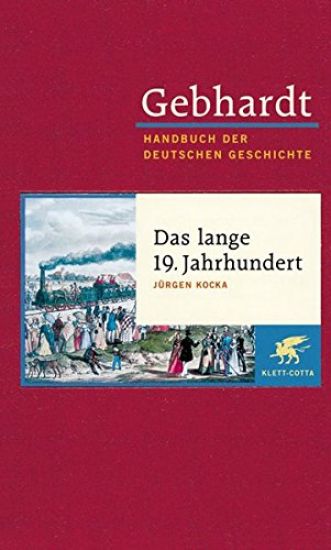
Der neue Gebhardt Das bedeutendste Standardwerk zur deutschen Geschichte in 24 Bänden - neu aufgelegt. Band 13: Das lange 19. Jahrhundert Das lange 19. Jahrhundert erlebte die Geburt der klassischen Moderne. Es begann bereits mit der Französischen Revolution und endete mit dem Ersten Weltkrieg. Es war die bürgerlichste Epoche der deutschen Geschichte, geprägt von Industrialisierung, Kapitalismus, Nationalismus, Klassenkonflikten und ausgeprägter Ungleichheit der Geschlechter. Es war die Zeit der großen Migrationen und der entstehenden Zivilgesellschaft.
Jürgen Kocka is one of the foremost historians of Germany whose work has been devoted to the integration of different genres of the social and economic history of Europe during the period of industrialization. This collection of essays gives a representative sample of his effort to develop, by reference to Marx and Weber, new and powerful analytical tools for understanding the dynamics of modern industrial societies.
Jürgen Kocka is one of the foremost historians of Germany whose work has been devoted to the integration of different genres of the social and economic history of Europe during the period of industrialization. This collection of essays gives a representative sample of his effort to develop, by reference to Marx and Weber, new and powerful analytical tools for understanding the dynamics of modern industrial societies.
1m folgenden werden die Er6ebnisse eines Projekts vorgelegt, an dem die Verfasser dieses Berichts 1977-1979 mit jeweils einem Teil ihrer Zeit gemeinsam gearbeitet haben. Das Projekt stand unter der Leitung des Unterzeichneten und trug den Titel "Vergleichende Untersuchungen zur Geschichte der Familie in Westfalen von ca. 1770 bis ca. 1870, unter beson- derer BerUcksichtigung der Familien des Adels, bauerlicher Gruppen und der entstehenden Lohnarbeiterschaft". Es wurde vom Ministerium fUr Wissenschaft und Forschung des Landes NRW in den Jahren 1977 und 1978 finanziel1 unterstUtzt. Das Projekt entstand im Uberschneidungsbereich von vier Dissertationen, die zum Teil bereits vor Beginn des Projektes weit fortgeschritten waren (Reif, Mooser, Ditt), zum Tei1 im Zusammenhang mit diesem Projekt konzipiert wurden (SchUren). Es handelt sich um vier Dissertationen, die an der Fakultat fUr Geschichtswissenschaft der Universitat . ielefeld einge- reicht wurden oder demnachst eingereicht werden: um die 1977 eingereichte und 1979 unter dem Tite1 "Westfalischer Adel 1770-1860. Vom Herrschaftsstand zur regiona1en Elite" erschienene Arbeit von Heinz Reif; um Josef Moosers 1978 eingereichte Dissertation "Bauerliche Gese1lschaft im Zeit- alter der Revolution 1789-1848. Zur Sozia1geschichte des politischen Verha1tens 1andlicher Unterschichten im ostlichen Westfalen"; aus der kurz vor dem AbschluB stehenden Disser- tation "Industria1isierung, Arbeiterschaft und Arbeiter- bewegung in Bielefeld 1850-1914" von Karl pitt; und um die voraussichtlich 1981 beendete Dissertation von Reinhard SchUren mit dem Arbeitstitel "Industrialisierung und Arbeiter- schaft im Baumwollindustriebezirk des westfalisch-nieder- l ndischen Grenzraums im 19. Jahrhundert".