
Kirjailija
Jürgen Osterhammel
Kirjat ja teokset yhdessä paikassa: 23 kirjaa, julkaisuja vuosilta 2003-2025, suosituimpien joukossa Geschichtswissenschaft Jenseits Des Nationalstaats: Studien Zu Beziehungsgeschichte Und Zivilisationsvergleich. Vertaile teosten hintoja ja tarkista saatavuus suomalaisista kirjakaupoista.
Mukana myös kirjoitusasut: Jurgen Osterhammel
23 kirjaa
Kirjojen julkaisuhaarukka 2003-2025.


In dieser grandiosen Weltgeschichte des 19. Jahrhunderts erzählt Jürgen Osterhammel kundig, schwungvoll und facettenreich die Geschichte einer Welt im Umbruch. Aus einer Fülle an Material und einer Vielzahl unterschiedlicher Blickwinkel entsteht dabei das tiefgründige Porträt einer faszinierenden Epoche. Osterhammel fragt nach Strukturen und Mustern, markiert Zäsuren und Kontinuitäten, Gemeinsamkeiten und Unterschiede. Seine kulturübergreifenden, thematisch aufgefächerten Darstellungen und Analysen verbinden sich dabei zu einem kühnen Geschichtspanorama, das nicht nur traditionelle eurozentrische Ansätze weit hinter sich läßt, sondern auch erheblich mehr bietet als die gängigen historiographischen Paradigmen wie Industrialisierung oder Kolonialismus. Die Herausbildung unterschiedlicher Wissensgesellschaften, das Verhältnis Mensch-Natur oder der Umgang mit Krankheit und Andersartigkeit kommen darin ebenso zur Sprache wie Besonderheiten der Urbanisierung, verschiedene Formen von Bürgerlichkeit oder die Gegensätze von Migration und Seßhaftigkeit, Anpassung und Revolte, Säkularisierung und Religiosität. Zugleich stellt Osterhammel immer wieder Bezüge zur Gegenwart her. Auf der Höhe der Forschung, engagiert geschrieben und zugleich wohltuend unideologisch, ist sein Werk nicht nur ein unverzichtbares Handbuch für jeden Historiker. Seine plastischen Schilderungen ziehen auch den interessierten Laien in den Bann eines Jahrhunderts, dessen historische Bedeutung in dieser fulminanten Epochengeschichte ganz neu ausgelotet wird

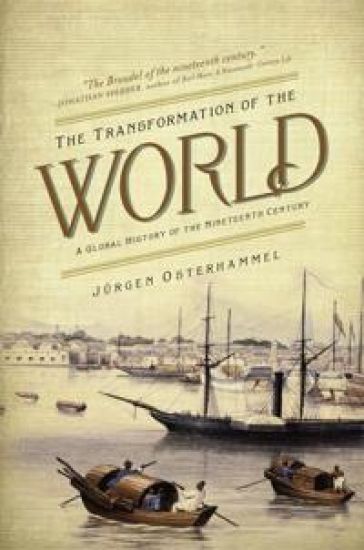
A monumental history of the nineteenth century, The Transformation of the World offers a panoramic and multifaceted portrait of a world in transition. Jurgen Osterhammel, an eminent scholar who has been called the Braudel of the nineteenth century, moves beyond conventional Eurocentric and chronological accounts of the era, presenting instead a truly global history of breathtaking scope and towering erudition. He examines the powerful and complex forces that drove global change during the "long nineteenth century," taking readers from New York to New Delhi, from the Latin American revolutions to the Taiping Rebellion, from the perils and promise of Europe's transatlantic labor markets to the hardships endured by nomadic, tribal peoples across the planet. Osterhammel describes a world increasingly networked by the telegraph, the steamship, and the railways. He explores the changing relationship between human beings and nature, looks at the importance of cities, explains the role slavery and its abolition played in the emergence of new nations, challenges the widely held belief that the nineteenth century witnessed the triumph of the nation-state, and much more. This is the highly anticipated English edition of the spectacularly successful and critically acclaimed German book, which is also being translated into Chinese, Polish, Russian, and French. Indispensable for any historian, The Transformation of the World sheds important new light on this momentous epoch, showing how the nineteenth century paved the way for the global catastrophes of the twentieth century, yet how it also gave rise to pacifism, liberalism, the trade union, and a host of other crucial developments.
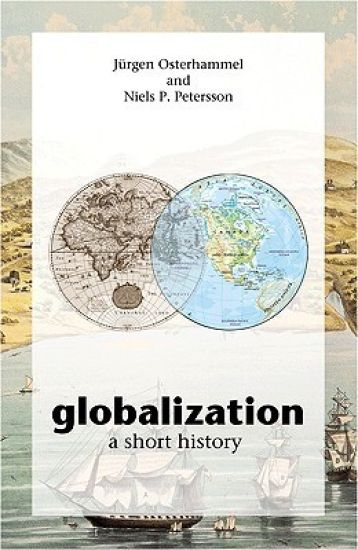
"Globalization" has become a popular buzzword for explaining today's world. The expression achieved terminological stardom in the 1990s and was soon embraced by the general public and integrated into numerous languages. But is this much-discussed phenomenon really an invention of modern times? In this work, Jurgen Osterhammel and Niels Petersson make the case that globalization is not so new, after all. Arguing that the world did not turn "global" overnight, the book traces the emergence of globalization over the past seven or eight centuries. In fact, the authors write, the phenomenon can be traced back to early modern large-scale trading, for example, the silk trade between China and the Mediterranean region, the shipping routes between the Arabian Peninsula and India, and the more frequently traveled caravan routes of the Near East and North Africa--all conduits for people, goods, coins, artwork, and ideas. Osterhammel and Petersson argue that the period from 1750 to 1880--an era characterized by the development of free trade and the long-distance impact of the industrial revolution--represented an important phase in the globalization phenomenon. Moreover, they demonstrate how globalization in the mid-twentieth century opened up the prospect of global destruction though nuclear war and ecological catastrophe. In the end, the authors write, today's globalization is part of a long-running transformation and has not ushered in a "global age" radically different from anything that came before. This book will appeal to historians, economists, and anyone in the social sciences who is interested in the historical emergence of globalization.

Max Weber (1894-1920) is generally recognized as one of the founding fathers of modern sociology. This collection pays homage to his continuing influence, not just within sociology, but also political theory, science and religion. The books carefully chosen for this collection provide an overview of all his most important ideas. They are critically assessed and analyzed to gain a real comprehension of his life's work.
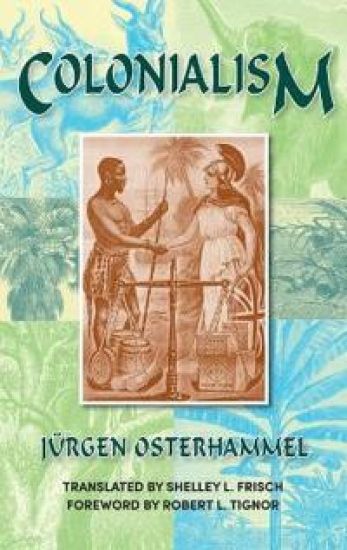
Osterhammel's book represents a new approach to the subject. The concise but sweeping study encompasses the process of colonization and decolonization from the early modern period to the twentieth century. Virtually all other studies to date have looked at strategies of colonial conquest, exploitation, and rule from the imperial point of view. Osterhammel shows that the colonial situation developed in ways that duplicated neither the metropolis nor the pre-colonial society, but instead blended these and added a new direction characteristic only of colonial realms. He emphasizes that the Europeans were normally not considered dangerous invaders by local populations until they threatened the traditional cultures with missionaries, European schools, and bureaucracy.
Osterhammel's book represents a new approach to the subject. The concise but sweeping study encompasses the process of colonization and decolonization from the early modern period to the twentieth century. Virtually all other studies to date have looked at strategies of colonial conquest, exploitation, and rule from the imperial point of view. Osterhammel shows that the colonial situation developed in ways that duplicated neither the metropolis nor the pre-colonial society, but instead blended these and added a new direction characteristic only of colonial realms. He emphasizes that the Europeans were normally not considered dangerous invaders by local populations until they threatened the traditional cultures with missionaries, European schools, and bureaucracy.
Geschichtswissenschaft Jenseits Des Nationalstaats: Studien Zu Beziehungsgeschichte Und Zivilisationsvergleich
Jurgen Osterhammel
Vandenhoeck Ruprecht
2003
nidottu
Geschichte in weltbürgerlicher Absicht. - Jürgen Osterhammels Buch ist ein Plädoyer - ein Plädoyer für die Integration aller Regionen der Erde in den Horizont einer "normalen" Geschichtswissenschaft. Afrika, Amerika, Asien und Ozeanien sollten nicht in einem Teilbereich "Außereuropäische Geschichte" abgehandelt werden, sondern selbstverständlicher Bestandteil einer Historie mit universalem Blickwinkel sein. - Die deutsche Geschichtswissenschaft ist in weiten Teilen von einer nationalgeschichtlichen Perspektive gekennzeichnet. Die in diesem Band gesammelten Aufsätze sind als Einspruch gegen diese einseitige Prägung zu verstehen. Jürgen Osterhammel behandelt zwischen den Polen Vergleich und Beziehungsgeschichte verschiedene Themen der Weltgeschichte, wobei der Begriff "Beziehung" sich nicht auf dem Bereich der internationalen Politik beschränkt, sondern andere Arten von Beziehungen wie etwa Kulturtransfers in gleicher Weise einbezieht. Auch geht es in diesem Band nicht um "Außereuropäische Geschichte" - letztlich eine Kategorie einer auf Europa zentrierten Historie - sondern vielmehr darum, Amerika, Asien, Afrika und Ozeanien in den Horizont einer "normalen" Geschichtswissenschaft zu integrieren. Neben eine nationalgeschichtliche und eine auf Europa zielende Historie könnte so eine Geschichte in weltbürgerlicher Absicht treten. Dabei geht es nicht um Antworten von globaler Gültigkeit, sondern um Fragen in einem universalen Horizont. - Der Autor: Dr. Jürgen Osterhammel ist Professor für Neuere und Neueste Geschichte an der Universität Konstanz.


The Global Bourgeoisie
Christof Dejung; David Motadel; Jürgen Osterhammel
Princeton University Press
2019
pokkari
The first global history of the middle class While the nineteenth century has been described as the golden age of the European bourgeoisie, the emergence of the middle class and bourgeois culture was by no means exclusive to Europe. The Global Bourgeoisie explores the rise of the middle classes around the world during the age of empire. Bringing together eminent scholars, this landmark essay collection compares middle-class formation in various regions, highlighting differences and similarities, and assesses the extent to which bourgeois growth was tied to the increasing exchange of ideas and goods. The contributors indicate that the middle class was from its very beginning, even in Europe, the result of international connections and entanglements.Essays are grouped into six thematic sections: the political history of middle-class formation, the impact of imperial rule on the colonial middle class, the role of capitalism, the influence of religion, the obstacles to the middle class beyond the Western and colonial world, and, lastly, reflections on the creation of bourgeois cultures and global social history. Placing the establishment of middle-class society into historical context, this book shows how the triumph or destabilization of bourgeois values can shape the liberal world order.The Global Bourgeoisie irrevocably changes the understanding of how an important social class came to be.
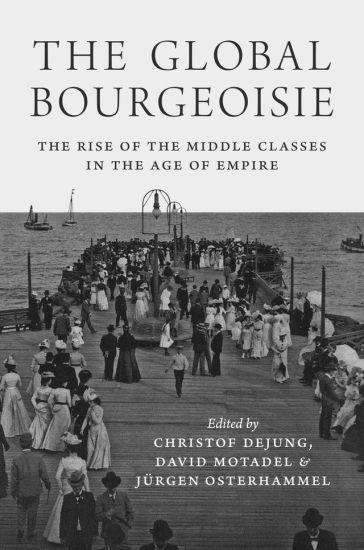
The Global Bourgeoisie
Christof Dejung; David Motadel; Jürgen Osterhammel
PRINCETON UNIVERSITY PRESS
2019
sidottu
The first global history of the middle class While the nineteenth century has been described as the golden age of the European bourgeoisie, the emergence of the middle class and bourgeois culture was by no means exclusive to Europe. The Global Bourgeoisie explores the rise of the middle classes around the world during the age of empire. Bringing together eminent scholars, this landmark essay collection compares middle-class formation in various regions, highlighting differences and similarities, and assesses the extent to which bourgeois growth was tied to the increasing exchange of ideas and goods. The contributors indicate that the middle class was from its very beginning, even in Europe, the result of international connections and entanglements.Essays are grouped into six thematic sections: the political history of middle-class formation, the impact of imperial rule on the colonial middle class, the role of capitalism, the influence of religion, the obstacles to the middle class beyond the Western and colonial world, and, lastly, reflections on the creation of bourgeois cultures and global social history. Placing the establishment of middle-class society into historical context, this book shows how the triumph or destabilization of bourgeois values can shape the liberal world order.The Global Bourgeoisie irrevocably changes the understanding of how an important social class came to be.
How Enlightenment Europe rediscovered its identity by measuring itself against the great civilizations of AsiaDuring the long eighteenth century, Europe's travelers, scholars, and intellectuals looked to Asia in a spirit of puzzlement, irony, and openness. In this panoramic book, Jürgen Osterhammel tells the story of the European Enlightenment's nuanced encounter with the great civilizations of the East, from the Ottoman Empire and India to China and Japan. He shows how major figures such as Leibniz, Voltaire, and Gibbon took a keen interest in Asian culture and challenges the notion that Europe's formative engagement with the non-European world was invariably marred by an imperial gaze and presumptions of Western superiority. A momentous work by one of Europe's most eminent historians, Unfabling the East brings the sights and sounds of this tumultuous age vividly to life. It takes readers on a thrilling voyage to the farthest shores, bringing back vital insights for our own multicultural age.
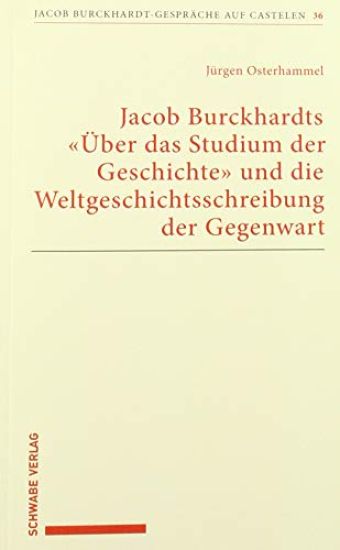
Jacob Burckhardts 'Uber Das Studium Der Geschichte' Und Die Weltgeschichtsschreibung Der Gegenwart
Jurgen Osterhammel
Schwabe Verlagsgruppe AG
2019
nidottu
Jacob Burckhardts Vorlesungen Uber das Studium der Geschichte aus den Jahren 1868/69, die seit 1905 als Weltgeschichtliche Betrachtungen beruhmt geworden sind, dienen heutzutage vielfach nur noch als Sammlung markiger Zitate. Auch die Welt- und Globalgeschichtsschreibung, die heute wieder viel Interesse findet, hat Burckhardt als Ideengeber kaum beachtet. Dieser Band setzt auf eine neue Lekture, die von einer Spannung ausgeht, die Burckhardts Text durchzieht: Einerseits fordert er ein Totalbild der Menschheit; andererseits verfolgt er eine nicht-totale Methodologie, die sich von den ublichen Bausteinen der Weltgeschichtsschreibung fernhalt: geschlossenen Kulturen, klar abgegrenzten Epochen und langfristigen Gesetzmassigkeiten. Der Text wird vor dem Hintergrund seiner Entstehungszeit betrachtet und zugleich auf sein bis heute fortwirkendes Anregungspotenzial befragt.
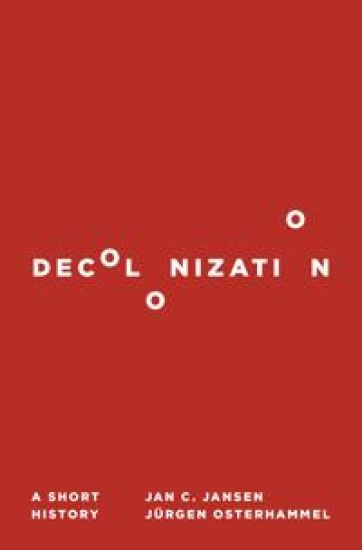
A concise and accessible history of decolonization in the twentieth centuryThe end of colonial rule in Asia, Africa, and the Caribbean was one of the most important and dramatic developments of the twentieth century. In the decades after World War II, dozens of new states emerged as actors in global politics. Imperial regimes collapsed, some more or less peacefully, others amid mass violence. This book takes an incisive look at decolonization and its long-term consequences, revealing it to be a coherent yet multidimensional process at the heart of modern history. Jan Jansen and Jürgen Osterhammel provide a comparative perspective on the decolonization process, shedding light on its key aspects while taking into account the unique regional and imperial contexts in which it unfolded. They examine the economic repercussions of decolonization and its impact on international power structures, its consequences for envisioning world order, and the long shadow it continues to cast over new states and former colonial powers alike.

Unfabling the East: The Enlightenment's Encounter with Asia
Jurgen Osterhammel
PRINCETON UNIVERSITY PRESS
2018
muu
How Enlightenment Europe rediscovered its identity by measuring itself against the great civilizations of AsiaDuring the long eighteenth century, Europe's travelers, scholars, and intellectuals looked to Asia in a spirit of puzzlement, irony, and openness. In this panoramic and colorful book, Jurgen Osterhammel tells the story of the European Enlightenment's nuanced encounter with the great civilizations of the East, from the Ottoman Empire and India to China and Japan.Here is the acclaimed book that challenges the notion that Europe's formative engagement with the non-European world was invariably marred by an imperial gaze and presumptions of Western superiority. Osterhammel shows how major figures such as Leibniz, Voltaire, Gibbon, and Hegel took a keen interest in Asian culture and history, and introduces lesser-known scientific travelers, colonial administrators, Jesuit missionaries, and adventurers who returned home from Asia bearing manuscripts in many exotic languages, huge collections of ethnographic data, and stories that sometimes defied belief. Osterhammel brings the sights and sounds of this tumultuous age vividly to life, from the salons of Paris and the lecture halls of Edinburgh to the deserts of Arabia, the steppes of Siberia, and the sumptuous courts of Asian princes. He demonstrates how Europe discovered its own identity anew by measuring itself against its more senior continent, and how it was only toward the end of this period that cruder forms of Eurocentrism--and condescension toward Asia--prevailed.A momentous work by one of Europe's most eminent historians, Unfabling the East takes readers on a thrilling voyage to the farthest shores, bringing back vital insights for our own multicultural age.
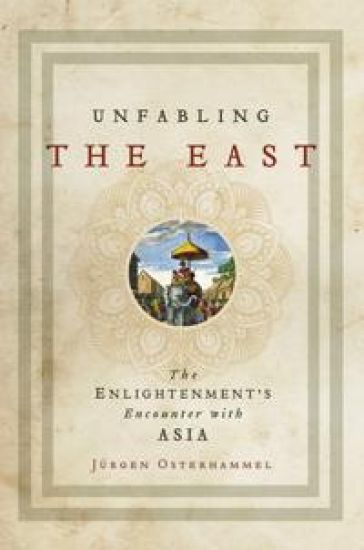
How Enlightenment Europe rediscovered its identity by measuring itself against the great civilizations of AsiaDuring the long eighteenth century, Europe's travelers, scholars, and intellectuals looked to Asia in a spirit of puzzlement, irony, and openness. In this panoramic and colorful book, Jürgen Osterhammel tells the story of the European Enlightenment's nuanced encounter with the great civilizations of the East, from the Ottoman Empire and India to China and Japan.Here is the acclaimed book that challenges the notion that Europe's formative engagement with the non-European world was invariably marred by an imperial gaze and presumptions of Western superiority. Osterhammel shows how major figures such as Leibniz, Voltaire, Gibbon, and Hegel took a keen interest in Asian culture and history, and introduces lesser-known scientific travelers, colonial administrators, Jesuit missionaries, and adventurers who returned home from Asia bearing manuscripts in many exotic languages, huge collections of ethnographic data, and stories that sometimes defied belief. Osterhammel brings the sights and sounds of this tumultuous age vividly to life, from the salons of Paris and the lecture halls of Edinburgh to the deserts of Arabia, the steppes of Siberia, and the sumptuous courts of Asian princes. He demonstrates how Europe discovered its own identity anew by measuring itself against its more senior continent, and how it was only toward the end of this period that cruder forms of Eurocentrism--and condescension toward Asia—prevailed.A momentous work by one of Europe's most eminent historians, Unfabling the East takes readers on a thrilling voyage to the farthest shores, bringing back vital insights for our own multicultural age.