Kirjojen hintavertailu. Mukana 12 657 676 kirjaa ja 12 kauppaa.

Kirjailija

Jürgen Rehm

Kirjat ja teokset yhdessä paikassa: 4 kirjaa, julkaisuja vuosilta 2002-2022, suosituimpien joukossa Wenn dich deine Plagen kratzen .... Vertaile teosten hintoja ja tarkista saatavuus suomalaisista kirjakaupoista.

4 kirjaa

Kirjojen julkaisuhaarukka 2002-2022.

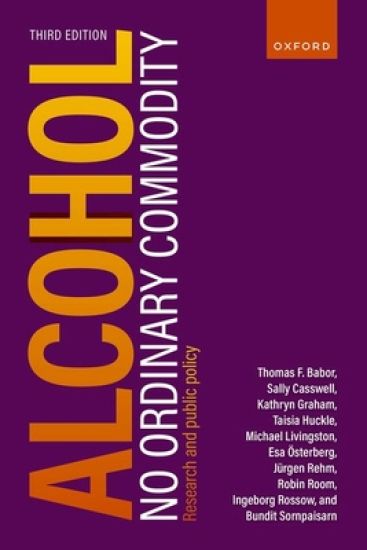
Alcohol: No Ordinary Commodity

Alcohol: No Ordinary Commodity

Thomas F. Babor; Sally Casswell; Kathryn Graham; Taisia Huckle; Michael Livingston; Esa Österberg; Jürgen Rehm; Robin Room; Ingeborg Rossow; Bundit Sornpaisarn

Oxford University Press
2022
nidottu
Alcohol: No Ordinary Commodity is a collaborative effort by an international group of addiction scientists to improve the linkages between addiction science and alcohol policy. It presents, in a comprehensive, practical, and readily accessible form, the accumulated scientific knowledge on alcohol research that has a direct relevance to the development of alcohol policy on local, national, and international levels. It provides an objective basis on which to build relevant policies globally and informs policy makers who have direct responsibility for public health and social welfare. By locating alcohol policy primarily within the realm of public health, this book draws attention to the growing tendency for governments, both national and local, to consider alcohol misuse as a major determinant of ill health, and to organize societal responses accordingly. The scope of the book is comprehensive and global. The authors describe the conceptual basis for a rational alcohol policy and present new epidemiological data on the global dimensions of alcohol misuse. The core of the book is a critical review of the cumulative scientific evidence in seven general areas of alcohol policy: pricing and taxation, regulating the physical availability of alcohol, modifying the environment in which drinking occurs, drinking-driving countermeasures, marketing restrictions, primary prevention programs in schools and other settings, and treatment and early intervention services. The final chapters discuss the current state of alcohol policy in different parts of the world and describe the need for a new approach to alcohol policy that is evidence-based, global, and coordinated. A valuable resource for those involved in addiction science and drug policy, as well as those in the wider fields of public health, health policy, epidemiology, and practising clinicians.
Drug Policy and the Public Good

Drug Policy and the Public Good

Thomas Babor; Jonathan Caulkins; Benedikt Fischer; David Foxcroft; Keith Humphreys; María Elena Medina-Mora; Isidore Obot; Jürgen Rehm; Peter Reuter; Robin Room; Ingeborg Rossow; John Strang

Oxford University Press
2018
nidottu
Illegal psychoactive substances and illicit prescription drugs are currently used on a daily basis all over the world. Affecting public health and social welfare, illicit drug use is linked to disease, disability, and social problems. Faced with an increase in usage, national and global policymakers are turning to addiction science for guidance on how to create evidence-based drug policy. Drug Policy and the Public Good is an objective analytical basis on which to build global drug policies. It presents the accumulated scientific knowledge on drug use in relation to policy development on a national and international level. By also revealing new epidemiological data on the global dimensions of drug misuse, it questions existing regulations and highlights the growing need for evidence-based, realistic, and coordinated drug policy. A critical review of cumulative scientific evidence, Drug Policy and the Public Good discusses four areas of drug policy; primary prevention programs in schools and other settings; supply reduction programs, including legal enforcement and drug interdiction; treatment interventions and harm reduction approaches; and control of the legal market through prescription drug regimes. In addition, it analyses the current state of global drug policy, and advocates improvements in the drafting of public health policy. Drug Policy and the Public Good is a global source of information and inspiration for policymakers involved in public health and social welfare. Presenting new research on illicit and prescription drug use, it is also an essential tool for academics, and a significant contribution to the translation of addiction research into effective drug policy.
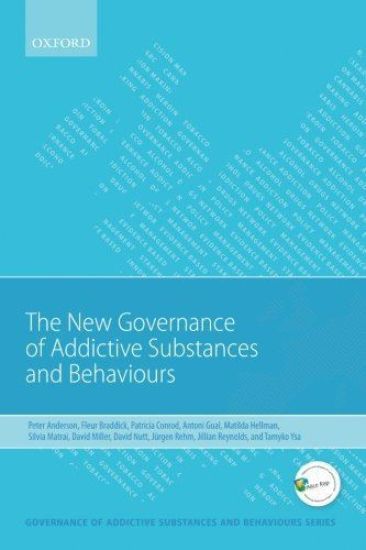
New Governance of Addictive Substances and Behaviours

New Governance of Addictive Substances and Behaviours

Peter Anderson; Fleur Braddick; Patricia J. Conrod; Antoni Gual; Matilda Hellman; Silvia Matrai; David Miller; David Nutt; Jürgen Rehm; Jillian Reynolds; Tamyko Ysa

Oxford University Press
2017
nidottu
Addictions have increased markedly in contemporary societies over the past decades. As well as widely acknowledged issues surrounding illegal substance addictions, there are increasing numbers of problems related to behavioural addictions such as the use of legal substances such as antidepressants and amphetamines. These addictions are concerning for a range of public policy fields, not least, public health and social cohesion. As a result, cohesive governance of addictive substances and behaviours is paramount to future public policy. This book is based on the findings of a five year, multidisciplinary project (Addictions and Lifestyles in Contemporary Europe - Reframing Addictions Project) studying the pace and impact of addictions in Europe, and is the concluding volume in the Governance of Addictive Substances and Behaviours series. Authored by 11 leading figures in the fields of public health, psychology, sociology, psychiatry, addiction studies, epidemiology, and social and public policy, the book takes a truly comprehensive approach to the study of the current state of addiction governance in Europe and proposals for a future governance framework. No one country has yet got governance polices right. The project's outcome is a plan for the redesign of addictions governance, which includes amendments to key metrics used in research, promoting individual-level to society-level scope of understanding in policy approaches, and bringing the impact of dependency on societal well-being to the fore. New Governance of Addictive Substances and Behaviours is an unprecedented study, both in terms of international reach and scope of issues addressed. It will be a key resource for anyone with an interest in research-driven European policy change in public health and the field of addictive substances and behaviours.