Kirjojen hintavertailu. Mukana 12 390 323 kirjaa ja 12 kauppaa.

Kirjailija

Jürgen Renn

Kirjat ja teokset yhdessä paikassa: 18 kirjaa, julkaisuja vuosilta 1993-2025, suosituimpien joukossa L'Evolution de la Connaissance: Repenser La Science Pour l'Anthropocene. Vertaile teosten hintoja ja tarkista saatavuus suomalaisista kirjakaupoista.

Mukana myös kirjoitusasut: Jurgen Renn

18 kirjaa

Kirjojen julkaisuhaarukka 1993-2025.

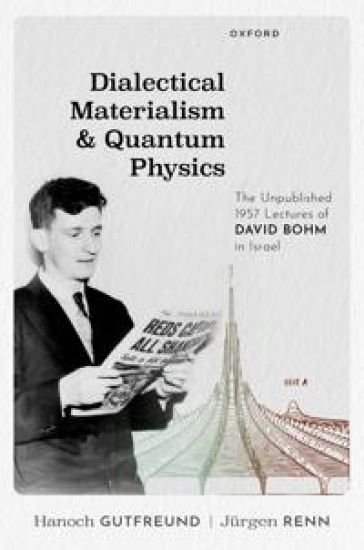
Dialectical Materialism and Quantum Physics

Dialectical Materialism and Quantum Physics

Jürgen Renn; Hanoch Gutfreund

Oxford University Press
2025
sidottu
This is the story of David Bohm's hitherto unpublished notes, uncovered from a series of lectures given in Israel in 1957 to a group of Marxist physicists from the Hashomer Hatsair (young guard) movement. The notes explore quantum theory and dialectical materialism, as well as shedding light on the intellectual and emotional resources of his persistent rebellion against orthodoxies in science. The discussion places his lectures notes in a wider historical, scientific, and philosophical context and traces Bohm's intellectual development from an early attempt to better understand the Copenhagen interpretation of quantum mechanics to his elaboration of an alternative causal interpretation based on the notion of "hidden variables." As the lecture notes strikingly illustrate, dialectical materialism played a fundamental role for the further development of his understanding of quantum mechanics. Bohm placed the notions of infinity of nature and the unity of opposites in the center of his natural philosophy, drawing from the works of Hegel, Marx, Engels, and Lenin. The authors also examine Bohm's legacy in the history of quantum mechanics and his contribution to preparing the "second quantum revolution." Bohm's engagement with dialectical materialism and his role as a dissident to the orthodox interpretation of quantum mechanics were pivotal in bringing about the novel insights and technologies associated with this second quantum revolution. During the 1960s, Bohm developed a growing interest in the nature of consciousness and engaged with the philosopher Jiddu Krishnamurti. In spite of a seemingly fundamental break with earlier philosophical positions, this new phase in Bohm's intellectual odyssey was not completely unrelated to his fascination with and deep understanding of Hegel's philosophy, which the lecture notes amply document for the first time.
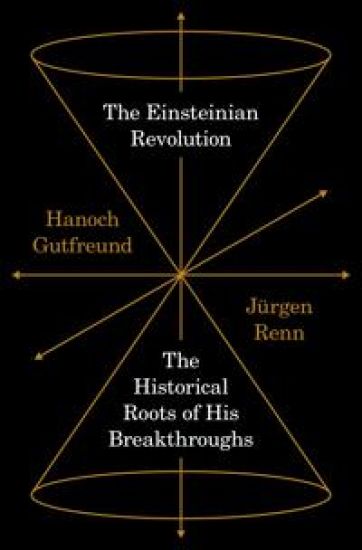
The Einsteinian Revolution

The Einsteinian Revolution

Hanoch Gutfreund; Jürgen Renn

PRINCETON UNIVERSITY PRESS
2025
pokkari
How the Einsteinian revolution can be understood as the result of a long-term evolution of science The revolution that emerged from Albert Einstein’s work in the early twentieth century transformed our understanding of space, time, motion, gravity, matter, and radiation. Beginning with Einstein’s miracle year of 1905 and continuing through his development of the theory of general relativity, Einstein spurred a revolution that continues to reverberate in modern-day physics. In The Einsteinian Revolution, Hanoch Gutfreund and Jürgen Renn trace the century-long transformation of classical physics and argue that the revolution begun by Einstein was in fact the result of a long-term evolution. Describing the origins and context of Einstein’s innovative research, Gutfreund and Renn work to dispel the popular myth of Einstein as a lone genius who brought about a revolution in physics through the power of his own pure thought. We can only understand the birth of modern physics, they say, if we understand the long history of the evolution of knowledge.Gutfreund and Renn outline the essential structures of the knowledge system of classical physics on which Einstein drew. Examining Einstein’s discoveries from 1905 onward, they describe the process by which new concepts arose and the basis of modern physics emerged. These transformations continued, eventually resulting in the establishment of quantum physics and general relativity as the two major conceptual frameworks of modern physics—and its two unreconciled theoretical approaches. Gutfreund and Renn note that Einstein was dissatisfied with this conceptual dichotomy and began a search for a unified understanding of physics—a quest that continued for the rest of his life.
The Einsteinian Revolution

The Einsteinian Revolution

Hanoch Gutfreund; Jürgen Renn

PRINCETON UNIVERSITY PRESS
2023
sidottu
How the Einsteinian revolution can be understood as the result of a long-term evolution of science The revolution that emerged from Albert Einstein’s work in the early twentieth century transformed our understanding of space, time, motion, gravity, matter, and radiation. Beginning with Einstein’s miracle year of 1905 and continuing through his development of the theory of general relativity, Einstein spurred a revolution that continues to reverberate in modern-day physics. In The Einsteinian Revolution, Hanoch Gutfreund and Jürgen Renn trace the century-long transformation of classical physics and argue that the revolution begun by Einstein was in fact the result of a long-term evolution. Describing the origins and context of Einstein’s innovative research, Gutfreund and Renn work to dispel the popular myth of Einstein as a lone genius who brought about a revolution in physics through the power of his own pure thought. We can only understand the birth of modern physics, they say, if we understand the long history of the evolution of knowledge.Gutfreund and Renn outline the essential structures of the knowledge system of classical physics on which Einstein drew. Examining Einstein’s discoveries from 1905 onward, they describe the process by which new concepts arose and the basis of modern physics emerged. These transformations continued, eventually resulting in the establishment of quantum physics and general relativity as the two major conceptual frameworks of modern physics—and its two unreconciled theoretical approaches. Gutfreund and Renn note that Einstein was dissatisfied with this conceptual dichotomy and began a search for a unified understanding of physics—a quest that continued for the rest of his life.
How Einstein Found His Field Equations

How Einstein Found His Field Equations

Michel Janssen; Jürgen Renn

Springer Nature Switzerland AG
2023
nidottu
Einstein's field equations of gravitation are a core element of his general theory of relativity. In four short communications to the Prussian Academy of Sciences in Berlin in November 1015, we can follow the final steps toward these equations and the resulting theory's spectacular success in accounting for the anomalous motion of Mercury's perihelion. This source book provides an expert guide to these four groundbreaking papers. Following an introductory essay placing these papers in the context of the development of Einstein's theory, it presents and analyzes, in addition to the four papers of November 1915, a careful selection of (critical excerpts from) papers, letters, and manuscripts documenting the path that early on led Einstein to the field equations of the first November 1915 paper, but then took a turn away from them only to lead back to them in the end. Drawing on extensive research at the Einstein Papers Project and the Max Planck Institute for History of Science, this volume traces the intricate interplay between considerations of physics and considerations of mathematics that guided Einstein along this path. It thus presents a concise yet authoritative account of how Einstein found his field equations, affording readers who are prepared to immerse themselves in these intricacies a unique glimpse of Einstein at work at the height of his creative prowess. Highlights of this journey in Einstein's footsteps include the crucial pages (with detailed annotation) from the Zurich Notebook, the record of Einstein's early search for field equation with his mathematician friend Marcel Grossmann, and the Einstein-Besso manuscript, documenting Einstein's attempts with his friend and confidant Michele Besso to explain the Mercury anomaly on the basis of the equations that he and Grossmann had eventually settled on in the Zurich Notebook.
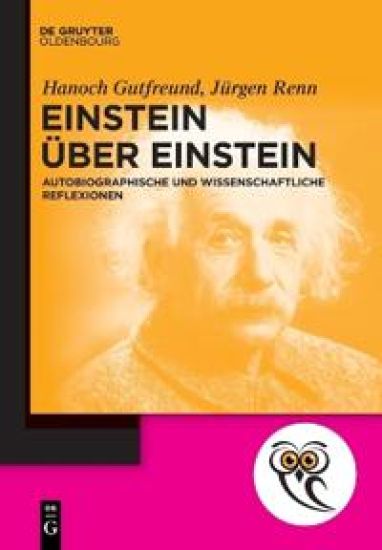
Einstein über Einstein

Einstein über Einstein

Hanoch Gutfreund; Jürgen Renn

de Gruyter Oldenbourg
2022
pokkari
Am Ende des Zweiten Weltkriegs wurde Albert Einstein eingeladen, seine intellektuelle Autobiografie f r die Library of Living Philosophers zu schreiben. Das Ergebnis war sein einzigartiger Text, Autobiographisches, ein Klassiker der Wissenschaftsgeschichte, der die Entwicklung seiner Ideen mit unvergleichlicher Pr gnanz erkl rt. Hanoch Gutfreund und J rgen Renn stellen Einsteins wissenschaftliche berlegungen dem heutigen Leser vor, zeichnen seine intellektuelle Entwicklung von der Kindheit bis ins hohe Alter nach und bieten ein fesselndes Portr t der Entwicklung eines Wissenschaftlers und Philosophen. Einstein ber Einstein enth lt, neben den Originaltext, Essays, die Einsteins berlegungen in den Kontext der verschiedenen Phasen seines wissenschaftlichen Lebens stellen. Gutfreund und Renn st tzen sich auf Einsteins Schriften, pers nliche Korrespondenz und Kommentare von seinen Zeitgenossen, um neue Perspektiven auf seine gr ten Entdeckungen zu er ffnen. Ebenfalls enthalten sind Einsteins Antworten auf seine Kritiker, die ein zus tzliches Licht auf seine wissenschaftliche und philosophische Weltanschauung werfen. Gutfreund und Renn zitieren ausf hrlich aus Einsteins ersten, unver ffentlichten Skizzen seiner Antworten. Der Band umfasst au erdem einen kurzen autobiografischen Text, den Einstein wenige Wochen vor seinem Tod geschrieben hat. Einstein ber Einstein ist mit eindrucksvollen Zeichnungen des K nstlers Laurent Taudin sowie mit zeitgen ssischen Fotografien illustriert.
How Einstein Found His Field Equations

How Einstein Found His Field Equations

Michel Janssen; Jürgen Renn

Springer Nature Switzerland AG
2022
sidottu
Einstein's field equations of gravitation are a core element of his general theory of relativity. In four short communications to the Prussian Academy of Sciences in Berlin in November 1015, we can follow the final steps toward these equations and the resulting theory's spectacular success in accounting for the anomalous motion of Mercury's perihelion. This source book provides an expert guide to these four groundbreaking papers. Following an introductory essay placing these papers in the context of the development of Einstein's theory, it presents and analyzes, in addition to the four papers of November 1915, a careful selection of (critical excerpts from) papers, letters, and manuscripts documenting the path that early on led Einstein to the field equations of the first November 1915 paper, but then took a turn away from them only to lead back to them in the end. Drawing on extensive research at the Einstein Papers Project and the Max Planck Institute for History of Science, this volume traces the intricate interplay between considerations of physics and considerations of mathematics that guided Einstein along this path. It thus presents a concise yet authoritative account of how Einstein found his field equations, affording readers who are prepared to immerse themselves in these intricacies a unique glimpse of Einstein at work at the height of his creative prowess. Highlights of this journey in Einstein's footsteps include the crucial pages (with detailed annotation) from the Zurich Notebook, the record of Einstein's early search for field equation with his mathematician friend Marcel Grossmann, and the Einstein-Besso manuscript, documenting Einstein's attempts with his friend and confidant Michele Besso to explain the Mercury anomaly on the basis of the equations that he and Grossmann had eventually settled on in the Zurich Notebook.
The Evolution of Knowledge

The Evolution of Knowledge

Jürgen Renn

PRINCETON UNIVERSITY PRESS
2022
pokkari
A fundamentally new approach to the history of science and technologyThis book presents a new way of thinking about the history of science and technology, one that offers a grand narrative of human history in which knowledge serves as a critical factor of cultural evolution. Jürgen Renn examines the role of knowledge in global transformations going back to the dawn of civilization while providing vital perspectives on the complex challenges confronting us today in the Anthropocene—this new geological epoch shaped by humankind.Renn reframes the history of science and technology within a much broader history of knowledge, analyzing key episodes such as the evolution of writing, the emergence of science in the ancient world, the Scientific Revolution of early modernity, the globalization of knowledge, industrialization, and the profound transformations wrought by modern science. He investigates the evolution of knowledge using an array of disciplines and methods, from cognitive science and experimental psychology to earth science and evolutionary biology. The result is an entirely new framework for understanding structural changes in systems of knowledge—and a bold new approach to the history and philosophy of science.Written by one of today's preeminent historians of science, The Evolution of Knowledge features discussions of historiographical themes, a glossary of key terms, and practical insights on global issues ranging from climate change to digital capitalism. This incisive book also serves as an invaluable introduction to the history of knowledge.
Einstein on Einstein

Einstein on Einstein

Hanoch Gutfreund; Jürgen Renn

PRINCETON UNIVERSITY PRESS
2020
sidottu
New perspectives on the iconic physicist's scientific and philosophical formationAt the end of World War II, Albert Einstein was invited to write his intellectual autobiography for the Library of Living Philosophers. The resulting book was his uniquely personal Autobiographical Notes, a classic work in the history of science that explains the development of his ideas with unmatched warmth and clarity. Hanoch Gutfreund and Jürgen Renn introduce Einstein's scientific reflections to today's readers, tracing his intellectual formation from childhood to old age and offering a compelling portrait of the making of a philosopher-scientist.Einstein on Einstein features the full English text of Autobiographical Notes along with incisive essays that place Einstein's reflections in the context of the different stages of his scientific life. Gutfreund and Renn draw on Einstein's writings, personal correspondence, and critical writings by Einstein's contemporaries to provide new perspectives on his greatest discoveries. Also included are Einstein's responses to his critics, which shed additional light on his scientific and philosophical worldview. Gutfreund and Renn quote extensively from Einstein's initial, unpublished attempts to formulate his response, and also look at another brief autobiographical text by Einstein, written a few weeks before his death, which is published here for the first time in English.Complete with evocative drawings by artist Laurent Taudin, Einstein on Einstein illuminates the iconic physicist's journey to general relativity while situating his revolutionary ideas alongside other astonishing scientific breakthroughs of the twentieth century.
The Evolution of Knowledge

The Evolution of Knowledge

Jürgen Renn

PRINCETON UNIVERSITY PRESS
2020
sidottu
A fundamentally new approach to the history of science and technologyThis book presents a new way of thinking about the history of science and technology, one that offers a grand narrative of human history in which knowledge serves as a critical factor of cultural evolution. Jürgen Renn examines the role of knowledge in global transformations going back to the dawn of civilization while providing vital perspectives on the complex challenges confronting us today in the Anthropocene—this new geological epoch shaped by humankind.Renn reframes the history of science and technology within a much broader history of knowledge, analyzing key episodes such as the evolution of writing, the emergence of science in the ancient world, the Scientific Revolution of early modernity, the globalization of knowledge, industrialization, and the profound transformations wrought by modern science. He investigates the evolution of knowledge using an array of disciplines and methods, from cognitive science and experimental psychology to earth science and evolutionary biology. The result is an entirely new framework for understanding structural changes in systems of knowledge—and a bold new approach to the history and philosophy of science.Written by one of today's preeminent historians of science, The Evolution of Knowledge features discussions of historiographical themes, a glossary of key terms, and practical insights on global issues ranging from climate change to digital capitalism. This incisive book also serves as an invaluable introduction to the history of knowledge.
The Formative Years of Relativity

The Formative Years of Relativity

Hanoch Gutfreund; Jürgen Renn

PRINCETON UNIVERSITY PRESS
2017
sidottu
First published in 1922 and based on lectures delivered in May 1921, Albert Einstein's The Meaning of Relativity offered an overview and explanation of the then new and controversial theory of relativity. The work would go on to become a monumental classic, printed in numerous editions and translations worldwide. Now, The Formative Years of Relativity introduces Einstein's masterpiece to new audiences. This beautiful volume contains Einstein's insightful text, accompanied by important historical materials and commentary looking at the origins and development of general relativity. Hanoch Gutfreund and Jurgen Renn provide fresh, original perspectives, placing Einstein's achievements into a broader context for all readers. In this book, Gutfreund and Renn tell the rich story behind the early reception, spread, and consequences of Einstein's ideas during the formative years of general relativity in the late 1910s and 1920s. They show that relativity's meaning changed radically throughout the nascent years of its development, and they describe in detail the transformation of Einstein's work from the esoteric pursuit of one individual communicating with a handful of colleagues into the preoccupation of a growing community of physicists, astronomers, mathematicians, and philosophers. This handsome edition quotes extensively from Einstein's correspondence and reproduces historical documents such as newspaper articles and letters. Inserts are featured in the main text giving concise explanations of basic concepts, and short biographical notes and photographs of some of Einstein's contemporaries are included. The first-ever English translations of two of Einstein's popular Princeton lectures are featured at the book's end.
The Road to Relativity

The Road to Relativity

Hanoch Gutfreund; Jürgen Renn; John Stachel

Princeton University Press
2017
pokkari
This richly annotated facsimile edition of "The Foundation of General Relativity" introduces a new generation of readers to Albert Einstein's theory of gravitation. Written in 1915, this remarkable document is a watershed in the history of physics and an enduring testament to the elegance and precision of Einstein's thought. Presented here is a beautiful facsimile of Einstein's original handwritten manuscript, along with its English translation and an insightful page-by-page commentary that places the work in historical and scientific context. Hanoch Gutfreund and Jurgen Renn's concise introduction traces Einstein's intellectual odyssey from special to general relativity, and their essay "The Charm of a Manuscript" provides a delightful meditation on the varied afterlife of Einstein's text. Featuring a foreword by John Stachel, this handsome edition also includes a biographical glossary of the figures discussed in the book, a comprehensive bibliography, suggestions for further reading, and numerous photos and illustrations throughout.
The Road to Relativity

The Road to Relativity

Hanoch Gutfreund; Jürgen Renn; John Stachel

Princeton University Press
2015
sidottu
This richly annotated facsimile edition of "The Foundation of General Relativity" introduces a new generation of readers to Albert Einstein's theory of gravitation. Written in 1915, this remarkable document is a watershed in the history of physics and an enduring testament to the elegance and precision of Einstein's thought. Presented here is a beautiful facsimile of Einstein's original handwritten manuscript, along with its English translation and an insightful page-by-page commentary that places the work in historical and scientific context. Hanoch Gutfreund and Jurgen Renn's concise introduction traces Einstein's intellectual odyssey from special to general relativity, and their essay "The Charm of a Manuscript" provides a delightful meditation on the varied afterlife of Einstein's text. Featuring a foreword by John Stachel, this handsome edition also includes a biographical glossary of the figures discussed in the book, a comprehensive bibliography, suggestions for further reading, and numerous photos and illustrations throughout.
Exploring the Limits of Preclassical Mechanics

Exploring the Limits of Preclassical Mechanics

Peter Damerow; Gideon Freudenthal; Peter McLaughlin; Jürgen Renn

Springer-Verlag New York Inc.
2011
nidottu
The question of when and how the basic concepts that characterize modern science arose in Western Europe has long been central to the history of science. This book examines the transition from Renaissance engineering and philosophy of nature to classical mechanics oriented on the central concept of velocity. For this new edition, the authors include a new discussion of the doctrine of proportions, an analysis of the role of traditional statics in the construction of Descartes' impact rules, and go deeper into the debate between Descartes and Hobbes on the explanation of refraction. They also provide significant new material on the early development of Galileo's work on mechanics and the law of fall.
Exploring the Limits of Preclassical Mechanics

Exploring the Limits of Preclassical Mechanics

Peter Damerow; Gideon Freudenthal; Peter McLaughlin; Jürgen Renn

Springer-Verlag New York Inc.
2004
sidottu
The question of when and how the basic concepts that characterize modern science arose in Western Europe has long been central to the history of science. This book examines the transition from Renaissance engineering and philosophy of nature to classical mechanics oriented on the central concept of velocity. For this new edition, the authors include a new discussion of the doctrine of proportions, an analysis of the role of traditional statics in the construction of Descartes' impact rules, and go deeper into the debate between Descartes and Hobbes on the explanation of refraction. They also provide significant new material on the early development of Galileo's work on mechanics and the law of fall.
The Power of Images in Early Modern Science

The Power of Images in Early Modern Science

Wolfgang Lefèvre; Jürgen Renn; Urs Schoepflin

Birkhauser Verlag AG
2003
nidottu
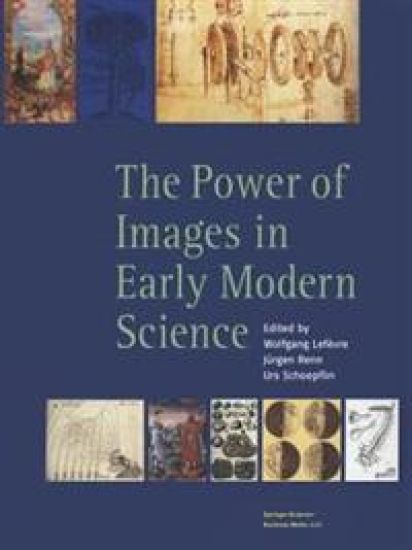
Wolfgang Lefevre, Jiirgen Renn, and Vrs Schoepflin General The origin of this volume is a workshop held has a deeper, more complex structure which in 1997 in Berlin as part of a series of work­ must be assumed if its analysis is only based shops organized in the framework of the on text. In fact, the analysis of the function of Network on Science and the Visual Images images in the early modern period shows that 1500 - 1800 funded by the European Science they mediated not only between science and Foundation and initiated by William Shea. its cultural context, but also between practi­ Meanwhile a selection of contributions was cal knowledge and its theoretical reflection thoroughly revised and prepared for publica­ in scientific theories. tion together with additionally invited papers The analysis of images thus constitutes an for this book. The result is a volume which important branch of the history of science we hope corresponds to the original inten­ that on the one hand is conceived of as part tion of the Network to contribute to a histori­ of a more general history of culture and on cal reconstruction of the role of images in the the other hand as a historical epistemology of history of science, still neglected because of knowledge. This book is not a systematic and the traditional focus of the history of science comprehensive account of scientific images on texts corresponding to a concentration on and the early modern period.
Einstein in Context

Einstein in Context

Mara Beller; Robert S. Cohen; Jurgen Renn

Cambridge University Press
1993
pokkari
This special issue of Science and Context examines the entire area of scientific inquiry surrounding Einstein, presenting controversies and debates within their contexts.