Kirjojen hintavertailu. Mukana 12 390 323 kirjaa ja 12 kauppaa.

Kirjailija

Jussi Parikka

Kirjat ja teokset yhdessä paikassa: 15 kirjaa, julkaisuja vuosilta 2010-2025, suosituimpien joukossa Masinaõpetus. Inimese, tehnoloogia ja meedia sidemed. Vertaile teosten hintoja ja tarkista saatavuus suomalaisista kirjakaupoista.

15 kirjaa

Kirjojen julkaisuhaarukka 2010-2025.

Masinaõpetus. Inimese, tehnoloogia ja meedia sidemed
Meediaarheoloogia teerajaja, nüüdseks ilmakuulus uusmaterialismi teoreetik Jussi Parikka avab oma esimeses, 2004. aastal soome keeles ilmunud raamatus tehnoloogia, meedia ja inimkultuuri põimunud ajalugu. Digikultuuri ja meediateooria valdkond oli raamatu ilmumise ajal veidi teistsugune kui praegu, kuid paljud teemad on arutellu naasnud, nagu küborgid ja tehisintellekt.Parikka mõtlemapanev teos kujutab endast uurimust sellest, kuidas masinad kujundavad meie kultuuri, mõtteid ja arusaamist eksistentsist laiemalt. Teekonnal küberpungi düstoopiatest Deleuze'i filosoofiani seab Parikka küsimärgi alla inimese ja tehnoloogia piiri. Kas masinad mõtlevad? Või on hoopis meie mõtlemine alati olnud masinlik? Raamat viib meid sügavale tehnoloogia aluskihistustesse - sinna, kus masinad ei ole pelgalt abivahendid, vaid kultuuri aktiivsed osalised."Masinaõpetus" kutsub lugejat üles oma suhet tehnoloogiaga ümber mõtestama, et leida inimese identiteet maailmas, mida üha enam määravad masinad. See raamat ei räägi ainult tehnoloogiast, see räägib meist endist ja sellest, kuidas me areneme koos loodud vahenditega.
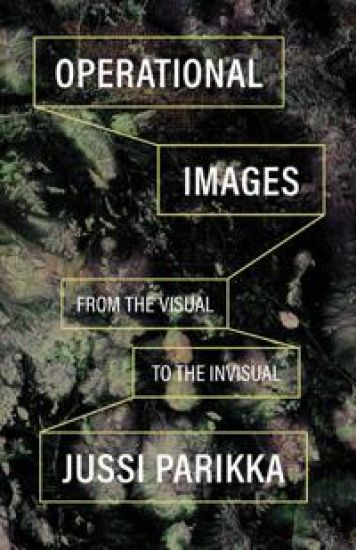
Operational Images

Operational Images

Jussi Parikka

UNIVERSITY OF MINNESOTA PRESS
2023
sidottu
An in-depth look into the transformation of visual culture and digital aesthetics First introduced by the German filmmaker Harun Farocki, the term operational images defines the expanding field of machine vision. In this study, media theorist Jussi Parikka develops Farocki’s initial concept by considering the extent to which operational images have pervaded today’s visual culture, outlining how data technologies continue to develop and disrupt our understanding of images beyond representation.Charting the ways that operational images have been employed throughout a variety of fields and historical epochs, Parikka details their many roles as technologies of analysis, capture, measurement, diagramming, laboring, (machine) learning, identification, tracking, and destruction. He demonstrates how, though inextricable from issues of power and control, operational images extend their reach far beyond militaristic and colonial violence and into the realms of artificial intelligence, data, and numerous aspects of art, media, and everyday visual culture.Serving as an extensive guide to a key concept in contemporary art, design, and media theory, Operational Images explores the implications of machine vision and the limits of human agency. Through a wealth of case studies highlighting the areas where imagery and data intersect, this book gives us unprecedented insight into the ever-evolving world of posthuman visuality. Cover alt text: Satellite photo on which white title words appear in yellow boxes. Yellow lines connect the boxes.
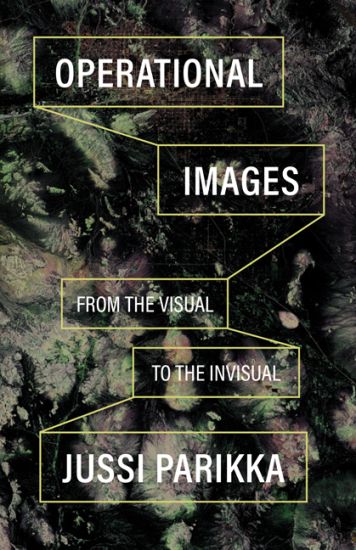
Operational Images

Operational Images

Jussi Parikka

UNIVERSITY OF MINNESOTA PRESS
2023
nidottu
An in-depth look into the transformation of visual culture and digital aesthetics First introduced by the German filmmaker Harun Farocki, the term operational images defines the expanding field of machine vision. In this study, media theorist Jussi Parikka develops Farocki’s initial concept by considering the extent to which operational images have pervaded today’s visual culture, outlining how data technologies continue to develop and disrupt our understanding of images beyond representation.Charting the ways that operational images have been employed throughout a variety of fields and historical epochs, Parikka details their many roles as technologies of analysis, capture, measurement, diagramming, laboring, (machine) learning, identification, tracking, and destruction. He demonstrates how, though inextricable from issues of power and control, operational images extend their reach far beyond militaristic and colonial violence and into the realms of artificial intelligence, data, and numerous aspects of art, media, and everyday visual culture.Serving as an extensive guide to a key concept in contemporary art, design, and media theory, Operational Images explores the implications of machine vision and the limits of human agency. Through a wealth of case studies highlighting the areas where imagery and data intersect, this book gives us unprecedented insight into the ever-evolving world of posthuman visuality. Cover alt text: Satellite photo on which white title words appear in yellow boxes. Yellow lines connect the boxes.
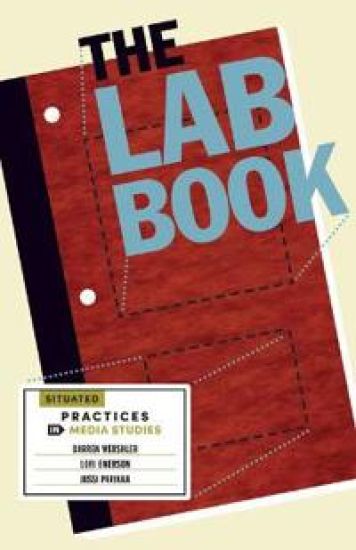
The Lab Book

The Lab Book

Darren Wershler; Lori Emerson; Jussi Parikka

University of Minnesota Press
2022
nidottu
An important new approach to the study of laboratories, presenting a practical method for understanding labs in all walks of life From the “Big Science” of Bell Laboratories to the esoteric world of sÉance chambers to university media labs to neighborhood makerspaces, places we call “labs” are everywhere-but how exactly do we account for the wide variety of ways that they produce knowledge? More than imitations of science and engineering labs, many contemporary labs are hybrid forms that require a new methodological and theoretical toolkit to describe. The Lab Book investigates these vital, creative spaces, presenting readers with the concept of the “hybrid lab” and offering an extended-and rare-critical investigation of how labs have proliferated throughout culture.Organized by interpretive categories such as space, infrastructure, and imaginaries, The Lab Book uses both historical and contemporary examples to show how laboratories have become fundamentally connected to changes in the contemporary university. Its wide reach includes institutions like the MIT Media Lab, the Tuskegee Institute’s Jesup Wagon, ACTLab, and the Media Archaeological Fundus. The authors cover topics such as the evolution and delineation of lab-based communities, how labs’ tools and technologies contribute to defining their space, and a glossary of key hybrid lab techniques.Providing rich historical breadth and depth, The Lab Book brings into focus a critical, but often misunderstood, aspect of the contemporary arts and humanities.
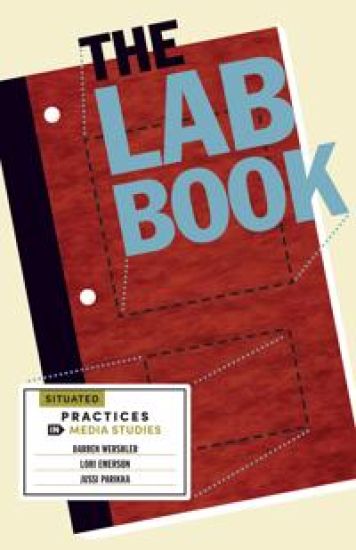
The Lab Book

The Lab Book

Darren Wershler; Lori Emerson; Jussi Parikka

University of Minnesota Press
2022
sidottu
An important new approach to the study of laboratories, presenting a practical method for understanding labs in all walks of life From the “Big Science” of Bell Laboratories to the esoteric world of sÉance chambers to university media labs to neighborhood makerspaces, places we call “labs” are everywhere-but how exactly do we account for the wide variety of ways that they produce knowledge? More than imitations of science and engineering labs, many contemporary labs are hybrid forms that require a new methodological and theoretical toolkit to describe. The Lab Book investigates these vital, creative spaces, presenting readers with the concept of the “hybrid lab” and offering an extended-and rare-critical investigation of how labs have proliferated throughout culture.Organized by interpretive categories such as space, infrastructure, and imaginaries, The Lab Book uses both historical and contemporary examples to show how laboratories have become fundamentally connected to changes in the contemporary university. Its wide reach includes institutions like the MIT Media Lab, the Tuskegee Institute’s Jesup Wagon, ACTLab, and the Media Archaeological Fundus. The authors cover topics such as the evolution and delineation of lab-based communities, how labs’ tools and technologies contribute to defining their space, and a glossary of key hybrid lab techniques.Providing rich historical breadth and depth, The Lab Book brings into focus a critical, but often misunderstood, aspect of the contemporary arts and humanities.
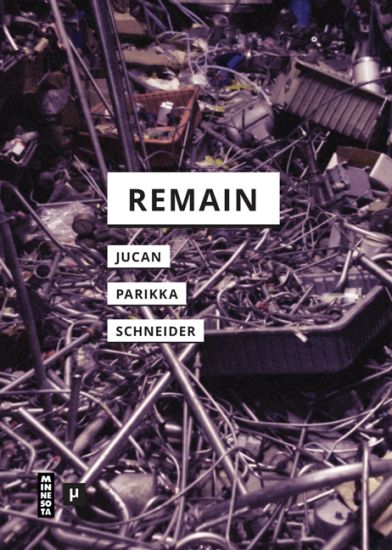
Remain

Remain

Ioana B. Jucan; Jussi Parikka; Rebecca Schneider

University of Minnesota Press
2019
pokkari
Engaging with remains and remainders of media cultures As new, as current, as now-this is primarily our understanding of technologies and their mediating of our social constructions. But past media and past practices continue to haunt and inflect our present social and technical arrangements. To trace this haunting, two performance theorists and a media theorist engage in this volume with remains and remainders of media cultures through the lenses of theatre and performance studies and of media archaeology. They address the temporalities and materialities of remain(s), the production of obsolescence in relation to the live body, and considerations of cultural memory as well as of infrastructure and the natural history of media culture.
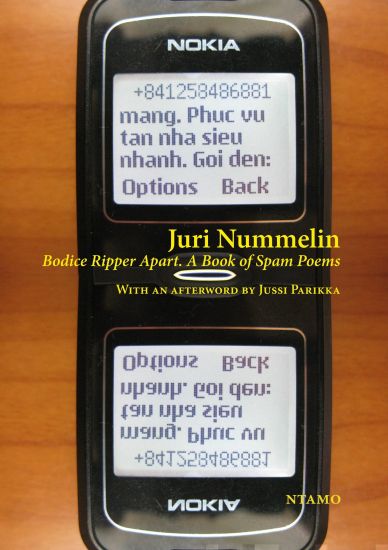
Bodice Ripper Apart

Bodice Ripper Apart

Juri Nummelin; Jussi Parikka

Ntamo
2019
nidottu
This is a book poems composed of bits and pieces taken entirely from the web. Predominantly, it is made out of junk mail.As media theorist Jussi Parikka writes in the afterword, "in the midst of the gloomy future scenarios and production of fear, (...) poetic recycling is however more than welcome. They are the modern surrealist techniques of tackling with the absurdities and layers beyond meaning of communication; the accidental, the haphazard, the unconscious (...) can be revealed through artistic methodologies."
Medya Arkeolojisi Nedir?

Medya Arkeolojisi Nedir?

Jussi Parikka

Koc Universitesi Yayinlari
2017
nidottu
"What is Media Archaeology?" av Jussi Parikka är en insiktsfull bok som utforskar det tvärvetenskapliga fältet mediearkeologi. Med Parikkas engagerande skrivstil och tankeväckande analys fördjupar sig läsarna i de historiska, teoretiska och metodologiska aspekterna av mediearkeologi och får en djupare förståelse för mediekultur, teknologi och hur det förflutna påverkar vår nutid och framtid.
Digital Contagions

Digital Contagions

Jussi Parikka

Peter Lang Publishing Inc
2016
nidottu
Now in its second edition, Digital Contagions is the first book to offer a comprehensive and critical analysis of the culture and history of the computer virus.At a time when our networks arguably feel more insecure than ever, the book provides an overview of how our fears about networks are part of a more complex story of the development of digital culture. It writes a media archaeology of computer and network accidents that are endemic to the computational media ecology. Viruses, worms, and other software objects are not seen merely from the perspective of anti-virus research or practical security concerns, but as cultural and historical expressions that traverse a non-linear field from fiction to technical media, from net art to politics of software.Mapping the anomalies of network culture from the angles of security concerns, the biopolitics of computer systems, and the aspirations for artificial life in software, this second edition also pays attention to the emergence of recent issues of cybersecurity and new forms of digital insecurity. A new preface by Sean Cubitt is also provided.
A Geology of Media

A Geology of Media

Jussi Parikka

University of Minnesota Press
2015
nidottu
Media history is millions, even billions, of years old. That is the premise of this pioneering and provocative book, which argues that to adequately understand contemporary media culture we must set out from material realities that precede media themselves-Earth’s history, geological formations, minerals, and energy. And to do so, writes Jussi Parikka, is to confront the profound environmental and social implications of this ubiquitous, but hardly ephemeral, realm of modern-day life.Exploring the resource depletion and material resourcing required for us to use our devices to live networked lives, Parikka grounds his analysis in Siegfried Zielinski’s widely discussed notion of deep time-but takes it back millennia. Not only are rare earth minerals and many other materials needed to make our digital media machines work, he observes, but used and obsolete media technologies return to the earth as residue of digital culture, contributing to growing layers of toxic waste for future archaeologists to ponder. He shows that these materials must be considered alongside the often dangerous and exploitative labor processes that refine them into the devices underlying our seemingly virtual or immaterial practices.A Geology of Media demonstrates that the environment does not just surround our media cultural world-it runs through it, enables it, and hosts it in an era of unprecedented climate change. While looking backward to Earth’s distant past, it also looks forward to a more expansive media theory-and, implicitly, media activism-to come.
The Anthrobscene

The Anthrobscene

Jussi Parikka

University of Minnesota Press
2014
pokkari
Smartphones, laptops, tablets, and e-readers all at one time held the promise of a more environmentally healthy world not dependent on paper and deforestation. The result of our ubiquitous digital lives is, as we see in The Anthrobscene, actually quite the opposite: not ecological health but an environmental wasteland, where media never die. Jussi Parikka critiques corporate and human desires as a geophysical force, analyzing the material side of the earth as essential for the existence of media and introducing the notion of an alternative deep time in which media live on in the layer of toxic waste we will leave behind as our geological legacy. Forerunners: Ideas First is a thought-in-process series of breakthrough digital publications. Written between fresh ideas and finished books, Forerunners draws on scholarly work initiated in notable blogs, social media, conference plenaries, journal articles, and the synergy of academic exchange. This is gray literature publishing: where intense thinking, change, and speculation take place in scholarship.
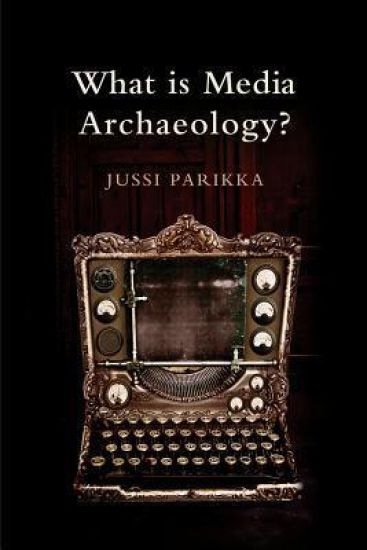
What is Media Archaeology?

What is Media Archaeology?

Jussi Parikka

Polity Press
2012
sidottu
This cutting-edge text offers an introduction to the emerging field of media archaeology and analyses the innovative theoretical and artistic methodology used to excavate current media through its past. Written with a steampunk attitude, What is Media Archaeology? examines the theoretical challenges of studying digital culture and memory and opens up the sedimented layers of contemporary media culture. The author contextualizes media archaeology in relation to other key media studies debates including software studies, German media theory, imaginary media research, new materialism and digital humanities. What is Media Archaeology? advances an innovative theoretical position while also presenting an engaging and accessible overview for students of media, film and cultural studies. It will be essential reading for anyone interested in the interdisciplinary ties between art, technology and media.
What is Media Archaeology?

What is Media Archaeology?

Jussi Parikka

Polity Press
2012
nidottu
This cutting-edge text offers an introduction to the emerging field of media archaeology and analyses the innovative theoretical and artistic methodology used to excavate current media through its past. Written with a steampunk attitude, What is Media Archaeology? examines the theoretical challenges of studying digital culture and memory and opens up the sedimented layers of contemporary media culture. The author contextualizes media archaeology in relation to other key media studies debates including software studies, German media theory, imaginary media research, new materialism and digital humanities. What is Media Archaeology? advances an innovative theoretical position while also presenting an engaging and accessible overview for students of media, film and cultural studies. It will be essential reading for anyone interested in the interdisciplinary ties between art, technology and media.
Insect Media

Insect Media

Jussi Parikka

University of Minnesota Press
2010
nidottu
Since the early nineteenth century, when entomologists first popularized the unique biological and behavioral characteristics of insects, technological innovators and theorists have proposed insects as templates for a wide range of technologies. In Insect Media, Jussi Parikka analyzes how insect forms of social organization-swarms, hives, webs, and distributed intelligence-have been used to structure modern media technologies and the network society, providing a radical new perspective on the interconnection of biology and technology.Through close engagement with the pioneering work of insect ethologists, including Jakob von Uexküll and Karl von Frisch, posthumanist philosophers, media theorists, and contemporary filmmakers and artists, Parikka develops an insect theory of media, one that conceptualizes modern media as more than the products of individual human actors, social interests, or technological determinants. They are, rather, profoundly nonhuman phenomena that both draw on and mimic the alien lifeworlds of insects. Deftly moving from the life sciences to digital technology, from popular culture to avant-garde art and architecture, and from philosophy to cybernetics and game theory, Parikka provides innovative conceptual tools for exploring the phenomena of network society and culture. Challenging anthropocentric approaches to contemporary science and culture, Insect Media reveals the possibilities that insects and other nonhuman animals offer for rethinking media, the conflation of biology and technology, and our understanding of, and interaction with, contemporary digital culture.