Kirjojen hintavertailu. Mukana 12 595 353 kirjaa ja 12 kauppaa.

Kirjailija

Justin D. Edwards

Kirjat ja teokset yhdessä paikassa: 7 kirjaa, julkaisuja vuosilta 2007-2026, suosituimpien joukossa Mobility at Large. Vertaile teosten hintoja ja tarkista saatavuus suomalaisista kirjakaupoista.

7 kirjaa

Kirjojen julkaisuhaarukka 2007-2026.

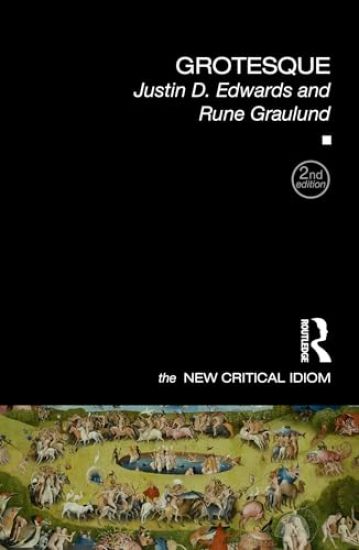
Grotesque 2e

Grotesque 2e

Justin D. Edwards; Rune Graulund

TAYLOR FRANCIS LTD
2026
nidottu
The new edition of the bestselling Grotesque offers an accessible introduction to the use (and abuse) of this complex literary term. Justin D. Edwards and Rune Graulund explore the influence of the grotesque on cultural forms throughout history, with particular focus on its representation in literature, visual art and film. The book presents a history of the literary grotesque from Classical writing to the present, examining theoretical debates around the term in their historical and cultural contexts and introduces readers to key writers, artists and film makers of the grotesque, including Homer, Rabelais, Shakespeare, Carson McCullers, David Cronenberg, Ottessa Moshfegh and Bong Joon Ho. It analyses key terms such as discord and transgression, deformed and distorted bodies, misfits and freaks, and explores the grotesque in relation to queer theory, post-colonialism and the carnivalesque. Updated and expanded throughout, the second edition reveals how grotesque is always on the move, pushing against the boundaries of shifting standards of what is and is not normal. It includes insightful new chapters on the absurd and ecocriticism. It also features fresh insight into fat studies, sophistication and the grotesque, decolonial grotesque, planetary grotesque, the New Weird and Ecogothic. This invaluable guide offers an original and distinctive overview of this vital genre. It is essential reading for students of literature, art history and film studies.
Grotesque 2e

Grotesque 2e

Justin D. Edwards; Rune Graulund

TAYLOR FRANCIS LTD
2026
sidottu
The new edition of the bestselling Grotesque offers an accessible introduction to the use (and abuse) of this complex literary term. Justin D. Edwards and Rune Graulund explore the influence of the grotesque on cultural forms throughout history, with particular focus on its representation in literature, visual art and film. The book presents a history of the literary grotesque from Classical writing to the present, examining theoretical debates around the term in their historical and cultural contexts and introduces readers to key writers, artists and film makers of the grotesque, including Homer, Rabelais, Shakespeare, Carson McCullers, David Cronenberg, Ottessa Moshfegh and Bong Joon Ho. It analyses key terms such as discord and transgression, deformed and distorted bodies, misfits and freaks, and explores the grotesque in relation to queer theory, post-colonialism and the carnivalesque. Updated and expanded throughout, the second edition reveals how grotesque is always on the move, pushing against the boundaries of shifting standards of what is and is not normal. It includes insightful new chapters on the absurd and ecocriticism. It also features fresh insight into fat studies, sophistication and the grotesque, decolonial grotesque, planetary grotesque, the New Weird and Ecogothic. This invaluable guide offers an original and distinctive overview of this vital genre. It is essential reading for students of literature, art history and film studies.
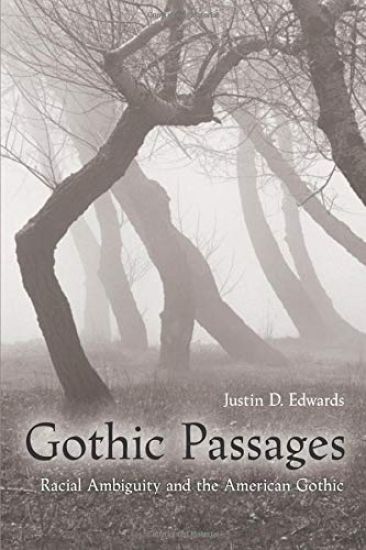
Gothic Passages

Gothic Passages

Justin D. Edwards

University of Iowa Press
2013
nidottu
This groundbreaking study analyzes the development of American gothic literature alongside nineteenth-century discourses of passing and racial ambiguity.By bringing together these areas of analysis, Justin Edwards considers the following questions. How are the categories of “race” and the rhetoric of racial difference tied to the language of gothicism? What can these discursive ties tell us about a range of social boundaries—gender, sexuality, class, race, etc.—during the nineteenth century? What can the construction and destabilization of these social boundaries tell us about the development of the U.S. gothic?The sources used to address these questions are diverse, often literary and historical, fluidly moving between “representation” and “reality.” Works of gothic literature by Edgar Allan Poe, Herman Melville, Frances Harper, and Charles Chesnutt, among others, are placed in the contexts of nineteenth-century racial “science” and contemporary discourses about the formation of identity. Edwards then examines how nineteenth-century writers gothicized biracial and passing figures in order to frame them within the rubric of a “demonization of difference.” By charting such depictions in literature and popular science, he focuses on an obsession in antebellum and postbellum America over the threat of collapsing racial identities—threats that resonated strongly with fears of the transgression of the boundaries of sexuality and the social anxiety concerning the instabilities of gender, class, ethnicity, and nationality.Gothic Passages not only builds upon the work of Americanists who uncover an underlying racial element in U.S. gothic literature but also sheds new light on the pervasiveness of gothic discourse in nineteenth-century representations of passing from both sides of the color line. This fascinating book will be of interest to scholars of American literature, cultural studies, and African American studies.
Mobility at Large

Mobility at Large

Justin D. Edwards; Rune Graulund

Liverpool University Press
2012
sidottu
Mobility at Large explores a unique trajectory of travel writing. Instead of focussing on best-selling travel texts by Paul Theroux, Bill Bryson, Michael Palin, Alain de Botton and others, this book examines a strand of innovative contemporary travel writing wherein the authors experiment with form, content and the politics of representation. In this, innovative travel texts by a range of writers – from Michael Ondaatje and Caryl Phillips to Daphne Marlatt and Sam Miller – transform the genre by inscribing travel, migration, mobility and displacement within a variety of experimental textual strategies to work through questions of movement and the politics of personal identity in relation to the complex interlocutions of space, place and subjectivity. As a result, Mobility at Large challenges those critics who dismiss the genre as inherently conservative and inextricably bound up in a colonial, Eurocentric tradition. The book also documents a long and rich tradition of travel writing that existed well beyond the influence of Europe.
Postcolonial Literature

Postcolonial Literature

Justin D. Edwards

Red Globe Press
2008
sidottu
This Guide analyses the criticism of English-language literature from the major regions of the postcolonial world. Criticism on works by writers such as Jean Rhys, V.S. Naipaul and Salman Rushdie, is discussed to illustrate the themes and concepts essential to an understanding of postcolonial literature and the development of criticism in the field
Postcolonial Literature

Postcolonial Literature

Justin D. Edwards

Red Globe Press
2008
nidottu
This Guide analyses the criticism of English-language literature from the major regions of the postcolonial world. Criticism on works by writers such as Jean Rhys, V.S. Naipaul and Salman Rushdie, is discussed to illustrate the themes and concepts essential to an understanding of postcolonial literature and the development of criticism in the field
Understanding Jamaica Kincaid

Understanding Jamaica Kincaid

Justin D. Edwards

University of South Carolina Press
2007
sidottu
Understanding Jamaica Kincaid introduces readers to the prizewinning author best known for the novels ""Annie John"", ""Lucy"", and ""The Autobiography of My Mother"". Justin D. Edwards surveys Jamaica Kincaid's life, career, and major works of fiction and nonfiction to identify and discuss her recurring interests in familial relations, Caribbean culture, and the aftermath of colonialism and exploitation. In addition to examining the haunting prose, rich detail, and personal insight that have brought Kincaid widespread praise, Edwards also identifies and analyzes the novelist's primary thematic concerns - the flow of power and the injustices faced by people undergoing social, economic, and political change. Edwards chronicles Kincaid's childhood in ""Antigua"", her development as a writer, and her early journalistic work as published in the ""New Yorker"" and other magazines. In separate chapters he provides critical appraisals of Kincaid's early novels; her works of nonfiction, including ""My Brother"" and ""A Small Place""; and her more recent novels, including ""Mr. Potter"". Edwards discusses the way in which Kincaid both exposes the problems of colonization and neocolonization and warns her readers about the dire consequences of inequality in the era of globalization.