Kirjojen hintavertailu. Mukana 12 595 353 kirjaa ja 12 kauppaa.

Kirjailija

Justin O'Connor

Kirjat ja teokset yhdessä paikassa: 7 kirjaa, julkaisuja vuosilta 1996-2026, suosituimpien joukossa Red Creative. Vertaile teosten hintoja ja tarkista saatavuus suomalaisista kirjakaupoista.

Mukana myös kirjoitusasut: Justin O’Connor

7 kirjaa

Kirjojen julkaisuhaarukka 1996-2026.

Red Creative: Culture and Modernity in China

Red Creative: Culture and Modernity in China

Justin O'Connor; Xin Gu

Routledge
2026
sidottu
As China’s leading economic metropolis and ‘most western city’ Shanghai in the last twenty years has used culture as a major spur to its ambitions to become a global city. This book is the first systematic investigation of how various ‘cultural economy’ strategies have been framed and pursued in a Chinese urban context. But Shanghai’s modernization, frequently couched in terms of ‘catching up with the West’ has – like that of China as a whole – developed a momentum and trajectory which has begun to challenge western-centric notions of development. If this has been partially recognised in terms of the axiomatic relations between capitalism and liberal democracy, it has been less so in terms of cultural economy policies whose pursuit has become an index of global modernity. This book engages in the debates on the ‘separation’ and ‘convergence’ of culture and economy in a context in which the framework of ‘Euro-modernity’ is being increasingly challenged.
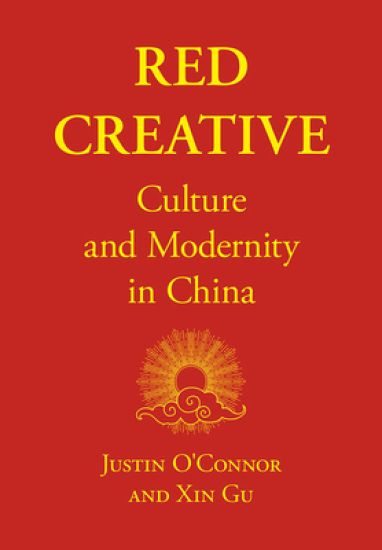
Red Creative

Red Creative

Justin O'Connor; Xin Gu

Intellect Books
2020
sidottu
This book brings together multiple strands of debate around the cultural creative industries and contemporary capitalism, China’s position in global capitalism, the future of modernity and new ways of thinking about culture and cultural policy. Clearly written and engaging, it is the first study to provide a critical lens on creative industries discourse and to bring it together with detailed historical and social analysis. It analyses the ongoing development of China’s cultural industries, examining the institutions, regulations, interests and markets that underpin the Chinese cultural economy and the strategic position of Shanghai within that economy. Explores cultural policy reforms in post-colonial China and articulates Shanghai’s significance in paving China’s path to modernity and entry to global capitalism. In-depth and illuminating, this book situates China’s contemporary cultural economy in its larger global and historical context, revealing the limits of Western thought in understanding Chinese history, culture and society. This book is aimed at a broad, educated audience who seek to engage more with what is happening in China, especially in the cultural field. It tries to take such an audience outside the standard frame of Western modernity, suggesting the possibility of different historical trajectories and possibilities. Because the book is theoretical and empirical in its approach, it will be of strong interest to both those interested in Chinese cultural policy and the creative industries approach generally. Cultural and creative industries is an increasingly important subject area in Higher Education, with undergraduate and postgraduate programs representing some of the fastest growing areas in arts, humanities and social science faculties. This audience is increasingly global, as this policy debate has now moved outside the Western countries whose economic competitiveness it was meant to promote. It is an agenda promoted by agencies such as UNESCO, UNCTAD, the World Bank, British Council and the Goethe Institute. Primary readership will be academics with a particular interest in Chinese culture, cultural studies, media studies, public policy and management studies, cultural policy, East Asian studies and cultural policy researchers. It will also be relevant to all those interested in China and Chinese’s culture; and those interested in the history of Shanghai and the role it plays in contemporary Chinese culture and politics. Given the current interest in China, it may also be of wider appeal too.
Culture is Not an Industry

Culture is Not an Industry

Justin O'Connor

MANCHESTER UNIVERSITY PRESS
2024
nidottu
Culture is at the heart of what it means to be human. But twenty-five years ago, the British government rebranded art and culture as ‘creative industries’, valued for their economic contribution, and set out to launch the UK as the creative workshop of a globalised world.Where does that leave art and culture now? Facing exhausted workers and a lack of funding and vision, culture finds itself in the grip of accountancy firms, creativity gurus and Ted Talkers. At a time of sweeping geo-political turmoil, culture has been de-politicised, its radical energies reduced to factors of industrial production. This book is about what happens when an essential part of our democratic citizenship, fundamental to our human rights, is reduced to an industry.Culture is not an industry argues that art and culture need to renew their social contract and re-align with the radical agenda for a more equitable future. Bold and uncompromising, the book offers a powerful vision for change.
Culture is Not an Industry

Culture is Not an Industry

Justin O'Connor

MANCHESTER UNIVERSITY PRESS
2024
sidottu
Culture is at the heart of what it means to be human. But twenty-five years ago, the British government rebranded art and culture as ‘creative industries’, valued for their economic contribution, and set out to launch the UK as the creative workshop of a globalised world.Where does that leave art and culture now? Facing exhausted workers and a lack of funding and vision, culture finds itself in the grip of accountancy firms, creativity gurus and Ted Talkers. At a time of sweeping geo-political turmoil, culture has been de-politicised, its radical energies reduced to factors of industrial production. This book is about what happens when an essential part of our democratic citizenship, fundamental to our human rights, is reduced to an industry.Culture is not an industry argues that art and culture need to renew their social contract and re-align with the radical agenda for a more equitable future. Bold and uncompromising, the book offers a powerful vision for change.
Red Creative

Red Creative

Justin O'Connor; Xin Gu

Intellect Books
2020
nidottu
This book brings together multiple strands of debate around the cultural creative industries and contemporary capitalism, China’s position in global capitalism, the future of modernity and new ways of thinking about culture and cultural policy. Clearly written and engaging, it is the first study to provide a critical lens on creative industries discourse and to bring it together with detailed historical and social analysis. It analyses the ongoing development of China’s cultural industries, examining the institutions, regulations, interests and markets that underpin the Chinese cultural economy and the strategic position of Shanghai within that economy. Explores cultural policy reforms in post-colonial China and articulates Shanghai’s significance in paving China’s path to modernity and entry to global capitalism. In-depth and illuminating, this book situates China’s contemporary cultural economy in its larger global and historical context, revealing the limits of Western thought in understanding Chinese history, culture and society. This book is aimed at a broad, educated audience who seek to engage more with what is happening in China, especially in the cultural field. It tries to take such an audience outside the standard frame of Western modernity, suggesting the possibility of different historical trajectories and possibilities. Because the book is theoretical and empirical in its approach, it will be of strong interest to both those interested in Chinese cultural policy and the creative industries approach generally. Cultural and creative industries is an increasingly important subject area in Higher Education, with undergraduate and postgraduate programs representing some of the fastest growing areas in arts, humanities and social science faculties. This audience is increasingly global, as this policy debate has now moved outside the Western countries whose economic competitiveness it was meant to promote. It is an agenda promoted by agencies such as UNESCO, UNCTAD, the World Bank, British Council and the Goethe Institute. Primary readership will be academics with a particular interest in Chinese culture, cultural studies, media studies, public policy and management studies, cultural policy, East Asian studies and cultural policy researchers. It will also be relevant to all those interested in China and Chinese’s culture; and those interested in the history of Shanghai and the role it plays in contemporary Chinese culture and politics. Given the current interest in China, it may also be of wider appeal too.

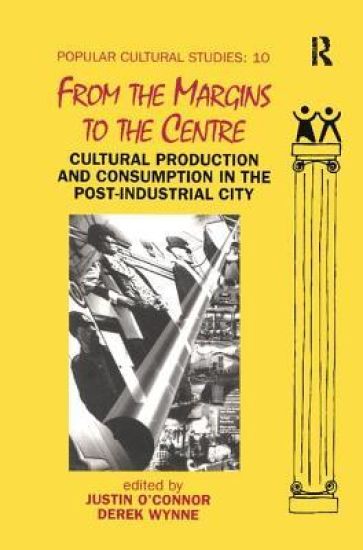
From the Margins to the Centre

From the Margins to the Centre

Justin O’Connor; Derek Wynne

Routledge
2017
sidottu
The title of this book, From the Margins to the Centre, refers to three related themes that have run closely together in the debates on the city in the 1980s and 1990s. Firstly a process of restructuring in which activities previously deemed peripheral to the 'productive' city have now moved centre stage; that is, a concern with culture, consumption and image. Secondly, the notion of gentrification, whereby a reversal of the movement out of the city centre by the affluent classes results in a re-centralisation of previously marginal areas of the city centre. Thirdly, a process whereby previously marginal groups and their activities have been made central to the city - and have made the city centre central to themselves. Each of the chapters in this volume derives from recently conducted research grounded in an attempt to examine some of the issues posed in what can be described as postmodernist theorising on the nature of the contemporary city. A strong current of such thought has placed the multiple uses of city spaces at the centre of its claims for the construction and deconstruction of identities. The prolification and fragmentation of patterns of cultural production and consumption, it is claimed, makes the city a complex field of conflicting activities whose juxtaposition undermines traditional cultural hierarchies. Across this field identity becomes fluid in a way that uncouples its connection with the fixed categories of class, gender and ethnicity. While such positions point to a dominant role for culture in contemporary society, there has been little discussion or investigation of the social practices whereby this is effected. This book attempts an investigation of such practices. Implicit in the very conception of the book, and running through each of the contributions, is the view that contemporary popular culture is crucial to the understanding of the transformations to which we refer, and that the investigation of this popular culture needs
From the Margins to the Centre

From the Margins to the Centre

Justin O’Connor; Derek Wynne

Ashgate Publishing Limited
1996
nidottu
The title of this book, From the Margins to the Centre, refers to three related themes that have run closely together in the debates on the city in the 1980s and 1990s. Firstly a process of restructuring in which activities previously deemed peripheral to the 'productive' city have now moved centre stage; that is, a concern with culture, consumption and image. Secondly, the notion of gentrification, whereby a reversal of the movement out of the city centre by the affluent classes results in a re-centralisation of previously marginal areas of the city centre. Thirdly, a process whereby previously marginal groups and their activities have been made central to the city - and have made the city centre central to themselves. Each of the chapters in this volume derives from recently conducted research grounded in an attempt to examine some of the issues posed in what can be described as postmodernist theorising on the nature of the contemporary city. A strong current of such thought has placed the multiple uses of city spaces at the centre of its claims for the construction and deconstruction of identities. The prolification and fragmentation of patterns of cultural production and consumption, it is claimed, makes the city a complex field of conflicting activities whose juxtaposition undermines traditional cultural hierarchies. Across this field identity becomes fluid in a way that uncouples its connection with the fixed categories of class, gender and ethnicity. While such positions point to a dominant role for culture in contemporary society, there has been little discussion or investigation of the social practices whereby this is effected. This book attempts an investigation of such practices. Implicit in the very conception of the book, and running through each of the contributions, is the view that contemporary popular culture is crucial to the understanding of the transformations to which we refer, and that the investigation of this popular culture needs