Kirjojen hintavertailu. Mukana 12 203 385 kirjaa ja 12 kauppaa.

Kirjailija

Justin Steinberg

Kirjat ja teokset yhdessä paikassa: 10 kirjaa, julkaisuja vuosilta 2007-2023, suosituimpien joukossa Dante E Il Suo Pubblico. Vertaile teosten hintoja ja tarkista saatavuus suomalaisista kirjakaupoista.

10 kirjaa

Kirjojen julkaisuhaarukka 2007-2023.

Law and Mimesis in Boccaccio's Decameron

Law and Mimesis in Boccaccio's Decameron

Justin Steinberg

Cambridge University Press
2023
sidottu
In Boccaccio's time, the Italian city-state began to take on a much more proactive role in prosecuting crime – one which superseded a largely communitarian, private approach. The emergence of the state-sponsored inquisitorial trial indeed haunts the legal proceedings staged in the Decameron. How, Justin Steinberg asks, does this significant juridical shift alter our perspective on Boccaccio's much-touted realism and literary self-consciousness? What can it tell us about how he views his predecessor, Dante: perhaps the world's most powerful inquisitorial judge? And to what extent does the Decameron shed light on the enduring role of verisimilitude and truth-seeming in our current legal system? The author explores these and other literary, philosophical, and ethical questions that Boccaccio raises in the Decameron's numerous trials. The book will appeal to scholars and students of medieval and early modern studies, literary theory and legal history.
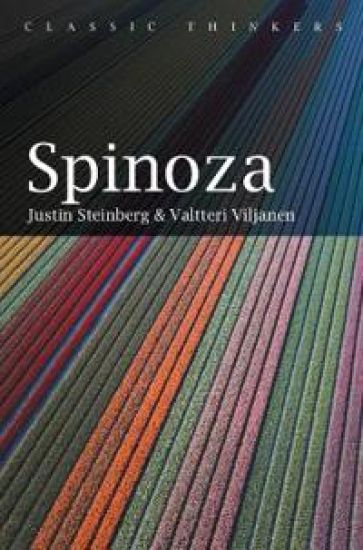
Spinoza

Spinoza

Justin Steinberg

Polity Press
2020
sidottu
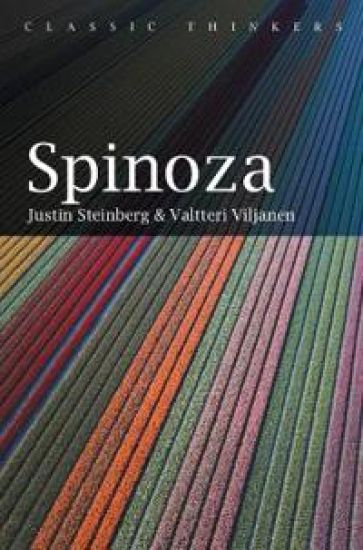
Benedict de Spinoza is one of the most controversial and enigmatic thinkers in the history of philosophy. His greatest work, Ethics (1677), developed a comprehensive philosophical system and argued that God and Nature are identical. His scandalous Theological-Political Treatise (1670) provoked outrage during his lifetime due to its biblical criticism, anticlericalism, and defense of the freedom to philosophize. Together, these works earned Spinoza a reputation as a singularly radical thinker. In this book, Steinberg and Viljanen offer a concise and up-to-date account of Spinoza’s thought and its philosophical legacy. They explore the full range of Spinoza’s ideas, from politics and theology to ontology and epistemology. Drawing broadly on Spinoza’s impressive oeuvre, they have crafted a lucid introduction for readers unfamiliar with this important philosopher, as well as a nuanced and enlightening study for more experienced readers. Accessible and compelling, Spinoza is the go-to text for anyone seeking to understand the thought of one of history’s most fascinating thinkers.
Spinoza

Spinoza

Justin Steinberg

Polity Press
2020
nidottu
Benedict de Spinoza is one of the most controversial and enigmatic thinkers in the history of philosophy. His greatest work, Ethics (1677), developed a comprehensive philosophical system and argued that God and Nature are identical. His scandalous Theological-Political Treatise (1670) provoked outrage during his lifetime due to its biblical criticism, anticlericalism, and defense of the freedom to philosophize. Together, these works earned Spinoza a reputation as a singularly radical thinker. In this book, Steinberg and Viljanen offer a concise and up-to-date account of Spinoza’s thought and its philosophical legacy. They explore the full range of Spinoza’s ideas, from politics and theology to ontology and epistemology. Drawing broadly on Spinoza’s impressive oeuvre, they have crafted a lucid introduction for readers unfamiliar with this important philosopher, as well as a nuanced and enlightening study for more experienced readers. Accessible and compelling, Spinoza is the go-to text for anyone seeking to understand the thought of one of history’s most fascinating thinkers.
Spinoza's Political Psychology

Spinoza's Political Psychology

Justin Steinberg

Cambridge University Press
2020
pokkari
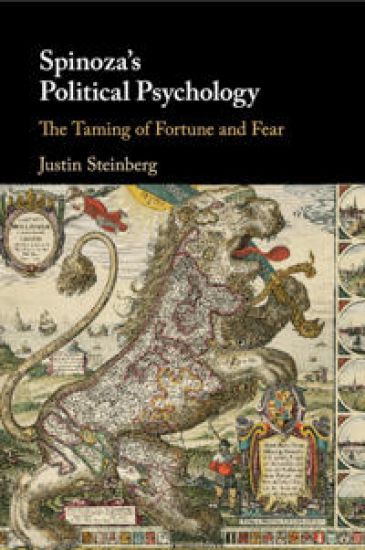
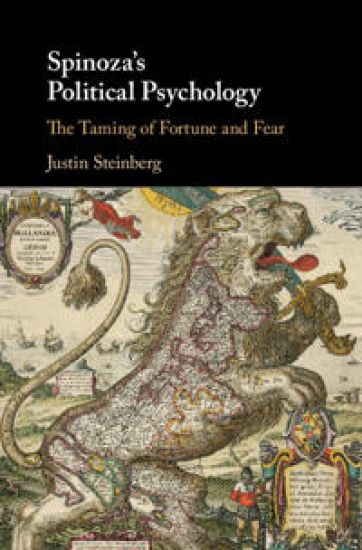
Spinoza's Political Psychology advances a novel, comprehensive interpretation of Spinoza's political writings, exploring how his analysis of psychology informs his arguments for democracy and toleration. Justin Steinberg shows how Spinoza's political method resembles the Renaissance civic humanism in its view of governance as an adaptive craft that requires psychological attunement. He examines the ways that Spinoza deploys this realist method in the service of empowerment, suggesting that the state can affectively reorient and thereby liberate its citizens, but only if it attends to their actual motivational and epistemic capacities. His book will interest a range of readers in Spinoza studies and the history of political thought, as well as readers working in contemporary political theory.
Spinoza's Political Psychology

Spinoza's Political Psychology

Justin Steinberg

Cambridge University Press
2018
sidottu
Spinoza's Political Psychology advances a novel, comprehensive interpretation of Spinoza's political writings, exploring how his analysis of psychology informs his arguments for democracy and toleration. Justin Steinberg shows how Spinoza's political method resembles the Renaissance civic humanism in its view of governance as an adaptive craft that requires psychological attunement. He examines the ways that Spinoza deploys this realist method in the service of empowerment, suggesting that the state can affectively reorient and thereby liberate its citizens, but only if it attends to their actual motivational and epistemic capacities. His book will interest a range of readers in Spinoza studies and the history of political thought, as well as readers working in contemporary political theory.
Dante E Il Suo Pubblico

Dante E Il Suo Pubblico

Justin Steinberg

Viella
2018
nidottu
I primi lettori di Dante non sono soltanto i poeti che rispondono per le rime alle sue liriche giovanili, ma anche coloro che per primi copiano, preservano e mettono in circolazione i suoi testi, e che fino a oggi sono stati trascurati dalla critica. Grazie a una ricerca di prima mano su documenti e manoscritti, Justin Steinberg ci mostra il ruolo svolto dai professionisti cittadini - mercanti e notai - come cultori e custodi della lirica italiana delle origini. Pur senza avere una formazione da amanuensi, questi lettori compiono scelte complesse e consapevoli nella selezione e trascrizione dei componimenti, e utilizzano la poesia come strumento essenziale per costruire la propria identita individuale e collettiva. Lo studio di questo pubblico consente all'autore di ricostruire i diversi contesti sociali, politici e storici con cui Dante si confronta e al cui interno rielabora i dibattiti poetici della propria epoca. Steinberg ci mostra cosi come tutta la carriera dell'Alighieri - dalla Vita nova al De vulgari eloquentia, fino alla Commedia - sia percorsa dall'esigenza di rispondere ai modi in cui il pubblico dell'Italia comunale interpretava, e troppo spesso fraintendeva, le sue opere.
Dante and the Limits of the Law

Dante and the Limits of the Law

Justin Steinberg

University of Chicago Press
2016
nidottu
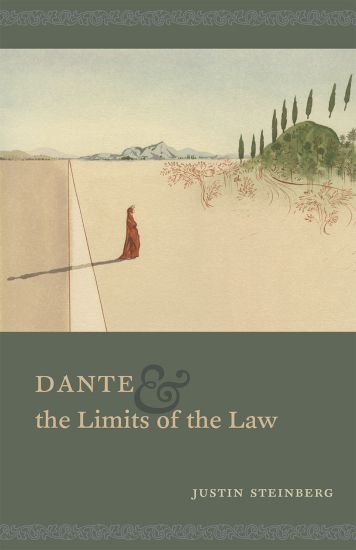
In Dante and the Limits of the Law, Justin Steinberg offers the first comprehensive study of the legal structure essential to Dante’s Divine Comedy. Steinberg reveals how Dante imagines an afterlife dominated by sophisticated laws, hierarchical jurisdictions, and rationalized punishments and rewards. He makes the compelling case that Dante deliberately exploits this highly structured legal system to explore the phenomenon of exceptions to it, crucially introducing Dante to current debates about literature’s relation to law, exceptionality, and sovereignty. Examining how Dante probes the limits of the law in this juridical otherworld, Steinberg argues that exceptions were vital to the medieval legal order and that Dante’s otherworld represents an ideal “system of exception.” In the real world, Dante saw this system as increasingly threatened by the dual crises of church and empire: the abuses and overreaching of the popes and the absence of an effective Holy Roman Emperor. Steinberg shows that Dante’s imagination of the afterlife seeks to address this gap between the universal validity of Roman law and the lack of a sovereign power to enforce it. Exploring the institutional role of disgrace, the entwined phenomena of judicial discretion and artistic freedom, medieval ideas about privilege and immunity, and the place of judgment in the poem, this cogently argued book brings to life Dante’s sense of justice.
Dante and the Limits of the Law

Dante and the Limits of the Law

Justin Steinberg

University of Chicago Press
2013
sidottu
In Dante and the Limits of the Law, Justin Steinberg offers the first comprehensive study of the legal structure crucial to Dante's Divine Comedy. Steinberg reveals how Dante imagines an afterlife dominated by elaborate laws, hierarchical jurisdictions, and rationalized punishments and rewards. Steinberg makes the compelling case that Dante deliberately exploits this highly structured legal system to explore the phenomenon of exceptions to it, introducing Dante to crucial current debates about literature's relation to law, exceptionality, and sovereignty. Examining how Dante probes the limits of the law in this juridical otherworld, Steinberg argues that exceptions were vital to the medieval legal order and that Dante's otherworld represents an ideal "system of exception." Yet Dante saw this system as threatened on earth by the dual crises of church and Empire - the abuses and overreaching of the popes and the absence of an effective Holy Roman Emperor. In his imagination of the afterlife, Steinberg shows, Dante seeks to address this gap between the universal validity of Roman law and the lack of a sovereign power to enforce it. Exploring the institutional role of disgrace, the entwined phenomena of judicial discretion and artistic freedom, medieval ideas about privilege and immunity, and the place of judgment in the poem, this is an elegantly argued book that persuasively brings to life Dante's sense of justice.
Accounting for Dante

Accounting for Dante

Justin Steinberg

University of Notre Dame Press
2007
sidottu
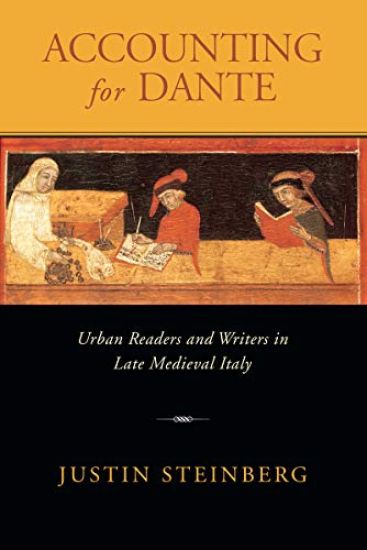
In Accounting for Dante, Justin Steinberg reexamines Dante's relation to his contemporary public, an audience that included those poets who responded to Dante's early work as well as the readers who first copied, preserved, and circulated his poetry. Based on original research of manuscripts and documents, Steinberg's study reveals in particular the importance of professional, urban classes—namely, merchants and notaries—as cultivators of early Italian poetry. Although not officially trained as glossators or scribes, these newly educated readers were full participants in an emergent vernacular literature, demonstrating at times a marked degree of sophistication in their choices of which lyric poems to include in their personal anthologies. Adapting their methods of memorializing contracts and keeping accounts to the collecting of medieval Italian poetry, these urban readers and writers made copying Italian poetry a crucial aspect of how they understood and represented themselves as individuals and communities. Steinberg describes how notaries and merchants transcribed Dante's poetry in nontraditional formats, such as in the archival documents of the Memoriali bolognesi and the register-book Vaticano Latino 3793. In bringing to light evidence of the urban reception of the early Italian lyric, Justin Steinberg restores the political, social, and historical contexts in which Dante would have understood the poetic debates of his day. He also examines how Dante continuously responded in his literary career—from the Vita Nuova, to the De Vulgari eloquentia, to the Commedia—to the interpretations and misinterpretations of his early lyrics by this municipal audience.
Accounting for Dante

Accounting for Dante

Justin Steinberg

University of Notre Dame Press
2007
nidottu
In Accounting for Dante, Justin Steinberg reexamines Dante's relation to his contemporary public, an audience that included those poets who responded to Dante's early work as well as the readers who first copied, preserved, and circulated his poetry. Based on original research of manuscripts and documents, Steinberg's study reveals in particular the importance of professional, urban classes—namely, merchants and notaries—as cultivators of early Italian poetry. Although not officially trained as glossators or scribes, these newly educated readers were full participants in an emergent vernacular literature, demonstrating at times a marked degree of sophistication in their choices of which lyric poems to include in their personal anthologies. Adapting their methods of memorializing contracts and keeping accounts to the collecting of medieval Italian poetry, these urban readers and writers made copying Italian poetry a crucial aspect of how they understood and represented themselves as individuals and communities. Steinberg describes how notaries and merchants transcribed Dante's poetry in nontraditional formats, such as in the archival documents of the Memoriali bolognesi and the register-book Vaticano Latino 3793. In bringing to light evidence of the urban reception of the early Italian lyric, Justin Steinberg restores the political, social, and historical contexts in which Dante would have understood the poetic debates of his day. He also examines how Dante continuously responded in his literary career—from the Vita Nuova, to the De Vulgari eloquentia, to the Commedia—to the interpretations and misinterpretations of his early lyrics by this municipal audience.