Kirjojen hintavertailu. Mukana 12 390 323 kirjaa ja 12 kauppaa.

Kirjailija

Justine McConnell

Kirjat ja teokset yhdessä paikassa: 5 kirjaa, julkaisuja vuosilta 2011-2024, suosituimpien joukossa Black Odysseys. Vertaile teosten hintoja ja tarkista saatavuus suomalaisista kirjakaupoista.

5 kirjaa

Kirjojen julkaisuhaarukka 2011-2024.

Black Odysseys

Black Odysseys

Justine McConnell

Oxford University Press
2013
sidottu
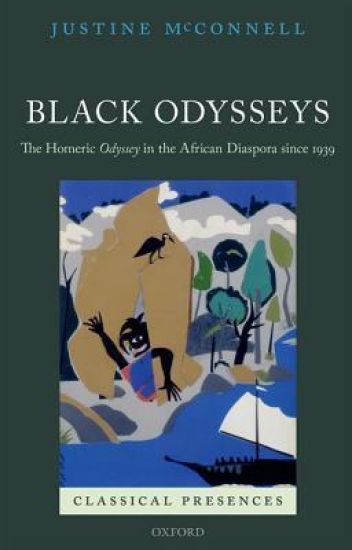
Black Odysseys explores creative works by artists of ultimately African descent, which respond to the Homeric Odyssey. Considering what the ancient Greek epic has signified for those struggling to emerge from the shadow of Western imperialism, and how it has inspired anti-colonial poets, novelists, playwrights, and directors, McConnell examines twentieth- and twenty-first century works from Africa and the African diaspora, including the Caribbean and the United States. In seeking to discover why the Odyssey, as a founding text of the Western canon, has been of such interest to these artists, the great plurality of post-colonial and anti-colonial responses becomes clear: responses that differ dramatically from each other, even in the attitude adopted towards Odysseus himself. Since Aimé Césaire's seminal 1939 poem, Cahier d'un retour au pays natal (Notebook of a Return to My Native Land), the Odyssey's homecoming trope and quest for identity have inspired writers who are simultaneously striving against and appropriating the very forms which had been used to oppress them. Following in the wake of Césaire, this volume proceeds chronologically and considers works by Ralph Ellison, Derek Walcott, Jon Amiel, Wilson Harris, Njabulo Ndebele, and Jatinder Verma.
Derek Walcott and the Creation of a Classical Caribbean

Derek Walcott and the Creation of a Classical Caribbean

Justine McConnell

BLOOMSBURY PUBLISHING PLC
2024
nidottu
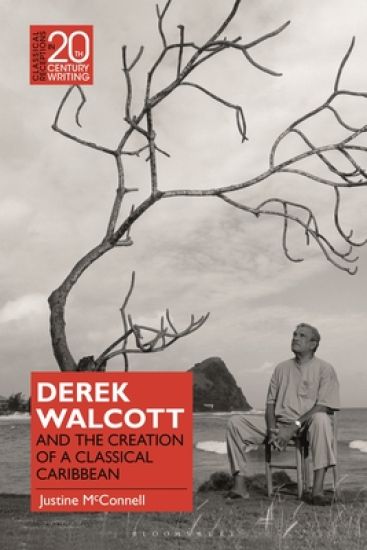
Throughout his career, Derek Walcott turned to the literature and cultures of ancient Greece and Rome. His book-length poem recasting the epics of Homer, Virgil and Dante in St Lucia is best-known in this regard, yet Omeros is only the pinnacle of a lengthy and lively dialogue that Walcott developed between the ancient Mediterranean and the modern Caribbean. Derek Walcott and the Creation of a Classical Caribbean explores how, in developing that discourse between ancient and modern, between Europe and the Caribbean, Walcott refuted the suggestion that to engage with literature from elsewhere was to lack originality; instead, he asserted a place for Caribbean art in a global, transhistorical canon. Drawing on Walcott’s own theoretical concerns, this book explores his engagement with Graeco-Roman antiquity from three key perspectives. Firstly, that a perception of time as linear must be coupled with an understanding of it as simultaneous, thereby doing away with the oppressive power of history and confirming the ‘New World’ on a par with the ‘Old’. Secondly, that syncretism lies at the heart of Caribbean life and art, with influences from Africa, Asia, and Europe constituting key parts of Caribbean identity alongside its indigenous cultures. Thirdly, that Caribbean literature creates the world anew without erasing the past. With these three postcolonial conceptions at the heart of his engagement with ancient Greece and Rome, Walcott revealed the reasons why classical reception has been a rich facet of Caribbean artistry.
Derek Walcott and the Creation of a Classical Caribbean

Derek Walcott and the Creation of a Classical Caribbean

Justine McConnell

BLOOMSBURY PUBLISHING PLC
2023
sidottu
Throughout his career, Derek Walcott turned to the literature and cultures of ancient Greece and Rome. His book-length poem recasting the epics of Homer, Virgil and Dante in St Lucia is best-known in this regard, yet Omeros is only the pinnacle of a lengthy and lively dialogue that Walcott developed between the ancient Mediterranean and the modern Caribbean. Derek Walcott and the Creation of a Classical Caribbean explores how, in developing that discourse between ancient and modern, between Europe and the Caribbean, Walcott refuted the suggestion that to engage with literature from elsewhere was to lack originality; instead, he asserted a place for Caribbean art in a global, transhistorical canon. Drawing on Walcott’s own theoretical concerns, this book explores his engagement with Graeco-Roman antiquity from three key perspectives. Firstly, that a perception of time as linear must be coupled with an understanding of it as simultaneous, thereby doing away with the oppressive power of history and confirming the ‘New World’ on a par with the ‘Old’. Secondly, that syncretism lies at the heart of Caribbean life and art, with influences from Africa, Asia, and Europe constituting key parts of Caribbean identity alongside its indigenous cultures. Thirdly, that Caribbean literature creates the world anew without erasing the past. With these three postcolonial conceptions at the heart of his engagement with ancient Greece and Rome, Walcott revealed the reasons why classical reception has been a rich facet of Caribbean artistry.
Performing Epic or Telling Tales

Performing Epic or Telling Tales

Fiona M. Macintosh; Justine McConnell

Oxford University Press
2020
sidottu
Performing Epic or Telling Tales takes the new millennium as a starting point for an exploration of the turn to narrative in twenty-first-century theatre, which is often also a turn to Graeco-Roman epic. However, the dominant focus of the volume is less on 'what' the recent epic turn in the theatre consists of than 'why' it seems to be so prevalent: this turn is explained with reference not only to the translation and scholarly histories of the epics, but also to earlier performance traditions and, notably, to recent theoretical debates relating to text-based 'drama' and performance based 'theatre'. What is perhaps most remarkable about this epic turn is not simply the sheer number of outstanding performances that it has produced; it is also that recent practice appears to have outstripped much theoretical discussion about theatre. In chapters ranging from spoken word performances to ballet, from the use of machines and technology to performances that make space for voices occluded by the ancient epics, Performing Epic or Telling Tales seeks to contextualize and explain the 'narrative'/storytelling (re-)turn in recent live performances - a turn that regularly entails engagement with ancient Graeco-Roman epics, which have long provided poets, playwrights, artists, and theatre makers with a storehouse of rich, often perceived as 'raw', material. Refigured and refracted for the modern era, the epics of ancient Greece and Rome are found to be particularly revealing, and particularly 'telling' of the contemporary wider cultural sphere.
Ancient Slavery and Abolition

Ancient Slavery and Abolition

Justine McConnell

Oxford University Press
2011
sidottu
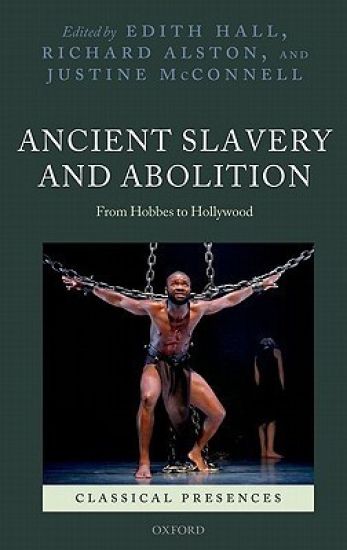
A pathbreaking study of the role played by ancient Greek and Roman sources and voices in the struggle to abolish transatlantic slavery and in representations of that struggle in the twentieth century. Thirteen essays by an interdisciplinary team of specialists from three continents, led by the Centre for the Reception of Greece and Rome at Royal Holloway University of London, ask how both critics and defenders of slavery in media ranging from parliamentary speeches to poetry, fiction, drama, and cinema have summoned the ghosts of the ancient Spartans, Homer, Aristotle, Aeschylus, Pliny, Spartacus, and Prometheus to support their arguments.