Kirjojen hintavertailu. Mukana 12 595 353 kirjaa ja 12 kauppaa.

Kirjailija

Jyotirmay Mathur

Kirjat ja teokset yhdessä paikassa: 27 kirjaa, julkaisuja vuosilta 2011-2026, suosituimpien joukossa Building Energy Simulation Using DesignBuilder™. Vertaile teosten hintoja ja tarkista saatavuus suomalaisista kirjakaupoista.

27 kirjaa

Kirjojen julkaisuhaarukka 2011-2026.

Building Energy Simulation Using DesignBuilder™

Building Energy Simulation Using DesignBuilder™

Vishal Garg; Jyotirmay Mathur; Aviruch Bhatia

TAYLOR FRANCIS LTD
2026
nidottu
This book explains the key concepts of energy simulations, build simulation models and use of these models to integrate daylight and energy efficiency in their building designs. It covers the key concepts of energy simulation, construction of the building with respect to geometry and materials used. It explains HVAC and photovoltaics as a medium to improve energy efficiency and energy generation, respectively. It covers heating and cooling design including simulating different types of HVACs and impact of photovoltaics for energy generation. It is aimed at students, researchers in building energy (simulation)/building design courses, energy simulation professionals, architects and so forth. Explains the building physics and related concepts behind energy performance of building without relying on high-level mathematics Covers the simulation of dynamic shading techniques and daylighting strategies, offering insights into optimizing building performance Discusses the analysis of individual components of centralized HVAC systems Includes the simulation of on-site photovoltaic systems by looking at their placement and its effect on energy generation Focusses on adaptive controls in naturally ventilated buildings It is aimed at students, researchers in building energy (simulation)/building design courses, energy simulation professionals, architects and so forth.
Building Energy Simulation Using DesignBuilder™

Building Energy Simulation Using DesignBuilder™

Vishal Garg; Jyotirmay Mathur; Aviruch Bhatia

TAYLOR FRANCIS LTD
2026
muu
This book explains the key concepts of energy simulations, build simulation models and use of these models to integrate daylight and energy efficiency in their building designs. It covers the key concepts of energy simulation, construction of the building with respect to geometry and materials used. It explains HVAC and photovoltaics as a medium to improve energy efficiency and energy generation, respectively. It covers heating and cooling design including simulating different types of HVACs and impact of photovoltaics for energy generation. It is aimed at students, researchers in building energy (simulation)/building design courses, energy simulation professionals, architects and so forth. Explains the building physics and related concepts behind energy performance of building without relying on high-level mathematics Covers the simulation of dynamic shading techniques and daylighting strategies, offering insights into optimizing building performance Discusses the analysis of individual components of centralized HVAC systems Includes the simulation of on-site photovoltaic systems by looking at their placement and its effect on energy generation Focusses on adaptive controls in naturally ventilated buildings It is aimed at students, researchers in building energy (simulation)/building design courses, energy simulation professionals, architects and so forth.

Building Energy Simulation Using DesignBuilder™

Building Energy Simulation Using DesignBuilder™

Vishal Garg; Jyotirmay Mathur; Aviruch Bhatia

TAYLOR FRANCIS LTD
2026
sidottu
Building Energy Simulation: A Workbook Using DesignBuilder concludes with this second volume of the comprehensive, tutorial-based energy simulation training series. This advanced volume focuses on mechanical systems and economic analysis, covering air-conditioning design, photovoltaic integration, and project costing methodologies. It includes topics on simulating HVAC components such as chillers, boilers, air handling units, heat recovery systems, and HVAC controls. This volume also addresses advanced topics like integrating thermal storage for demand response, renewable energy integration, cost-benefit evaluations, sensitivity and uncertainty analysis. Features: Focuses on learning building energy simulation while being interactive through examples and exercises. Explains the building physics and the science behind the energy performance of buildings. Encourages an integrated design approach by explaining the interactions between various building systems and their effect on energy performance of building. Discusses a how-to model for building energy code compliance. Provides hands-on training of building energy simulation tools: DesignBuilder™ and EnergyPlus. This book is intended for students and researchers in building energy courses, energy simulation professionals, and architects.
Building Energy Simulation Using DesignBuilder™

Building Energy Simulation Using DesignBuilder™

Vishal Garg; Jyotirmay Mathur; Aviruch Bhatia

TAYLOR FRANCIS LTD
2026
sidottu
Building Energy Simulation: A Workbook Using DesignBuilder is a comprehensive, tutorial-based training guide designed to teach energy simulation through hands-on practice. This first volume of the two-part series concentrates on fundamental building performance elements, including building envelope design, passive strategies like shading and insulation systems, cool and green roof technologies, and daylighting optimization. It also covers interior lighting simulation with advanced control strategies. A newly added chapter on Life Cycle Analysis (LCA) introduces a quantitative approach to sustainability strategy, supporting informed design decisions. LCA simulations are now also important in earning green building certification credits. The daylighting section has been enhanced to include dynamic shading for internal windows and spatial daylight autonomy (sDA) simulations. Features: Focuses on learning building energy simulation while being interactive through examples and exercises. Explains the building physics and the science behind the energy performance of buildings. Encourages an integrated design approach by explaining the interactions between various building systems and their effect on energy performance of building. Discusses a how-to model for building energy code compliance. Provides hands-on training of building energy simulation tools: DesignBuilder™ and EnergyPlus. This book is intended for students and researchers in building energy courses, energy simulation professionals, and architects.
Building Energy Simulation Using DesignBuilder™

Building Energy Simulation Using DesignBuilder™

Vishal Garg; Jyotirmay Mathur; Aviruch Bhatia

TAYLOR FRANCIS LTD
2026
nidottu
Building Energy Simulation: A Workbook Using DesignBuilder concludes with this second volume of the comprehensive, tutorial-based energy simulation training series. This advanced volume focuses on mechanical systems and economic analysis, covering air-conditioning design, photovoltaic integration, and project costing methodologies. It includes topics on simulating HVAC components such as chillers, boilers, air handling units, heat recovery systems, and HVAC controls. This volume also addresses advanced topics like integrating thermal storage for demand response, renewable energy integration, cost-benefit evaluations, sensitivity and uncertainty analysis. Features: Focuses on learning building energy simulation while being interactive through examples and exercises. Explains the building physics and the science behind the energy performance of buildings. Encourages an integrated design approach by explaining the interactions between various building systems and their effect on energy performance of building. Discusses a how-to model for building energy code compliance. Provides hands-on training of building energy simulation tools: DesignBuilder™ and EnergyPlus. This book is intended for students and researchers in building energy courses, energy simulation professionals, and architects.
Building Energy Simulation Using DesignBuilder™

Building Energy Simulation Using DesignBuilder™

Vishal Garg; Jyotirmay Mathur; Aviruch Bhatia

TAYLOR FRANCIS LTD
2026
nidottu
Building Energy Simulation: A Workbook Using DesignBuilder is a comprehensive, tutorial-based training guide designed to teach energy simulation through hands-on practice. This first volume of the two-part series concentrates on fundamental building performance elements, including building envelope design, passive strategies like shading and insulation systems, cool and green roof technologies, and daylighting optimization. It also covers interior lighting simulation with advanced control strategies. A newly added chapter on Life Cycle Analysis (LCA) introduces a quantitative approach to sustainability strategy, supporting informed design decisions. LCA simulations are now also important in earning green building certification credits. The daylighting section has been enhanced to include dynamic shading for internal windows and spatial daylight autonomy (sDA) simulations. Features: Focuses on learning building energy simulation while being interactive through examples and exercises. Explains the building physics and the science behind the energy performance of buildings. Encourages an integrated design approach by explaining the interactions between various building systems and their effect on energy performance of building. Discusses a how-to model for building energy code compliance. Provides hands-on training of building energy simulation tools: DesignBuilder™ and EnergyPlus. This book is intended for students and researchers in building energy courses, energy simulation professionals, and architects.
Gestione del carico residenziale

Gestione del carico residenziale

Sonali Chadha; G D Agarwal; Jyotirmay Mathur

International Book Market Service Ltd
2021
pokkari
La domanda di energia, e in particolare la domanda di elettricit in India cresciuta ad un ritmo molto rapido nell'ultimo decennio. Attualmente, il settore dell'elettricit caratterizzato da carenze croniche di energia e da una scarsa qualit dell'energia. Con una domanda che supera l'offerta, gravi picchi e carenze di energia continuano a tormentare il settore. Mentre il governo ha aperto il settore della produzione di energia agli investimenti privati nel 1991, gli State Electricity Boards (SEBs) continuano ad essere le principali agenzie responsabili della generazione e della fornitura di energia elettrica in India oggi. Il problema elementare affrontato dal settore dell'energia la cattiva condizione finanziaria di questi State Electricity Boards. Ci ha portato a investimenti inadeguati in capacit di generazione aggiuntiva, che probabilmente esacerberanno ulteriormente il divario esistente tra l'offerta e la domanda di energia. Chiaramente, c' un grande ruolo e potenziale per i programmi di gestione della domanda (DSM) in India.
Gestion de la charge résidentielle

Gestion de la charge résidentielle

Sonali Chadha; G D Agarwal; Jyotirmay Mathur

International Book Market Service Ltd
2021
pokkari
La demande d' nergie, et en particulier la demande d' lectricit en Inde, a augment un rythme tr s rapide au cours de la derni re d cennie. Actuellement, le secteur de l' lectricit est caract ris par des p nuries chroniques et une mauvaise qualit de l' nergie. La demande tant sup rieure l'offre, de graves p nuries de pointe et d' nergie continuent d'affliger le secteur. Bien que le gouvernement ait ouvert le secteur de la production d' lectricit aux investissements priv s en 1991, les State Electricity Boards (SEB) restent aujourd'hui les principales agences responsables de la production et de la fourniture d' lectricit en Inde. Le probl me l mentaire auquel est confront le secteur de l' lectricit est la mauvaise situation financi re de ces State Electricity Boards. Il en r sulte des investissements insuffisants dans des capacit s de production suppl mentaires, ce qui risque d'aggraver encore l' cart existant entre l'offre et la demande d' lectricit . Il est clair que les programmes de gestion de la demande (DSM) ont un r le et un potentiel importants en Inde.
Lastmanagement für Haushalte

Lastmanagement für Haushalte

Sonali Chadha; G D Agarwal; Jyotirmay Mathur

International Book Market Service Ltd
2021
pokkari
Die Energienachfrage und insbesondere die Stromnachfrage in Indien ist in den letzten zehn Jahren sehr schnell gewachsen. Derzeit ist der Stromsektor durch chronische Stromknappheit und schlechte Stromqualit t gekennzeichnet. Da die Nachfrage das Angebot bersteigt, wird der Sektor nach wie vor von schwerwiegenden Spitzenlasten und Energieengp ssen geplagt. W hrend die Regierung den Stromerzeugungssektor 1991 f r private Investitionen ffnete, sind die State Electricity Boards (SEBs) auch heute noch die Hauptverantwortlichen f r die Erzeugung und Lieferung von Strom in Indien. Das elementare Problem, mit dem der Stromsektor konfrontiert ist, sind die schlechten finanziellen Bedingungen dieser State Electricity Boards. Dies hat zu unzureichenden Investitionen in zus tzliche Erzeugungskapazit ten gef hrt, was die bestehende Kluft zwischen Stromangebot und -nachfrage weiter versch rfen d rfte. Offensichtlich gibt es eine gro e Rolle und ein gro es Potenzial f r Demand Side Management (DSM) Programme in Indien.
Gestão de Carga Residencial

Gestão de Carga Residencial

Sonali Chadha; G D Agarwal; Jyotirmay Mathur

International Book Market Service Ltd
2021
pokkari
A procura de energia, e em particular de electricidade na ndia tem crescido a um ritmo muito r pido durante a ltima d cada. Actualmente, o sector da electricidade caracteriza-se por faltas cr nicas de energia e m qualidade energ tica. Com a procura a exceder a oferta, os picos severos e a escassez de energia continuam a assolar o sector. Enquanto em 1991 o governo abriu o sector de produ o de energia ao investimento privado, os State Electricity Boards (SEBs) continuam a ser as principais ag ncias respons veis pela produ o e fornecimento de electricidade na ndia nos dias de hoje. O problema elementar que o sector da electricidade enfrenta s o as m s condi es financeiras destas Juntas Estatais de Electricidade. Isto resultou num investimento inadequado em capacidade de produ o adicional, o que suscept vel de exacerbar ainda mais o fosso existente entre a oferta e a procura de energia. Claramente, existe um grande papel e potencial para programas de Gest o do Lado da Procura (DSM) na ndia.
Building Energy Simulation

Building Energy Simulation

Vishal Garg; Jyotirmay Mathur; Aviruch Bhatia

CRC Press
2020
sidottu
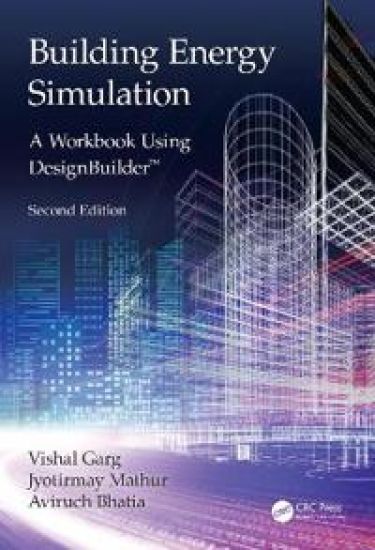
The second edition of Building Energy Simulation includes studies of various components and systems of buildings and their effect on energy consumption, with the help of DesignBuilderTM, a front-end for the EnergyPlus simulation engine, supported by examples and exercises. The book employs a "learning by doing" methodology. It explains simulation-input parameters and how-to-do analysis of the simulation output, in the process explaining building physics and energy simulation. Divided into three sections, it covers the fundamentals of energy simulation followed by advanced topics in energy simulation and simulation for compliance with building codes and detailed case studies for comprehensive building energy simulation.Features:Focuses on learning building energy simulation while being interactive through examples and exercises.Explains the building physics and the science behind the energy performance of buildings.Encourages an integrated design approach by explaining the interactions between various building systems and their effect on energy performance of building.Discusses a how-to model for building energy code compliance including three projects to practice whole building simulation.Provides hands-on training of building energy simulation tools: DesignBuilder™ and EnergyPlus.Includes practical projects problems, appendices and CAD files in the e-resources section.Building Energy Simulation is intended for students and researchers in building energy courses, energy simulation professionals, and architects.
Building Energy Simulation

Building Energy Simulation

Vishal Garg; Jyotirmay Mathur; Aviruch Bhatia

CRC Press
2020
nidottu
The second edition of Building Energy Simulation includes studies of various components and systems of buildings and their effect on energy consumption, with the help of DesignBuilderTM, a front-end for the EnergyPlus simulation engine, supported by examples and exercises. The book employs a "learning by doing" methodology. It explains simulation-input parameters and how-to-do analysis of the simulation output, in the process explaining building physics and energy simulation. Divided into three sections, it covers the fundamentals of energy simulation followed by advanced topics in energy simulation and simulation for compliance with building codes and detailed case studies for comprehensive building energy simulation.Features:Focuses on learning building energy simulation while being interactive through examples and exercises.Explains the building physics and the science behind the energy performance of buildings.Encourages an integrated design approach by explaining the interactions between various building systems and their effect on energy performance of building.Discusses a how-to model for building energy code compliance including three projects to practice whole building simulation.Provides hands-on training of building energy simulation tools: DesignBuilder™ and EnergyPlus.Includes practical projects problems, appendices and CAD files in the e-resources section.Building Energy Simulation is intended for students and researchers in building energy courses, energy simulation professionals, and architects.
Residential Load Management

Residential Load Management

Sonali Chadha; G D Agarwal; Jyotirmay Mathur

LAP Lambert Academic Publishing
2019
pokkari
Energy demand, and in particular electricity demand in India has been growing at a very rapid rate over the last decade. Currently, the electricity sector is characterized by chronic power shortages and poor power quality. With demand exceeding supply, severe peak and energy shortages continue to plague the sector. While the government opened up the power generation sector to private investments in 1991, the State Electricity Boards (SEBs) continue to be the main agencies responsible for the generation and supply of electricity in India today. The elementary problem being faced by the power sector is the poor financial conditions of these State Electricity Boards. This has resulted in inadequate investment in additional generation capacity, which is likely to further exacerbate the existing gap between power supply and demand. Clearly, there is a large role and potential for Demand Side Management (DSM) programmes in India.
Introduction to Wind Energy Systems

Introduction to Wind Energy Systems

Hermann-Josef Wagner; Jyotirmay Mathur

Springer International Publishing AG
2018
nidottu
This monograph addresses the needs of readers interested in wind energy converters. The authors achieve to strike a balance between a concise presentation of the material and a detailed book for experts in the field. The book covers aspects such as design and technical challenges of wind converters, but also policy issues as well as life cycle assessment considerations. In the past few decades, growth in the wind energy sector has been most phenomenal among all renewable energy resources. In this context, it is nearly universally agreed that wind energy can definitely play an important part in ensuring a sustainable future.The topic is highly interdisciplinary and requires an accessible format for non-experts. Hence, this compact version is suitable for many students and practitioners who intend to read concisely on wind energy.