Kirjojen hintavertailu. Mukana 12 390 323 kirjaa ja 12 kauppaa.
Kirjailija
K. G. Srinivasa
Kirjat ja teokset yhdessä paikassa: 12 kirjaa, julkaisuja vuosilta 2009-2025, suosituimpien joukossa The Internet of Educational Things. Vertaile teosten hintoja ja tarkista saatavuus suomalaisista kirjakaupoista.
Mukana myös kirjoitusasut: K.G. Srinivasa, K.G Srinivasa
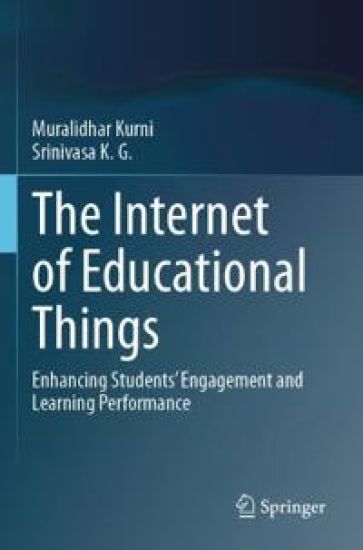
The Internet of Educational Things - Enhancing Students’ Engagement and Learning Performance delves into the transformative potential of the Internet of Things (IoT) within education. This comprehensive guide explores how IoT technology can revolutionize traditional teaching methods and learning environments, fostering more interactive, adaptive, and data-driven experiences. The book covers a wide range of topics, including the development of IoT-enabled classrooms, intelligent tutoring systems, and online labs. By leveraging real-time data and advanced analytics, educators can personalize learning paths, enhance student engagement, and optimize resource allocation. Practical applications, real-world examples, and case studies illustrate the benefits and challenges of incorporating IoT in educational settings, making it a valuable resource for students, teachers, researchers, and policymakers. The book provides practical implementation strategies and addresses critical issues such as data privacy, cybersecurity, and ethical considerations. It thoroughly examines the latest technologies, including AI, AR, VR, and digital twins, and their integration with IoT to create futuristic learning environments. The book’s unique contribution lies in its emphasis on securing IoT systems and its recommendations for overcoming infrastructure readiness and staff training obstacles. By presenting a forward-looking perspective on the role of IoT in education, this book aims to equip stakeholders with the knowledge and tools necessary to create innovative, inclusive, and secure learning ecosystems that prepare students for the future.
This textbook tackles the matter of contemporary learners’ needs, and introduces modern learning, teaching, and assessment methods. It provides a deeper understanding of these methods so that the students and teachers can create teaching and learning opportunities for themselves and others. It explores the meaning of ‘pedagogy’, why it is essential, and how pedagogy has evolved to take 21st-century skills and learning into account. This textbook showcases various modern learning, teaching, and assessment methods for contemporary learners in an increasingly digital environment. Each chapter presents insights and case studies that show how such modern methods can be applied to classrooms, and how they can support the existing curriculum. It shows students, educators, and researchers alike how to effectively make sense of and use modern learning, teaching, and assessment methods in everyday practice.
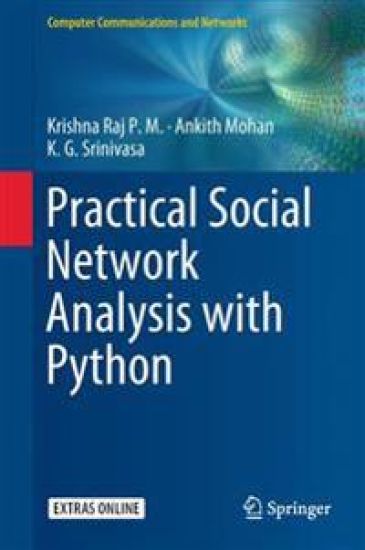
This book focuses on social network analysis from a computational perspective, introducing readers to the fundamental aspects of network theory by discussing the various metrics used to measure the social network. It covers different forms of graphs and their analysis using techniques like filtering, clustering and rule mining, as well as important theories like small world phenomenon. It also presents methods for identifying influential nodes in the network and information dissemination models. Further, it uses examples to explain the tools for visualising large-scale networks, and explores emerging topics like big data and deep learning in the context of social network analysis.With the Internet becoming part of our everyday lives, social networking tools are used as the primary means of communication. And as the volume and speed of such data is increasing rapidly, there is a need to apply computational techniques to interpret and understand it. Moreover, relationships in molecular structures, co-authors in scientific journals, and developers in a software community can also be understood better by visualising them as networks.This book brings together the theory and practice of social network analysis and includes mathematical concepts, computational techniques and examples from the real world to offer readers an overview of this domain.
In order to carry out data analytics, we need powerful and flexible computing software. However the software available for data analytics is often proprietary and can be expensive. This book reviews Apache tools, which are open source and easy to use. After providing an overview of the background of data analytics, covering the different types of analysis and the basics of using Hadoop as a tool, it focuses on different Hadoop ecosystem tools, like Apache Flume, Apache Spark, Apache Storm, Apache Hive, R, and Python, which can be used for different types of analysis. It then examines the different machine learning techniques that are useful for data analytics, and how to visualize data with different graphs and charts. Presenting data analytics from a practice-oriented viewpoint, the book discusses useful tools and approaches for data analytics, supported by concrete code examples. The book is a valuable reference resource for graduate students and professionals in related fields, and is also of interest to general readers with an understanding of data analytics.
This book focuses on social network analysis from a computational perspective, introducing readers to the fundamental aspects of network theory by discussing the various metrics used to measure the social network. It covers different forms of graphs and their analysis using techniques like filtering, clustering and rule mining, as well as important theories like small world phenomenon. It also presents methods for identifying influential nodes in the network and information dissemination models. Further, it uses examples to explain the tools for visualising large-scale networks, and explores emerging topics like big data and deep learning in the context of social network analysis.With the Internet becoming part of our everyday lives, social networking tools are used as the primary means of communication. And as the volume and speed of such data is increasing rapidly, there is a need to apply computational techniques to interpret and understand it. Moreover, relationships in molecular structures, co-authors in scientific journals, and developers in a software community can also be understood better by visualising them as networks.This book brings together the theory and practice of social network analysis and includes mathematical concepts, computational techniques and examples from the real world to offer readers an overview of this domain.
In order to carry out data analytics, we need powerful and flexible computing software. However the software available for data analytics is often proprietary and can be expensive. This book reviews Apache tools, which are open source and easy to use. After providing an overview of the background of data analytics, covering the different types of analysis and the basics of using Hadoop as a tool, it focuses on different Hadoop ecosystem tools, like Apache Flume, Apache Spark, Apache Storm, Apache Hive, R, and Python, which can be used for different types of analysis. It then examines the different machine learning techniques that are useful for data analytics, and how to visualize data with different graphs and charts. Presenting data analytics from a practice-oriented viewpoint, the book discusses useful tools and approaches for data analytics, supported by concrete code examples. The book is a valuable reference resource for graduate students and professionals in related fields, and is also of interest to general readers with an understanding of data analytics.
Computer software and technologies are advancing at an amazing rate. The accessibility of these software sources allows for a wider power among common users as well as rapid advancement in program development and operating information. Free and Open Source Software in Modern Data Science and Business Intelligence: Emerging Research and Opportunities is a critical scholarly resource that examines the differences between the two types of software, integral in the FOSS movement, and their effect on the distribution and use of software. Featuring coverage on a wide range of topics, such as FOSS Ecology, graph mining, and project tasks, this book is geared towards academicians, researchers, and students interested in current research on the growing importance of FOSS and its expanding reach in IT infrastructure.
This timely text/reference describes the development and implementation of large-scale distributed processing systems using open source tools and technologies. Comprehensive in scope, the book presents state-of-the-art material on building high performance distributed computing systems, providing practical guidance and best practices as well as describing theoretical software frameworks. Features: describes the fundamentals of building scalable software systems for large-scale data processing in the new paradigm of high performance distributed computing; presents an overview of the Hadoop ecosystem, followed by step-by-step instruction on its installation, programming and execution; Reviews the basics of Spark, including resilient distributed datasets, and examines Hadoop streaming and working with Scalding; Provides detailed case studies on approaches to clustering, data classification and regression analysis; Explains the process of creating a working recommender system using Scalding and Spark.
This timely text/reference describes the development and implementation of large-scale distributed processing systems using open source tools and technologies. Comprehensive in scope, the book presents state-of-the-art material on building high performance distributed computing systems, providing practical guidance and best practices as well as describing theoretical software frameworks. Features: describes the fundamentals of building scalable software systems for large-scale data processing in the new paradigm of high performance distributed computing; presents an overview of the Hadoop ecosystem, followed by step-by-step instruction on its installation, programming and execution; Reviews the basics of Spark, including resilient distributed datasets, and examines Hadoop streaming and working with Scalding; Provides detailed case studies on approaches to clustering, data classification and regression analysis; Explains the process of creating a working recommender system using Scalding and Spark.
The authors have consolidated their research work in this volume titled Soft Computing for Data Mining Applications. The monograph gives an insight into the research in the ?elds of Data Mining in combination with Soft Computing methodologies. In these days, the data continues to grow - ponentially. Much of the data is implicitly or explicitly imprecise. Database discovery seeks to discover noteworthy, unrecognized associations between the data items in the existing database. The potential of discovery comes from the realization that alternate contexts may reveal additional valuable information. The rate at which the data is storedis growing at a phenomenal rate. Asaresult,traditionaladhocmixturesofstatisticaltechniquesanddata managementtools are no longer adequate for analyzing this vast collection of data. Severaldomainswherelargevolumesofdataarestoredincentralizedor distributeddatabasesincludesapplicationslikeinelectroniccommerce,bio- formatics, computer security, Web intelligence, intelligent learning database systems,?nance,marketing,healthcare,telecommunications,andother?elds. E?cient tools and algorithms for knowledge discovery in large data sets have been devised during the recent years. These methods exploit the ca- bility of computers to search huge amounts of data in a fast and e?ective manner. However,the data to be analyzed is imprecise and a?icted with - certainty. In the case of heterogeneous data sources such as text and video, the data might moreover be ambiguous and partly con?icting. Besides, p- terns and relationships of interest are usually approximate. Thus, in order to make the information mining process more robust it requires tolerance toward imprecision, uncertainty and exceptions.
The authors have consolidated their research work in this volume titled Soft Computing for Data Mining Applications. The monograph gives an insight into the research in the ?elds of Data Mining in combination with Soft Computing methodologies. In these days, the data continues to grow - ponentially. Much of the data is implicitly or explicitly imprecise. Database discovery seeks to discover noteworthy, unrecognized associations between the data items in the existing database. The potential of discovery comes from the realization that alternate contexts may reveal additional valuable information. The rate at which the data is storedis growing at a phenomenal rate. Asaresult,traditionaladhocmixturesofstatisticaltechniquesanddata managementtools are no longer adequate for analyzing this vast collection of data. Severaldomainswherelargevolumesofdataarestoredincentralizedor distributeddatabasesincludesapplicationslikeinelectroniccommerce,bio- formatics, computer security, Web intelligence, intelligent learning database systems,?nance,marketing,healthcare,telecommunications,andother?elds. E?cient tools and algorithms for knowledge discovery in large data sets have been devised during the recent years. These methods exploit the ca- bility of computers to search huge amounts of data in a fast and e?ective manner. However,the data to be analyzed is imprecise and a?icted with - certainty. In the case of heterogeneous data sources such as text and video, the data might moreover be ambiguous and partly con?icting. Besides, p- terns and relationships of interest are usually approximate. Thus, in order to make the information mining process more robust it requires tolerance toward imprecision, uncertainty and exceptions.