Kirjojen hintavertailu. Mukana 12 390 323 kirjaa ja 12 kauppaa.

Kirjailija

K. Sivaramakrishnan

Kirjat ja teokset yhdessä paikassa: 59 kirjaa, julkaisuja vuosilta 1999-2025, suosituimpien joukossa The Camphor Tree and the Elephant. Vertaile teosten hintoja ja tarkista saatavuus suomalaisista kirjakaupoista.

59 kirjaa

Kirjojen julkaisuhaarukka 1999-2025.

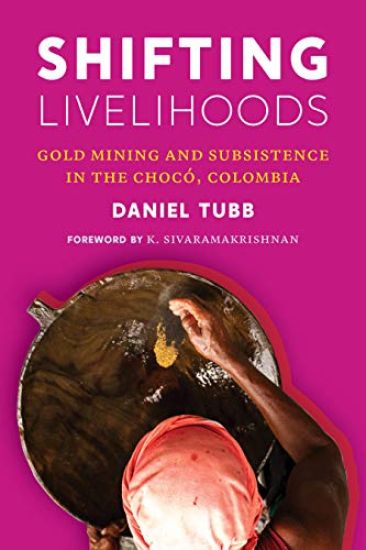
Shifting Livelihoods

Shifting Livelihoods

Daniel Tubb; K. Sivaramakrishnan

University of Washington Press
2020
sidottu
Honorable Mention for the Society for the Anthropology of Work (SAW) Book PrizeThe many dimensions of gold in a shadow economyPeople employ various methods to extract gold in the rainforests of the Chocó, in northwest Colombia: Rural Afro-Colombian artisanal miners work hillsides with hand tools or dredge mud from river bottoms. Migrant miners level the landscape with excavators, then trap gold with mercury. Canadian mining companies prospect for open-pit mega-mines. Drug traffickers launder cocaine profits by smuggling gold into Colombia and claiming it came from fictitious small-scale mines.Through an ethnography of gold that examines the movement of people, commodities, and capital, Shifting Livelihoods investigates how resource extraction reshapes a place. In the Chocó, gold enables forms of "shift" (rebusque)—a metaphor for the fluid livelihood strategy adopted by forest dwellers and migrant gold miners alike as they seek informal work amid a drug war. Mining's effects on rural people, corporations, and politics are on view in this fine-grained account of daily life in a regional economy dominated by gold and cocaine.
Disturbed Forests, Fragmented Memories

Disturbed Forests, Fragmented Memories

Jonathan Padwe; K. Sivaramakrishnan

University of Washington Press
2020
sidottu
In the hill country of northeast Cambodia, just a few kilometers from the Vietnam border, sits the village of Tang Kadon. This community of hill rice farmers of the Jarai ethnic minority group survived aerial bombardment and the American invasion of Cambodia during the Vietnam War, only to find themselves relocated to the "killing fields" of the Khmer Rouge regime. Now back in their homeland, they have reestablished agriculture, seed by seed.Disturbed Forests, Fragmented Memories tells the story of violence and dispossession in the highlands from the perspective of the land itself. Weaving rich ethnography with the history of the Jarai and their treatment at the hands of outsiders, Jonathan Padwe narrates the highlanders' successful efforts to rebuild their complex, highly diverse agricultural system after a decades-long interruption.Focusing on the ecological dimensions of social change and dispossession from the precolonial slave trade to the present moment of land grabs along a rapidly transforming resource frontier, Padwe shows how the past lives on in the land. An engrossing treatment of timely issues in anthropology and political ecology, this book will also appeal to readers in environmental studies, geography, and Southeast Asian studies.
Disturbed Forests, Fragmented Memories

Disturbed Forests, Fragmented Memories

Jonathan Padwe; K. Sivaramakrishnan

University of Washington Press
2020
pokkari
In the hill country of northeast Cambodia, just a few kilometers from the Vietnam border, sits the village of Tang Kadon. This community of hill rice farmers of the Jarai ethnic minority group survived aerial bombardment and the American invasion of Cambodia during the Vietnam War, only to find themselves relocated to the "killing fields" of the Khmer Rouge regime. Now back in their homeland, they have reestablished agriculture, seed by seed.Disturbed Forests, Fragmented Memories tells the story of violence and dispossession in the highlands from the perspective of the land itself. Weaving rich ethnography with the history of the Jarai and their treatment at the hands of outsiders, Jonathan Padwe narrates the highlanders' successful efforts to rebuild their complex, highly diverse agricultural system after a decades-long interruption.Focusing on the ecological dimensions of social change and dispossession from the precolonial slave trade to the present moment of land grabs along a rapidly transforming resource frontier, Padwe shows how the past lives on in the land. An engrossing treatment of timely issues in anthropology and political ecology, this book will also appeal to readers in environmental studies, geography, and Southeast Asian studies.
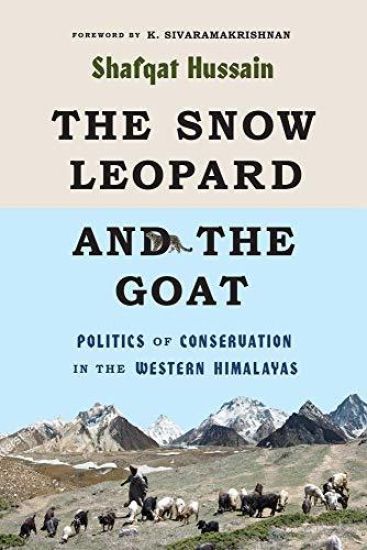
The Snow Leopard and the Goat

The Snow Leopard and the Goat

Shafqat Hussain; K. Sivaramakrishnan

University of Washington Press
2020
pokkari
Who should bear the cost of protecting charismatic wildlife?Following the downgrading of the snow leopard's status from "endangered" to "vulnerable" by the International Union for Conservation of Nature in 2017, debate has renewed about the actual number of snow leopards in the wild and the most effective strategies for coexisting with these enigmatic animals. Evidence from Pakistan and other countries in the snow leopard's home range shows that they rely heavily on human society—domestic livestock accounts for as much as 70 percent of their diet. Maintaining that the snow leopard is a "wild" animal, conservation NGOs and state agencies have enacted laws that punish farmers for attacking these predators, while avoiding engaging with efforts to mitigate the harms suffered by farmers whose herds are reduced by snow leopards.This ethnography examines the uneven distribution of costs and benefits involved in snow leopard conservation and shows that for the conservation of nature to be successful, the vision, interests, and priorities of those most affected by conservation policies—in this case, local farmers—must be addressed. A case history of Project Snow Leopard in the mountains of northern Pakistan, which inspired similar programs in India, Bhutan, Nepal, Mongolia, Afghanistan and Tajikistan, describes how the animal's food habits are studied, how elusive individuals are counted, and how a novel kind of "snow leopard insurance" has protected the species by compensating farmers for livestock losses. The Snow Leopard and the Goat demonstrates that characterizing this conflict as one between humans (farmers) and wildlife (snow leopards) is misleading, as the real conflict is between two human groups—farmers and conservationists—who see the snow leopard differently.
The Snow Leopard and the Goat

The Snow Leopard and the Goat

Shafqat Hussain; K. Sivaramakrishnan

University of Washington Press
2020
sidottu
Who should bear the cost of protecting charismatic wildlife?Following the downgrading of the snow leopard’s status from “endangered” to “vulnerable” by the International Union for Conservation of Nature in 2017, debate has renewed about the actual number of snow leopards in the wild and the most effective strategies for coexisting with these enigmatic animals. Evidence from Pakistan and other countries in the snow leopard’s home range shows that they rely heavily on human society—domestic livestock accounts for as much as 70 percent of their diet. Maintaining that the snow leopard is a “wild” animal, conservation NGOs and state agencies have enacted laws that punish farmers for attacking these predators, while avoiding engaging with efforts to mitigate the harms suffered by farmers whose herds are reduced by snow leopards.This ethnography examines the uneven distribution of costs and benefits involved in snow leopard conservation and shows that for the conservation of nature to be successful, the vision, interests, and priorities of those most affected by conservation policies—in this case, local farmers—must be addressed. A case history of Project Snow Leopard in the mountains of northern Pakistan, which inspired similar programs in India, Bhutan, Nepal, Mongolia, Afghanistan and Tajikistan, describes how the animal’s food habits are studied, how elusive individuals are counted, and how a novel kind of “snow leopard insurance” has protected the species by compensating farmers for livestock losses. The Snow Leopard and the Goat demonstrates that characterizing this conflict as one between humans (farmers) and wildlife (snow leopards) is misleading, as the real conflict is between two human groups—farmers and conservationists—who see the snow leopard differently.
Roses from Kenya

Roses from Kenya

Megan A. Styles; K. Sivaramakrishnan

University of Washington Press
2019
pokkari
Honorable Mention for the Society for the Anthropology of Work (SAW) Book prizeThe potential of floriculture grows at Lake NaivashaKenya supplies more than 35 percent of the fresh-cut roses and other flowers sold annually in the European Union. This industry—which employs at least 90,000 workers, most of whom are women—is lucrative but enduringly controversial. More than half the flowers are grown near the shores of Lake Naivasha, a freshwater lake northwest of Nairobi recognized as a Ramsar site, a wetland of international importance. Critics decry the environmental side effects of floriculture, and human rights activists demand better wages and living conditions for workers.In this rich portrait of Kenyan floriculture, Megan Styles presents the point of view of local workers and investigates how the industry shapes Kenyan livelihoods, landscapes, and politics. She investigates the experiences and perspectives of low-wage farmworkers and the more elite actors whose lives revolve around floriculture, including farm managers and owners, Kenyan officials, and the human rights and environmental activists advocating for reform. By exploring these perspectives together, Styles reveals the complex and contradictory ways that rose farming shapes contemporary Kenya. She also shows how the rose industry connects Kenya to the world, and how Kenyan actors perceive these connections. As a key space of encounter, Lake Naivasha is a synergistic center where many actors seek to solve broader Kenyan social and environmental problems using the global flows of people, information, and money generated by floriculture.
Roses from Kenya

Roses from Kenya

Megan A. Styles; K. Sivaramakrishnan

University of Washington Press
2019
sidottu
Honorable Mention for the Society for the Anthropology of Work (SAW) Book prizeThe potential of floriculture grows at Lake NaivashaKenya supplies more than 35 percent of the fresh-cut roses and other flowers sold annually in the European Union. This industry—which employs at least 90,000 workers, most of whom are women—is lucrative but enduringly controversial. More than half the flowers are grown near the shores of Lake Naivasha, a freshwater lake northwest of Nairobi recognized as a Ramsar site, a wetland of international importance. Critics decry the environmental side effects of floriculture, and human rights activists demand better wages and living conditions for workers.In this rich portrait of Kenyan floriculture, Megan Styles presents the point of view of local workers and investigates how the industry shapes Kenyan livelihoods, landscapes, and politics. She investigates the experiences and perspectives of low-wage farmworkers and the more elite actors whose lives revolve around floriculture, including farm managers and owners, Kenyan officials, and the human rights and environmental activists advocating for reform. By exploring these perspectives together, Styles reveals the complex and contradictory ways that rose farming shapes contemporary Kenya. She also shows how the rose industry connects Kenya to the world, and how Kenyan actors perceive these connections. As a key space of encounter, Lake Naivasha is a synergistic center where many actors seek to solve broader Kenyan social and environmental problems using the global flows of people, information, and money generated by floriculture.
Working with the Ancestors

Working with the Ancestors

Emily C. Donaldson; K. Sivaramakrishnan

University of Washington Press
2019
pokkari
Throughout the Marquesas Islands of French Polynesia, forest spirits share space with ancestral ruins and active agricultural plots, affecting land use and heritage preservation. As Marquesans continue their efforts to establish UNESCO World Heritage status, they grapple with questions about when sites should be preserved intact, when neglect is an appropriate option, and when deterioration resulting from local livelihoods should be accepted.In Working with the Ancestors Emily Donaldson considers how Marquesan perceptions of heritage and mana, or sacred power, have influenced the use of land in the islands and how both cultural and environmental sustainability can be achieved. The Marquesas' relative geographical isolation and ecological richness are the backdrop for the confluence of international heritage preservation and sustainability efforts that affect both resources and Indigenous peoples. Donaldson demonstrates how anthropological concepts of embodiment, alienation, place, and power can inform global resource management, offering a new approach that integrates analyses of policy, practice, and heritage.
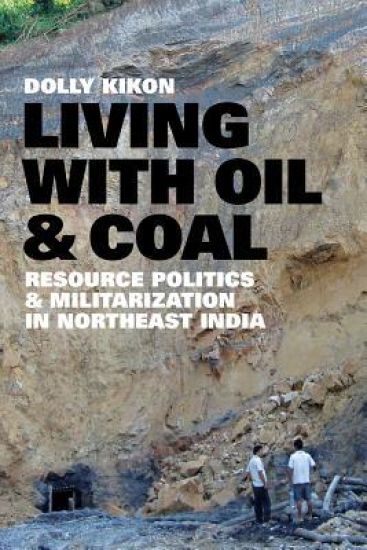
Living with Oil and Coal

Living with Oil and Coal

Dolly Kikon; K. Sivaramakrishnan

University of Washington Press
2019
pokkari
The nineteenth-century discovery of oil in the eastern Himalayan foothills, together with the establishment of tea plantations and other extractive industries, continues to have a profound impact on life in the region. In the Indian states of Assam and Nagaland, everyday militarization, violence, and the scramble for natural resources regulate the lives of Naga, Ahom, and Adivasi people, as well as migrants from elsewhere in the region, as they struggle to find peace and work.Anthropologist Dolly Kikon uses in-depth ethnographic accounts to address the complexity of Northeast India, a region between Southeast Asia and China where boundaries and borders are made, disputed, and maintained. Bringing a fresh and exciting direction to borderland studies, she explores the social bonds established through practices of resource extraction and the tensions these relations generate, focusing on peoples' love for the landscape and for the state, as well as for family, friends, and neighbors. Living with Oil and Coal illuminates questions of citizenship, social justice, and environmental politics that are shared by communities worldwide.
Living with Oil and Coal

Living with Oil and Coal

Dolly Kikon; K. Sivaramakrishnan

University of Washington Press
2019
sidottu
The nineteenth-century discovery of oil in the eastern Himalayan foothills, together with the establishment of tea plantations and other extractive industries, continues to have a profound impact on life in the region. In the Indian states of Assam and Nagaland, everyday militarization, violence, and the scramble for natural resources regulate the lives of Naga, Ahom, and Adivasi people, as well as migrants from elsewhere in the region, as they struggle to find peace and work.Anthropologist Dolly Kikon uses in-depth ethnographic accounts to address the complexity of Northeast India, a region between Southeast Asia and China where boundaries and borders are made, disputed, and maintained. Bringing a fresh and exciting direction to borderland studies, she explores the social bonds established through practices of resource extraction and the tensions these relations generate, focusing on peoples' love for the landscape and for the state, as well as for family, friends, and neighbors. Living with Oil and Coal illuminates questions of citizenship, social justice, and environmental politics that are shared by communities worldwide.
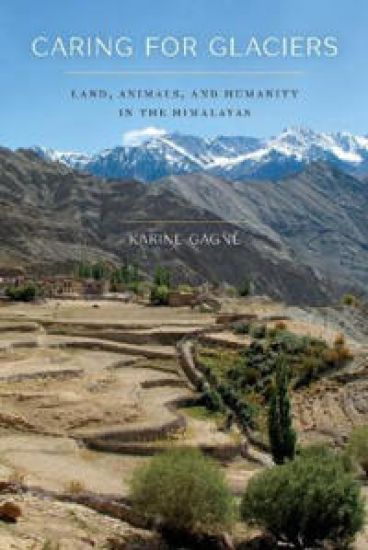
Caring for Glaciers

Caring for Glaciers

Karine Gagné; K. Sivaramakrishnan

University of Washington Press
2019
pokkari
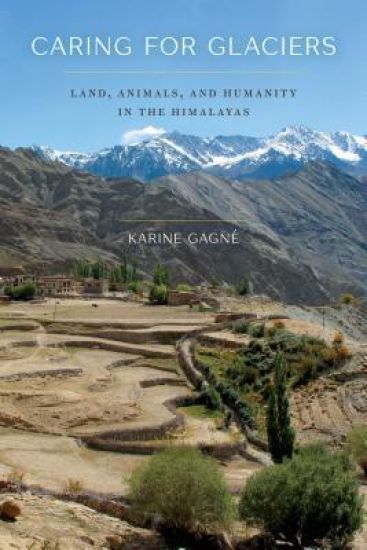
Regional geopolitical processes have turned the Himalayan region of Ladakh, in northwest India, into a strategic border area with an increasing military presence that has decentered the traditional agropastoralist economy. This in turn has led to social fragmentation, the growing isolation of elders, and ethical dilemmas for those who strive to maintain traditional subsistence activities. Simultaneously, climate change is causing glaciers—a vital source of life in the region—to recede, which elders perceive as the consequence of a broken bond with the natural environment and the deities that inhabit the landscape.Caring for Glaciers looks at the causes and consequences of ongoing social and cultural change in peoples' relationship with the natural environment. It illuminates how relations of reciprocity - learned through everyday life and work in the mountains with the animals, glaciers, and deities that form Ladakh's sacred geography - shape and nurture an ethics of care. Integrating contemporary studies of affect, landscape, and multispecies anthropology, Caring for Glaciers contributes to the anthropology of ethics by examining the moral order that develops through the embodied experience of life and work in the Himalayas.
Caring for Glaciers

Caring for Glaciers

Karine Gagné; K. Sivaramakrishnan

University of Washington Press
2019
sidottu
Regional geopolitical processes have turned the Himalayan region of Ladakh, in northwest India, into a strategic border area with an increasing military presence that has decentered the traditional agropastoralist economy. This in turn has led to social fragmentation, the growing isolation of elders, and ethical dilemmas for those who strive to maintain traditional subsistence activities. Simultaneously, climate change is causing glaciers—a vital source of life in the region—to recede, which elders perceive as the consequence of a broken bond with the natural environment and the deities that inhabit the landscape.Caring for Glaciers looks at the causes and consequences of ongoing social and cultural change in peoples' relationship with the natural environment. It illuminates how relations of reciprocity - learned through everyday life and work in the mountains with the animals, glaciers, and deities that form Ladakh's sacred geography - shape and nurture an ethics of care. Integrating contemporary studies of affect, landscape, and multispecies anthropology, Caring for Glaciers contributes to the anthropology of ethics by examining the moral order that develops through the embodied experience of life and work in the Himalayas.
Enclosed

Enclosed

Liza Grandia; K. Sivaramakrishnan

University of Washington Press
2012
sidottu
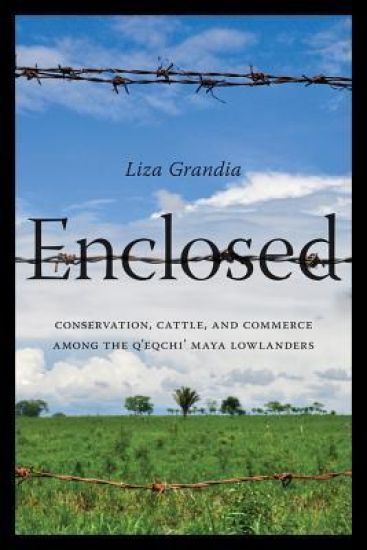
This impassioned and rigorous analysis of the territorial plight of the Q'eqchi Maya of Guatemala highlights an urgent problem for indigenous communities around the world - repeated displacement from their lands. Liza Grandia uses the tools of ethnography, history, cartography, and ecology to explore the recurring enclosures of Guatemala's second largest indigenous group, who number a million strong. Having lost most of their highland territory to foreign coffee planters at the end of the 19th century, Q'eqchi' people began migrating into the lowland forests of northern Guatemala and southern Belize. Then, pushed deeper into the frontier by cattle ranchers, lowland Q'eqchi' found themselves in conflict with biodiversity conservationists who established protected areas across this region during the 1990s.The lowland, maize-growing Q'eqchi' of the 21st century face even more problems as they are swept into global markets through the Dominican Republic-Central America Free Trade Agreement (DR-CAFTA) and the Puebla to Panama Plan (PPP). The waves of dispossession imposed upon them, driven by encroaching coffee plantations, cattle ranches, and protected areas, have unsettled these agrarian people. Enclosed describes how they have faced and survived their challenges and, in doing so, helps to explain what is happening in other contemporary enclosures of public "common" space.A Capell Family BookWatch the book trailer: https://www.youtube.com/watch?v=pTLvmg3mHE8
Enclosed

Enclosed

Liza Grandia; K. Sivaramakrishnan

University of Washington Press
2012
pokkari
This impassioned and rigorous analysis of the territorial plight of the Q'eqchi Maya of Guatemala highlights an urgent problem for indigenous communities around the world - repeated displacement from their lands. Liza Grandia uses the tools of ethnography, history, cartography, and ecology to explore the recurring enclosures of Guatemala's second largest indigenous group, who number a million strong. Having lost most of their highland territory to foreign coffee planters at the end of the 19th century, Q'eqchi' people began migrating into the lowland forests of northern Guatemala and southern Belize. Then, pushed deeper into the frontier by cattle ranchers, lowland Q'eqchi' found themselves in conflict with biodiversity conservationists who established protected areas across this region during the 1990s.The lowland, maize-growing Q'eqchi' of the 21st century face even more problems as they are swept into global markets through the Dominican Republic-Central America Free Trade Agreement (DR-CAFTA) and the Puebla to Panama Plan (PPP). The waves of dispossession imposed upon them, driven by encroaching coffee plantations, cattle ranches, and protected areas, have unsettled these agrarian people. Enclosed describes how they have faced and survived their challenges and, in doing so, helps to explain what is happening in other contemporary enclosures of public "common" space.A Capell Family BookWatch the book trailer: https://www.youtube.com/watch?v=pTLvmg3mHE8
Nature Protests

Nature Protests

Edward K. Snajdr; K. Sivaramakrishnan

University of Washington Press
2008
sidottu
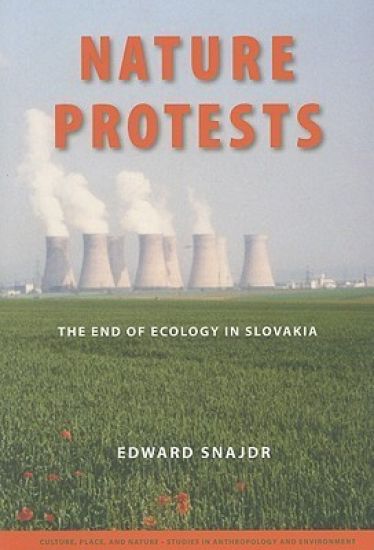
As societies around the world are challenged to respond to ever growing environmental crises, it has become increasingly important for activists, policy makers, and environmental practitioners to understand the dynamic relationship between environmental movements and the state. In communist Eastern Europe, environmental activism fueled the rise of democratic movements and the overthrow of totalitarianism. Yet, as this study of environmentalism in Slovakia shows, concern for the environment declined during the post-communist period, an ironic victim of its own earlier success.Through ethnographic interviews and archival materials, Edward Snajdr explains why Slovakia's ecology movement, so strong under socialism, fell apart so rapidly despite the persistence of serious environmental problems in the region. Synthesizing theory in anthropology and political ecology, he suggests that the fate of environmentalism in Slovakia marks the beginning of a global post-ecological age, where nature is culturally maginalized in new ways.In addition to its significance for policy makers, this book will be a valuable resource for anthropologists, sociologists, political ecologists, and scholars of East European and post-Soviet studies.
Nature Protests

Nature Protests

Edward K. Snajdr; K. Sivaramakrishnan

University of Washington Press
2008
pokkari
As societies around the world are challenged to respond to ever growing environmental crises, it has become increasingly important for activists, policy makers, and environmental practitioners to understand the dynamic relationship between environmental movements and the state. In communist Eastern Europe, environmental activism fueled the rise of democratic movements and the overthrow of totalitarianism. Yet, as this study of environmentalism in Slovakia shows, concern for the environment declined during the post-communist period, an ironic victim of its own earlier success.Through ethnographic interviews and archival materials, Edward Snajdr explains why Slovakia's ecology movement, so strong under socialism, fell apart so rapidly despite the persistence of serious environmental problems in the region. Synthesizing theory in anthropology and political ecology, he suggests that the fate of environmentalism in Slovakia marks the beginning of a global post-ecological age, where nature is culturally maginalized in new ways.In addition to its significance for policy makers, this book will be a valuable resource for anthropologists, sociologists, political ecologists, and scholars of East European and post-Soviet studies.
Forest Guardians, Forest Destroyers

Forest Guardians, Forest Destroyers

Tim Forsyth; Andrew Walker; K. Sivaramakrishnan

University of Washington Press
2008
sidottu
In this far-reaching examination of environmental problems and politics in northern Thailand, Tim Forsyth and Andrew Walker analyze deforestation, water supply, soil erosion, use of agrochemicals, and biodiversity in order to challenge popularly held notions of environmental crisis. They argue that such crises have been used to support political objectives of state expansion and control in the uplands. They have also been used to justify the alternative directions advocated by an array of NGOs.In official and alternative discourses of economic development, the peoples living in Thailand's hill country are typically cast as either guardians or destroyers of forest resources, often depending on their ethnicity. Political and historical factors have created a simplistic, misleading, and often scientifically inaccurate environmental narrative: Hmong farmers, for example, are thought to exhibit environmentally destructive practices, whereas the Karen are seen as linked to and protective of their ancestral home. Forsyth and Walker reveal a much more complex relationship of hill farmers to the land, to other ethnic groups, and to the state. They conclude that current explanations fail to address the real causes of environmental problems and unnecessarily restrict the livelihoods of local people.The authors' critical assessment of simplistic environmental narratives, as well as their suggestions for finding solutions, will be valuable in international policy discussions about environmental issues in rapidly developing countries. Moreover, their redefinition of northern Thailand's environmental problems, and their analysis of how political influences have reinforced inappropriate policies, demonstrate new ways of analyzing how environmental science and knowledge are important arenas for political control.This book makes valuable contributions to Thai studies and more generally to the fields of environmental science, ecology, geography, anthropology, and political science, as well as to policy making and resource management in the developing world.
Forest Guardians, Forest Destroyers

Forest Guardians, Forest Destroyers

Tim Forsyth; Andrew Walker; K. Sivaramakrishnan

University of Washington Press
2008
pokkari
In this far-reaching examination of environmental problems and politics in northern Thailand, Tim Forsyth and Andrew Walker analyze deforestation, water supply, soil erosion, use of agrochemicals, and biodiversity in order to challenge popularly held notions of environmental crisis. They argue that such crises have been used to support political objectives of state expansion and control in the uplands. They have also been used to justify the alternative directions advocated by an array of NGOs.In official and alternative discourses of economic development, the peoples living in Thailand's hill country are typically cast as either guardians or destroyers of forest resources, often depending on their ethnicity. Political and historical factors have created a simplistic, misleading, and often scientifically inaccurate environmental narrative: Hmong farmers, for example, are thought to exhibit environmentally destructive practices, whereas the Karen are seen as linked to and protective of their ancestral home. Forsyth and Walker reveal a much more complex relationship of hill farmers to the land, to other ethnic groups, and to the state. They conclude that current explanations fail to address the real causes of environmental problems and unnecessarily restrict the livelihoods of local people.The authors' critical assessment of simplistic environmental narratives, as well as their suggestions for finding solutions, will be valuable in international policy discussions about environmental issues in rapidly developing countries. Moreover, their redefinition of northern Thailand's environmental problems, and their analysis of how political influences have reinforced inappropriate policies, demonstrate new ways of analyzing how environmental science and knowledge are important arenas for political control.This book makes valuable contributions to Thai studies and more generally to the fields of environmental science, ecology, geography, anthropology, and political science, as well as to policy making and resource management in the developing world.
Modern Forests

Modern Forests

K. Sivaramakrishnan

Stanford University Press
1999
pokkari
Modern Forests is an environmental, institutional, and cultural history of forestry in colonial eastern India. By carefully examining the influence of regional political formations and biogeographic processes on land and forest management, this book offers an analysis of the interrelated social and biophysical factors that influenced landscape change. Through a cultural analysis of powerful landscape representations, Modern Forests reveals the contention, debates, and uncertainty that persisted for two hundred years of colonial rule as forests were identified, classified, and brought under different regimes of control and were transformed to serve a variety of imperial and local interests. The author examines the regionally varied conditions that generated widely different kinds of forest management systems, and the ways in which certain ideas and forces became dominant at various times. Through this emphasis on regional socio-political processes and ecologies, the author offers a new way to write environmental history. Instead of making a sharp distinction between third-world and first-world experiences in forest management, the book suggests a potential for cross-continental comparative studies through regional analyses. The book also offers an approach to historical anthropology that does not make apolitical separations between foreign and indigenous views of the world of nature, insisting instead that different cultural repertoires for discerning the natural, and using it, can be fashioned out of shared concerns within and across social groups. The politics of such cultural construction, the book argues, must be studied through institutional histories and ethnographies of statemaking. In conclusion, the author offers a genealogy of development as it can be traced from forest conservation in colonial eastern India.