Kirjojen hintavertailu. Mukana 12 595 353 kirjaa ja 12 kauppaa.

Kirjailija

Kai Cheng

Kirjat ja teokset yhdessä paikassa: 3 kirjaa, julkaisuja vuosilta 2011-2024, suosituimpien joukossa The Science and Engineering of Cutting. Vertaile teosten hintoja ja tarkista saatavuus suomalaisista kirjakaupoista.

3 kirjaa

Kirjojen julkaisuhaarukka 2011-2024.

The Science and Engineering of Cutting

The Science and Engineering of Cutting

Kai Cheng; Tony Atkins

Elsevier - Health Sciences Division
2024
nidottu
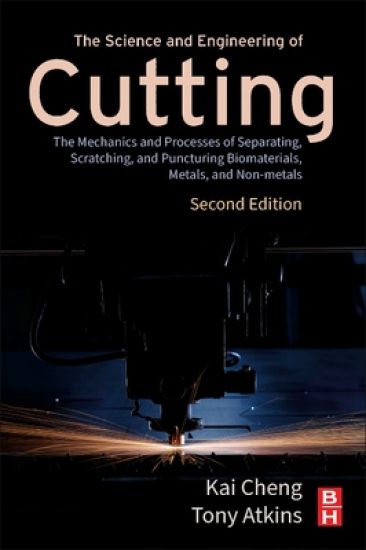
The Science and Engineering of Cutting: The Mechanics and Processes of Separating, Scratching and Puncturing Biomaterials, Metals and Non-metals, Second Edition has been updated to include new developments in the mechanics of cutting, introducing topics such as friction modeling, oblique cutting of polymers, nano-sectioning, ultraprecision cutting, new methods for determining the fracture toughness of welds and glued joints, finite element simulations of cutting, and much more. The book also looks at new applications, such as improvements in the design of wood cutting machinery, body armor, and the employment of greater ‘slice-push’ methods in food-cutting machinery.
Virtual Manufacturing

Virtual Manufacturing

Wasim Ahmed Khan; Abdul Raouf; Kai Cheng

Springer London Ltd
2013
nidottu
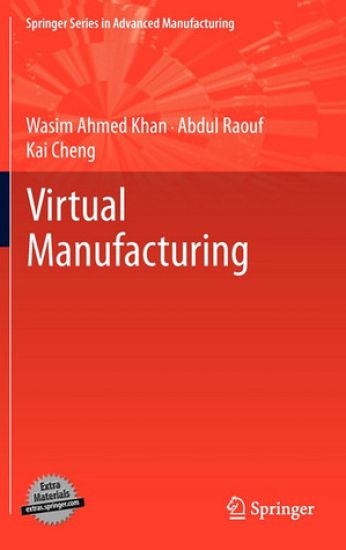
Virtual Manufacturing presents a novel concept of combining human computer interfaces with virtual reality for discrete and continuous manufacturing systems. The authors address the relevant concepts of manufacturing engineering, virtual reality, and computer science and engineering, before embarking on a description of the methodology for building augmented reality for manufacturing processes and manufacturing systems. Virtual Manufacturing is centered on the description of the development of augmented reality models for a range of processes based on CNC, PLC, SCADA, mechatronics and on embedded systems. Further discussions address the use of augmented reality for developing augmented reality models to control contemporary manufacturing systems and to acquire micro- and macro-level decision parameters for managers to boost profitability of their manufacturing systems. Guiding readers through the building of their own virtual factory software, Virtual Manufacturing comes with access to online files and software that will enable readers to create a virtual factory, operate it and experiment with it. This is a valuable source of information with a useful toolkit for anyone interested in virtual manufacturing, including advanced undergraduate students, postgraduate students and researchers.
Virtual Manufacturing

Virtual Manufacturing

Wasim Ahmed Khan; Abdul Raouf; Kai Cheng

Springer London Ltd
2011
sidottu
Virtual Manufacturing presents a novel concept of combining human computer interfaces with virtual reality for discrete and continuous manufacturing systems. The authors address the relevant concepts of manufacturing engineering, virtual reality, and computer science and engineering, before embarking on a description of the methodology for building augmented reality for manufacturing processes and manufacturing systems. Virtual Manufacturing is centered on the description of the development of augmented reality models for a range of processes based on CNC, PLC, SCADA, mechatronics and on embedded systems. Further discussions address the use of augmented reality for developing augmented reality models to control contemporary manufacturing systems and to acquire micro- and macro-level decision parameters for managers to boost profitability of their manufacturing systems. Guiding readers through the building of their own virtual factory software, Virtual Manufacturing comes with access to online files and software that will enable readers to create a virtual factory, operate it and experiment with it. This is a valuable source of information with a useful toolkit for anyone interested in virtual manufacturing, including advanced undergraduate students, postgraduate students and researchers.