Kirjojen hintavertailu. Mukana 12 471 049 kirjaa ja 12 kauppaa.

Kirjailija

Kal Muller

Kirjat ja teokset yhdessä paikassa: 17 kirjaa, julkaisuja vuosilta 2017-2026, suosituimpien joukossa The Asmat. Vertaile teosten hintoja ja tarkista saatavuus suomalaisista kirjakaupoista.

17 kirjaa

Kirjojen julkaisuhaarukka 2017-2026.

The Asmat

The Asmat

Kal Muller

Galda Verlag
2025
pokkari
The Asmat ethnolinguistic group was the last major culture in Indonesia to bow to outside influences. Traditionally, it was a culture that prized headhunting and widely practiced cannibalism. Today, the Asmat number some 110,000 people, considerably more than during the days of unrestricted warfare. They live in some 18,000 km2 of land on the south shore of West New Guinea (or West Papua) in what is now Indonesia. Their homeland consists of mangroves, tidal swamps, freshwater swamps, and lowland rainforest. They live along the north shore of the Arafura Sea and a considerable distance inland, aways next to rivers. Their dwellings are on piles due to the high tides that reach far in the flat inland. The outside world was quickly attracted to the Asmat's unique carvings. These consist of elaborate large wood carvings such as 'bisj' poles, designed to honor their ancestors. The many other art forms include elaborate shields, finely sculpted hourglass drums and large canoe prows often featuring the praying mantis, the headhunter symbol par excellence. Traditionally, the Asmat men were completely naked in all their activities, including warfare and carving. Many Asmat artifacts have been collected by the world's museums, among the most notable of which are those found in the Michael C. Rockefeller Collection at the Metropolitan Museum of Art in New York City and the Tropenmuseum in Amsterdam. Asmat art is widely displayed in major Western museums. Despite the difficulty in visiting the remote region to collect work, the "exceptionally expressive" art "caused a sensation in art-collecting circles" which led to large-scale collecting expeditions in the post-WW II era. In this book we cover the Asmat in nine chapters with a strong emphasis on their artistic carvings. A chapter is devoted to the diary of Michael Rockefeller who disappeared while collecting art in the Asmat area.
The Marind

The Marind

Kal Muller

Galda Verlag
2025
pokkari
The Marind ethno-linguistic culture stands out in several respects. It became infamous towards the end of the 19th century for well-organized head-hunting raids from its home territory in Dutch New Guinea to areas around the distant Fly River. This means that the Marind were cutting off British-administered heads. Complaints to the Dutch authorities resulted in establishing a Dutch military post at Merauke that stopped the raids into British territory, and eventually closer to home. Yet, secret, small-scale head hunting continued into the 1950s. Roman Catholic missionaries of the fraternity of the Sacred Heart arrived to attempt to evangelize the Marind. Not successful, especially initially, the proselytizers began studying the complex Marind language and writing Dutch-Marind dictionaries and eventually a grammar. While the priests were interested in the Marind culture, it took a trained Swiss anthropologist, Paul Wirz, to study the culture in depth during his 1916 to 1919 field work when he immersed himself totally in the Marind Society and took a series of excellent photographs some of which illustrate this book. While the missionaries published their reports of the Marind in Dutch, Wirz printed all his research only in German. It took a Dutch scholar and administrator, Jan van Baal, to compile all the available information on the Marind in a huge book called Dema, in the English language. Most of this current book on the Marind is based on Van Baal great work, published in 1960. We have added a few other publications for a better sense of perspective. These include some essential history of Dutch New Guinea, a text on the history of the Roman Cathodic Church among the Marind, a study of a pandemic that devastated the Marind and some information on the most recent travails of this culture.
The Biodiversity in West Guinea

The Biodiversity in West Guinea

Kal Muller

Galda Verlag
2024
pokkari
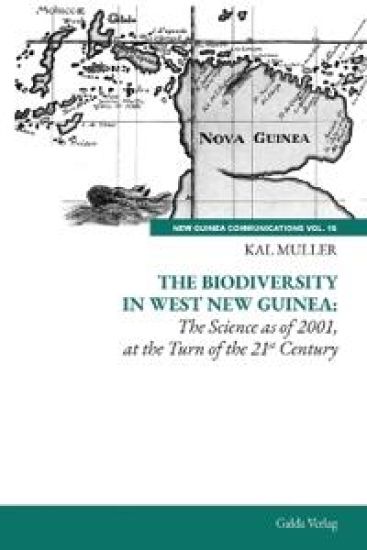
The Biodiversity of New Guinea covers the situation as it was in the year 2001. It is divided into three main sections. Section One comprises the biodiversity of the entire island of New Guinea, PNG and WNG. Section Two concentrates on the Timika area and the Lorentz National Park/World Heritage Site. Section Three lists the plants and animals the Kamoro ethno-linguistic group uses from the natural resources available to them. This volume, researched in 2003 was written in the town of Timika (south coast of WNG) where the author had easy access to the ample material generated by the Environmental Department of Freeport Indonesia, the mining company that employed the author. Among much material on the biodiversity of PNG, J.L. Gressit's Biology and Ecology offered great help. Research on WNG was made difficult by the grueling process in obtaining the necessary government permits, but provided an invaluable sources in a two-volume Ecology of Papua. After the introduction, Section One treats the following topics: Basic Influences (geology, the Ice Ages, and landforms); Plant and Animal Life; Origins of New Guinea Animals; Molluscs; Crustacea (shrimps, crayfish, and crabs); Insects (butterflies and beetles); Fresh Water Fishes; Amphibians (frogs and toads); Reptiles (snakes, turtles, crocodiles); Birds (in different environments); Mammals. Section Two includes Vegetation; Insects; Fresh Water Fishes; Amphibians and Reptiles; Birds and Mammals. Section Three concentrates on the name of plants and animals used by the Kamoro. An Appendix lists animals with their Latin, English, Indonesian, and Kamoro designations. Much new research has given ever-increasing information about the various animal groups during the past two decades. The author has made only a few updates on the frogs, thanks to Dr. Steve Richards. The other chapters were left largely as in the original text. Some mysteries remain such as the date of the first arrival of pigs that can differ by 2,000
Hungarians in New Guinea

Hungarians in New Guinea

Kal Muller

Galda Verlag
2024
pokkari
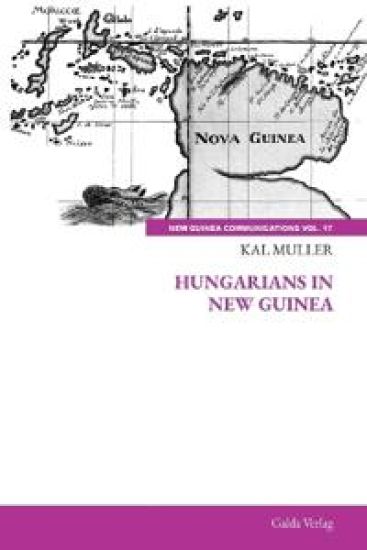
Hungarians in New Guinea? How did a cohort of Hungarians end up in New Guinea? How did this small central European country send so many of its sons to such a faraway corner of Melanesia? The answer lies in Hungary's 19th century history, when it was part of the important Habsburg empire, as the junior partner in the Austro-Hungarian monarchy, that officially began in 1867. This was a German-speaking entity, as was the Prussian-led alliance that unified the German nation in the 1870s. This was the country that in the 1880s colonized parts of Africa as well as the north-east area of New Guinea in 1884. Shortly before the year 1900, two Hungarian scientist-collectors, Samuel Fenichel and Lajos Biro, worked in German New Guinea, the pioneers of the Hungarians who came after them. They were followed by Count Festetics de Tolna, a wealthy Hungarian who sailed in his yacht along the eastern coast of New Guinea. He collected many artefacts and took numerous excellent photos. In 1914, the opening days of WW I, an Australian task force quickly defeated the small German defense force. Australia then absorbed the former colony that became a mandated territory under the post-war League of Nations. It existed separately, alongside the Australian colony of Papua in the south-eastern section of New Guinea. Three prominent Hungarians worked in, and/or wrote about, what became Papua New Guinea. Seven less prominent Hungarians also left their mark on eastern New Guinea. In the former Dutch colony, in the eastern half of New Guinea, a prominent geologist collected many artefacts. After the Indonesian takeover of the former Dutch colony, the Hungarian author of this book spent 20 years (1996-2016) working for Freeport Indonesia, a gigantic mining company. His job included the purchase and sales of art-related carvings. Most of the Hungarians, heading the main chapters of our book, impelled by patriotic feelings of nationalistic impulses, sent back from New Guinea to Hungary
New Guinea

New Guinea

Kal Muller

Galda Verlag
2023
pokkari
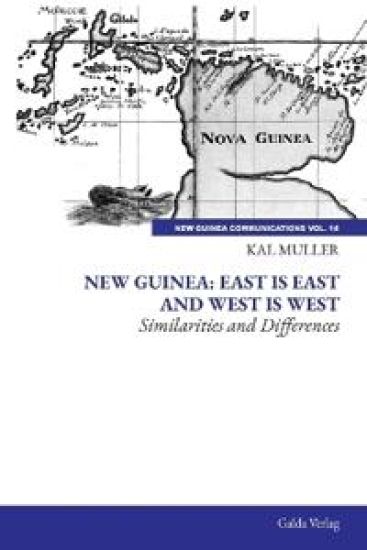
This book compares the two sides of New Guinea: the independent country of Papua New Guinea (PNG) and the West New Guinea (WNG) that forms a part of the Republic of Indonesia. By sharing the same island there are many similarities that apply to both sides such as the ethnic makeup in the eastern and western halves of New Guinea. Yet differences exist: geologies and geographies underlie some basic difference: outward maritime trade routes in the west focus toward the Moluccas while those in the east look towards the South Pacific. The inland trade routes are similar in the highlands following the dictates of the rugged terrain. Stone blades for axes and adzes were among the most important trade items everywhere, along with salt from local saline pools. The island's Babel of over 1,100 languages has prevented any large-scale political entities. And while the art styles show some similarities, marked differences are found in the east and the west. The colonization process defines much of the current differences between the two sides. The west was colonized by the Dutch as part of their East Indies domain, now Indonesia. In the east, the British and the Germans were the first to take possession, with Australia taking over the entire west after 1914. Treatment of the Papuans differed considerably. In the west, it was almost complete neglect as the Dutch were mostly interested in the productive money generating parts of the East Indies, lacking in West New Guinea. In what became Papua New Guinea, working in plantations and gold mining depended on cheap Papuan labor, with their treatment showing considerable variation. World War II affected the two sides quite differently. The Japanese juggernaut rolled over the north coast of West New Guinea, then that of PNG before being stopped in the Solomon Islands. The expulsion of the Japanese took nearly three years on the PNG side but only a few months in WNG. This difference had profound effects, quite different on the two
The Amungme of West New Guinea

The Amungme of West New Guinea

Kal Muller

Galda Verlag
2023
pokkari
THE BOOK Aside from the Dani of the Baliem Valley, the Amungme are the best-known highlands tribe in West New Guinea. This is largely due to some of their lands having been taken by the mining company Freeport Indonesia for the development of their mining complex, first around the Ertsberg, then the Grasberg. This second ore body holds the world's largest gold deposit and the third largest concentration of copper. The Amungme, live to the south of the steep central mountains, while their linguistic brothers, the Damal, spread just to the north of this range. During the early years of the Freeport mine operations, the company paid little attention to the Amungme. Their lands were used with scant compensation as the company paid its taxes to the central government, with no obligation to start any social programs for the Amungme. The various chapters cover the essential aspects of the Amungme culture, including their origins, their distinctive language, the kinship structure, social organization, the importance of cowry shells, and females in exchanges, leadership, and the various ways of subsisting: hunting, farming, and gathering. The results of the contacts with the outside world begin with the section on Christianity and the pre-contact mystical concept of 'h'ai', and early paradise that can be attained without first expiring. The effects of the large-scale mining operations are described from the early history of Freeport Indonesia and the effects of the discovery of the huge ore body in Grasberg (Grass Mountain). The concluding section describes the current improvements in the treatment of the Amungme by Freeport, including education, health programs, and job training. THE SERIES The aim is to provide a conduit for the publication of studies on the Island of New Guinea, with its two established political divisions, but will also include other associated patterns of islands. It will enable contributions from new knowledge workers-with their dissertations-
The Dani, the Lani

The Dani, the Lani

Kal Muller

Galda Verlag
2023
pokkari
THE BOOK The Dani group, centered in the Baliem Valley, has long taken the world's attention. It is by far the best-known ethnic group in West New Guinea, ever since its discovery by the aptly named American explorer Richard Archbold in 1938. While some Dutch groups had passed close by during previous nears, none had seen the valley itself with its high population of 50,000 to 100,000. The flat, fertile valley bottom was expertly farmed with irrigation and drainage in geometrically laid out fields of raised mounds that produced bumper crops of sweet potatoes. The Dani group was discovered when Archbold flew his hydroplane overhead and was suitably impressed by the gardens beautiful, orderly layout. He also saw some mysterious tall erections dispersed in several areas on the flat land. These structures turned out to be watchtowers, ready to alert the nearby inhabitants of the approach of a hostile group. For large-scale warfare was the way of life in the Baliem. Divided into several large alliances, hostilities were never-ending, punctured by short periods of relative peace. After the Archbold Expedition left the valley, the next visitors were American Evangelical missionaries who landed on the Baliem River in their new hydroplane. They established a base there and began proselytizing a full two years before the Dutch opened their first post there. A few years later, an American filming expedition from Harvard University was able to film the daily life as well as some actual battles, fought with spears, bows and arrows. The film, Dead Birds, was screened to many audiences in the US and elsewhere. The missionaries among the Dani were not very successful. This was in stark contrast with the Lani (also called Western Dani) who lived in the northernmost part of the Baliem Valley and spread far toward the east in West New Guinea's central highlands. They had been successfully proselytized by American Evangelicals based in Enarotali, on the shore of Lake Paniai. The L
The Me, the Moni, and the Wodani

The Me, the Moni, and the Wodani

Kal Muller

Galda Verlag
2023
pokkari
The fourth volume of the CLAREP Journal of English and Linguistics (C-JEL 4) contains fourteen (14) well-researched papers in the fields of English and literary studies. The papers are based on various topics such as history of the English language in Africa, applied linguistics, New Englishes, academic literacy, semiotics, and analysis of poetry and prose as tools of social, economic and political conflict management. The Centre for Language Research and English Proficiency (CLAREP) is an educational non-governmental, non-profit organisation whose focus is on the advancement of language research in Africa and the promotion of the proficient use of language in all its spheres.
The Kamoro

The Kamoro

Kal Muller

Galda Verlag
2022
pokkari
THE BOOK The 18,000-odd Kamoro ethno-linguistic group occupy some 300 km of land along the north shore of the Arafura Sea. Their homeland lies to the west of their better-known language relatives, the more numerous Asmat. For better or worse, a section of the Kamoro lands lie within the contract of works area of the huge Grasberg mine operated by Freeport Indonesia, and majority owned by the Indonesian government. The mining company has financed several large-scale programs beneficial to the affected villages to compensate them for their lost sago groves. One of these programs which I ran for 20 years helped to revive and encourage their culture and traditional woodcarving skills. Whilst I have based this book on my personal experiences on this group, I have also sought out the works of explorers, missionaries and anthropologists who have gone before me. THE SERIES The aim is to provide a conduit for the publication of studies on the Island of New Guinea, with its two established political divisions, but will also include other associated patterns of islands. It will enable contributions from new knowledge workers-with their dissertations-and from established scholars. As there are numerous scholars who would like better coverage of the areas in which they have explored-as a tribute to the people they have worked with-as well as local scholars who understand the importance of their unique areas. It is felt that the approaches being trialed in the visual anthropology part of the series as area studies will bring a wider attention to the remarkable nature of the island. The first volumes will be on modes of communication: oral history and folklore, and the emergence of a local literature. While the representation of all disciplines is welcome, comparative and whole island studies would be of great interest as well. For this, collaborative works or edited volumes may be needed. It will allow for academic publications of a more preliminary kind-rather than exhausti
The South Coast of West New Guinea

The South Coast of West New Guinea

Kal Muller

Galda Verlag
2022
pokkari
THE BOOK The South Coast of West New Guinea holds a number of well-known cultures, along with several other less researched ones. In the late 19th Century, the headhunting activities of the Marind operating in then-British New Guinea required the establishment of a Dutch military post at Merauke to stop the cross-border raids. A number of excellent ethnographic studies of the Marind have given us a rare understanding of this ethnolinguistic group in its pristine state. The Asmat were the last major group to be brought under Dutch control. This did not occur until well into the 1950s. The young son of the then-governor of New York State, Nelson Rockefeller, died while collecting Asmat carvings - probably by drowning but possible by being killed by a group perhaps still practising head-hunting. Missionaries of the Roman Catholic Church in the Asmat area helped to preserve the artistic talents of this group and helped them to retain a measure of pride in their way of life. The Kamoro also produced excellent woodcarvings. A portion of their land has been by the mining company, Freeport Indonesia in their lowlands infrastructure development. In return, the company offers various development programs to them (along with other Papuan groups) covering their economy, education and health necessities. Support for their woodcarving tradition is given through a locally-run foundation. Our texts emphasize what is known of the traditional elements of the various South Coast cultures. Now that warfare, cannibalism and head-hunting have stopped, the groups are considerably less 'exotic' but still present a fascinating way of life. THE SERIES The aim is to provide a conduit for the publication of studies on the Island of New Guinea, with its two established political divisions, but will also include other associated patterns of islands. It will enable contributions from new knowledge workers-with their dissertations-and from established scholars. As there are numerous scholar
The Highlands of West New Guinea

The Highlands of West New Guinea

Kal Muller

Galda Verlag
2021
pokkari
THE BOOK A long broad stretch of real estate covers the central highlands spine of West New Guinea. This wide mountain range runs from the Paniai Lakes region and continues across the international border into the neighboring country of Papua New Guinea. This book deals with the land and main language groups of the Indonesian side of the island, namely the Amungme, the Dani, the Lani, the Moni, the Me, the Yali, the Ok and the Mek. Most of the Papuan population lives in the highlands. This area was unknown until the 1930s. In the west, or the Dutch side of the island, the first government post of the highlands was located at Enarotali, bordering one of the Paniai Lakes. From there, American Evangelical missionaries pushed their way to the east, proselytizing the Papuan groups until they finally reached the Baliem Valley where the first post was open in 1954. THE SERIES The aim is to provide a conduit for the publication of studies on the Island of New Guinea, with its two established political divisions, but will also include other associated patterns of islands. It will enable contributions from new knowledge workers-with their dissertations-and from established scholars. As there are numerous scholars who would like better coverage of the areas in which they have explored-as a tribute to the people they have worked with-as well as local scholars who understand the importance of their unique areas. It is felt that the approaches being trialed in the visual anthropology part of the series as area studies will bring a wider attention to the remarkable nature of the island. The first volumes will be on modes of communication: oral history and folklore, and the emergence of a local literature. While the representation of all disciplines is welcome, comparative and whole island studies would be of great interest as well. For this, collaborative works or edited volumes may be needed. It will allow for academic publications of a more preliminary kind-rather than exhaus
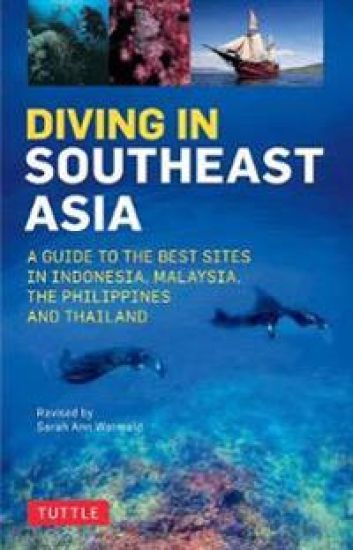
Diving in Southeast Asia

Diving in Southeast Asia

David Espinosa; Heneage Mitchell; Kal Muller

Periplus Editions
2017
nidottu
Well-travelled divers all acknowledge that the best diving in the world is found in the warm waters of tropical Asia.No other region on earth presents such a rich variety of marine life, and none can boast as many different types of dive sites: tiny, isolated atolls, World War II wrecks draped in beautiful soft corals, shallow, bommie-filled fringing reefs and pinnacles, all swarming with fish and vibrant color.Diving in Southeast Asia is a comprehensive diving guide covering Indonesia, Malaysia, the Philippines, and Thailand. It presents in great detail the very best dive sites in the tropical western Pacific. Our seasoned diver-authors have an aggregate half-century of experience exploring these waters, and each site receives thorough coverage, including detailed maps, color photos, and a full description of access, conditions, and facilities. This Southeast Asia diving guide features:Practicalities: Detailed travel information for every budget, including accommodations, transportation, prices, seasons, and dive operators.Information: Local history, diving lore, site conditions, and more than 50 maps.Photography: More than 100 color photographs by top photographers.