Kirjojen hintavertailu. Mukana 12 390 323 kirjaa ja 12 kauppaa.

Kirjailija

Kalevi Kull

Kirjat ja teokset yhdessä paikassa: 3 kirjaa, julkaisuja vuosilta 2004-2025, suosituimpien joukossa Semiootika. Vertaile teosten hintoja ja tarkista saatavuus suomalaisista kirjakaupoista.

3 kirjaa

Kirjojen julkaisuhaarukka 2004-2025.

Semiootika

Semiootika

Andreas Ventsel; Vadim Verenitsh; Anti Randviir; Silvi Salupere; Rauno Thomas Moss; Kati Lindström; Kalevi Kull; Elin Sütiste; Riin Magnus; Ülle Pärli; Mihhail Lotman; Kaire Maimets; Timo Maran; Virve Sarapik; Peeter Torop

Tartu ülikooli kirjastus
2024
sidottu
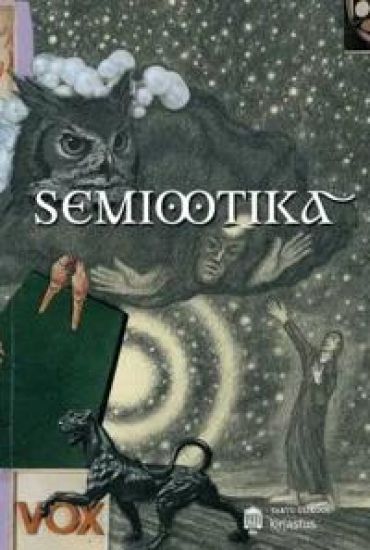
"Semiootika" 3. trükk.Tähendustemaailm on keskkond, milles me möödapääsmatult iga päev elame ja osaleme. Semiootika ülesandeks pole mitte üksnes orienteeruda kõikvõimalikes tähendustasandites ja märgilisuse tüüpides, vaid ka tähendusloome praktikates, mis kultuuri ja kogu elu kujundavad. Käesolev raamat on esimesi eestikeelseid semiootika õpikuid, mis püüab pakkuda võimalikult terviklikku käsitlust.Raamatu sissejuhatavale peatükile, milles esitatakse lühidalt semiootika määratlus ja tähtsamad allikad, järgnevad neli osa. Esimene neist annab ülevaate semiootika ajaloost ja peamistest koolkondadest. Teine osa on pühendatud semiootika klassikutele: siinses valikus Charles S. Peirce, Ferdinand de Saussure, Jakob von Uexküll, Charles Morris, Roman Jakobson, Algirdas Greimas, Juri Lotman, Umberto Eco, Thomas Sebeok. Kolmas osa on ülevaade kolmest olulisest semiootika valdkonnast - kultuuri-, sotsio- ja biosemiootikast. Neljandas osas esitatakse sissejuhatused reasse semiootika harudesse ja rakendusaladesse.Oma nägemuse klassikutest ja semiootika kujunemisest vormis piltideks semiootikust kunstnik Rauno Thomas Moss. Opiku lõpus on toodud peamiste mõistete lühiseletused, samuti nimede ja terminite indeksid ning põhjalik bibliograafia. Kuigi raamat on eeskätt mõeldud abivahendiks semiootikatudengitele, on selle koostamisel ja kirjutamisel silmas peetud ka laiemat lugejaskonda.Raamatu väljaandmist toetas Sihtasutuse Archimedes eestikeelsete kõrgkooliõpikute väljaandmise programm
Sphere of Understanding

Sphere of Understanding

Kalevi Kull; Ekaterina Velmezova

De Gruyter
2025
sidottu
The book presents dialogues with fourteen highly influential semioticians: Juri Lotman, Vyacheslav Ivanov, Boris Uspenskij, Umberto Eco, Paolo Fabbri, Myrdene Anderson, Winfried Nöth, Gunther Kress, Roland Posner, Stuart Kauffman, Jesper Hoffmeyer, Terrence Deacon, Paul Cobley, and Jaan Valsiner. They have all made a remarkable impact on contemporary research in the Tartu centre of semiotics. As well as these remarkable dialogues, the first part of the volume features an illuminating sequence of chapters on topics including the importance of dialogues, the historical roots and context of semiotics in Tartu since the 19th century, plus the main principles formulated in Jakob von Uexküll’s and Juri Lotman’s works. CONTENTS Contexts The importance of dialogues The aim of this book On the genre of interviews with semioticians Tartu as a point of departure The beginnings of semiotics in Estonia Uexküll’s legacy Lotman’s legacy The interviewees Dialogues Juri Lotman Vyacheslav Ivanov Boris Uspenskij Umberto Eco Paolo Fabbri Myrdene Anderson Winfried Nöth Gunther Kress Roland Posner Stuart Kauffman Jesper Hoffmeyer Terrence Deacon Paul Cobley Jaan Valsiner ?ata???s? For a detailed table of contents, please see here.
Imagining Nature

Imagining Nature

Kalevi Kull

Aarhus University Press
2004
nidottu
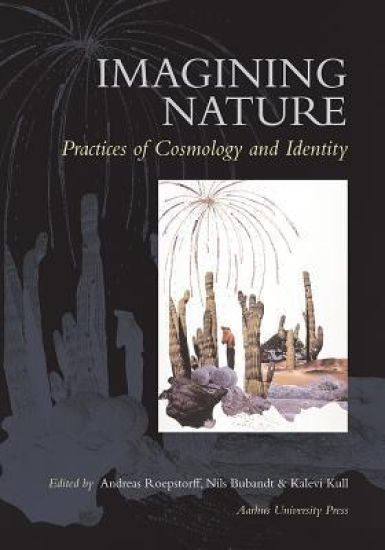
During the last decade, many social scientists have sought to show that nature is not an eternal constant but an intrinsically unstable concept - a historical, cultural and social construct with powerful emotional, moral and political connotations. Imagining Nature sets out to explore some of the implications of and lacunae in this recent push to "denaturalise nature". But rather than asking, What is nature? as many academic writers have been doing, the contributors here ask, How is nature established as an entity? Through what processes and practices does nature achieve reality? The first section of the book, "Cosmologies", focuses on ways the practices of nature are embedded in overarching conceptual worldviews. Chapters in the second section illustrate some of the means by which identity unfolds and becomes established in interacting with and imagining nature. The chapters examine nature and identity in the national mythologies of Scandinavia and Germany; two Fulani status groups in Burkina Faso; the confrontational Sami community of Manndalen, Norway; the spatial world of the Tsaatang nomads in Mongolia; and two neoclassic houses by Le Corbusier and Wright.While the individual contributions here will certainly interest specialists in the particular fields they represent, Imagining Nature is broadly interdisciplinary in appeal, and it is especially recommended to anyone intrigued by recent constructivist debate and the multiplying conceptions of nature in the social sciences.