Kirjojen hintavertailu. Mukana 12 390 323 kirjaa ja 12 kauppaa.

Kirjailija

Kamesha Spates

Kirjat ja teokset yhdessä paikassa: 4 kirjaa, julkaisuja vuosilta 2014-2025, suosituimpien joukossa What Don't Kill Us Makes Us Stronger. Vertaile teosten hintoja ja tarkista saatavuus suomalaisista kirjakaupoista.

4 kirjaa

Kirjojen julkaisuhaarukka 2014-2025.

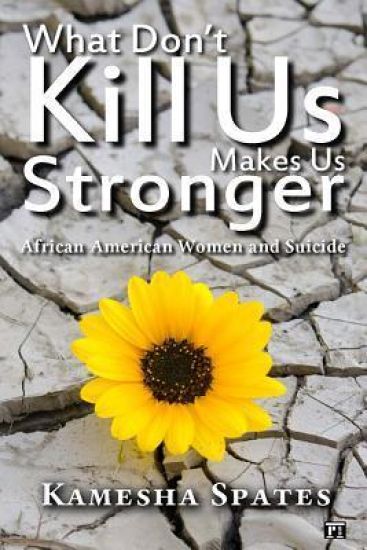
What Don't Kill Us Makes Us Stronger
A close look at black women’s physical, mental, and social circumstances reveals harmful social disparities. Yet, for decades, black women’s suicide rates have remained virtually nonexistent compared to the rest of the American population, baffling social scientists. In this book, black women speak for themselves about their life struggles and their notions of suicide. Within a framework that explores racial and gender inequalities, Spates uses interviews to uncover reasons for the racial suicide paradox. Her analysis offers a deeper understanding of the positive life strategies, including family and faith, that underlie black women’s resilience.-Provides insights into the impact of a variety of racial and gender inequalities-Vivid use of qualitative approaches to shed light on a statistical paradox-Highlights a positive image of black women and their resilience
Policing Black Bodies in the 21st Century

Policing Black Bodies in the 21st Century

Kamesha Spates; Brittany Slatton

Routledge
2025
nidottu
In Ferguson and many other American communities, social media has raised the visibility of police actions, leading to protests and social movements addressing white police treatment of African Americans. This is the first book to explore recent allegations of racial profiling in light of a longer history of white-black relations.This concise text draws from critical race theory and criminology to critically examine the role of race in contemporary American policing. It shows that trust between black communities and police remain contentious due to institutional racism. The author offer a historical look at the ways in which American policing has served to reinforce racial order between whites and blacks--and more recently how ideologies of color blindness further complicate relationships between the police and the black community. What continuities and differences exist between current policing practices and those of the civil rights era? How does color-blind ideology undermine public discussions, police practices, and the American justice system? The book takes up these and many other timely questions.
Policing Black Bodies in the 21st Century

Policing Black Bodies in the 21st Century

Kamesha Spates; Brittany Slatton

Routledge
2025
sidottu
In Ferguson and many other American communities, social media has raised the visibility of police actions, leading to protests and social movements addressing white police treatment of African Americans. This is the first book to explore recent allegations of racial profiling in light of a longer history of white-black relations.This concise text draws from critical race theory and criminology to critically examine the role of race in contemporary American policing. It shows that trust between black communities and police remain contentious due to institutional racism. The author offer a historical look at the ways in which American policing has served to reinforce racial order between whites and blacks--and more recently how ideologies of color blindness further complicate relationships between the police and the black community. What continuities and differences exist between current policing practices and those of the civil rights era? How does color-blind ideology undermine public discussions, police practices, and the American justice system? The book takes up these and many other timely questions.
What Don't Kill Us Makes Us Stronger
A close look at black women’s physical, mental, and social circumstances reveals harmful social disparities. Yet, for decades, black women’s suicide rates have remained virtually nonexistent compared to the rest of the American population, baffling social scientists. In this book, black women speak for themselves about their life struggles and their notions of suicide. Within a framework that explores racial and gender inequalities, Spates uses interviews to uncover reasons for the racial suicide paradox. Her analysis offers a deeper understanding of the positive life strategies, including family and faith, that underlie black women’s resilience.-Provides insights into the impact of a variety of racial and gender inequalities-Vivid use of qualitative approaches to shed light on a statistical paradox-Highlights a positive image of black women and their resilience