Kirjojen hintavertailu. Mukana 12 459 402 kirjaa ja 12 kauppaa.

Kirjailija

Karapin Roger

Kirjat ja teokset yhdessä paikassa: 2 kirjaa, julkaisuja vuosilta 2007-2016, suosituimpien joukossa Political Opportunities for Climate Policy. Vertaile teosten hintoja ja tarkista saatavuus suomalaisista kirjakaupoista.

2 kirjaa

Kirjojen julkaisuhaarukka 2007-2016.

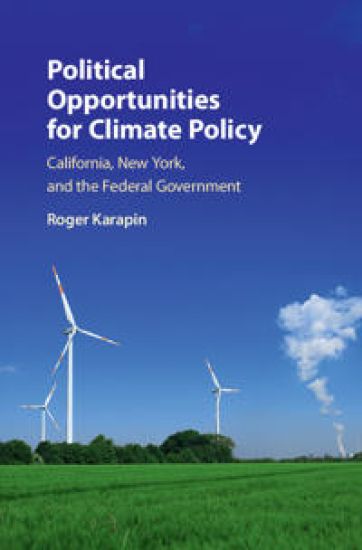
Political Opportunities for Climate Policy

Political Opportunities for Climate Policy

Karapin Roger

Cambridge University Press
2016
pokkari
Analysis of climate change policies focuses mainly on the prospects for international agreements or how climate policies should be designed. Yet effective domestic climate policies are essential to any global solution, and we know too little about how and why such policies are adopted. Political Opportunities for Climate Policy examines in depth the causes of effective climate policies in the United States, using a statistical analysis of all fifty states and long-term case studies of California, New York, and the federal government. Roger Karapin analyzes twenty-two episodes in which policies were adopted, blocked, or reversed. He shows that actors and events have positively affected climate policy making, despite the constraints presented by political institutions and powerful fossil fuel industries. Climate policy advocates have succeeded when they mobilized vigorously and astutely during windows of opportunity - which opened when events converged to raise both problem awareness and the political commitment to address them.

Protest Politics in Germany

Protest Politics in Germany

Karapin Roger

Pennsylvania State University Press
2007
sidottu
Social movements and the protests they spawn are widely regarded as important to the vibrancy of democracy and its ability to respond constructively to change. In the immediate postwar period, West Germany’s was a “spectator democracy,” with the citizenry largely passive and elites operating mainly through consensus. Beginning with the student demonstrations in the late 1960s, however, Germany experienced waves of left-wing protest that expanded the political agenda and broadened political participation. Later, after the unification of East and West Germany, the country was confronted by new challenges from right-wing groups, which often engaged in violence during the early 1990s.In this book Roger Karapin carefully examines protest movements on both the left and the right in order to understand how they became large and influential and why protesters in different conflicts used quite different methods (ranging from conventional participation to nonviolent disruption to violent militancy). His study of nine cases of protest includes leftist opposition to urban-renewal and nuclear-energy policies in the 1970s and 1980s and rightist opposition to immigration policy in the 1990s. Comparisons of contrasting cases reveal the crucial role played by strategic interaction among protesters, party politicians, and government officials—rather than socioeconomic factors or political institutions—in determining the paths that the movements took.