Kirjailija
Karen Anderson
Kirjat ja teokset yhdessä paikassa: 20 kirjaa, julkaisuja vuosilta 1981-2025, suosituimpien joukossa Eat Alberta First. Vertaile teosten hintoja ja tarkista saatavuus suomalaisista kirjakaupoista.
20 kirjaa
Kirjojen julkaisuhaarukka 1981-2025.

Love in Pieces Unfuckwithable Poems of Power, Boundaries, and Becoming In Love in Pieces, Karen Anderson delivers an unapologetic and soul-stirring collection of poetry that cuts to the bone. Through raw emotion and unfiltered truths, this book explores the cracks and scars that life leaves behind-shaped by pain, betrayal, love, and the relentless journey of healing. From breaking generational curses to reclaiming self-worth, Love in Pieces is a manifesto for anyone who has ever been told they're "too much" or "not enough." With fire in her words and resilience in her heart, Anderson channels themes of self-discovery, sensuality, and empowerment, weaving a story of triumph from the fragments of a broken past. Whether you've cried in the shower, screamed at the sky, or danced in defiance, these pages hold a piece of you. With every poem, you'll find permission to feel deeply, rise boldly, and reclaim your narrative on your own terms. This is not just a book-it's a rebellion, a revolution, and a reminder that even in pieces, you can still be whole. For the women who turned their pain into power-this is your anthem.

Karen Anderson's From Pain to Power is not just a memoir-it's a movement. A story of unimaginable strength, resilience, and the fierce pursuit of truth, this book chronicles Karen's journey from the suffocating grip of trauma to the liberating reclamation of her voice and identity. In this deeply personal and unfiltered account, Karen pulls back the curtain on her experiences of childhood abuse, family betrayal, and the silencing power of generational secrets. She fearlessly unpacks the cycles of silence and complicity that permeate many families, challenging readers to reflect on their own truths. Through raw honesty and profound vulnerability, Karen offers readers an intimate look at her battle to heal-not just from the trauma inflicted by others, but from the self-doubt and pain that lingered long after. She explores the complexities of faith, motherhood, and the delicate process of learning to love and trust again after betrayal. But this isn't just a book about pain. From Pain to Power is a beacon of hope for anyone who has ever felt voiceless, broken, or trapped by their past. It's an invitation to step out of the shadows, confront the darkness, and reclaim the story that has always been yours to tell. Karen's journey reminds us that healing isn't a straight path-it's messy, raw, and deeply transformative. With every chapter, she proves that courage isn't the absence of fear, but the decision to face it head-on. Whether you are on your own journey of recovery, seeking inspiration, or simply wish to understand the depths of human resilience, From Pain to Power will resonate deeply. It's more than a story-it's a reminder of the power found in breaking the silence, in choosing yourself, and in stepping into the light no matter how long you've lived in the dark.

Equal parts cookbook and manifesto, this beautifully photographed collection is the ultimate guide to local eating in Alberta all through the year. Eat Alberta First presents 90 tried and true recipes in celebration of Alberta's farmers, ranchers, and food artisans. Alberta Food Tours founder and enthusiastic locavore Karen Anderson's love of her province is enriched with the experience gained during her extensive global travels. Organized around uniquely Alberta seasons (including "Cabin Fever" and "Harvest Hurry Up"), with mini workshops on sourdough, foraging, and canning, gorgeous food and landscape photography, and an Alberta food sourcing list, the book is designed to help the home cook build reliance on their skills and on the province's food producers. Beginning with detailed lists of pantry essentials and an introduction to the skill levels each recipe is organized by, Karen then takes readers through the seasons, from the depths of winter (when the tough get baking), through always dicey springs, full-on summer, harvest, and batch prepping for a busy fall. The book concludes with a chapter dedicated to hosting a diversity of feasts all year round. Learn to make Morel Mushroom Cheese Spread, Never the Same Way Twice Coleslaw, Slow-Cooked Alberta Bison, Long Life Noodles with Greens, the ultimate charcuterie board, Festive Vegetable Biryani, Summer's Every Fruit Cake, and many many more. We think you'll find Karen's gusto and belief in the power of local truly inspiring.

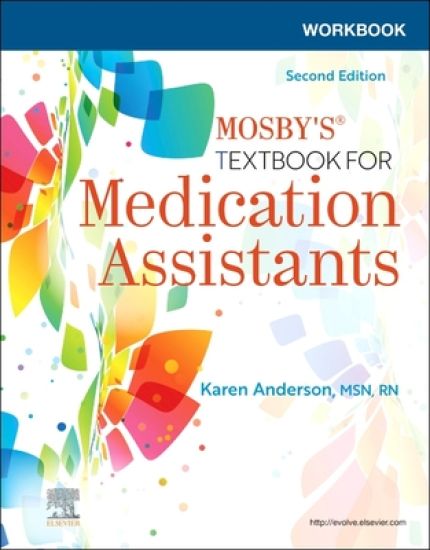
Reinforce your understanding of drug administration with this practical workbook! Corresponding to the chapters in Mosby's Textbook for Medication Assistants, 2nd Edition, this workbook helps you review concepts and practice the procedures performed by medication assistants. A wide variety of exercises and activities allow you to apply your knowledge to healthcare settings. Not only will you get more out of the textbook, but you will also prepare for certification exams by building on your strengths and improving any areas of weakness. Engaging exercises enhance and reinforce your comprehension with matching, multiple-choice, fill-in-the-blank, and true/false questions. Independent learning activities challenge you to apply your knowledge to practice. Procedure checklists make it easier to learn and practice medication administration skills, and provide helpful self-evaluation. NEW! Updated exercises correspond with the updated drug information and content in Mosby's Textbook for Medication Assistants, 2nd Edition. NEW! Dosage calculation exercises allow you to practice and improve math skills.
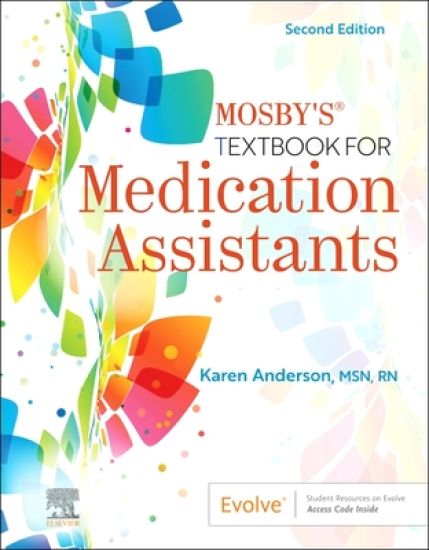
Gain the knowledge and skills you need to safely administer medications! Mosby's Textbook for Medication Assistants, 2nd Edition covers the principles and techniques of drug administration for common drugs and over-the-counter medications. It addresses topics such as basic pharmacology, the effect of drugs on body systems, delegation and lifespan considerations, ethics and laws, and math skills for accurate dosage calculation. Written by Karen Anderson, this text is a complete guide to the medication assistant's role, function, and scope of practice. Step-by-step procedures are divided into manageable segments, with instructions for each skill. Clear, easy-to-read writing style makes it easy to understand what you've read. Documentation reporting and recording is discussed for each drug. Focus on Communication boxes suggest what to say and questions to ask when interacting with patients, residents, family, and nursing staff. Focus on Older Person boxes provide age-specific considerations when administering drugs to older patients. Promoting Safety and Comfort boxes highlight safe guidelines for administering drugs. Delegation Guidelines call out the information the aide should obtain from the nurse and the care plan for delegated tasks. Chapter Review Questions at the end of each chapter help you evaluate your comprehension. Arithmetic Review in the appendix covers the basic math skills you need for calculating and checking medication dosages. Key Terms are defined at the beginning of each chapter to help you understand key terminology. NEW! Updated drug content includes current brand names, dosages, effects, and side effects. NEW Infection Prevention chapter is added. NEW! Full-color drawings and photos are updated to illustrate key concepts and techniques. NEW! Updated and simplified coverage of disease helps you understand how and when drugs are used to treat different diseases. NEW! NCLEX® review questions are now available on the Evolve companion website.

Power dynamics in the workplace are a given.For those in leadership, the imbalance of power often leads to feeling frustrated, undervalued, and overlooked-especially in women and minorities-impacting both self-esteem and the bottom line.For those feeling alone and unsure of how to respond, Power Up Power Down gives specific strategies to (finally) reclaim control and identifies proven ways to create a ‘win-win” outcome.Too often, power situations can feel like a “rock and a hard place” – if you’re too assertive, you’re labeled (at best) as overbearing and unapproachable. If you’re too passive, your voice, ideas, and opinions are ignored. But as Viktor Frankl stated, “Between stimulus and response, there is a space.” Our “real” power is knowing how to tap into that space and respond intentionally.Gail Rudolph helps readers discover how to harness their innate interpersonal power, revealing cues and signals that helps us respond effectively.By recognizing the ways to value all people (including yourself), you can make a choice to become empowered!

The Bezos Letters lays out the fourteen growth principles that Amazon uses every day by examining Jeff Bezos’ personal letters to shareholders. Jeff Bezos created Amazon, the fastest company to reach $100 billion in sales ever, making him the richest man in the world. Business owners marvel at Amazon’s success, but don’t realize they have the answers right at their fingertips as Bezos reveals his hidden roadmap in his annual letters to shareholders. For the first time, business analyst Steve Anderson unlocks the key lessons, mindset, principles, and steps Bezos used, and continues to use, to make Amazon the massive success it is today. Steve shows business owners, leaders, and CEOs how to apply those same practices and watch their business become more efficient, productive, and successful—fast!

After life-saving surgery, freelance photographer Elizabeth Fisher decided it was time to put her depression and anxiety behind her, and live life to its fullest. Treating her widowed father and their longtime housekeeper to a summer holiday in the quaint town of Kapalei, on the island of Kauai, little did any of them realize how much their lives would change forever. An uplifting and heartwarming story of a family bound together by love and fate, as they rediscover happiness and meaning in life after profound tragedy and loss.

Amra, Vol. 2, No. 2 (1959)
John W Campbell; Karen Anderson; August Derleth
Wildside Press
2016
pokkari

The desegregation crisis in Little Rock is a landmark of American history: on September 4, 1957, after the Supreme Court struck down racial segregation in public schools, Arkansas Governor Orval Faubus called up the National Guard to surround Little Rock Central High School, preventing black students from going in. On September 25, 1957, nine black students, escorted by federal troops, gained entrance. With grace and depth, Little Rock provides fresh perspectives on the individuals, especially the activists and policymakers, involved in these dramatic events. Looking at a wide variety of evidence and sources, Karen Anderson examines American racial politics in relation to changes in youth culture, sexuality, gender relations, and economics, and she locates the conflicts of Little Rock within the larger political and historical context. Anderson considers how white groups at the time, including middle class women and the working class, shaped American race and class relations. She documents white women's political mobilizations and, exploring political resentments, sexual fears, and religious affiliations, illuminates the reasons behind segregationists' missteps and blunders. Anderson explains how the business elite in Little Rock retained power in the face of opposition, and identifies the moral failures of business leaders and moderates who sought the appearance of federal compliance rather than actual racial justice, leaving behind a legacy of white flight, poor urban schools, and institutional racism. Probing the conflicts of school desegregation in the mid-century South, Little Rock casts new light on connections between social inequality and the culture wars of modern America.

BTEC Level 3 National IT Student Book 2
Jenny Lawson; Karen Anderson
Pearson Education, Oxford
2011
pokkari
BTEC and Heinemann have joined forces to bring learners BTEC's own resources to accompany the new specification, supporting them every step of the way to BTEC success.

BTEC Level 3 National IT Student Book 1
Karen Anderson; Alan Jarvis
Pearson Education, Oxford
2010
pokkari
BTEC and Heinemann have joined forces to provide BTEC's own resources to accompany the new BTEC Level 3 National IT specification, supporting learners every step of the way to BTEC success.

The desegregation crisis in Little Rock is a landmark of American history: on September 4, 1957, after the Supreme Court struck down racial segregation in public schools, Arkansas Governor Orval Faubus called up the National Guard to surround Little Rock Central High School, preventing black students from going in. On September 25, 1957, nine black students, escorted by federal troops, gained entrance. With grace and depth, Little Rock provides fresh perspectives on the individuals, especially the activists and policymakers, involved in these dramatic events. Looking at a wide variety of evidence and sources, Karen Anderson examines American racial politics in relation to changes in youth culture, sexuality, gender relations, and economics, and she locates the conflicts of Little Rock within the larger political and historical context. Anderson considers how white groups at the time, including middle class women and the working class, shaped American race and class relations. She documents white women's political mobilizations and, exploring political resentments, sexual fears, and religious affiliations, illuminates the reasons behind segregationists' missteps and blunders. Anderson explains how the business elite in Little Rock retained power in the face of opposition, and identifies the moral failures of business leaders and moderates who sought the appearance of federal compliance rather than actual racial justice, leaving behind a legacy of white flight, poor urban schools, and institutional racism. Probing the conflicts of school desegregation in the mid-century South, Little Rock casts new light on connections between social inequality and the culture wars of modern America.
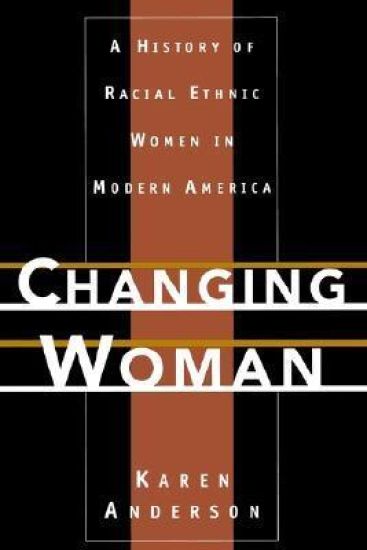
While great strides have been made in documenting discrimination against women in America, our awareness of discrimination is due in large part to the efforts of a feminist movement dominated by middle-class white women, and is skewed to their experiences. Yet discrimination against racial ethnic women is in fact dramatically different--more complex and more widespread--and without a window into the lives of racial ethnic women our understanding of the full extent of discrimination against all women in America will be woefully inadequate. Now, in this illuminating volume, Karen Anderson offers the first book to examine the lives of women in the three main ethnic groups in the United States--Native American, Mexican American, and African American women--revealing the many ways in which these groups have suffered oppression, and the profound effects it has had on their lives. Here is a thought-provoking examination of the history of racial ethnic women, one which provides not only insight into their lives, but also a broader perception of the history, politics, and culture of the United States. For instance, Anderson examines the clash between Native American tribes and the U.S. government (particularly in the plains and in the West) and shows how the forced acculturation of Indian women caused the abandonment of traditional cultural values and roles (in many tribes, women held positions of power which they had to relinquish), subordination to and economic dependence on their husbands, and the loss of meaningful authority over their children. Ultimately, Indian women were forced into the labor market, the extended family was destroyed, and tribes were dispersed from the reservation and into the mainstream--all of which dramatically altered the woman's place in white society and within their own tribes. The book examines Mexican-American women, revealing that since U.S. job recruiters in Mexico have historically focused mostly on low-wage male workers, Mexicans have constituted a disproportionate number of the illegals entering the states, placing them in a highly vulnerable position. And even though Mexican-American women have in many instances achieved a measure of economic success, in their families they are still subject to constraints on their social and political autonomy at the hands of their husbands. And finally, Anderson cites a wealth of evidence to demonstrate that, in the years since World War II, African-American women have experienced dramatic changes in their social positions and political roles, and that the migration to large urban areas in the North simply heightened the conflict between homemaker and breadwinner already thrust upon them. Changing Woman provides the first history of women within each racial ethnic group, tracing the meager progress they have made right up to the present. Indeed, Anderson concludes that while white middle-class women have made strides toward liberation from male domination, women of color have not yet found, in feminism, any political remedy to their problems.
Changing Woman examines the role of Indian, Mexican-American, and African-American women during the 20th century, focusing on the changes these years have brought about in their lives and comparing each group

This comprehensive reading program will lead students through the literacy learning process from phonics to chapter books, building confidence and important language access tools along the way. SUNSHINE offers both shared and guided reading experiences using a variety of genres. Choose from our Big Books, student books, cassettes, plays, and chapter books, or opt for a carefully designed grade-level kit that provides a yearlong skills instruction program. Assessment is a critical part of the literacy process, and SUNSHINE's benchmark books and assessment guides expertly satisfy that requirement. Give your students a bright reading future with SUNSHINE's extensive selection of titles, language development materials, and teacher resources.

In this highly original volume of social history, Karen Anderson makes a provocative claim: the subjugation of women in seventeenth-century New France was linked with the brutal colonization of native Indian populations. Before colonization, the Huron and Montagnais tribes lived in gender-egalitarian societies. The domination of women by men was only one effect of French "civilization"--along with warfare, disease, famine and Jesuit proselytization--which combined to destroy Indian culture and sexual equality. Anderson's is an interdisciplinary, cross-cultural, feminist case study of the historical and political construction of gender and racial inequality.