Kirjojen hintavertailu. Mukana 12 514 092 kirjaa ja 12 kauppaa.

Kirjailija

Karen Armstrong

Kirjat ja teokset yhdessä paikassa: 58 kirjaa, julkaisuja vuosilta 1994-2026, suosituimpien joukossa Living into Hope. Vertaile teosten hintoja ja tarkista saatavuus suomalaisista kirjakaupoista.

58 kirjaa

Kirjojen julkaisuhaarukka 1994-2026.

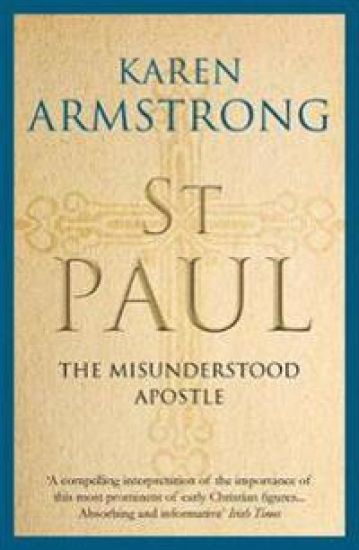
St Paul

St Paul

Karen Armstrong

Atlantic Books
2016
nidottu
St Paul is known throughout the world as the first Christian writer, authoring fourteen of the twenty-seven books in the New Testament. But as Karen Armstrong demonstrates in St Paul: The Misunderstood Apostle, he also exerted a more significant influence on the spread of Christianity throughout the world than any other figure in history. It was Paul who established the first Christian churches in Europe and Asia in the first century, Paul who transformed a minor sect into the largest religion produced by Western civilization, and Paul who advanced the revolutionary idea that Christ could serve as a model for the possibility of transcendence. While we know little about some aspects of the life of St Paul - his upbringing, the details of his death - his dramatic vision of God on the road to Damascus is one of the most powerful stories in the history of Christianity, and the life that followed forever changed the course of history.
Fields of Blood

Fields of Blood

Karen Armstrong

Random House UK
2015
pokkari
Is humanity on the brink of destroying itself? This book intends to disprove the link between religion and bloodshed. It deals with ancient religious ideas and movements that have promoted peace and reconciliation across millennia of civilization.
Fields of Blood: Religion and the History of Violence

Fields of Blood: Religion and the History of Violence

Karen Armstrong

Knopf Doubleday Publishing Group
2015
nidottu
From the renowned bestselling author of A History of God--a sweeping exploration of religion and the history of human violence. - "Elegant and powerful.... Both erudite and accurate, dazzling in its breadth of knowledge and historical detail." --The Washington PostIn these times of rising geopolitical chaos, the need for mutual understanding between cultures has never been more urgent. Religious differences are seen as fuel for violence and warfare. In these pages, one of our greatest writers on religion, Karen Armstrong, amasses a sweeping history of humankind to explore the perceived connection between war and the world's great creeds--and to issue a passionate defense of the peaceful nature of faith. With unprecedented scope, Armstrong looks at the whole history of each tradition--not only Christianity and Islam, but also Buddhism, Hinduism, Confucianism, Daoism, and Judaism. Religions, in their earliest days, endowed every aspect of life with meaning, and warfare became bound up with observances of the sacred. Modernity has ushered in an epoch of spectacular violence, although, as Armstrong shows, little of it can be ascribed directly to religion. Nevertheless, she shows us how and in what measure religions came to absorb modern belligerence--and what hope there might be for peace among believers of different faiths in our time.
The Bible

The Bible

Karen Armstrong

Atlantic Books
2015
nidottu
The Bible is the most widely distributed book in the world. Translated into over two thousand languages, it is estimated that more than six billion copies have been sold in the last two hundred years alone. In this seminal account, Karen Armstrong traces the gestation of the Bible to reveal a complex and contradictory document created by scores of people over hundreds of years. Karen Armstrong begins her analysis with the origins of the very earliest books of the Hebrew Bible, in which God was called both 'Yahweh' and 'Elohim'. She then traces the development of both the Hebrew Bible and the New Testament to reveal the disparate influences that helped to form these sacred texts. From the Jewish practice of Midrash and the Christian cult of Jesus; to the influence of Paul's letters on the Reformation and the manipulation of Revelations by Christian fundamentalism, Armstrong explores the contexts in which these sixty-six books were understood and explains the social needs they answered. In the process she reveals an unfamiliar and paradoxical work that will permanently alter our understanding of the Bible.
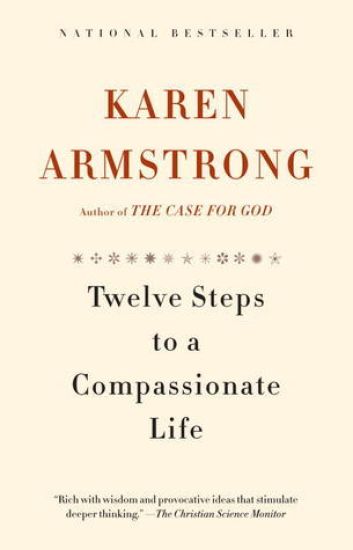
Twelve Steps to a Compassionate Life

Twelve Steps to a Compassionate Life

Karen Armstrong

Vintage Books Canada
2011
nidottu
One of the most original thinkers on the role of religion in the modern world--author of such acclaimed books as A History of God, Islam and Buddha--now gives us an impassioned and practical book that can help us make the world a more compassionate place. In Twelve Steps to a Compassionate Life, Armstrong suggests concrete ways of enhancing our compassion and putting it into action in our everyday lives. Throughout, Armstrong makes clear that a compassionate life is not a matter of only heart or mind but a deliberate and often life-altering commingling of the two. In November 2009 Armstrong and TED launched The Charter for Compassion (www.charterforcompassion.org), which calls upon all men and women to "restore compassion to the centre of morality and religion . . . to cultivate an informed empathy with the suffering of all human beings--even those regarded as enemies." To date, it's been signed by over 48,000 people, including such figures as The Dalai Lama and Queen Noor, Dave Eggers and Meg Ryan. Out of the ideals of that Charter has come this humane, accessible, indispensable short book for our times.
Twelve Steps to a Compassionate Life

Twelve Steps to a Compassionate Life

Karen Armstrong

ANCHOR BOOKS
2011
nidottu
One of the most original thinkers on the role of religion in the modern world--and the bestselling author of such acclaimed books as A History of God, Islam, and Buddha--now gives us an exquisitely intelligent" book (Financial Times) that can help us make the world a more compassionate place.Karen Armstrong believes that while compassion is intrinsic in all human beings, each of us needs to work diligently to cultivate and expand our capacity for compassion. Here, in this straightforward, thoughtful, and thought-provoking book, she sets out a program that can lead us toward a more compassionate life. The twelve steps Armstrong suggests begin with "Learn About Compassion" and close with "Love Your Enemies." In between, she takes up "compassion for yourself," mindfulness, suffering, sympathetic joy, the limits of our knowledge of others, and "concern for everybody." She suggests concrete ways of enhancing our compassion and putting it into action in our everyday lives, and provides, as well, a reading list to encourage us to "hear one another's narratives." Throughout, Armstrong makes clear that a compassionate life is not a matter of only heart or mind but a deliberate and often life-altering commingling of the two.
In the Beginning

In the Beginning

Karen Armstrong

Vintage
2011
pokkari
The foundation stone of Jewish and Christian scriptures, the power of the Book of Genesis lies in its stories - Creation, the Fall, Cain and Abel, Noah, Abraham, Jacob and Joseph. Karen Armstrong traces the themes and meanings of these stories, examining what they can still tell us about the human quest for meaning.
Twelve Steps to a Compassionate Life
Drawing on a wide range of material - ranging from the spiritual character of the world religions to the findings of contemporary neuroscience - this title argues that compassion is hardwired into our brains, yet is constantly pushed back by our more primitive instincts for selfishness and survival.
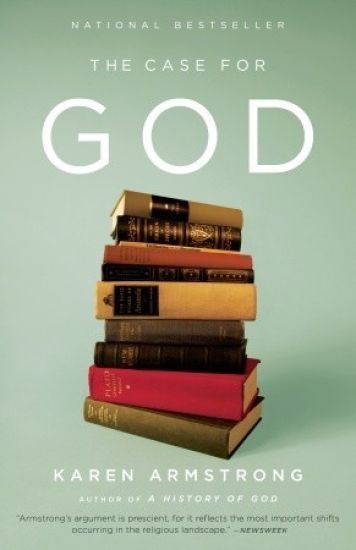
The Case for God

The Case for God

Karen Armstrong

ANCHOR BOOKS
2010
nidottu
NATIONAL BESTSELLER - From the New York Times bestselling author of The History of God--a nuanced exploration of the role of religion in our lives, drawing on insights of the past to build a faith for our dangerously polarized age. "A stimulating, hopeful work. --NPR's All Things ConsideredMoving from the Paleolithic age to the present, Karen Armstrong details the great lengths to which humankind has gone in order to experience a sacred reality that it called by many names, such as God, Brahman, Nirvana, Allah, or Dao. Focusing especially on Christianity but including Judaism, Islam, Buddhism, Hinduism, and Chinese spiritualities, Armstrong examines the diminished impulse toward religion in our own time, when a significant number of people either want nothing to do with God or question the efficacy of faith. Why has God become unbelievable? Why is it that atheists and theists alike now think and speak about God in a way that veers so profoundly from the thinking of our ancestors? Answering these questions with the same depth of knowledge and profound insight that have marked all her acclaimed books, Armstrong makes clear how the changing face of the world has necessarily changed the importance of religion at both the societal and the individual level. Yet she cautions us that religion was never supposed to provide answers that lie within the competence of human reason; that, she says, is the role of logos. The task of religion is "to help us live creatively, peacefully, and even joyously with realities for which there are no easy explanations." She emphasizes, too, that religion will not work automatically. It is, she says, a practical discipline: its insights are derived not from abstract speculation but from "dedicated intellectual endeavor" and a "compassionate lifestyle that enables us to break out of the prism of selfhood."
Case for God

Case for God

Karen Armstrong

Vintage
2010
pokkari
Tracing the history of faith from the Palaeolithic Age to the present, the author shows that meaning of words such as 'belief', 'faith', and 'mystery' has been entirely altered, so that atheists and theists alike now think and speak about God - and, indeed, reason itself - in a way that our ancestors would have found astonishing.
Plädoyer für Gott

Plädoyer für Gott

Karen Armstrong

Mohr Siebeck
2010
sidottu
Im Laufe der Moderne hat sich im Westen die Vorstellung des Religiösen gewandelt und ist so für viele Menschen problematisch geworden. Eine Theologie, die Lehre von Gott sein will, stellt keine Erklärungen bereit, sondern lädt uns dazu ein, in die Transzendenz, die wir Gott nennen und die jenseits unseres Verstehens liegt, vorzudringen; eine solche Glaubenslehre bietet uns nicht Informationen über das Göttliche, sondern fordert von uns Taten und verlangt vor allem kenosis (Selbstentäußerung) und Anteilnahme (die Fähigkeit, den anderen wahrzunehmen und uns selbst zurückzunehmen). Solange die Mythoi der Religion nicht in rituelle oder ethische humanitäre Maßnahmen übersetzt werden, bleiben sie unverständlich und undurchsichtig. Heute lesen wir heilige Schriften meist mit einem Ausmaß an Literaturkritik, das keine Parallele in der Religionsgeschichte aufweist und das den Glauben für viele Menschen zweifelhaft werden ließ.
The Great Transformation

The Great Transformation

Karen Armstrong

Atlantic Books
2007
nidottu
The centuries between 800 and 300 BC saw an explosion of new religious concepts. Their emergence is second only to man's harnessing of fire in fundamentally transforming our understanding of what it is to be human. But why did Socrates, Buddha, Confucius, Jeremiah, Lao Tzu and others all emerge in this five-hundred-year span? And why do they have such similar ideas about humanity?In The Great Transformation, Karen Armstrong examines this phenomenal period and the connections between this disparate group of philosophers, mystics and theologians.
Muhammad

Muhammad

Karen Armstrong

Harpercollins Pb
2007
nidottu
From the bestselling writer of 'The History of God' and the widely acclaimed 'Islam -- A Short History' comes Karen Armstrong's 'Muhammad'.
Mytens historie

Mytens historie

Karen Armstrong

Gyldendal Trade 140
2005
nidottu
Myteserien: Med udgivelsen af Mytens historie indledes et af de største internationale udgivelsesprojekter nogensinde. Med 38 forlag fra hele verden som udgivere samler Myteserien nogle af verdens fineste forfattere der hver især genfortæller en myte efter eget valg. Forfatterne omfatter foreløbig bl.a. Chinua Achebe Karen Armstrong Margaret Atwood A.S. Byatt David Grossman Viktor Pelevin Donna Tart Su Tong og Jeanette Winterson. Mytens historie: Myter er universelle og tidløse historier som afspejler og former vores liv - de udforsker vores lyster vores frygt vores længsler. Fortællinger som husker os på hvad det vil sige at være menneske. Mytens historie er menneskehedens historie; vores historier og vores forskellige trosformer vores nysgerrighed og vores forsøg på at forstå verden forbinder os med vores forfædre og hinanden. Myterne hjælper os med at skabe mening. Karen Armstrongs indsigtsfulde introduktion til myternes univers fører læseren fra ældre stenalder og jægerkulturens myter helt frem til de sidste 500 års "store vestlige transformation" og videnskabens miskreditering af myterne. Det er en bog om myterne i bredest tænkelige forstand og viser hvorfor vi stadig har så desperat brug for dem. Karen Armstrong har udgivet talrige bøger som er oversat til mere end 30 sprog bl.a. "Gud - i jødedom kristendom og islam og Jerusalem: tro historie politik". Senest er udkommet "Islam: A Short History og Buddha" der blev en international bestseller.
Through the Narrow Gate, Revised: A Memoir of Spiritual Discovery
"Through the Narrow Gate" is Karen Armstrong's intimate memoir of life inside a Catholic convent. With refreshing honesty and clarity, the book takes readers on a revelatory adventure that begins with Armstrong's decision in the course of her spiritual training offers a fascinating view into a shrouded religious life, and a vivid, moving account of the spiritual coming age of one of our most loved and respected interpreters of religious.
The Spiral Staircase: My Climb Out of Darkness
The New York Times bestselling author of A History of God delivers the gripping, inspirational story about her own search for God. "A story about becoming human, being recognized, finally recognizing oneself.... It fills the reader with hope." --The Washington Post Book WorldIn 1962, at age seventeen, Karen Armstrong entered a convent, eager to meet God. After seven brutally unhappy years as a nun, she left her order to pursue English literature at Oxford. But convent life had profoundly altered her, and coping with the outside world and her expiring faith proved to be excruciating. Her deep solitude and a terrifying illness-diagnosed only years later as epilepsy--marked her forever as an outsider. In her own mind she was a complete failure: as a nun, as an academic, and as a normal woman capable of intimacy. Her future seemed very much in question until she stumbled into comparative theology. What she found, in learning, thinking, and writing about other religions, was the ecstasy and transcendence she had never felt as a nun.