Kirjojen hintavertailu. Mukana 12 477 566 kirjaa ja 12 kauppaa.
Kirjailija
Karen Christensen
Kirjat ja teokset yhdessä paikassa: 9 kirjaa, julkaisuja vuosilta 2013-2023, suosituimpien joukossa Pædiatrisk fysioterapi. Vertaile teosten hintoja ja tarkista saatavuus suomalaisista kirjakaupoista.
Pædiatrisk fysioterapi er den første danske grundbog, der beskriver fysioterapeutisk teori og praksis inden for børneområdet og ser på specialet, fysioterapi til børn, som et hele. Bogen er inddelt i to dele. Første del omhandler børnefysioterapeutens baggrundsviden med en kombination af teoretiske emner og felter, som beskriver bagvedliggende overvejelser børnefysioterapeuter ved enhver behandlingsstart må gøre sig. Der er emner som Klinisk ræsonnering, Sundhedsfremme, Familiecentreret praksis samt test og målemetoder m.m. Den anden del indeholder specifikke børneområder, og her beskrives de epidemiologiske forhold og det kliniske billede af barnet samt den kliniske praksis. Målgruppen er primært fysioterapeutstuderende og fysioterapeuter i praksis, men også andre med interesse inden for området kan have stor gavn af at læse bogen.
Writing Great Tom is the account of a biographer's journey that began with a letter from a New York editor asking him to write a biography of T. S. Eliot. T. S. Matthews referred to the journey as "living a detective story." He began keeping this backup account when he thought it might be impossible to write the biography. He comforted himself with the idea of publishing instead "The Story of a Book." This story is composed of reflections, interview notes, dozens of letters to and from people including Robert Lowell, Edmund Wilson, and Valerie (Mrs. T. S.) Eliot, and correspondence with libraries and lawyers. Matthews's extensive contacts on both sides of the Atlantic enabled him to interview a wide range of people important in Eliot's life. He was the first to explore the role of two women important in Eliot's life and evident in his poetry: his first wife, Vivien Haigh-Wood and his confidante of many decades, Emily Hale. Fortunately, and in spite of what he called the "Eliot Establishment," Matthews managed to complete the first biography of T. S. Eliot It was published in the US and the UK as Great Tom: Notes Towards the Definition of T. S. Eliot. Matthews's backup account was filed away at Princeton University as part of the archives from his extensive writing career. The folder was discovered by Sara Fitzgerald in 2021, just over a year after Princeton opened the collection of more than 1,100 long-sequestered letters from T. S. Eliot to Emily Hale. More than fifty years on, his unfinished draft provides a lively, personal perspective on the challenges of contemporary biography.
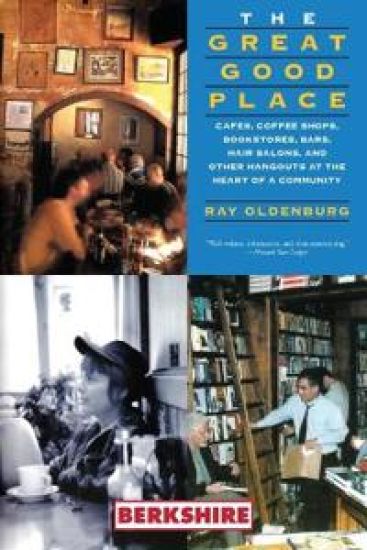
"Third places," or "great good places," are all the wonderful places where people gather, put aside the concerns of home and work (our first and second places), and hang out simply for the pleasures of good company and lively conversation. Third places are the heart of a community's social vitality, and have long been central to grassroots democracy. Author Ray Oldenburg is renowned for coining the term "third place." In this book, he portrays, probes, and promotes these great good places: coffee houses, caf s, bookstores, hair salons, bars, bistros, and more, both past and present - and offers a vision for their revitalization. Eloquent and visionary, this book offers a compelling argument for the importance of informal public and civic life. It explains how third places are essential to community health and individual well-being. In the years since its first appearance in 1989, The Great Good Place has inspired policy makers and entrepreneurs from Seattle to Singapore, Osaka to Oslo. They have opened coffee houses, bookstores, community centers, bars, and other establishments - proudly acknowledging their indebtedness to Ray Oldenburg's ideas. "The great value of this book is that Mr. Oldenburg has given us an insightful and extremely useful new lens through which to look at a familiar problem." -Roberta Gratz, New York Times Book Review"Well-written, informative, and often entertaining." -Newark Star-Ledger"Examines gathering places and reminds us how important they are. People need the "third place" to nourish sociability." -Parade"Oldenburg believes that the powerful need in humans to associate with one another will inevitably lead to the revival of places where, as the theme song to Cheers, the TV show, so aptly puts it, 'everyone knows your name.' We'll drink to that." -Booklist
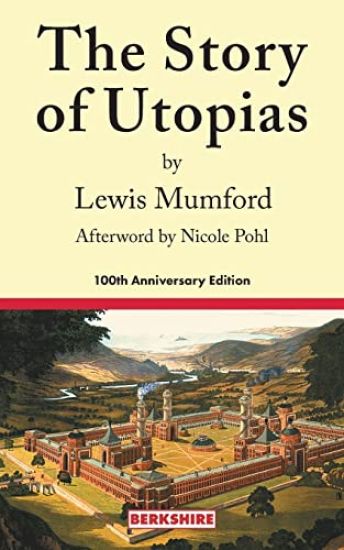
This survey of utopias, which spans from Plato to the twentieth century, was Lewis Mumford's first success. He was particularly interested in what he calls utopias of reconstruction, models for reshaping an imperfect world. Beginning with a survey of famous utopian ideas and writings, he moves from Plato's Republic, More's Utopia, Andre 's Christianopolis, Bacon's New Atlantis, Campanella's City of the Sun, Fourier's phalanxes, Cabet's Icaria, Bellamy's Looking Backward, Morris's News from Nowhere, and finally on to H.G. Wells's utopian fiction. He then produces the essence of a checklist for assessing how closely a society comes to utopian ideals, looking at work and standards of living, housing, democratic (or not) governance, sex and marriage, the raising of children, our relationship with nature, and the importance of the arts and creativity. A century later, the book stands not only as an introduction to the work of a maverick scholar who had worldwide influence, but also suggests ways to approach a future even more challenging than that faced by Mumford's post-war generation. Mumford delves into issues that remain relevant today: social equity in his chapter on the country house, for example, and the relationship between science and the arts in his concluding chapter about how we can find, or build, utopia.Mumford was thinking, as many of us are, about the practical lessons offered by imagined utopias. He posits that there are utopias of escape and utopias of "reconstruction," and was particularly interested in these utopias of reconstruction, models for reshaping an imperfect world: The utopia of reconstruction is what its name implies: a vision of a reconstituted environment which is better adapted to the nature and aims of the human beings who dwell within it than the actual one; and not merely better adapted to their actual nature, but better fitted to their possible developments. If the first utopia of escape] leads backward into the utopian's ego, the second leads outward-outward into the world.In contrast with The Waste Land by T. S. Eliot, also published in 1922 by Boni & Liveright and republished by Berkshire Publishing Group in 2022, The Story of Utopias is largely about this idea of reconstruction, rather than the disillusion that Eliot's poem so powerfully captures.
The Waste Land was first published in 1922, in the aftermath of a world war and global pandemic. It has been translated into some 35 languages. Berkshire Publishing Group's centenary edition includes, in addition to the title poem, a number of Eliot's best-known early poems, including "The Love Song of J. Alfred Prufrock," "Portrait of a Lady," "Preludes," "Rhapsody on a Windy Night," "The Boston Evening Transcript," "La Figlia che Piange," and "The Hollow Men." The design is based on both the original Hogarth Press edition, produced by Leonard and Virginia Woolf, and the American Boni & Liveright design. In his foreword, internationally acclaimed novelist and translator Qiu Xiaolong explains how he came, as a student in China, to love Eliot's poetry and what it has meant, and means today, to readers around the world. There is also an afterword by Berkshire's CEO Karen Christensen, who worked for Valerie Eliot, the poet's second wife, as a young editor. The centenary edition is available in paperback and hardcover, ePub and PDF ebook, and in a collector's limited edition.
In this beautifully-argued book, Karen Cristensen and Ingrid Guldvik provide a comparatively-based insight to the historical context for public care work and show how migration policies, general welfare and long-term care policies (including the cash-for-care schemes) as well as cultural differences in values in the UK and Norway set the context for how migrant care workers can realise their individual life projects. Through viewing migrants as individuals who actively construct their lives within the options and conditions they are given at any time, they bring to the discussion an awareness of what might be called ’a new type of migrant’ one who is neither a victim of the divide between the global north and the global south, nor someone leaving family behind, but individuals using care work as a part of their own life project of potential self-improvement.
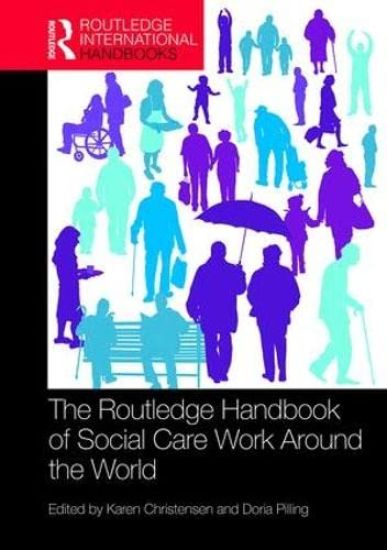
The Routledge Handbook of Social Care Work Around the World provides both a comprehensive and authoritative state-of-the-art review of the current research in this subject. It is the first handbook to cover social care work research from around the world, including both low- and middle-income countries as well as high income countries.Each of the 22 chapters are written by experts on long-term care services, particularly for older people and cover key issues and debates, based on research evidence, on social care work in a specific country. They look at perspectives of social care work from the macro level: the structural conditions for long-term care, including demographic challenges and the long-term care policy, the meso level: the level of provider organizations and intermediaries, and the micro level: views of care workers, care users, and unpaid informal carers. Furthermore, they discuss a number of topics central to discussions of care work including marketization, personalization policies, policy implementation under austerity, the provision of social care work whether through public services, or private arrangements, or mixed types, funding, the feminization of social care and the new role that technology, and robots can play in care work.By drawing together leading scholars from around the world, this book provides an up to the minute snapshot of current scholarship as well as signposting several fruitful avenues for future research. This book is both an invaluable resource for scholars and an indispensable teaching tool for use in the classroom and will be of interest to students, academics, social workers, social policy-makers and human service professionals.
In this beautifully-argued book, Karen Cristensen and Ingrid Guldvik provide a comparatively-based insight to the historical context for public care work and show how migration policies, general welfare and long-term care policies (including the cash-for-care schemes) as well as cultural differences in values in the UK and Norway set the context for how migrant care workers can realise their individual life projects. Through viewing migrants as individuals who actively construct their lives within the options and conditions they are given at any time, they bring to the discussion an awareness of what might be called ’a new type of migrant’ one who is neither a victim of the divide between the global north and the global south, nor someone leaving family behind, but individuals using care work as a part of their own life project of potential self-improvement.