Kirjojen hintavertailu. Mukana 12 459 402 kirjaa ja 12 kauppaa.

Kirjailija

Karen Fog Olwig

Kirjat ja teokset yhdessä paikassa: 12 kirjaa, julkaisuja vuosilta 1985-2021, suosituimpien joukossa Global Culture, Island Identity. Vertaile teosten hintoja ja tarkista saatavuus suomalaisista kirjakaupoista.

12 kirjaa

Kirjojen julkaisuhaarukka 1985-2021.

The Biometric Border World

The Biometric Border World

Karen Fog Olwig; Kristina Grünenberg; Perle Møhl; Anja Simonsen

Taylor Francis Ltd
2021
nidottu
Since the 1990s, biometric border control has attained key importance throughout Europe. Employing digital images of, for example, fingerprints, DNA, bones, faces or irises, biometric technologies use bodies to identify, categorize and regulate individuals’ cross-border movements.Based on innovative collaborative fieldwork, this book examines how biometrics are developed, put to use and negotiated in key European border sites. It analyses the disparate ways in which the technologies are applied, perceived and experienced by border control agents and others managing the cross-border flow of people, by scientists and developers engaged in making the technologies, and by migrants and non-government organizations attempting to manoeuvre in the complicated and often-unpredictable systems of technological control. Biometric technologies are promoted by national and supranational authorities and industry as scientifically exact and neutral methods of identification and verification, and as an infallible solution to security threats. The ethnographic case studies in this volume demonstrate, however, that the technologies are, in fact, characterized by considerable ambiguity and uncertainty and subject to substantial subjective interpretation, translation and brokering with different implications for migrants, border guards, researchers and other actors engaged in the border world.
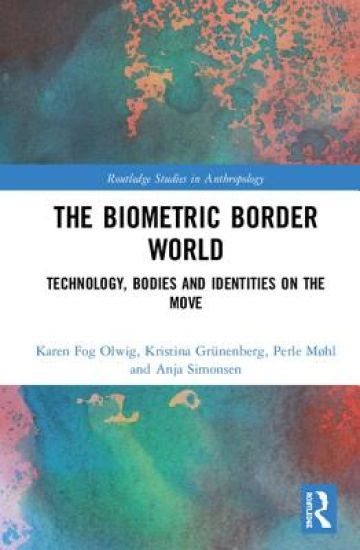
The Biometric Border World

The Biometric Border World

Karen Fog Olwig; Kristina Grünenberg; Perle Møhl; Anja Simonsen

Routledge
2019
sidottu
Since the 1990s, biometric border control has attained key importance throughout Europe. Employing digital images of, for example, fingerprints, DNA, bones, faces or irises, biometric technologies use bodies to identify, categorize and regulate individuals’ cross-border movements.Based on innovative collaborative fieldwork, this book examines how biometrics are developed, put to use and negotiated in key European border sites. It analyses the disparate ways in which the technologies are applied, perceived and experienced by border control agents and others managing the cross-border flow of people, by scientists and developers engaged in making the technologies, and by migrants and non-government organizations attempting to manoeuvre in the complicated and often-unpredictable systems of technological control. Biometric technologies are promoted by national and supranational authorities and industry as scientifically exact and neutral methods of identification and verification, and as an infallible solution to security threats. The ethnographic case studies in this volume demonstrate, however, that the technologies are, in fact, characterized by considerable ambiguity and uncertainty and subject to substantial subjective interpretation, translation and brokering with different implications for migrants, border guards, researchers and other actors engaged in the border world.
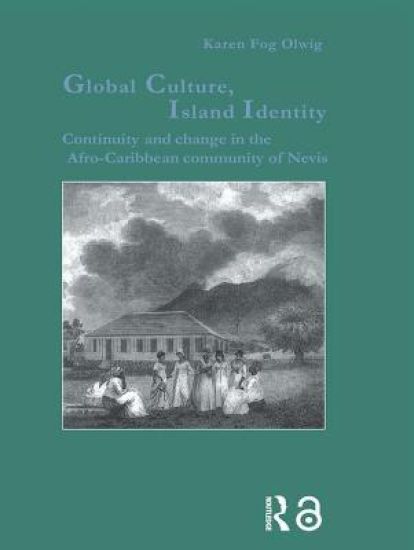
Global Culture, Island Identity

Global Culture, Island Identity

Karen Fog Olwig

Routledge
2017
sidottu
Looking at the development of cultural identity in the global context, this text uses the approach of historical anthropology. It examines the way in which the West Indian Community of Nevis, has, since the 1600s, incorporated both African and European cultural elements into the framework of social life, to create an Afro-Caribbean culture that was distinctive and yet geographically unbounded - a "global culture". The book takes as its point of departure the processes of cultural interaction and reflectivity. It argues that the study of cultural continuity should be guided by the notion of cultural complexity involving the continuous constitution, development and assertion of culture. It emphasizes the interplay between local and global cultures, and examines the importance of cultural display for peoples who have experienced the process of socioeconomic marginalization in the Western world.
Siviliserende institusjoner

Siviliserende institusjoner

Karen Fog Olwig; Dil Bach; Eva Gulløv; Laura Gilliam

Fagbokforlaget
2015
nidottu
I Siviliserende institusjoner rettes søkelyset mot forholdet mellom samfunn og oppdragelse gjennom antropologiske undersøkelser i barnehager, skoler og familier. Barnehagelærere, grunnskolelærere og foreldre lærer barn å moderere sine følelsesuttrykk, respektere andres grenser og samtidig «være seg selv», slik at de kan inngå i fellesskap i institusjonene og i samfunnet. Oppdragelsen forteller imidlertid også barn om kulturelle distinksjoner mellom mennesker, og dermed om sosiale og moralske hierarkier i samfunnet. Boken viser at noen barn reagerer med motstand og distanserer seg fra samfunnets siviliseringsprosjekt.
Integration

Integration

Karen Fog Olwig; Karsten Pærregaard

Museum Tusculanums Forlag
2007
nidottu
Gennem antropologiske og etnografiske analyser af forholdet mellem indvandrere og flygtninge og den danske flertalsbefolkning udforskes integration som både analytisk begreb og politisk projekt. Antropologien placeres centralt i den dagsaktuelle debat om integration og afspejler et ønske om at gøre antropologisk forskning samfundsrelevant. Integration. Antropologiske Perspektiver har dog ikke form som et aktuelt debatoplæg, men mere som en generel kritisk analyse af de sociale og kulturelle forhold, som former integrationsprocesser overalt i verden, og som nødvendigvis må skabe spændinger og debat i et hvilket som helst samfund. Bogen er således også skrevet ud fra den opfattelse, at migrations- og integrationsstudier giver en enestående mulighed for at forstå, hvorfor og hvordan samfund udvikler og forandrer sig - for det meste stille og umærkeligt i hverdagen og sommetider mærkbart og synligt. Bogen bygger på den forskning i migration, der siden 1980´erne har været udført ved Institut for Antropologi, Københavns Universitet, og som i de senere år særligt har fokuseret på indvandrere og flygtninge i Danmark.
Caribbean Journeys

Caribbean Journeys

Karen Fog Olwig

Duke University Press
2007
sidottu
Caribbean Journeys is an ethnographic analysis of the cultural meaning of migration and home in three families of West Indian background that are now dispersed throughout the Caribbean, North America, and Great Britain. Moving migration studies beyond its current focus on sending and receiving societies, Karen Fog Olwig makes migratory family networks the locus of her analysis. For the people whose lives she traces, being “Caribbean” is not necessarily rooted in ongoing visits to their countries of origin, or in ethnic communities in the receiving countries, but rather in family narratives and the maintenance of family networks across vast geographical expanses.The migratory journeys of the families in this study began more than sixty years ago, when individuals in the three families left home in a British colonial town in Jamaica, a French Creole rural community in Dominica, and an African-Caribbean village of small farmers on Nevis. Olwig follows the three family networks forward in time, interviewing family members living under highly varied social and economic circumstances in locations ranging from California to Barbados, Nova Scotia to Florida, and New Jersey to England. Through her conversations with several generations of these far-flung families, she gives insight into each family’s educational, occupational, and socioeconomic trajectories. Olwig contends that terms such as “Caribbean diaspora” wrongly assume a culturally homogeneous homeland. As she demonstrates in Caribbean Journeys, anthropologists who want a nuanced understanding of how migrants and their descendants perceive their origins and identities must focus on interpersonal relations and intimate spheres as well as on collectivities and public expressions of belonging.
Caribbean Journeys

Caribbean Journeys

Karen Fog Olwig

Duke University Press
2007
pokkari
Caribbean Journeys is an ethnographic analysis of the cultural meaning of migration and home in three families of West Indian background that are now dispersed throughout the Caribbean, North America, and Great Britain. Moving migration studies beyond its current focus on sending and receiving societies, Karen Fog Olwig makes migratory family networks the locus of her analysis. For the people whose lives she traces, being “Caribbean” is not necessarily rooted in ongoing visits to their countries of origin, or in ethnic communities in the receiving countries, but rather in family narratives and the maintenance of family networks across vast geographical expanses.The migratory journeys of the families in this study began more than sixty years ago, when individuals in the three families left home in a British colonial town in Jamaica, a French Creole rural community in Dominica, and an African-Caribbean village of small farmers on Nevis. Olwig follows the three family networks forward in time, interviewing family members living under highly varied social and economic circumstances in locations ranging from California to Barbados, Nova Scotia to Florida, and New Jersey to England. Through her conversations with several generations of these far-flung families, she gives insight into each family’s educational, occupational, and socioeconomic trajectories. Olwig contends that terms such as “Caribbean diaspora” wrongly assume a culturally homogeneous homeland. As she demonstrates in Caribbean Journeys, anthropologists who want a nuanced understanding of how migrants and their descendants perceive their origins and identities must focus on interpersonal relations and intimate spheres as well as on collectivities and public expressions of belonging.
Warwick University Caribbean Studies Caribbean Narratives of Belonging

Warwick University Caribbean Studies Caribbean Narratives of Belonging

Jean Besson; Karen Fog Olwig

Macmillan Education
2006
nidottu
Contemporary Caribbean society emerged within a complex framework of extensive and exploitive interconnections on a global scale, and unequal, inter-cultural, social relations at the local level. This book explores the communities of belonging that Caribbean people have created ands sustained, as they have carved out a life for themselves within this context of social, economic and cultural complexity. Caribbean narratives offer a fertile ground in which to explore notions and practices of belonging, because they are rich in empirical data on the lives experienced by various Caribbean people. At the same time they point to the shared socio-cultural orders that give meaning and purpose to these lives. By analyzing narratives as accounts of lived lives, as a way of structuring the past, and as modes of communication and performance, the chapters in this volume develop important insights into Caribbean culture and bring fresh perspectives to cross-cultural research on narratives and their articulation with fields of social relations and sites of cultural identity.The sixteen chapters by anthropologists, geographers, historians and sociologists are based on in-depth research from throughout the Caribbean region and among Caribbean migrants and their descendents in Europe and North America.
Viden om verden

Viden om verden

Andreas Roepstorff; Cecilie Rubow; Charlotte Andreas Baarts; Christian Kordt Højbjerg; Francine Lorimer; Hanne Overgaard Mogensen; Helle Bundgaard; Henrik Vigh; Jacqueline Ryle; Karen Fog Olwig; Karsten Pærregaard; Katja Kvaale; Kirsten Hastrup; Kåre Jansbøl; Mark Vacher; Mette Nordahl Svendsen; Morten Axel Pedersen; Pia Lundberg; Sally Anderson; Steffen Jöhncke; Tine Gammeltoft; Tine Tjørnhøj-Thomsen; Vibeke Steffen; Susan Reynolds Whyte

Gyldendal
2004
sidottu
Antropologien har i mange år været centralt placeret i udviklingen og brugen af nye teorier og metoder inden for human- og samfundsvidenskaberne. I Viden om verden demonstrerer en række danske forskere, hvordan generel antropologisk viden bliver til gennem en analyse af konkrete sociale forhold. Viden om verden kompletterer den stærkt roste Ind i verden (2003) - også redigeret af Kirsten Hastrup - der viser, hvordan afsættet for den antropologiske viden er et konkret personligt engagement i andre menneskers liv i form af det etnografiske feltarbejde. I Viden om verden er tyngdepunktet forskudt fra metoden til resultaterne, og dermed fra det personlige engagement i felten til det almene vidensudbytte. Den proces, hvormed man kommer fra det empiriske materiale til en egentlig videnskabelig viden, er en analytisk proces. Bogen viser, hvordan denne foregår i praksis i et teoretisk ræsonnement over det konkrete empiriske materiale. Resultatet af analysen er en viden af almen karakter om f.eks. socialitet, solidaritet, handling, intentionalitet, modernitet - for blot at nævne enkelte overskrifter på bogens kapitler. Bogen afsluttes med en diskussion af selve det vidensbegreb, der driver den antropologiske forskning, og det vises, hvordan viden om verden også er en viden i verden - dvs. en virkningsfuld del af samfundet. Viden om verden er redigeret af Kirsten Hastrup, professor ved Institut for Antropologi, Københavns Universitet. Bogens 20 bidrag er alle skrevet af antropologer tilknyttet danske universiteter og forskningsinstitutioner.
Work and Migration

Work and Migration

Karen Fog Olwig; Ninna Nyberg Sorensen

Routledge
2001
sidottu
Using case-studies from those who have moved either transnationally or internally within their own country, international contributors offer various definitions of what it means to make a living on the move.
Global Culture, Island Identity

Global Culture, Island Identity

Karen Fog Olwig

Harwood-Academic Publishers
1996
nidottu
Looking at the development of cultural identity in the global context, this text uses the approach of historical anthropology. It examines the way in which the West Indian Community of Nevis, has, since the 1600s, incorporated both African and European cultural elements into the framework of social life, to create an Afro-Caribbean culture that was distinctive and yet geographically unbounded - a "global culture". The book takes as its point of departure the processes of cultural interaction and reflectivity. It argues that the study of cultural continuity should be guided by the notion of cultural complexity involving the continuous constitution, development and assertion of culture. It emphasizes the interplay between local and global cultures, and examines the importance of cultural display for peoples who have experienced the process of socioeconomic marginalization in the Western world.
Cultural Adaptation and Resistance on St.John

Cultural Adaptation and Resistance on St.John

Karen Fog Olwig

University Press of Florida
1985
nidottu
"This study covers 300 years of St. Johnian history from the plantation economy of the early 1700s through the peasant economy of the late 1800s inclusive of the present tourist-based economy. The author employs archival records as well as field data, arguing that most anthropologists have shied away from supporting their interpretation with historical research . . . her treatment of the impact of tourism is outstanding, demonstrating that the establishment of a national park on the island has been a mixed blessing. . . . A significant contribution to ethnology."--Choice"Olwig presents two refreshing perspectives on life in a Caribbean community: the development of an Afro-American way of life and an appreciation of the dignified ways in which St. Johnians use an ideology of exchange to help them shape a distinctive sense of themselves. This is a well-balanced, rich, and very solid contribution to Caribbean studies, creatively combining history and ethnography."--Richard Price, Johns Hopkins UniversityDr. Olwig teaches anthropology at the University of Copenhagen.