Kirjojen hintavertailu. Mukana 12 595 353 kirjaa ja 12 kauppaa.

Kirjailija

Karen Garner

Kirjat ja teokset yhdessä paikassa: 7 kirjaa, julkaisuja vuosilta 2009-2023, suosituimpien joukossa Precious Fire. Vertaile teosten hintoja ja tarkista saatavuus suomalaisista kirjakaupoista.

7 kirjaa

Kirjojen julkaisuhaarukka 2009-2023.

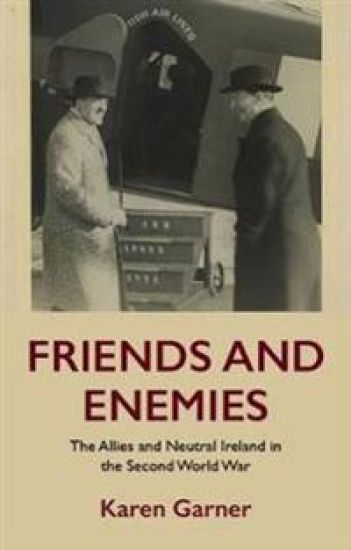
Friends and Enemies

Friends and Enemies

Karen Garner

MANCHESTER UNIVERSITY PRESS
2023
nidottu
This history of Anglo-American efforts to overturn Ireland’s neutrality policy during the Second World War adds complexity to the grand narrative of the Western Alliance against the Axis Powers, exploring relatively unexamined emotional, personalised, and gendered politics that underlay policymaking and alliance relations. Friends and enemies combines the methodologies of diplomatic history through its close reliance on archival documentation with attention to new theoretical understandings regarding the roles played by personal friendships and enmities and competing masculine ideologies among national leaders. Including, Winston Churchill, Franklin Roosevelt and Eamon de Valera, and their close foreign policy advisers in London, Washington DC and Dublin, as they constructed national identities and defined their nations’ special relationships in time of war.
Friends and Enemies

Friends and Enemies

Karen Garner

Manchester University Press
2021
sidottu
This history of Anglo-American efforts to overturn Ireland’s neutrality policy during the Second World War adds complexity to the grand narrative of the Western Alliance against the Axis Powers, exploring relatively unexamined emotional, personalised, and gendered politics that underlay policymaking and alliance relations. Friends and enemies combines the methodologies of diplomatic history through its close reliance on archival documentation with attention to new theoretical understandings regarding the roles played by personal friendships and enmities and competing masculine ideologies among national leaders. Including, Winston Churchill, Franklin Roosevelt and Eamon de Valera, and their close foreign policy advisers in London, Washington DC and Dublin, as they constructed national identities and defined their nations’ special relationships in time of war.
Women and Gender in International History

Women and Gender in International History

Karen Garner

Bloomsbury Academic
2018
nidottu
Most governments and global political organizations have been dominated by male leaders and structures that institutionalize male privilege. As Women and Gender in International History reveals, however, women have participated in and influenced the traditional concerns of international history even as they have expanded those concerns in new directions. Karen Garner provides a timely synthesis of key scholarship and establishes the influential roles that women and gender power relations have wielded in determining the course of international history. From the early-20th century onward, women have participated in state-to-state relations and decisions about when to pursue diplomacy or when to go to war to settle international conflicts. Particular women, as well as masculine and feminine gender role constructs, have also influenced the establishment and evolution of intergovernmental organizations and their political, social and economic policy making regimes and agencies. Additionally, feminists have critiqued male-dominated diplomatic establishment and intergovernmental organizations and have proposed alternative theories and practices.This text integrates women, and gender and feminist analyses, into the study of international history in order to produce a broader understanding of processes of international change during the 20th and 21st centuries.
Women and Gender in International History

Women and Gender in International History

Karen Garner

Bloomsbury Academic
2018
sidottu
Most governments and global political organizations have been dominated by male leaders and structures that institutionalize male privilege. As Women and Gender in International History reveals, however, women have participated in and influenced the traditional concerns of international history even as they have expanded those concerns in new directions. Karen Garner provides a timely synthesis of key scholarship and establishes the influential roles that women and gender power relations have wielded in determining the course of international history. From the early-20th century onward, women have participated in state-to-state relations and decisions about when to pursue diplomacy or when to go to war to settle international conflicts. Particular women, as well as masculine and feminine gender role constructs, have also influenced the establishment and evolution of intergovernmental organizations and their political, social and economic policy making regimes and agencies. Additionally, feminists have critiqued male-dominated diplomatic establishment and intergovernmental organizations and have proposed alternative theories and practices.This text integrates women, and gender and feminist analyses, into the study of international history in order to produce a broader understanding of processes of international change during the 20th and 21st centuries.
Shaping a Global Women's Agenda

Shaping a Global Women's Agenda

Karen Garner

Manchester University Press
2013
nidottu
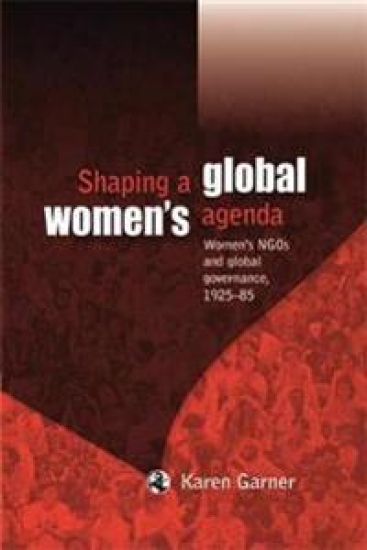
Available in paperback for the first time, and drawing on a wide range of archival sources, Shaping a global women's agenda documents international women’s history through the lens of the long-established Western-led international organisations that defined and dominated women’s involvement in global politics from the 1925 founding of the Joint Standing Committee of Women’s International Organisations up through the UN Decade for Women (1976–85). Documenting specific global campaigns in episodes that span the twentieth century, Garner includes biographical information about lesser known international leaders as she discusses important historic debates regarding feminist goals and strategies among women from the East and West, North and South. This interdisciplinary study addresses questions of interest to historians, political scientists, international relations scholars, sociologists, and feminist scholars and activists whose work promotes women’s and human rights.
Shaping a Global Women's Agenda

Shaping a Global Women's Agenda

Karen Garner

Manchester University Press
2010
sidottu
Drawing on a wide range of archival sources, Karen Garner documents international women’s history through the lens of the long-established Western-led international organisations that defined and dominated women’s involvement in global politics from the 1925 founding of the Joint Standing Committee of Women’s International Organisations up through the UN Decade for Women (1976–85). Documenting specific global campaigns in episodes that span the twentieth century, Garner includes biographical information about lesser known international leaders as she discusses important historic debates regarding feminist goals and strategies among women from the East and West, North and South. This interdisciplinary study addresses questions of interest to historians, political scientists, international relations scholars, sociologists, and feminist scholars and activists whose work promotes women’s and human rights.
Precious Fire

Precious Fire

Karen Garner

University of Massachusetts Press
2009
nidottu
When Maud Russell (1893-1989) first sailed for China in 1917, she traveled as one of a number of foreign secretaries dispatched by the YWCA to do Woman's Work for Woman. A product of the Progressive Era, she sought to bring the benefits of Christianity and Western civilization to a new generation of Chinese women struggling to find their own path to modernity in the wake of the 1911 Republican Revolution. Instead, over the next twenty-six years, Russell was herself transformed--from Christian liberal reformer to committed Marxist revolutionary. According to Karen Garner, Russell's personal political trajectory paralleled that of the YWCA in China, which evolved during the 1920s and 1930s from a Western-led, middle-class-oriented institution into a Chinese-led organization that addressed the needs of revolutionary working women. Crossing class, race, and cultural boundaries to learn from their Chinese associates, Russell and a few other western YWCA secretaries developed a shared vision of feminist social change that included support for the Chinese Communist Party and its leadership. Returning to the United States during World War II, Russell joined American liberals and leftists in promoting government cooperation with the Soviet Union and other Communist Party-led states and movements. After the war her views, including her advocacy of a one world Progressive Party, collided with the anticommunist imperatives of the emerging Cold War. In response, Russell adopted a defensive and dogmatic pro-communist stance from which she would never retreat. During a long and at times lonely career as a radical activist and publisher of the Far East Reporter (1952-1989), Russell was defamed and investigated by the anticommunist right and embraced by the antiwar New Left. Her notoriety as a proponent of friendship with the People's Republic of China soared during the restoration of U.S-China diplomatic relations in the 1970s, only to dissolve in the 1980s as she denounced the revival of capitalist economics in China on ideological grounds. Although Russell's own political vision may have narrowed over the years, Garner's reconstruction of her life broadens our understanding of U.S.-China relations during the twentieth century. Not only did Russell come to see her own country through the eyes of an ideological antagonist, she also brought to that vantage point the experiences of a modern American woman. As Garner shows, even if one did not agree with Russell's views, one could not deny the fervor of her commitment to gender equality, social justice, and internationalism.