Kirjojen hintavertailu. Mukana 12 595 353 kirjaa ja 12 kauppaa.

Kirjailija

Karen Green

Kirjat ja teokset yhdessä paikassa: 18 kirjaa, julkaisuja vuosilta 1995-2024, suosituimpien joukossa Den politiske filosofis historie. Vertaile teosten hintoja ja tarkista saatavuus suomalaisista kirjakaupoista.

18 kirjaa

Kirjojen julkaisuhaarukka 1995-2024.

Den politiske filosofis historie

Den politiske filosofis historie

Claus Bryld; Ditlev Tamm; Hans Fink; Gert Posselt; Amnon Lev; Christian Høgel; Gorm Harste; Bent Nielsen; Bodil Due; Niels Grønkjær; Heine Hansen; Jørgen Delman; Anders Dahl Sørensen; Carl Henrik Koch; Tue Emil Öhler Søvsø; Joachim Wiewiura; Esben Korsgaard Rasmussen; Kresten Lundsgaard-Leth; Clara Marie Westergaard; Saer El-Jaichi; Cary J. Nederman; June Dahy; Karen Green; Tine Ravnsted-Larsen Reeh; Anna Becker; Jakob Leth Fink

Gyldendal
2022
nidottu
Den politiske filosofis historie – frem til 1600 er den største kortlægning af den politiske filosofis historie på dansk. Bogen introducerer en bred palet af vigtige tænkere med en eller flere særligt udvalgte passager fra dennes forfatterskab, ledsaget af en indledende tekst, der sætter forfatterskabet i perspektiv. Her vil tænkeren og teksten blive introduceret i en bredere historisk kontekst, med særligt henblik på de argumenter, pointer og diskussioner, som det pågældende tekstuddrag lægger op til. Bogen illustrerer bredden og dybden i den politiske filosofis historie og giver inspiration til videre fordybelse, der rækker ud over værket selv. Bogen er blandt andre tiltænkt studerende på statskundskab, sociologi, filosofi, idéhistorie o.l., men værket vil også finde anvendelse i andre sammenhænge og henvende sig til et bredere publikum. Den politiske filosofis historie er redigeret af Joachim Wiewiura (f. 1987), ph.d. i politisk filosofi fra Københavns Universitet. Han er ansat ved Humanomics Research Centre, Institut for Kommunikation og Psykologi på Aalborg Universitet. Han har bl.a. redigeret bøgerne Offentlighedens rum (2019), Simmel: Sociologiens eventyrer (2019) og If Schools Didn’t Exist, der udkom på MIT Press i 2020.
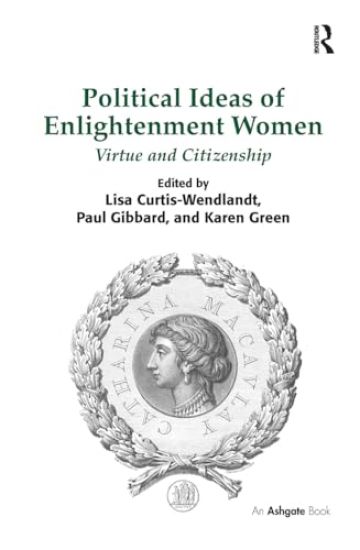
Political Ideas of Enlightenment Women

Political Ideas of Enlightenment Women

Lisa Curtis-Wendlandt; Paul Gibbard; Karen Green

TAYLOR FRANCIS LTD
2024
nidottu
This edited collection showcases the contribution of women to the development of political ideas during the Enlightenment, and presents an alternative to the male-authored canon of philosophy and political thought. Over the course of the eighteenth century increasing numbers of women went into print, and they exploited both new and traditional forms to convey their political ideas: from plays, poems, and novels to essays, journalism, annotated translations, and household manuals, as well as dedicated political tracts. Recently, considerable scholarly attention has been paid to women’s literary writing and their role in salon society, but their participation in political debates is less well studied. This volume offers new perspectives on some better known authors such as Mary Wollstonecraft, Catharine Macaulay, and Anna Laetitia Barbauld, as well as neglected figures from the British Isles and continental Europe. The collection advances discussion of how best to understand women’s political contributions during the period, the place of salon sociability in the political development of Europe, and the interaction between discourses on slavery and those on women’s rights. It will interest scholars and researchers working in women’s intellectual history and Enlightenment thought and serve as a useful adjunct to courses in political theory, women’s studies, the history of feminism, and European history.
Yellow Birds

Yellow Birds

Karen Green

The Sutherland House Inc.
2024
pokkari
Set just before the digital revolution, Kait is a young woman searching for identity and community among the cast-outs, cast-offs, and other "misfit toys" who refer to themselves as the Yellow Birds and follow a band called the Open Road from town to town.Just as Kait believes she has found her place among a group of Birds travelling together in a messy van, a young man with the eye-roll worthy name of Horizon sits beside her one night and alters her fragile plan for the foreseeable future.Amidst the whirlwind of the Open Road Tour, their growing feelings for one another soar to ecstatic heights, while propelling them toward an impending reckoning with their troubled pasts.Filled with sex, drugs, music, and even cults, readers won't be able to get enough of this bohemian love story, the groupie lifestyle, and the party within the party."Yellow Birds will catch hold of your heart and not let go. Vivid, compelling, and poignant. Green is an exceptional talent." --Rebecca Keenan, Journalist
The Mystery of the Disappearing Woodland Creatures
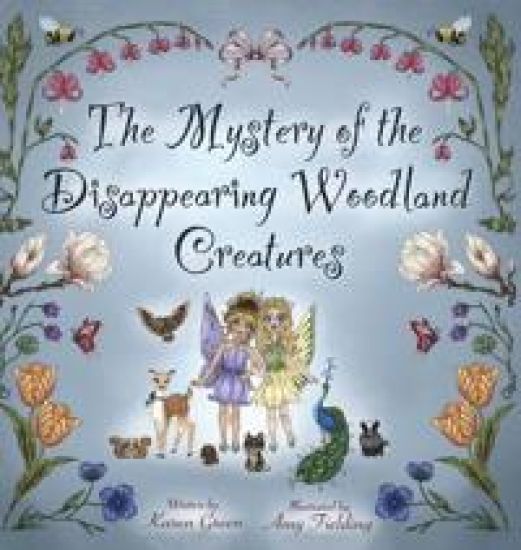
This is a fantasy story about flower fairies Bluebell and Primrose, who are summoned to Never-Never land by the Fairy Queen. They are asked to go on a mission to find out what has happened to all the fairies and woodland creatures that have gone missing. Follow their adventure that shows how important friendship and bravery is.
The Mystery of the Disappearing Woodland Creatures
This is a fantasy story about flower fairies Bluebell and Primrose, who are summoned to Never-Never land by the Fairy Queen. They are asked to go on a mission to find out what has happened to all the fairies and woodland creatures that have gone missing. Follow their adventure that shows how important friendship and bravery is.
Simone de Beauvoir

Simone de Beauvoir

Karen Green

Cambridge University Press
2022
pokkari
Tracing her intellectual development from her university years, when she was trained in a Cartesian and neo-Kantian philosophical tradition, to her final decade, during which she was recognised as having inspired the emerging strands of late twentieth-century feminism, Beauvoir is shown to have been among the most influential philosophical voices of the mid twentieth century. Countering the recent trend to read her in isolation from Sartre, she is shown to have both adopted, adapted, and influenced his philosophy, most importantly through encouraging him to engage with Hegel and to consider our relations with others. The Second Sex is read in the light of her existentialist humanism and ultimately faulted for having succumbed too uncritically to the masculine myth that it is men who are solely responsible for society's intellectual and cultural history.
Catharine Macaulay's Republican Enlightenment
The ‘celebrated’ Catharine Macaulay was both lauded and execrated during the eighteenth century for her republican politics and her unconventional, second marriage. This comprehensive biography in the 'life and letters' tradition situates her works in their political and social contexts and offers an unprecedented, detailed account of the content and influence of her writing, the arguments she developed in her eight-volume history of England and her other political, ethical, and educational works. Her disagreements with conservative opponents, David Hume, Edmund Burke, and Samuel Johnson are developed in detail, as is her influence on more progressive admirers such as Thomas Jefferson, Jacques-Pierre Brissot, Mercy Otis Warren, and Mary Wollstonecraft. Macaulay emerges as a coherent and influential political voice, whose attitudes and aspirations were characteristic of those enlightenment republicans who grounded their progressive politics in rational religion. She looked back to the seventeenth-century levellers and parliamentarians as important precursors who had advocated the liberty and political rights she aspired to see implemented in Great Britain, America, and France. Her defence of republican liberty and the equal rights of men offers an important corrective to some contemporary accounts of the character and origins of democratic republicanism during this crucial period.
Joan of Arc and Christine de Pizan's Ditié
Grounded in a close reading of the records of Joan's trial and rehabilitation, on the early letters announcing her arrival at Chinon, and on three literary works; Christine de Pizan's Ditié, Martin le Franc's Le Champion des dames, and Alain Chartier's, Traité de l’Esperance, this controversial work argues that serious historians should accept that Joan was trained. It proposes that she was identified and taught how to behave in the expectation of the fulfillment of the Charlemagne Prophecy and other prophecies from the Joachite tradition. It explores the possibility that Christine de Pizan, who had been promoting these prophecies from the beginning of the century, had some hand in the process that resulted in Joan's appearance and demonstrates, at the very least, that there are many links connecting Christine de Pizan to the knights who fought with Joan.
Catharine Macaulay's Republican Enlightenment
The ‘celebrated’ Catharine Macaulay was both lauded and execrated during the eighteenth century for her republican politics and her unconventional, second marriage. This comprehensive biography in the 'life and letters' tradition situates her works in their political and social contexts and offers an unprecedented, detailed account of the content and influence of her writing, the arguments she developed in her eight-volume history of England and her other political, ethical, and educational works. Her disagreements with conservative opponents, David Hume, Edmund Burke, and Samuel Johnson are developed in detail, as is her influence on more progressive admirers such as Thomas Jefferson, Jacques-Pierre Brissot, Mercy Otis Warren, and Mary Wollstonecraft. Macaulay emerges as a coherent and influential political voice, whose attitudes and aspirations were characteristic of those enlightenment republicans who grounded their progressive politics in rational religion. She looked back to the seventeenth-century levellers and parliamentarians as important precursors who had advocated the liberty and political rights she aspired to see implemented in Great Britain, America, and France. Her defence of republican liberty and the equal rights of men offers an important corrective to some contemporary accounts of the character and origins of democratic republicanism during this crucial period.
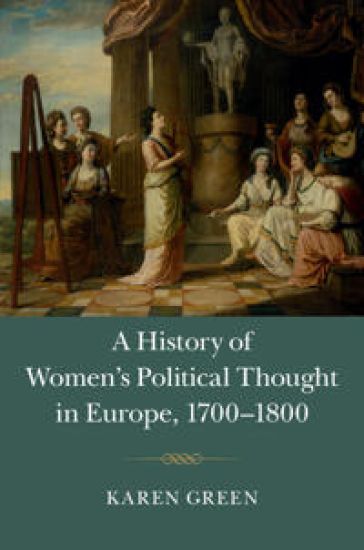
A History of Women's Political Thought in Europe, 1700–1800
During the eighteenth century, elite women participated in the philosophical, scientific, and political controversies that resulted in the overthrow of monarchy, the reconceptualisation of marriage, and the emergence of modern, democratic institutions. In this comprehensive study, Karen Green outlines and discusses the ideas and arguments of these women, exploring the development of their distinctive and contrasting political positions, and their engagement with the works of political thinkers such as Hobbes, Locke, Mandeville and Rousseau. Her exploration ranges across Europe from England through France, Italy, Germany and Russia, and discusses thinkers including Mary Astell, Emilie Du Châtelet, Luise Kulmus-Gottsched and Elisabetta Caminer Turra. This study demonstrates the depth of women's contributions to eighteenth-century political debates, recovering their historical significance and deepening our understanding of this period in intellectual history. It will provide an essential resource for readers in political philosophy, political theory, intellectual history, and women's studies.
A History of Women's Political Thought in Europe, 1700–1800
During the eighteenth century, elite women participated in the philosophical, scientific, and political controversies that resulted in the overthrow of monarchy, the reconceptualisation of marriage, and the emergence of modern, democratic institutions. In this comprehensive study, Karen Green outlines and discusses the ideas and arguments of these women, exploring the development of their distinctive and contrasting political positions, and their engagement with the works of political thinkers such as Hobbes, Locke, Mandeville and Rousseau. Her exploration ranges across Europe from England through France, Italy, Germany and Russia, and discusses thinkers including Mary Astell, Emilie Du Châtelet, Luise Kulmus-Gottsched and Elisabetta Caminer Turra. This study demonstrates the depth of women's contributions to eighteenth-century political debates, recovering their historical significance and deepening our understanding of this period in intellectual history. It will provide an essential resource for readers in political philosophy, political theory, intellectual history, and women's studies.
Political Ideas of Enlightenment Women

Political Ideas of Enlightenment Women

Lisa Curtis-Wendlandt; Paul Gibbard; Karen Green

Routledge
2013
sidottu
This edited collection showcases the contribution of women to the development of political ideas during the Enlightenment, and presents an alternative to the male-authored canon of philosophy and political thought. Over the course of the eighteenth century increasing numbers of women went into print, and they exploited both new and traditional forms to convey their political ideas: from plays, poems, and novels to essays, journalism, annotated translations, and household manuals, as well as dedicated political tracts. Recently, considerable scholarly attention has been paid to women’s literary writing and their role in salon society, but their participation in political debates is less well studied. This volume offers new perspectives on some better known authors such as Mary Wollstonecraft, Catharine Macaulay, and Anna Laetitia Barbauld, as well as neglected figures from the British Isles and continental Europe. The collection advances discussion of how best to understand women’s political contributions during the period, the place of salon sociability in the political development of Europe, and the interaction between discourses on slavery and those on women’s rights. It will interest scholars and researchers working in women’s intellectual history and Enlightenment thought and serve as a useful adjunct to courses in political theory, women’s studies, the history of feminism, and European history.
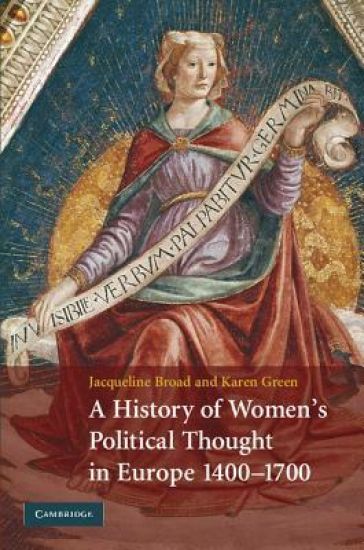
A History of Women's Political Thought in Europe, 1400–1700

A History of Women's Political Thought in Europe, 1400–1700

Jacqueline Broad; Karen Green

Cambridge University Press
2009
sidottu
This ground-breaking book surveys the history of women's political thought in Europe from the late medieval period to the early modern era. The authors examine women's ideas about topics such as the basis of political authority, the best form of political organisation, justifications of obedience and resistance, and concepts of liberty, toleration, sociability, equality, and self-preservation. Women's ideas concerning relations between the sexes are discussed in tandem with their broader political outlooks; and the authors demonstrate that the development of a distinctively sexual politics is reflected in women's critiques of marriage, the double standard, and women's exclusion from government. Women writers are also shown to be indebted to the ancient idea of political virtue, and to be acutely aware of being part of a long tradition of female political commentary. This work will be of tremendous interest to political philosophers, historians of ideas, and feminist scholars alike.
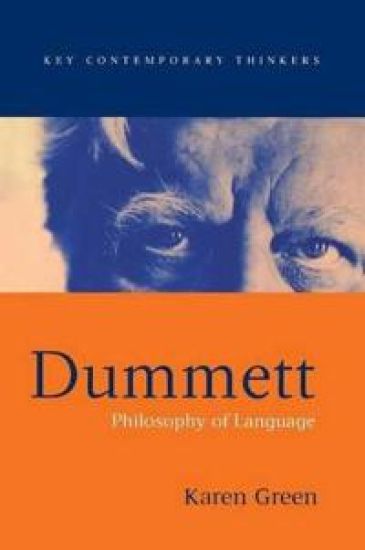
Dummett

Dummett

Karen Green

Polity Press
2001
nidottu
Michael Dummett stands out among his generation as the only British philosopher of language to rival in stature the Americans, Davidson and Quine. In conjunction with them he has been responsible for much of the framework within which questions concerning meaning and understanding are raised and answered in the late twentieth-century Anglo-American tradition. Dummett's output has been prolific and highly influential, but not always as accessible as it deserves to be. This book sets out to rectify this situation. Karen Green offers the first comprehensive introduction to Dummett's philosophy of language, providing an overview and summary of his most important arguments. She argues that Dummett should not be understood as a determined advocate of anti-realism, but that his greatest contribution to the philosophy of language is to have set out the strengths and weaknesses of the three most influential positions within contemporary theory of meaning - realism, as epitomised by Frege, the holism to be found in Wittgenstein, Quine and Davidson and the constructivism which can be extracted from Brouwer. It demonstrates that analytic philosophy as Dummett practices it, is by no means an outmoded approach to thinking about language, but that it is relevant both to cognitive science and to phenomenology.