

Kirjailija
Karen Harvey
Kirjat ja teokset yhdessä paikassa: 10 kirjaa, julkaisuja vuosilta 2001-2022, suosituimpien joukossa Ansiktsmaling. Vertaile teosten hintoja ja tarkista saatavuus suomalaisista kirjakaupoista.
10 kirjaa
Kirjojen julkaisuhaarukka 2001-2022.

In October 1726, newspapers began reporting a remarkable event. In the town of Godalming in Surrey, a woman called Mary Toft had started to give birth to rabbits. Several leading doctors - some sent directly by King George I - travelled to examine the woman and she was moved to London to be closer to them. By December, she had been accused of fraud and taken into custody. Mary Toft's unusual deliveries caused a media sensation. Her rabbit births were a test case for doctors trying to further their knowledge about the processes of reproduction and pregnancy. The rabbit births prompted not just public curiosity and scientific investigation, but also a vicious backlash. Based on extensive new archival research, this book is the first in-depth re-telling of this extraordinary story. Karen Harvey situates the rabbit-births within the troubled community of Godalming and the women who remained close to Mary Toft as the case unfolded, exploring the motivations of the medics who examined her, considering why the case attracted the attention of the King and powerful men in government, and following the case through the criminal justice system. The case of Mary Toft exposes huge social and cultural changes in English history. Against the backdrop of an incendiary political culture, it was a time when traditional social hierarchies were shaken, relationships between men and women were redrawn, print culture acquired a new vibrancy and irreverence, and knowledge of the body was remade. But Mary Toft's story is not just a story about the past. In reconstructing Mary's physical, social and mental world, The Imposteress Rabbit Breeder allows us to reflect critically on our own ideas about pregnancy, reproduction, and the body through the lens of the past.


Lag over 30 forskjellige fantastiske ansikter med enkle trinn-for-trinn-instrukser for ansiktsmaling! Her finner du en lang rekke flotte ansikter du kan male, pluss tips og teknikker fra den prisvinnende ansiktsmaleren Karen Harvey.
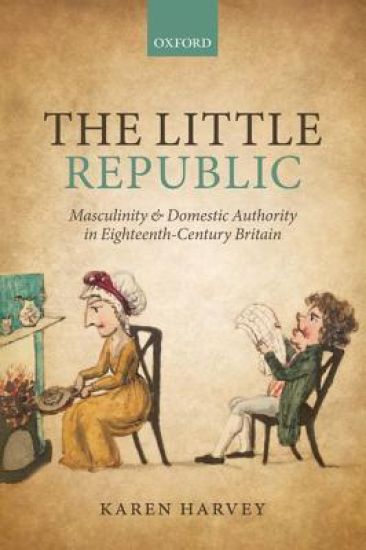
This is an open access title available under the terms of a CC BY-NC-ND 3.0 International licence. It is free to read at Oxford Scholarship Online and offered as a free PDF download from OUP and selected open access locations. The Little Republic examines the relationship between masculinity, the household, and domestic patriarchy. How did men engage with domestic life? What did the household mean to men? How could they lay claim to domestic authority? In reconstructing men's own understandings, this volume foregrounds the concept of the 'house' and the associated discourse of 'oeconomy': the practice of managing the economic and moral resources of the household for the maintenance of good order. Oeconomy shaped men's engagements with the household adn underpinned the patriarchal authority they acquired through the mundane material practices of everyday household management. The house also endured as a central component of masculinity, providing the grounding for men's self and public identities. Indeed, the skills and virtues practised by men in their 'little republics' were tied increasingly closely to a language of public-spirited political citizenship. The close relationship between men and the domestic in eighteenth-century Britain has been obscured by accounts that chart a decline in domestic patriarchy grounded in political patriarchalism, and the emergence of a new 'home' charcterized by a feminized culture of 'domesticity'. The Little Republic shifts the terms of these discussions. The eighteenth-century house was neither private nor feminized. Oeconomy brought together the house and the world - and increasingly so - primarily through men's authoritative engagement with the household.
This is an open access title available under the terms of a CC BY-NC-ND 3.0 International licence. It is free to read at Oxford Scholarship Online and offered as a free PDF download from OUP and selected open access locations. The relationship between men and the domestic in eighteenth-century Britain has been obscured by two well-established historiographical narratives. The first charts changes in domestic patriarchy, founded on political patriarchalism in the early modern period and transformed during the eighteenth century by new types of family relationship rooted in contract theory. The second describes the emergence of a new kind of domestic interior during the long eighteenth century, a 'home' infused with a new culture of 'domesticity' primarily associated with women and femininity. The Little Republic shifts the terms of these debates, rescuing the engagement of men with the house from obscurity, and better equipping historians to understand masculinity, the domestic environment, and domestic patriarchy. Karen Harvey explores how men represented and legitimized their domestic activities. She considers the relationship between discourses of masculinity and domesticity, and whether there was a particularly manly attitude to the domestic. In doing so, Harvey suggests that 'home' is too narrow a concept for an understanding of eighteenth-century domestic experience. Instead, focusing on the 'house' foregrounds a different domestic culture, one in which men and masculinity were central. Reconstructing men's experiences of the domestic as shaped by their own and others' beliefs, assumptions and expectations, Harvey argues for the continuation of a model of domestic patriarchy and also that effective domestic patriarchs remained important to late-eighteenth-century political theory. It was a discourse of 'oeconomy' - the practice of managing the economic and moral resources of the household for the maintenance of good order - that shaped men's attitudes towards and experiences in the house. Oeconomy combined day-to-day and global management of people and resources; it was a meaningful way of defining masculinity and established the house a key component of a manly identity that operated across the divide of 'inside' and 'outside' the house. Significantly for histories of the home which so often narrate a process of privatization and feminization, oeconomy brought together the home and the world, primarily through men's domestic management.

This book will give you a clear insight into the mind of a Rottweiler and ultimately tell you how it is possible to raise a balanced and sociable animal from puppyhood.
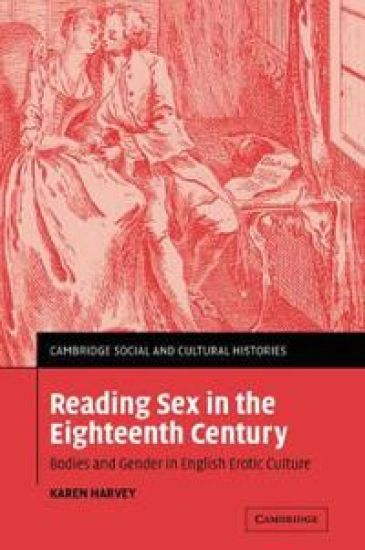
Karen Harvey explores the construction of sexual difference and gender identity in eighteenth-century England. Using erotic texts and their illustrations, and rooting this evidence firmly in historical context, Harvey provides a thoroughgoing critique of the orthodoxy of work on sexual difference in the history of the body. She argues that eighteenth-century English erotic culture combined a distinctive mode of writing and reading in which the form of refinement was applied to the matter of sex. Erotic culture was male-centred and it was in this environment, Harvey argues, that men could enjoy both the bawdy, raucous, libidinous elements of the eighteenth century and the refined politeness for which the period is also renowned. This book makes a significant contribution to the history of masculinity and advocates an approach to change in gender history, one capable of capturing the processes of negotiation and contestation integral to cultural change.
Karen Harvey explores the construction of sexual difference and gender identity in eighteenth-century England. Using erotic texts and their illustrations, and rooting this evidence firmly in historical context, Harvey provides a thoroughgoing critique of the orthodoxy of work on sexual difference in the history of the body. She argues that eighteenth-century English erotic culture combined a distinctive mode of writing and reading in which the form of refinement was applied to the matter of sex. Erotic culture was male-centred and it was in this environment, Harvey argues, that men could enjoy both the bawdy, raucous, libidinous elements of the eighteenth century and the refined politeness for which the period is also renowned. This book makes a significant contribution to the history of masculinity and advocates an approach to change in gender history, one capable of capturing the processes of negotiation and contestation integral to cultural change.
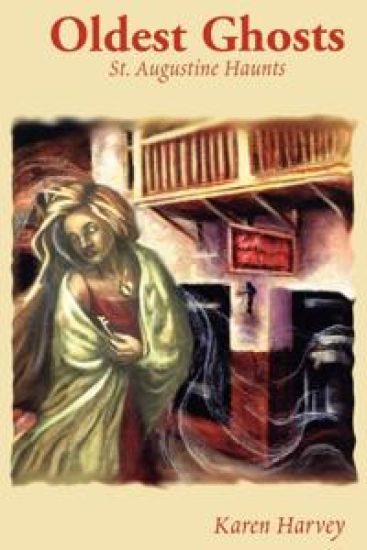
Oldest Ghosts tells of unexplained exploits by the spirits dwelling in St. Augustine, the oldest city of European origin in the United States.Judge John Stickney watches from a tree limb above his cemetery monument.A Colonial-period ghost hangs laundry in a Spanish courtyard.The ghost of Will Green, who died in 1802, routinely enters the bodies of men drinking in a bar.Some residents and visitors tolerate the playful spirits. Others prefer not to acknowledge them. Either way, the ghosts abide.