Kirjojen hintavertailu. Mukana 12 390 323 kirjaa ja 12 kauppaa.

Kirjailija

Karen J. Wenell

Kirjat ja teokset yhdessä paikassa: 5 kirjaa, julkaisuja vuosilta 2007-2026, suosituimpien joukossa Does Religious Education Work?. Vertaile teosten hintoja ja tarkista saatavuus suomalaisista kirjakaupoista.

Mukana myös kirjoitusasut: Karen J Wenell

5 kirjaa

Kirjojen julkaisuhaarukka 2007-2026.

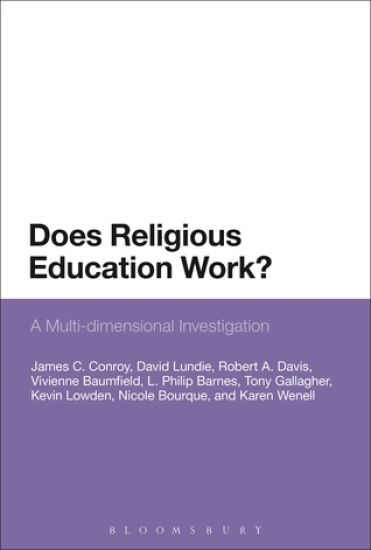
Does Religious Education Work?

Does Religious Education Work?

James C. Conroy; David Lundie; Robert A. Davis; Vivienne Baumfield; L. Philip Barnes; Tony Gallagher; Kevin Lowden; Nicole Bourque; Karen J. Wenell

Bloomsbury Academic USA
2013
sidottu
Society for Educational Studies Annual Book Prize winner: 2nd PrizeThis ground-breaking volume draws upon a rich and variegated range of methodologies to understand more fully the practices, policies and resources available in and to religious education in British schools. The descriptions, explanations and analyses undertaken here draw on an innovative combination of policy work, ethnography, Delphi methods, Actor Network Theory, questionnaires, textual analysis as well as theological and philosophical insight. It traces the evolution of religious education in a post-religious age from the creation of policy to the everyday experiences of teachers and students in the classroom. It begins by analysing the way in which policy has evolved since the 1970s with an examination of the social forces that have shaped curriculum development. It goes on to explore the impact and intentions of a diverse group of stakeholders with sometimes competing accounts of the purposes of religious educations. It then examines the manner in which policy is, or is not, enacted in the classroom. Finally, it explores contradictions and confusions, successes and failures, and the ways in which wider public debates enter the classroom. The book also exposes the challenge religious education teachers have in using the language of religion.
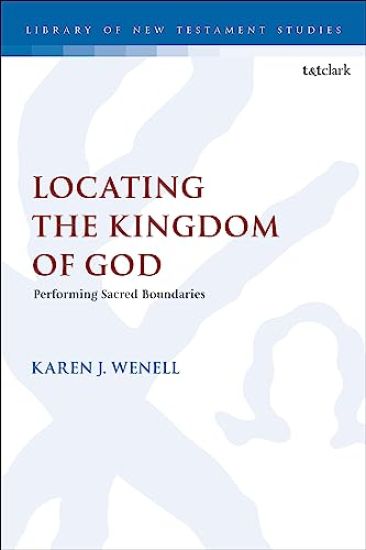
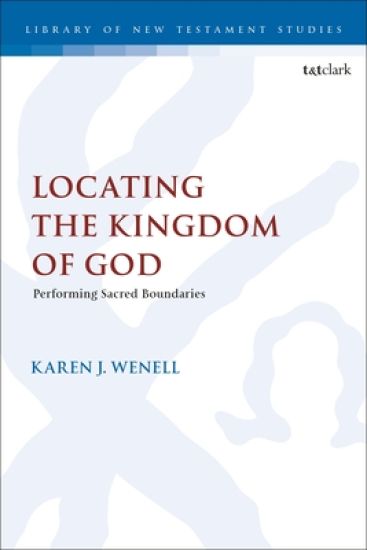
Locating the Kingdom of God

Locating the Kingdom of God

Karen J. Wenell

BLOOMSBURY PUBLISHING PLC
2024
sidottu
This book offers a new, multidisciplinary way of thinking about the Kingdom of God which fully recognises its sociological and spatial significance in performing boundaries of the sacred. Though spatial-critical perspectives have been increasingly recognised as important across many disciplines, the significance of non-physical religious spaces and their correspondence to boundaries of the sacred has not been explored fully, and never using the specific example of the Kingdom of God. Wenell considers the diverse and sometimes contradictory articulation of the Kingdom in the gospels as well as the ways that Kingdom language frames contemporary ethical debates. Her study of the Kingdom is located within the wider study of religion, affording the opportunity to investigate connections between space, belonging and the sacred. Wenell structures her investigation in four key areas that engage with the Kingdom in different, but theoretically interconnected ways. She begins by setting out a theory of sacred space that is capable of including the Kingdom, and establishing key concepts such as boundary, performance, physical/non-physical spatiality, spokespersons and controversy. Wenell then focuses on the synoptic gospels and the origins of the Kingdom, noting aspects of uncertainty as well as areas of agreement and controversy over boundaries of the sacred in these uniquely interrelated texts. The third and fourth areas of investigation move into cultural reception, considering instances where the Kingdom is formative for identity and ethical relationships both in individual and wider group belonging terms. Specific reference is made to issues of ethical consuming and displacement, placing the Kingdom in dialogue with Bauman’s discussion of a society of consumers, and Arendt’s notion of equitable co-habitation of the earth.
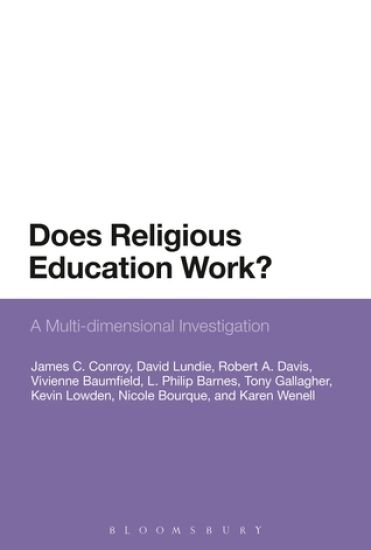
Does Religious Education Work?

Does Religious Education Work?

James C. Conroy; David Lundie; Robert A. Davis; Vivienne Baumfield; L. Philip Barnes; Tony Gallagher; Kevin Lowden; Nicole Bourque; Karen J. Wenell

Bloomsbury Academic
2015
nidottu
Society for Educational Studies Annual Book Prize winner: 2nd PrizeThis ground-breaking volume draws upon a rich and variegated range of methodologies to understand more fully the practices, policies and resources available in and to religious education in British schools. The descriptions, explanations and analyses undertaken here draw on an innovative combination of policy work, ethnography, Delphi methods, Actor Network Theory, questionnaires, textual analysis as well as theological and philosophical insight. It traces the evolution of religious education in a post-religious age from the creation of policy to the everyday experiences of teachers and students in the classroom. It begins by analysing the way in which policy has evolved since the 1970s with an examination of the social forces that have shaped curriculum development. It goes on to explore the impact and intentions of a diverse group of stakeholders with sometimes competing accounts of the purposes of religious educations. It then examines the manner in which policy is, or is not, enacted in the classroom. Finally, it explores contradictions and confusions, successes and failures, and the ways in which wider public debates enter the classroom. The book also exposes the challenge religious education teachers have in using the language of religion.
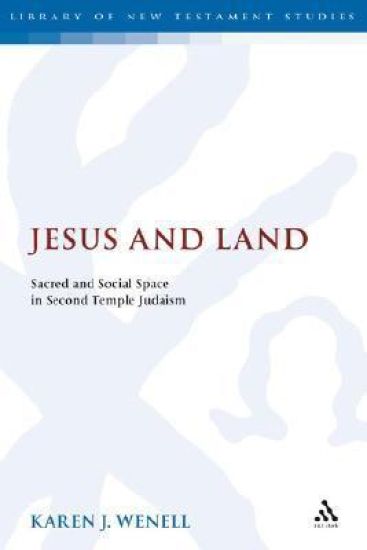
Jesus and Land

Jesus and Land

Karen J. Wenell

T. T.Clark Ltd
2007
sidottu
Beliefs about land, or the Abrahamic land promise, were an important part of Second Temple Judaism. Within the Roman Empire, the reality of life for Jews 'in the land' was different from the experience of Jews in the Diaspora. Among the diverse expressions of Judaism that flourished in the land prior to the revolt, there are indications that Jesus paid attention to the relationship between God, people and land. However, there are marked differences between Jesus' millenarian vision of sacred space and that of other groups at that time. The methodology employed in Wenell's study views religious space as having both sacred and social aspects and draws upon insights from sociology and social anthropology. It focuses on three main areas, all of which are relevant to beliefs about 'the land': temple, purity and the twelve. A comparative approach with other first century groups reveals Jesus as a prophetic figure who does not focus on a temple as the centre of God's kingdom, nor on purity as the means of maintaining group identity in the sacredness of the land. Instead, Jesus takes up land imagery in calling a group of twelve disciples in a prophetic and symbolic action with implications for Jesus' vision of sacred space and the social organization of that space. Both positively and negatively, Jesus' attitude toward the three areas of temple, purity and twelve points to unique aspects of his message and to distinctive beliefs poignantly relevant to the Abrahamic promise of the land.