Kirjojen hintavertailu. Mukana 12 595 353 kirjaa ja 12 kauppaa.

Kirjailija

Karen Kilby

Kirjat ja teokset yhdessä paikassa: 11 kirjaa, julkaisuja vuosilta 2004-2021, suosituimpien joukossa The SPCK Introduction to Karl Rahner. Vertaile teosten hintoja ja tarkista saatavuus suomalaisista kirjakaupoista.

11 kirjaa

Kirjojen julkaisuhaarukka 2004-2021.

The SPCK Introduction to Karl Rahner

The SPCK Introduction to Karl Rahner

Karen Kilby

SPCK Publishing
2007
pokkari
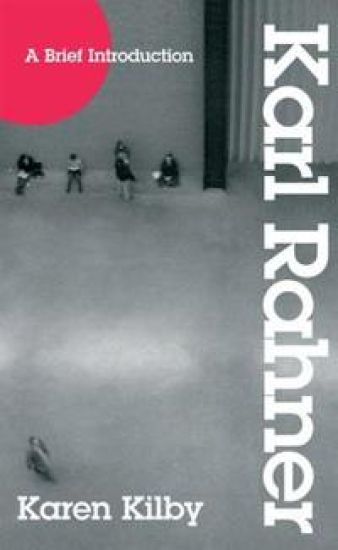
Karl Rahner, a German Jesuit, was probably the most prominent and influential Catholic theologian of the twentieth century. In the 1950s, he was on the margins, his orthodoxy questioned and his work censored. Yet a decade later he was a key theological adviser at the Second Vatican Council and, in almost all accounts but his own, one of the shaping influences upon it. Heavily influenced by Aquinas, his work sought to reconcile Christian faith with contemporary thought and the revelation of God in human experience. Here, Karen Kilby makes Rahner's often dense and difficult thinking accessible to a wide audience. She sketches a few of the central themes of Rahner's thought and gives the reader both a feeling for the way he approaches problems and some sense of the breadth of his work. This revised and expanded edition is an ideal introduction to Rahner for students and the general reader.
God, Evil and the Limits of Theology

God, Evil and the Limits of Theology

Karen Kilby

T. T.Clark Ltd
2021
nidottu
Karen Kilby explores the doctrine of the Trinity and issues of evil, suffering and sin. She offers a critique of the lack of respect for mystery found in the most popular Trinitarian thinking of our time. Kilby gives an apophatic reading of Aquinas on the Trinity and offers a distinct next step in the sequence on the Trinity – the appeal of social doctrines of the Trinity lies principally in their ecclesial and political relevance. She engages with Miroslav Volf’s famous ‘The Trinity is our social program’ essay and addresses the question of what an alternative politics of an apophatic theology of the Trinity might look like. The essays explore the question of theodicy and argue that evil poses a question to Christians and Christian’s theology which can neither be answered nor dismissed. Kilby argues that Christians must live with this mystery, this lack of resolution, rather than trying to diminish the gravity of evil, or allowing evil to dictate their conception of God’s goodness or power. By offering a critical reading of Hans Urs von Balthasar and Julian of Norwich she explores the question of whether Christianity can avoid giving a positive valuation to suffering, and concludes the two represent two different strands within the Christian tradition in relation to thought on suffering.
God, Evil and the Limits of Theology

God, Evil and the Limits of Theology

Karen Kilby

T. T.Clark Ltd
2020
sidottu
Karen Kilby explores the doctrine of the Trinity and issues of evil, suffering and sin. She offers a critique of the lack of respect for mystery found in the most popular Trinitarian thinking of our time. Kilby gives an apophatic reading of Aquinas on the Trinity and offers a distinct next step in the sequence on the Trinity – the appeal of social doctrines of the Trinity lies principally in their ecclesial and political relevance. She engages with Miroslav Volf’s famous ‘The Trinity is our social program’ essay and addresses the question of what an alternative politics of an apophatic theology of the Trinity might look like. The essays explore the question of theodicy and argue that evil poses a question to Christians and Christian’s theology which can neither be answered nor dismissed. Kilby argues that Christians must live with this mystery, this lack of resolution, rather than trying to diminish the gravity of evil, or allowing evil to dictate their conception of God’s goodness or power. By offering a critical reading of Hans Urs von Balthasar and Julian of Norwich she explores the question of whether Christianity can avoid giving a positive valuation to suffering, and concludes the two represent two different strands within the Christian tradition in relation to thought on suffering.
Progressive Creation and the Struggles of Humanity in the Bible

Progressive Creation and the Struggles of Humanity in the Bible

Zoltan Dornyei; Karen Kilby

Pickwick Publications
2018
sidottu
Why does the Christian walk often feel like an ongoing struggle and why does God's creation include imperfection, let alone forces that are intent on thwarting God's creative work? In seeking a response to these questions, this book argues that the biblical accounts describe creation in terms of a progressive transformation process whereby the initially incomplete created order will reach perfection only in the fulfillment of new creation. The following discussion then outlines a comprehensive framework for the biblical theology of humanity's struggles, centered on three key themes: corporeal temptation, deficient social structures, and the much-debated notion of spiritual warfare. The book presents an overarching canonical narrative that threads together a series of diverse biblical topics, from Job's temptation to the Atonement. The final part surveys biblical teaching on how human conduct can be aligned with God's creative purpose, and discusses three ""assignments"" from Jesus to believers: to celebrate the Eucharist, to pray the Lord's Prayer, and to fulfill the Great Commission. ""Rarely have I read such a stimulating and profitable book. Zoltan Dornyei sets out a fresh telling of the narrative of Scripture which starts by making a persuasive case for the view that creation is a continuous process, initially 'unfinished, ' and relates this to the on-going threat of chaos and of spiritual warfare. At the end, he explains his approach has been like writing a guidebook to a new path through the Yorkshire Dales. His work is, however, more like walking the path with an expert guide who is constantly pointing out new views, new insights, new connections, and breathtaking views which many would miss en route. Written with eminent clarity, this is theology at its best: broad in its sweep, careful in its exegesis, masterly in its theological perception and, above all, rich in its practical, spiritual insights."" --Derek Tidball, Former Principal of London School of Theology and former Chairman of the Evangelical Alliance, UK Zoltan Dornyei is Professor of Psycholinguistics at the University of Nottingham. He has published over twenty books on topics related to human motivation and language learning, including The Psychology of Second Language Acquisition (2009) and Christian Faith and English Language Teaching and Learning (coeditor, 2013).
Progressive Creation and the Struggles of Humanity in the Bible

Progressive Creation and the Struggles of Humanity in the Bible

Zoltan Dornyei; Karen Kilby

Pickwick Publications
2018
pokkari
Why does the Christian walk often feel like an ongoing struggle and why does God's creation include imperfection, let alone forces that are intent on thwarting God's creative work? In seeking a response to these questions, this book argues that the biblical accounts describe creation in terms of a progressive transformation process whereby the initially incomplete created order will reach perfection only in the fulfillment of new creation. The following discussion then outlines a comprehensive framework for the biblical theology of humanity's struggles, centered on three key themes: corporeal temptation, deficient social structures, and the much-debated notion of spiritual warfare. The book presents an overarching canonical narrative that threads together a series of diverse biblical topics, from Job's temptation to the Atonement. The final part surveys biblical teaching on how human conduct can be aligned with God's creative purpose, and discusses three ""assignments"" from Jesus to believers: to celebrate the Eucharist, to pray the Lord's Prayer, and to fulfill the Great Commission. ""Rarely have I read such a stimulating and profitable book. Zoltan Dornyei sets out a fresh telling of the narrative of Scripture which starts by making a persuasive case for the view that creation is a continuous process, initially 'unfinished, ' and relates this to the on-going threat of chaos and of spiritual warfare. At the end, he explains his approach has been like writing a guidebook to a new path through the Yorkshire Dales. His work is, however, more like walking the path with an expert guide who is constantly pointing out new views, new insights, new connections, and breathtaking views which many would miss en route. Written with eminent clarity, this is theology at its best: broad in its sweep, careful in its exegesis, masterly in its theological perception and, above all, rich in its practical, spiritual insights."" --Derek Tidball, Former Principal of London School of Theology and former Chairman of the Evangelical Alliance, UK Zoltan Dornyei is Professor of Psycholinguistics at the University of Nottingham. He has published over twenty books on topics related to human motivation and language learning, including The Psychology of Second Language Acquisition (2009) and Christian Faith and English Language Teaching and Learning (coeditor, 2013).
Balthasar

Balthasar

Karen Kilby

William B Eerdmans Publishing Co
2012
nidottu
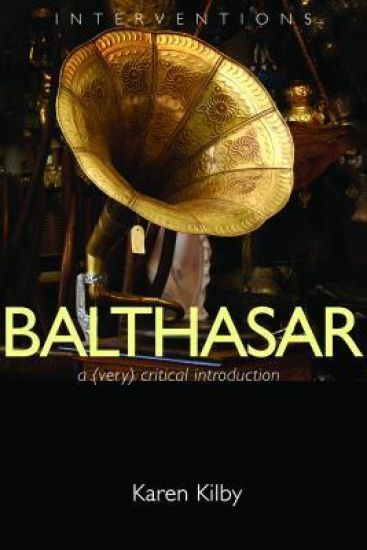
The enormously prolific Swiss Roman Catholic theologian Hans Urs von Balthasar (1905-1988) was marginalized during much of his life, but his reputation over time has only continued to grow. He was said to be the favorite theologian of John Paul II and is held in high esteem by Benedict XVI. It is not uncommon to hear him referred to as the great Catholic theologian of the twentieth century. In Balthasar: A (Very) Critical Introduction Karen Kilby argues that although the low regard in which Balthasar was held from the 1950s to 1960s was not justified, neither is the current tendency to lionize him. Instead, she advocates a more balanced approach, particularly in light of a fundamental problem in his writing, namely, his characteristic authorial voice -- an over-reaching -God's eye- point of view that contradicts the content of his theology.
Karl Rahner

Karl Rahner

Karen Kilby

Routledge
2004
sidottu
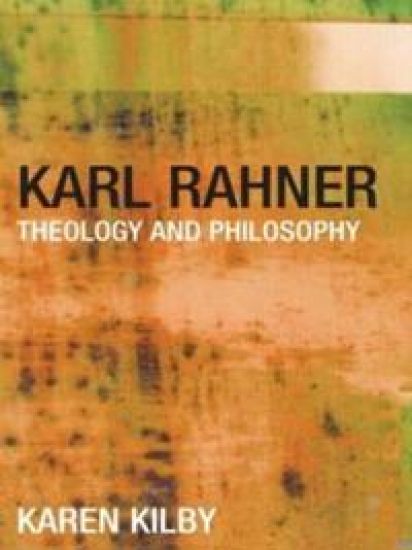
Karl Rahner is one of the great theologians of the twentieth century, known for his systematic, foundationalist approach. This bold and original book explores the relationship between his theology and his philosophy, and argues for the possibility of a nonfoundationalist reading of Rahner. Karen Kilby calls into question both the admiration of Rahner's disciples for the overarching unity of his though, and the too easy dismissals of critics who object to his 'flawed philosophical staring point' or to his supposedly modern and liberal appeal to experience. Through a lucid and critical exposition of key texts including Spirit in the World and Hearer of the Word, and of themes such as the Vorgriff auf esse, the supernatural existential and the anonymous Christian, Karen Kilby reaffirms Rahner's significance for modern theology and offers a clear exposition of his thought.
Karl Rahner

Karl Rahner

Karen Kilby

Routledge
2004
nidottu
Karl Rahner is one of the great theologians of the twentieth century, known for his systematic, foundationalist approach. This bold and original book explores the relationship between his theology and his philosophy, and argues for the possibility of a nonfoundationalist reading of Rahner. Karen Kilby calls into question both the admiration of Rahner's disciples for the overarching unity of his though, and the too easy dismissals of critics who object to his 'flawed philosophical staring point' or to his supposedly modern and liberal appeal to experience. Through a lucid and critical exposition of key texts including Spirit in the World and Hearer of the Word, and of themes such as the Vorgriff auf esse, the supernatural existential and the anonymous Christian, Karen Kilby reaffirms Rahner's significance for modern theology and offers a clear exposition of his thought.