Kirjojen hintavertailu. Mukana 12 595 353 kirjaa ja 12 kauppaa.

Kirjailija

Karen Newman

Kirjat ja teokset yhdessä paikassa: 9 kirjaa, julkaisuja vuosilta 1991-2016, suosituimpien joukossa Shakespeare's Rhetoric of Comic Character. Vertaile teosten hintoja ja tarkista saatavuus suomalaisista kirjakaupoista.

9 kirjaa

Kirjojen julkaisuhaarukka 1991-2016.

This Distracted Globe

This Distracted Globe

Jonathan Goldberg; Karen Newman

Fordham University Press
2016
pokkari
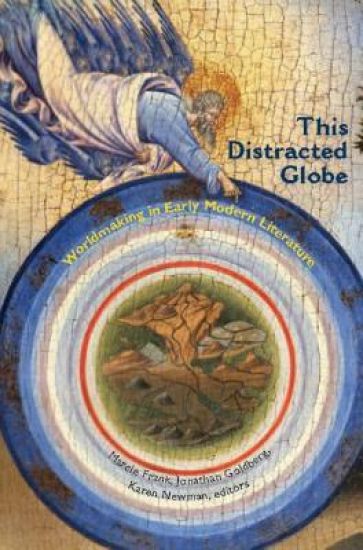
Worldmaking takes many forms in early modern literature and thus challenges any single interpretive approach. The essays in this collection investigate the material stuff of the world in Spenser, Cary, and Marlowe; the sociable bonds of authorship, sexuality, and sovereignty in Shakespeare and others; and the universal status of spirit, gender, and empire in the worlds of Vaughan, Donne, and the dastan (tale) of Chouboli, a Rajasthani princess. Together, these essays make the case that to address what it takes to make a world in the early modern period requires the kinds of thinking exemplified by theory.
This Distracted Globe

This Distracted Globe

Jonathan Goldberg; Karen Newman

FORDHAM UNIVERSITY PRESS
2016
sidottu
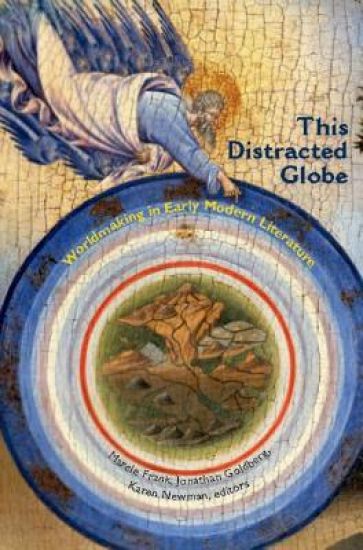
Worldmaking takes many forms in early modern literature and thus challenges any single interpretive approach. The essays in this collection investigate the material stuff of the world in Spenser, Cary, and Marlowe; the sociable bonds of authorship, sexuality, and sovereignty in Shakespeare and others; and the universal status of spirit, gender, and empire in the worlds of Vaughan, Donne, and the dastan (tale) of Chouboli, a Rajasthani princess. Together, these essays make the case that to address what it takes to make a world in the early modern period requires the kinds of thinking exemplified by theory.
Cultural Capitals

Cultural Capitals

Karen Newman

Princeton University Press
2009
pokkari
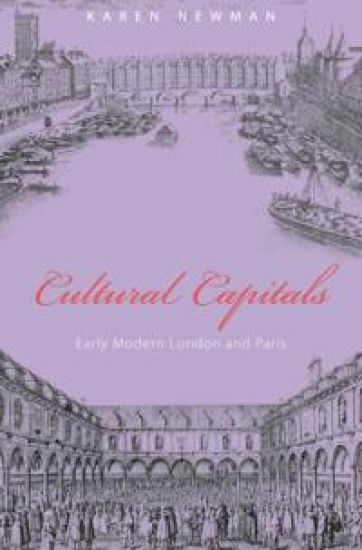
Social theories of modernity focus on the nineteenth century as the period when Western Europe was transformed by urbanization. Cities became thriving metropolitan centers as a result of economic, political, and social changes wrought by the industrial revolution. In Cultural Capitals, Karen Newman demonstrates that speculation and capital, the commodity, the crowd, traffic, and the street, often thought to be historically specific to nineteenth-century urban culture, were in fact already at work in early modern London and Paris. Newman challenges the notion of a rupture between premodern and modern societies and shows how London and Paris became cultural capitals. Drawing upon poetry, plays, and prose by writers such as Shakespeare, Scudery, Boileau, and Donne, as well as popular materials including pamphlets, ballads, and broadsides, she examines the impact of rapid urbanization on cultural production. Newman shows how changing demographics and technological development altered these two emerging urban centers in which new forms of cultural capital were produced and new modes of sociability and representation were articulated. Cultural Capitals is a fascinating work of literary and cultural history that redefines our conception of when the modern city came to be and brings early modern London and Paris alive in all their splendor, squalor, and richness.
Essaying Shakespeare

Essaying Shakespeare

Karen Newman

University of Minnesota Press
2009
nidottu
A pioneering scholar of Shakespeare and early modern letters provides an overview of work in the fieldFor more than twenty-five years, Karen Newman has brought her critical acumen to bear on early modern studies. In this collection of her essays on Shakespeare-some acknowledged classics and others never before published-Newman shows how changing theoretical trends have shaped Shakespeare studies, from new historicism and gender studies to critical race studies and globalization.Central to Newman’s work is social exchange, or the circulation of people and objects. At least two of these essays have had a powerful and lasting impact on Shakespeare studies: “Renaissance Family Politics and Shakespeare’s The Taming of the Shrew” and “‘And wash the Ethiop White’: Femininity and the Monstrous in Othello.” Three essays appear in print for the first time: an examination of clothing of the poor and the portrayal of the king as a beggar in Richard II; a stinging review of Harold Bloom’s book Shakespeare: The Invention of the Human; and a rethinking of claims about the globalization of culture and cultural translation.Essaying Shakespeare chronicles Newman’s own critical development to provide a significant map of critical work on Shakespeare.
Shakespeare's Rhetoric of Comic Character
First published in 1985. In this revisionist history of comic characterization, Karen Newman argues that, contrary to received opinion, Shakespeare was not the first comic dramatist to create self-conscious characters who seem 'lifelike' or 'realistic'. His comic practice is firmly set within a comic tradition which stretches from Plautus and Menander to playwrights of the Italian Renaissance.
Shakespeare's Rhetoric of Comic Character
First published in 1985. In this revisionist history of comic characterization, Karen Newman argues that, contrary to received opinion, Shakespeare was not the first comic dramatist to create self-conscious characters who seem 'lifelike' or 'realistic'. His comic practice is firmly set within a comic tradition which stretches from Plautus and Menander to playwrights of the Italian Renaissance.
Fetal Positions

Fetal Positions

Karen Newman

Stanford University Press
1997
sidottu
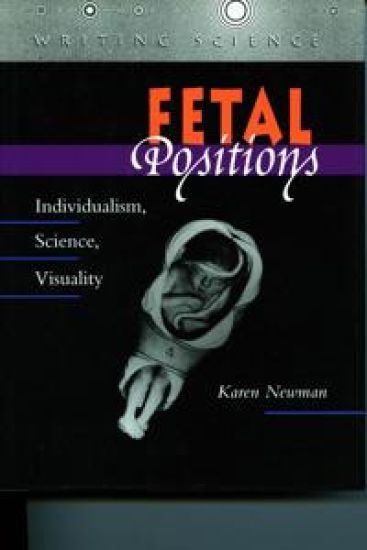
This compelling book uses 103 illustrations to argue that modes of visualizing science have profoundly determined "fetal politics" and the contemporary abortion debates. With its close interplay of visual and verbal texts, it traces both the history of fetal images from the sixteenth century onward (including the classic Life magazine photographs of Lennart Nilsson in 1965) and the consequences of how obstetrical and embryological knowledge was represented over time in Europe—to both specialists and the public—as medical knowledge came to be produced and understood through anatomical observation. As the abortion debates witness, perhaps no flesh is more overdetermined with cultural meaning than the female reproductive body. Language and rhetoric have had an important role in framing the debates and shaping attitudes: "pro-choice" versus "abortion," "anti-abortion" rather than "pro-life," "fetus" rather than "baby" or "unborn child," "uterus" rather than "womb." How visual modes of representing obstetrical and embryological information, which have similar consequences in forming both public and professional opinion, shape the politics of the abortion debates has until recently received very little attention.
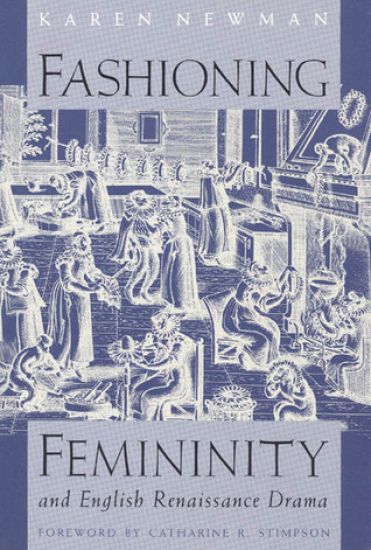
Fashioning Femininity and English Renaissance Drama

Fashioning Femininity and English Renaissance Drama

Karen Newman

University of Chicago Press
1991
nidottu
By examining representations of women on stage and in the many printed materials aimed at them, Karen Newman shows how female subjectivity—both the construction of the gendered subject and the ideology of women's subjection to men—was fashioned in Elizabethan and Jacobean England. Her emphasis is not on "women" so much as on the category of "femininity" as deployed in the late sixteenth and early seventeenth centuries. Through the critical lens of poststructuralism, Newman reads anatomies, conduct and domesticity handbooks, sermons, homilies, ballads, and court cases to delineate the ideologies of femininity they represented and produced. Arguing that drama, as spectacle, provides a peculiarly useful locus for analyzing the management of femininity, Newman considers the culture of early modern London to reveal how female subjectivity was fashioned and staged in the plays of Shakespeare, Jonson, and others.