Kirjojen hintavertailu. Mukana 12 595 353 kirjaa ja 12 kauppaa.

Kirjailija

Karen Postal

Kirjat ja teokset yhdessä paikassa: 4 kirjaa, julkaisuja vuosilta 2013-2021, suosituimpien joukossa Testimony That Sticks. Vertaile teosten hintoja ja tarkista saatavuus suomalaisista kirjakaupoista.

4 kirjaa

Kirjojen julkaisuhaarukka 2013-2021.

The Art and Science of Expert Witness Testimony
Featuring in-depth interviews of attorneys, judges, and seasoned forensic experts from multiple disciplines including psychology, medicine, economics, history, and neuropsychology, The Art and Science of Expert Witness Testimony highlights and offers bridges for the areas where the needs and expectations of the courtroom collide with experts’ communication habits developed over years of academic and professional training. Rather than seeing testimony as a one-way download from expert to jurors, The Art and Science of Expert Witness Testimony focuses on the direct, dynamic, unique communication relationship that develops as each juror’s lived experience interacts with the words of experts on the stand. This book expands the academic tradition of "methods-centered credibility" to also include "person-centered credibility," where warmth, confidence, and relentless attention to detail build trust with jurors. Seasoned forensic experts share what they actually say on the stand: their best strategies and techniques for disrupting traditional academic communication and creating access to science and professional opinions with vivid, clear language and strong visuals. The difficult but necessary emotional work of the courtroom is addressed with specific techniques to regulate emotions in order to maintain person-centered credibility and keep the needs of jurors front and center through cross-examination. This innovative compilation of research is essential reading for professionals and practitioners, such as physicians, engineers, accountants, and scientists, that may find themselves experts in a courtroom. The Art and Science of Expert Witness Testimony provides a unique experience for readers, akin to being personally mentored by over eighty-five attorneys, judges, and seasoned experts as they share their observations, insights, and strategies—not to "win" as a defense, prosecution, or plaintiff expert, but to be productive in helping jurors and other triers of fact do their difficult intellectual job in deciding a case.
The Art and Science of Expert Witness Testimony
Featuring in-depth interviews of attorneys, judges, and seasoned forensic experts from multiple disciplines including psychology, medicine, economics, history, and neuropsychology, The Art and Science of Expert Witness Testimony highlights and offers bridges for the areas where the needs and expectations of the courtroom collide with experts’ communication habits developed over years of academic and professional training. Rather than seeing testimony as a one-way download from expert to jurors, The Art and Science of Expert Witness Testimony focuses on the direct, dynamic, unique communication relationship that develops as each juror’s lived experience interacts with the words of experts on the stand. This book expands the academic tradition of "methods-centered credibility" to also include "person-centered credibility," where warmth, confidence, and relentless attention to detail build trust with jurors. Seasoned forensic experts share what they actually say on the stand: their best strategies and techniques for disrupting traditional academic communication and creating access to science and professional opinions with vivid, clear language and strong visuals. The difficult but necessary emotional work of the courtroom is addressed with specific techniques to regulate emotions in order to maintain person-centered credibility and keep the needs of jurors front and center through cross-examination. This innovative compilation of research is essential reading for professionals and practitioners, such as physicians, engineers, accountants, and scientists, that may find themselves experts in a courtroom. The Art and Science of Expert Witness Testimony provides a unique experience for readers, akin to being personally mentored by over eighty-five attorneys, judges, and seasoned experts as they share their observations, insights, and strategies—not to "win" as a defense, prosecution, or plaintiff expert, but to be productive in helping jurors and other triers of fact do their difficult intellectual job in deciding a case.
Testimony That Sticks

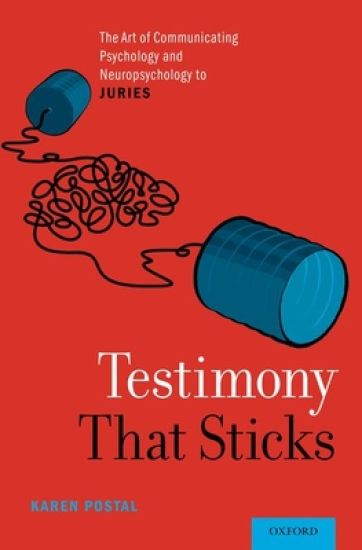
Testimony That Sticks

Karen Postal

Oxford University Press Inc
2019
sidottu
Following on the success of Feedback That Sticks (Oxford, 2013), Karen Postal demonstrates, through the words of forensic experts, how to translate complex, highly technical neuropsychological and psychological information for jurors in a way that is engaging, understandable, and (to quote Faulkner) sets the truth on fire. Testimony That Sticks shares the fruits of four years of in-depth interviews with over 70 seasoned forensic neuropsychologists and psychologists, as well as attorneys and judges, presenting what experts actually say on the stand: how they use compelling analogies, metaphors, and succinct explanations of assessment processes and findings, as well as principles of productive expert testimony for direct and cross examination. This book allows readers to be a fly on the wall as seasoned forensic neuropsychologists and psychologists share what they actually say on the stand: their best strategies and techniques for communicating science to juries and other triers of fact. Readers also have access to the thoughts of attorneys and judges as they watch expert testimony and weigh in on what works and doesn't, and what they need from the forensic neuropsychology and psychology professions to create more productive testimony. At its heart, the book shows how academics can shed their academic communication style learned in years of scientific training that results in the inability to communicate clearly and simply about psychology and neuroscience. This landmark book is about shedding jargon, giving academics permission to allow emotion to creep back into their language, freeing up body language, and using vivid, clear, language to create moments of genuine, productive communication with jurors and other triers of fact.
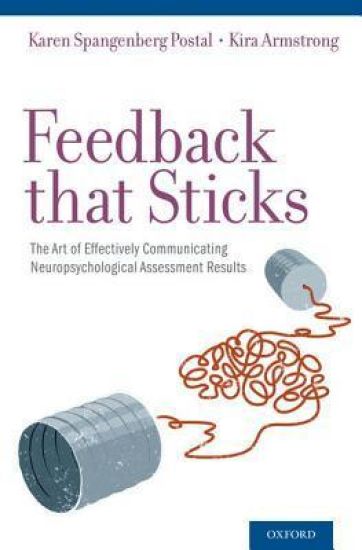
Feedback that Sticks

Feedback that Sticks

Karen Postal; Kira Armstrong

Oxford University Press Inc
2013
sidottu
This book is about how to give outstanding feedback to patients, their family members, and other professionals. Effective feedback sessions have the potential to help patients understand their neurocognitive syndromes in the larger context of their real world environments and in a manner that positively alters lives. As our profession has matured, feedback sessions with patients and family members have become the norm rather than the exception. Nonetheless, many senior and even mid-career neuropsychologists were never explicitly taught how to give feedback. And despite the burgeoning neuropsychological literature describing sophisticated assessment methods and neuropsychological syndromes, there has been almost no parallel literature describing techniques for communicating this information to patients and other professionals. This begs the question: how have we learned to do this extraordinary task well? And how do we effectively communicate intrinsically complex assessment results, to deliver the type of salient feedback that alters lives? It turns out, the answers are like feedback sessions themselves - varied and complex. Feedback that Sticks presents a compilation of the clinical feedback strategies of over 85 neuropsychologists from all over the country: training directors, members of tertiary medical teams, and private practitioners. It offers the reader the ability to be a fly on the wall as these seasoned neuropsychologists share feedback strategies they use with patients across the lifespan, and who present with a wide variety of neurological and developmental conditions. Like receiving the best feedback training from 85 different mentors, the book gathers the most compelling, accessible ways of explaining complex neuropsychological concepts from a broad variety of practitioners. Through this process, it offers a unique opportunity for practicing neuropsychologists to develop, broaden, and strengthen their own approaches to feedback.