Kirjojen hintavertailu. Mukana 12 595 353 kirjaa ja 12 kauppaa.

Kirjailija

Karen R. Lawrence

Kirjat ja teokset yhdessä paikassa: 3 kirjaa, julkaisuja vuosilta 1994-2020, suosituimpien joukossa Who's Afraid of James Joyce?. Vertaile teosten hintoja ja tarkista saatavuus suomalaisista kirjakaupoista.

Mukana myös kirjoitusasut: Karen R Lawrence

3 kirjaa

Kirjojen julkaisuhaarukka 1994-2020.

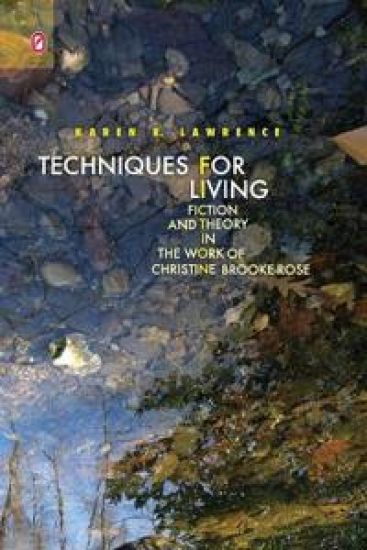
Techniques for Living

Techniques for Living

Karen R Lawrence

Ohio State University Press
2020
pokkari
Christine Brooke-Rose is a writer, critic, and narrative theorist whose extraordinarily varied body of work tests the relationship between twentieth-century theory and fiction in unparalleled ways. As they rupture "the relics of nineteenth-century ideologies," Brooke-Rose's fictional experiments offer new ways to theorize life and formulate conduct in the new world orders of the twentieth and twenty-first centuries. Specifically addressing the loss of our ability to differentiate reality from what she calls "the unreal," her novels mime the various "deaths" and absences described in contemporary literary theory, registering these absences technically, ontologically, and emotionally in linguistic and grammatical "constraints." Rather than melancholy or self-enclosed exercises, however, her writing draws creative vitality out of the loss and limitation it examines. Deploying twentieth-century discourses drawn from technology, literary theory, astronomy, evolutionary biology, and popular culture, her vital, often humorous, fictions offer survival strategies for the genre of the novel. They offer new forms for telling the human story within the unreality of contemporary life. In Techniques for Living: Fiction and Theory in the Work of Christine Brooke-Rose, Karen R. Lawrence explains how Brooke-Rose's career invites revision of contemporary literary histories and theories of postmodernism. With her highly original narrative forms, Brooke-Rose significantly contributes to the radical evolution of narrative in modernism's wake. In its singular focus on the lively and prolific experiments of this writer/critic/theorist, Techniques for Living lays the groundwork for further challenges to our generalized versions of postmodernism, as it also provides a fascinating reading of a highly original writer.
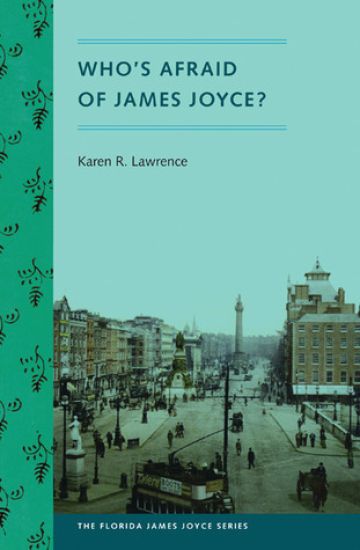
Who's Afraid of James Joyce?

Who's Afraid of James Joyce?

Karen R. Lawrence

University Press of Florida
2012
nidottu
""Contains riches and will become an essential resource for new generations of Joyce critics looking to build on Lawrence's immense contributions to the field. The glittering intelligence of the individual pieces in this collection reminds us that each time Lawrence returns to Joyce's body of work, she manages not just to extract a creative reading, but to develop a fundamentally new way of approaching these immensely influential stories and novels.""--Sean Latham, University of Tulsa The development of Joycean studies into a respected and very large subdiscipline of modernist studies can be traced to the work of several important scholars. Among those who did the most to document Joyce's work, Karen Lawrence can easily be considered one of that elite cadre. A retrospective of decades of work on Joyce, this collection includes published journal articles, book chapters, and selections from her best known work (all updated and revised), along with one new essay. Featuring engaging close readings of such Joyce works as Dubliners and Ulysses, it will be a welcome addition to any serious Joycean's library and will prove extremely useful to new generations of Joyce critics looking to build on Lawrence's expansive scholarship. Both readable and lively, this work may inspire a lifetime of reading, re-reading, and teaching Joyce.
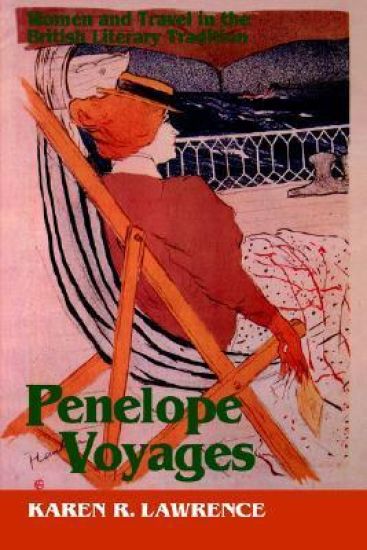
Penelope Voyages

Penelope Voyages

Karen R. Lawrence

Cornell University Press
1994
pokkari
Looking at travel writing by British women from the seventeenth century on, Karen R. Lawrence asks an intriguing question: What happens when, instead of waiting patiently for Odysseus, Penelope voyages and records her journey—when the woman who is expected to waitsets forth herself and traces an itinerary of her own? Lawrence ranges widely, discussing both fiction and nonfiction and traversing the genres of travel letters, realistic and sentimental novels, ethnography, fantasy, and postmodern narrative. In examining works as dissimilar as Margaret Cavendish's rendition of the Renaissance adventure narrative and Christine Brooke-Rose's postmodernist Between, she explores not only the significance of gender for travel writing, but also the value of travel itself for testing the limits of women's social freedoms and restraints. Lawrence shows how writings by Frances Burney, Mary Wollstonecraft, Sarah Lee, Mary Kingsley, Virginia Woolf, and Brigid Brophy reconceive the meanings of femininity in relation to such apparent oppositions as travel/home, other/self, and foreign/domestic. Despite the differences-historical, generic, political-among these writers, Lawrence maintains, they share common insights. Their accounts overturn the dichotomy between adventure and domesticity, demonstrating something illusory within both the stability of home and the freedom of travel.