Kirjojen hintavertailu. Mukana 12 595 353 kirjaa ja 12 kauppaa.
Kirjailija
Karima Mahmoud
Kirjat ja teokset yhdessä paikassa: 234 kirjaa, julkaisuja vuosilta 2019-2026, suosituimpien joukossa O futuro da energia descentralizada. Vertaile teosten hintoja ja tarkista saatavuus suomalaisista kirjakaupoista.
A laser is a device that emits light through a process of optical amplification based on the stimulated emission of electromagnetic radiation. The word laser is an acronym that originated as an acronym for light amplification by stimulated emission of radiation. The first laser was built in 1960 by Theodore Maiman at Hughes Research Laboratories, based on theoretical work by Charles H. Townes and Arthur Leonard Schawlow. A laser differs from other sources of light in that it emits light that is coherent. Spatial coherence allows a laser to be focused to a tight spot, enabling applications such as laser cutting and lithography. It also allows a laser beam to stay narrow over great distances (collimation), a feature used in applications such as laser pointers and lidar (light detection and ranging). Lasers can also have high temporal coherence, which permits them to emit light with a very narrow frequency spectrum. Alternatively, temporal coherence can be used to produce ultra-short pulses of light with a broad spectrum but durations as short as a femtosecond.
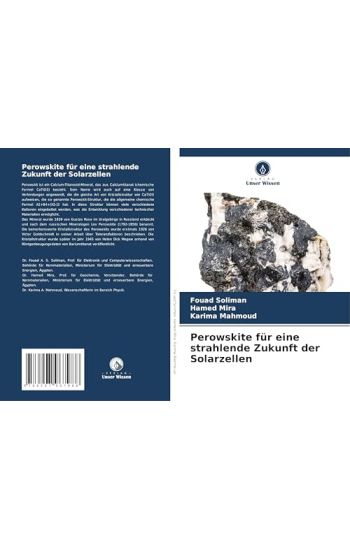
Perowskit ist ein Calcium-Titanoxid-Mineral, das aus Calciumtitanat (chemische Formel CaTiO3) besteht. Sein Name wird auch auf eine Klasse von Verbindungen angewandt, die die gleiche Art von Kristallstruktur wie CaTiO3 aufweisen, die so genannte Perowskit-Struktur, die die allgemeine chemische Formel A2+B4+(X2-)3 hat. In diese Struktur k nnen viele verschiedene Kationen eingebettet werden, was die Entwicklung verschiedener technischer Materialien erm glicht. Das Mineral wurde 1839 von Gustav Rose im Uralgebirge in Russland entdeckt und nach dem russischen Mineralogen Lev Perovskite (1792-1856) benannt. Die bemerkenswerte Kristallstruktur des Perowskits wurde erstmals 1926 von Victor Goldschmidt in seiner Arbeit ber Toleranzfaktoren beschrieben. Die Kristallstruktur wurde sp ter im Jahr 1945 von Helen Dick Megaw anhand von R ntgenbeugungsdaten von Bariumtitanat ver ffentlicht.
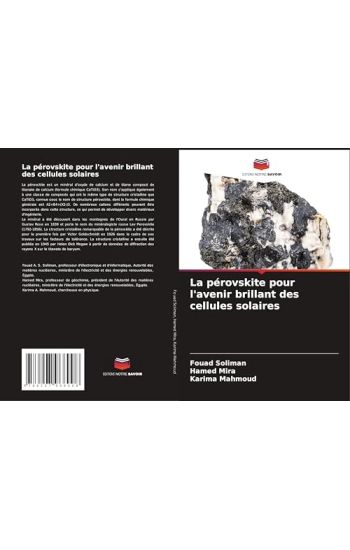
La p rovskite est un min ral d'oxyde de calcium et de titane compos de titanate de calcium (formule chimique CaTiO3). Son nom s'applique galement une classe de compos s qui ont le m me type de structure cristalline que CaTiO3, connue sous le nom de structure p rovskite, dont la formule chimique g n rale est A2+B4+(X2-)3. De nombreux cations diff rents peuvent tre incorpor s dans cette structure, ce qui permet de d velopper divers mat riaux d'ing nierie. Le min ral a t d couvert dans les montagnes de l'Oural en Russie par Gustav Rose en 1839 et porte le nom du min ralogiste russe Lev Perovskite (1792-1856). La structure cristalline remarquable de la p rovskite a t d crite pour la premi re fois par Victor Goldschmidt en 1926 dans le cadre de ses travaux sur les facteurs de tol rance. La structure cristalline a ensuite t publi e en 1945 par Helen Dick Megaw partir de donn es de diffraction des rayons X sur le titanate de baryum.
La perovskite un minerale di ossido di calcio e titanio composto da titanato di calcio (formula chimica CaTiO3). Il suo nome si applica anche a una classe di composti che hanno lo stesso tipo di struttura cristallina del CaTiO3, nota come struttura della perovskite, che ha una formula chimica generale A2+B4+(X2-)3. Molti cationi diversi possono essere incorporati in questa struttura, consentendo lo sviluppo di diversi materiali ingegnerizzati. Il minerale stato scoperto negli Urali in Russia da Gustav Rose nel 1839 e prende il nome dal mineralogista russo Lev Perovskite (1792-1856). La notevole struttura cristallina della perovskite fu descritta per la prima volta da Victor Goldschmidt nel 1926 nel suo lavoro sui fattori di tolleranza. La struttura cristallina fu poi pubblicata nel 1945 da Helen Dick Megaw sulla base dei dati di diffrazione dei raggi X sul titanato di bario.
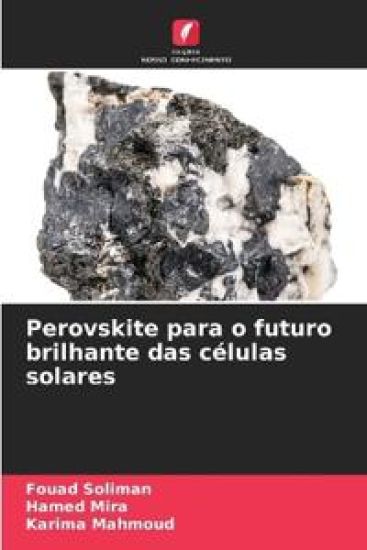
A perovskite um mineral de xido de c lcio e tit nio composto por titanato de c lcio (f rmula qu mica CaTiO3). O seu nome tamb m se aplica classe de compostos que t m o mesmo tipo de estrutura cristalina que o CaTiO3, conhecida como estrutura de perovskite, que tem uma f rmula qu mica geral A2+B4+(X2-)3. Muitos cati es diferentes podem ser incorporados nesta estrutura, permitindo o desenvolvimento de diversos materiais de engenharia. O mineral foi descoberto nos Montes Urais da R ssia por Gustav Rose em 1839 e recebeu o nome do mineralogista russo Lev Perovskite (1792-1856). A not vel estrutura cristalina da perovskite foi descrita pela primeira vez por Victor Goldschmidt em 1926 no seu trabalho sobre factores de toler ncia. A estrutura cristalina foi posteriormente publicada em 1945, a partir de dados de difra o de raios X do titanato de b rio, por Helen Dick Megaw.