Kirjojen hintavertailu. Mukana 12 595 353 kirjaa ja 12 kauppaa.

Kirjailija

Karl G. Heider

Kirjat ja teokset yhdessä paikassa: 6 kirjaa, julkaisuja vuosilta 1991-2017, suosituimpien joukossa The Dugum Dani. Vertaile teosten hintoja ja tarkista saatavuus suomalaisista kirjakaupoista.

6 kirjaa

Kirjojen julkaisuhaarukka 1991-2017.

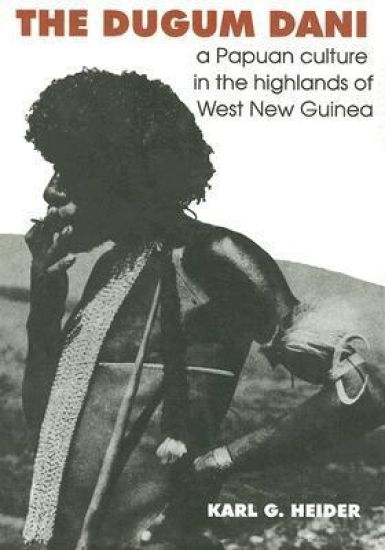
The Dugum Dani

The Dugum Dani

Karl G. Heider

Routledge
2017
sidottu
For many years anthropologists have speculated about primitive warfare, its place in a particular culture, its form, and its consequences on other tribes. This full-scale ethnography of the Dugum Dani centers on the issue of hostility between groups of human beings and the place and function of violence. Warfare, like rituals and kinship alliances, is part of a total culture, and for this reason Professor Heider has approached the Dani from a holistic point of view. Other aspects of Dani life and organization are shown in interrelationship with the institution of warfare, such as the social, ecological, and technological elements in the Dani way of life. Professor Heider examines particularly the role of warfare itself in terms of the particular needs, and lack of them. The first section of this book documents the Dani and their warfare and provides one of the most detailed accounts of tribal life available. The second section focuses on the material aspects of Dani culture, to explore the interrelationships of the material objects with the other aspects of Dani culture; this analysis is especially interesting since the Dani moved from a stone-age culture to steel tools during the period of study itself. Professor Heider also notes the distinctive aspects of Dani culture; the paucity of color, number, and other attribute terms, the near absence of art; their five-year post-partum sexual abstinence, and other traits that seem to suggest that the Dani have little interest in intellectual elaboration or sex, and that despite their warfare, they are not a particularly aggressive people. Including previously unpublished photographs and descriptions of tribal life and warfare, this book provides anthropologists with a full and vivid account of Dani culture and with new insights into the general problems of human aggression.
Landscapes of Emotion

Landscapes of Emotion

Karl G. Heider

Cambridge University Press
2006
pokkari
In this book, Karl G. Heider studies the cultural constructions of emotions, examining how different cultures shape ideas and talk about emotion. The main subjects of the study are the Minangkabau, a matrilineal Muslim culture of three million people in West Sumatra, Indonesia. Comparative data come from the Central Javanese, also of Indonesia and reference is made to studies of American emotions. The Minangkabau have two different 'cultures of emotion', used depending on whether they are speaking their own regional language or the national language. And the Central Javanese have yet another culture of emotion when they are speaking the 'same' national language. Landscapes of Emotion will appeal to a range of readers in anthropology, psychology, sociology and Asian studies who want to understand how different cultures shape emotion.
Ethnographic Film

Ethnographic Film

Karl G. Heider

University of Texas Press
2006
pokkari
From reviews of the first edition: “Ethnographic Film can rightly be considered a film primer for anthropologists.” -Choice “This is an interesting and useful book about what it means to be ethnographic and how this might affect ethnographic filmmaking for the better. It obviously belongs in all departments of anthropology, and most ethnographic filmmakers will want to read it.” -Ethnohistory Even before Robert Flaherty released Nanook of the North in 1922, anthropologists were producing films about the lifeways of native peoples for a public audience, as well as for research and teaching. Ethnographic Film (1976) was one of the first books to provide a comprehensive introduction to this field of visual anthropology, and it quickly became the standard reference. In this new edition, Karl G. Heider thoroughly updates Ethnographic Film to reflect developments in the field over the three decades since its publication, focusing on the work of four seminal filmmakers-Jean Rouch, John Marshall, Robert Gardner, and Timothy Asch. He begins with an introduction to ethnographic film and a history of the medium. He then considers many attributes of ethnographic film, including the crucial need to present "whole acts," "whole bodies," "whole interactions," and "whole people" to preserve the integrity of the cultural context. Heider also discusses numerous aspects of making ethnographic films, from ethics and finances to technical considerations such as film versus video and preserving the filmed record. He concludes with a look at using ethnographic film in teaching.
The Dugum Dani

The Dugum Dani

Karl G. Heider

AldineTransaction
2006
nidottu
For many years anthropologists have speculated about primitive warfare, its place in a particular culture, its form, and its consequences on other tribes. This full-scale ethnography of the Dugum Dani centers on the issue of hostility between groups of human beings and the place and function of violence. Warfare, like rituals and kinship alliances, is part of a total culture, and for this reason Professor Heider has approached the Dani from a holistic point of view. Other aspects of Dani life and organization are shown in interrelationship with the institution of warfare, such as the social, ecological, and technological elements in the Dani way of life. Professor Heider examines particularly the role of warfare itself in terms of the particular needs, and lack of them. The first section of this book documents the Dani and their warfare and provides one of the most detailed accounts of tribal life available. The second section focuses on the material aspects of Dani culture, to explore the interrelationships of the material objects with the other aspects of Dani culture; this analysis is especially interesting since the Dani moved from a stone-age culture to steel tools during the period of study itself. Professor Heider also notes the distinctive aspects of Dani culture; the paucity of color, number, and other attribute terms, the near absence of art; their five-year post-partum sexual abstinence, and other traits that seem to suggest that the Dani have little interest in intellectual elaboration or sex, and that despite their warfare, they are not a particularly aggressive people. Including previously unpublished photographs and descriptions of tribal life and warfare, this book provides anthropologists with a full and vivid account of Dani culture and with new insights into the general problems of human aggression.
Landscapes of Emotion

Landscapes of Emotion

Karl G. Heider

Cambridge University Press
1991
sidottu
In this book, Karl G. Heider studies the cultural constructions of emotions, examining how different cultures shape ideas and talk about emotion. The main subjects of the study are the Minangkabau, a matrilineal Muslim culture of three million people in West Sumatra, Indonesia. Comparative data come from the Central Javanese, also of Indonesia and reference is made to studies of American emotions. The Minangkabau have two different 'cultures of emotion', used depending on whether they are speaking their own regional language or the national language. And the Central Javanese have yet another culture of emotion when they are speaking the 'same' national language. Landscapes of Emotion will appeal to a range of readers in anthropology, psychology, sociology and Asian studies who want to understand how different cultures shape emotion.
Indonesian Cinema

Indonesian Cinema

Karl G. Heider

University of Hawai'i Press
1991
nidottu
A film-goer accustomed to the typical Hollywood movie plot would feel uneasy watching an Indonesian movie. Contrary to expectations, good guys do not win, bad guys are not punished, and individuals do not reach a new self-awareness. Instead, by the end of the movie order is restored, bad guys are converted, and families are reunited. Like American movies, Indonesian films reflect the understandings and concerns of the culture and era in which they are made. Thus Indonesian preoccupations with order and harmony, national unity, and modernization motivate the plots of many films. Cinema has not traditionally been within the purview of anthropologists, but Karl Heider demonstrates how Indonesian movies are profoundly Indonesian. Produced in the national language by Indonesians from various regions, the films are intended for audiences across the diverse archipelago. Heider examines these films to identify pan-Indonesian cultural patterns and to show how these cultural principles shape the movies and, sometimes, how the movies influence the culture. This anthropological approach to Indonesian film opens up the medium of Asian cinema to a new group of scholars. ""Indonesian Cinema"" should be of interest to social scientists, Asianists, film scholars, and anyone concerned with the role of popular culture in developing countries.