Kirjojen hintavertailu. Mukana 12 319 372 kirjaa ja 12 kauppaa.

Kirjailija

Karl-Heinrich Schmidt

Kirjat ja teokset yhdessä paikassa: 2 kirjaa, julkaisuja vuosilta 2011-2014, suosituimpien joukossa Multimodal Film Analysis. Vertaile teosten hintoja ja tarkista saatavuus suomalaisista kirjakaupoista.

2 kirjaa

Kirjojen julkaisuhaarukka 2011-2014.

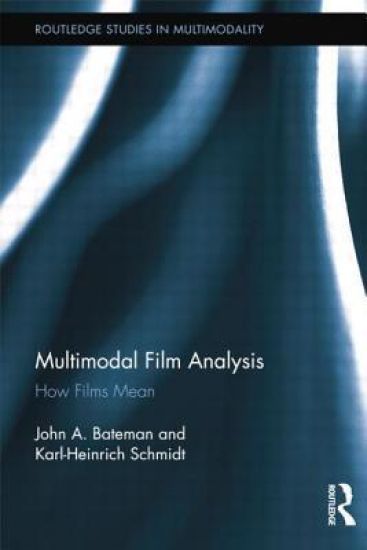
Multimodal Film Analysis

Multimodal Film Analysis

John Bateman; Karl-Heinrich Schmidt

Routledge
2014
nidottu
This book presents a new basis for the empirical analysis of film. Starting from an established body of work in film theory, the authors show how a close incorporation of the current state of the art in multimodal theory—including accounts of the syntagmatic and paradigmatic axes of organisation, discourse semantics and advanced ‘layout structure’—builds a methodology by which concrete details of film sequences drive mechanisms for constructing filmic discourse structures. The book introduces the necessary background, the open questions raised, and the method by which analysis can proceed step-by-step. Extensive examples are given from a broad range of films. With this new analytic tool set, the reader will approach the study of film organisation with new levels of detail and probe more deeply into the fundamental question of the discipline: just how is it that films reliably communicate meaning?
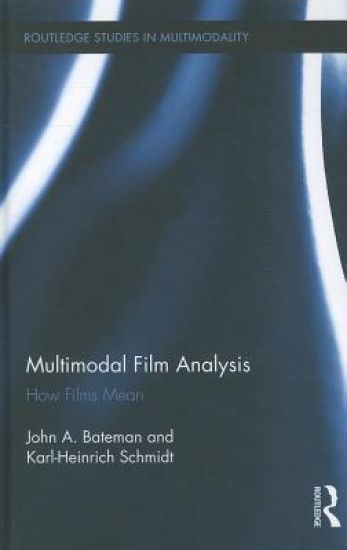
Multimodal Film Analysis

Multimodal Film Analysis

John Bateman; Karl-Heinrich Schmidt

Routledge
2011
sidottu
This book presents a new basis for the empirical analysis of film. Starting from an established body of work in film theory, the authors show how a close incorporation of the current state of the art in multimodal theory—including accounts of the syntagmatic and paradigmatic axes of organisation, discourse semantics and advanced ‘layout structure’—builds a methodology by which concrete details of film sequences drive mechanisms for constructing filmic discourse structures. The book introduces the necessary background, the open questions raised, and the method by which analysis can proceed step-by-step. Extensive examples are given from a broad range of films. With this new analytic tool set, the reader will approach the study of film organisation with new levels of detail and probe more deeply into the fundamental question of the discipline: just how is it that films reliably communicate meaning?