Kirjojen hintavertailu. Mukana 12 390 323 kirjaa ja 12 kauppaa.

Kirjailija

Kate Cairns

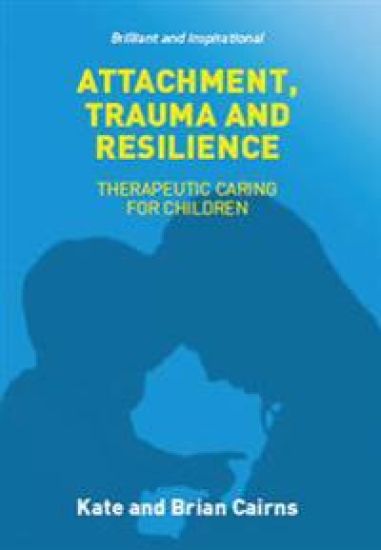
Kirjat ja teokset yhdessä paikassa: 7 kirjaa, julkaisuja vuosilta 2015-2025, suosituimpien joukossa Attachment, Trauma and Resilience. Vertaile teosten hintoja ja tarkista saatavuus suomalaisista kirjakaupoista.

7 kirjaa

Kirjojen julkaisuhaarukka 2015-2025.

Introducing Sociology Using the Stuff of Everyday Life

Introducing Sociology Using the Stuff of Everyday Life

Josee Johnston; Kate Cairns; Shyon Baumann

TAYLOR FRANCIS LTD
2025
sidottu
The second edition of this innovative and highly creative introduction to sociology provides foundational orientation to sociological thinking, topics, and themes for students in today's classroom setting in an imaginative and salient way, taking material objects of everyday life and tracing out not only their social significance but also the structures through which they are produced, distrubuted, marketed, and consumed. Through this, this textbook makes the practice of sociological thinking meaningful, rigorous, and relevant to today’s world of undergraduates.This comprehensive but concise and highly visual book offers a refreshingly new way forward to reach students, using one of the most powerful tools in a sociologist’s teaching arsenal—the familiar stuff in students’ everyday lives throughout the world: the jeans they wear to class, the coffee they drink each morning, or the phones their professors tell them to put away during lectures.A focus on consumer culture, seeing the strange in the familiar, is not only interesting for students; it is also (the authors suggest) pedagogically superior to more traditional approaches. By engaging students through their stuff, this book moves beyond teaching about sociology to helping instructors teach the practice of sociological thinking. It moves beyond describing what sociology is, so that students can practice what sociological thinking can do. This pedagogy also posits a relationship between teacher and learner that is bi-directional. Many students feel a sense of authority in various areas of consumer culture, and they often enjoy sharing their knowledge with fellow students and with their instructor. Opening up the sociology classroom to discussion of these topics validates students’ expertise on their own life-worlds. Teachers, in turn, gain insight from the goods, services, and cultural expectations that shape students’ lives.While innovative, the book has been carefully crafted to make it as useful and flexible as possible for instructors aiming to build core sociological foundations in a single semester. A teaching map in the book identifies core sociological concepts covered so that a traditional syllabus as well as individual lectures can easily be maintained. Theory, method, and active learning exercises in every chapter constantly encourage the sociological imagination as well as the "doing" of sociology.This new edition is thoroughly revised and updated, incorporating the latest research around material sociology, culture, and object oriented studies. New teaching materials and illustrations are included.
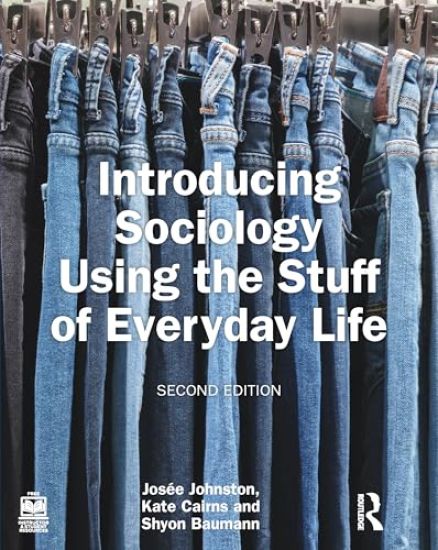
Introducing Sociology Using the Stuff of Everyday Life

Introducing Sociology Using the Stuff of Everyday Life

Josee Johnston; Kate Cairns; Shyon Baumann

TAYLOR FRANCIS LTD
2025
nidottu
The second edition of this innovative and highly creative introduction to sociology provides foundational orientation to sociological thinking, topics, and themes for students in today's classroom setting in an imaginative and salient way, taking material objects of everyday life and tracing out not only their social significance but also the structures through which they are produced, distrubuted, marketed, and consumed. Through this, this textbook makes the practice of sociological thinking meaningful, rigorous, and relevant to today’s world of undergraduates.This comprehensive but concise and highly visual book offers a refreshingly new way forward to reach students, using one of the most powerful tools in a sociologist’s teaching arsenal—the familiar stuff in students’ everyday lives throughout the world: the jeans they wear to class, the coffee they drink each morning, or the phones their professors tell them to put away during lectures.A focus on consumer culture, seeing the strange in the familiar, is not only interesting for students; it is also (the authors suggest) pedagogically superior to more traditional approaches. By engaging students through their stuff, this book moves beyond teaching about sociology to helping instructors teach the practice of sociological thinking. It moves beyond describing what sociology is, so that students can practice what sociological thinking can do. This pedagogy also posits a relationship between teacher and learner that is bi-directional. Many students feel a sense of authority in various areas of consumer culture, and they often enjoy sharing their knowledge with fellow students and with their instructor. Opening up the sociology classroom to discussion of these topics validates students’ expertise on their own life-worlds. Teachers, in turn, gain insight from the goods, services, and cultural expectations that shape students’ lives.While innovative, the book has been carefully crafted to make it as useful and flexible as possible for instructors aiming to build core sociological foundations in a single semester. A teaching map in the book identifies core sociological concepts covered so that a traditional syllabus as well as individual lectures can easily be maintained. Theory, method, and active learning exercises in every chapter constantly encourage the sociological imagination as well as the "doing" of sociology.This new edition is thoroughly revised and updated, incorporating the latest research around material sociology, culture, and object oriented studies. New teaching materials and illustrations are included.

The Undiscovered Country

The Undiscovered Country

Mary Brown; Kate Cairns

Kate Cairns Associates
2018
pokkari
In today's society, death has become sanitised and distant, happening away from us in hospitals, mortuaries and funeral homes, or is experienced vicariously and trivialised through television or films. Previously part of everyday life and surrounded by sacred rituals, death seems to have become something dark and frightening, to be largely ignored until we are forced to encounter it directly. Mary Brown confronts the taboos surrounding death by talking to those who have lost loved ones and to those who work with the dying and their families. In doing so, she brings out their unique experiences of and perspectives on death and shows that it is not something to fear, but part of life, to be acknowledged and discussed openly.
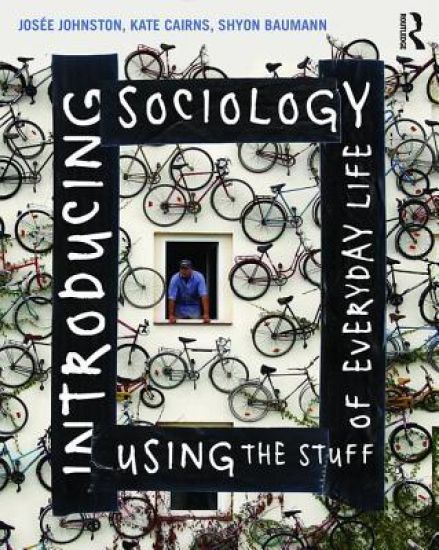
Introducing Sociology Using the Stuff of Everyday Life

Introducing Sociology Using the Stuff of Everyday Life

Josee Johnston; Kate Cairns; Shyon Baumann

Routledge
2016
nidottu
The challenges of teaching a successful introductory sociology course today demand materials from a publisher very different from the norm. Texts that are organized the way the discipline structures itself intellectually no longer connect with the majority of student learners. This is not an issue of pandering to students or otherwise seeking the lowest common denominator. On the contrary, it is a question of again making the practice of sociological thinking meaningful, rigorous, and relevant to today’s world of undergraduates.This comparatively concise, highly visual, and affordable book offers a refreshingly new way forward to reach students, using one of the most powerful tools in a sociologist’s teaching arsenal—the familiar stuff in students’ everyday lives throughout the world: the jeans they wear to class, the coffee they drink each morning, or the phones their professors tell them to put away during lectures.A focus on consumer culture, seeing the strange in the familiar, is not only interesting for students; it is also (the authors suggest) pedagogically superior to more traditional approaches. By engaging students through their stuff, this book moves beyond teaching about sociology to helping instructors teach the practice of sociological thinking. It moves beyond describing what sociology is, so that students can practice what sociological thinking can do. This pedagogy also posits a relationship between teacher and learner that is bi-directional. Many students feel a sense of authority in various areas of consumer culture, and they often enjoy sharing their knowledge with fellow students and with their instructor. Opening up the sociology classroom to discussion of these topics validates students’ expertise on their own life-worlds. Teachers, in turn, gain insight from the goods, services, and cultural expectations that shape students’ lives.While innovative, the book has been carefully crafted to make it as useful and flexible as possible for instructors aiming to build core sociological foundations in a single semester. A map on pages ii–iii identifies core sociological concepts covered so that a traditional syllabus as well as individual lectures can easily be maintained. Theory, method, and active learning exercises in every chapter constantly encourage the sociological imagination as well as the "doing" of sociology.
Food and Femininity

Food and Femininity

Kate Cairns; Josée Johnston

Bloomsbury Academic
2015
nidottu
Over the space of a few generations, women's relationship with food has changed dramatically. Yet – despite significant advances in gender equality – food and femininity remain closely connected in the public imagination as well as the emotional lives of women. While women encounter food-related pressures and pleasures as individuals, the social challenge to perform food femininities remains: as the nurturing mother, the talented home cook, the conscientious consumer, the svelte and health-savvy eater. In Food and Femininity, Kate Cairns and Josée Johnston explore these complex and often emotionally-charged tensions to demonstrate that food is essential to the understanding of femininity today. Drawing on extensive qualitative research in Toronto, they present the voices of over 100 food-oriented men and women from a range of race and class backgrounds. Their research reveals gendered expectations to purchase, prepare, and enjoy food within the context of time crunches, budget restrictions, political commitments, and the pressure to manage health and body weight. The book analyses how women navigate multiple aspects of foodwork for themselves and others, from planning meals, grocery shopping, and feeding children, to navigating conflicting preferences, nutritional and ethical advice, and the often-inequitable division of household labour. What emerges is a world in which women’s choices continue to be closely scrutinized – a world where ‘failing’ at food is still perceived as a failure of femininity.A compelling rethink of contemporary femininity, this is an indispensable read for anyone interested in the sociology of food, gender studies and consumer culture.
Food and Femininity

Food and Femininity

Kate Cairns; Josée Johnston

Bloomsbury Academic
2015
sidottu
Over the space of a few generations, women's relationship with food has changed dramatically. Yet – despite significant advances in gender equality – food and femininity remain closely connected in the public imagination as well as the emotional lives of women. While women encounter food-related pressures and pleasures as individuals, the social challenge to perform food femininities remains: as the nurturing mother, the talented home cook, the conscientious consumer, the svelte and health-savvy eater. In Food and Femininity, Kate Cairns and Josée Johnston explore these complex and often emotionally-charged tensions to demonstrate that food is essential to the understanding of femininity today. Drawing on extensive qualitative research in Toronto, they present the voices of over 100 food-oriented men and women from a range of race and class backgrounds. Their research reveals gendered expectations to purchase, prepare, and enjoy food within the context of time crunches, budget restrictions, political commitments, and the pressure to manage health and body weight. The book analyses how women navigate multiple aspects of foodwork for themselves and others, from planning meals, grocery shopping, and feeding children, to navigating conflicting preferences, nutritional and ethical advice, and the often-inequitable division of household labour. What emerges is a world in which women’s choices continue to be closely scrutinized – a world where ‘failing’ at food is still perceived as a failure of femininity.A compelling rethink of contemporary femininity, this is an indispensable read for anyone interested in the sociology of food, gender studies and consumer culture.