
Kirjailija
Kate Griffiths
Kirjat ja teokset yhdessä paikassa: 9 kirjaa, julkaisuja vuosilta 2006-2024, suosituimpien joukossa Zola and the Art of Television. Vertaile teosten hintoja ja tarkista saatavuus suomalaisista kirjakaupoista.
9 kirjaa
Kirjojen julkaisuhaarukka 2006-2024.
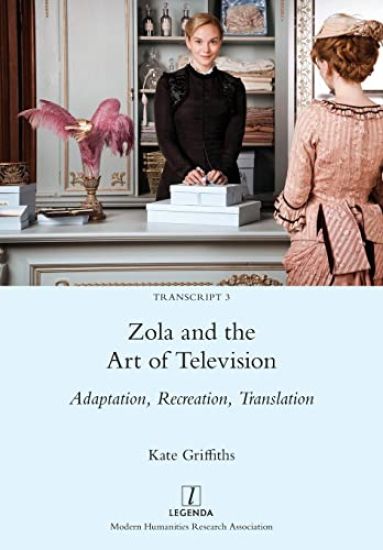
mile Zola (1840-1902) has become one of the most adapted authors of all time, but while much has been made of his adaptation into cinema and theatre, television has largely been overlooked. Yet television, with its serial structures and popular reach, is uniquely suited to the adaptation of a novelist who eagerly reworked his writing for the broadest audiences possible. It is not for nothing that broadcasters such as the BBC return to Zola so often - most recently with The Paradise (2012). In older productions, particularly, sweeping panoramas disappear, to be replaced by the boxy interior shots of studio-produced pieces heavy with dialogue. But television fulfils Zola's intention to provide, in close-up, a dissection of the characters' entrapment as they struggle beneath the weight of their heredity, era and environment.The passage from book to television is also the passage from a single author to a collective one, in a process which challenges many of the simple binaries which have dominated and limited key debates in the history of adaptation. Different identities commission, fund, write, direct and produce programmes which are then shown and re-shown in different contexts, forms, times and media packages. This volume brings translation theory into dialogue with adaptation studies to open new debates. It does so in relation to an author of key import to adaptation studies. Zola and the myriad television adaptations of his work ask us to reconsider the boundaries of authorship, adaptation and the artistic artefact.Kate Griffiths is Professor of French and Translation Studies at Cardiff University.
The History of French Literature on Film
Kate Griffiths; Andrew Watts
BLOOMSBURY PUBLISHING PLC
2022
nidottu
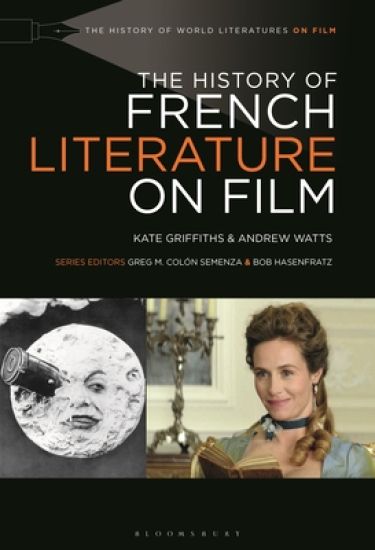
French novels, plays, poems and short stories, however temporally or culturally distant from us, continue to be incarnated and reincarnated on cinema screens across the world. From the silent films of Georges Méliès to the Hollywood production of Gustave Flaubert’s Madame Bovary directed by Sophie Barthes, The History of French Literature on Film explores the key films, directors, and movements that have shaped the adaptation of works by French authors since the end of the 19th century. Across six chapters, Griffiths and Watts examine the factors that have driven this vibrant adaptive industry, as filmmakers have turned to literature in search of commercial profits, cultural legitimacy, and stories rich in dramatic potential. The volume also explains how the work of theorists from a variety of disciplines (literary theory, translation theory, adaptation theory), can help to deepen both our understanding and our appreciation of literary adaptation as a creative practice. Finally, this volume seeks to make clear that adaptation is never a simple transcription of an earlier literary work. It is always simultaneously an adaptation of the society and era for which it is created. Adaptations of French literature are thus not only valuable artistic artefacts in their own right, so too are they important historical documents which testify to the values and tastes of their own time.
The History of French Literature on Film
Kate Griffiths; Andrew Watts
Bloomsbury Academic USA
2020
sidottu
French novels, plays, poems and short stories, however temporally or culturally distant from us, continue to be incarnated and reincarnated on cinema screens across the world. From the silent films of Georges Méliès to the Hollywood production of Gustave Flaubert’s Madame Bovary directed by Sophie Barthes, The History of French Literature on Film explores the key films, directors, and movements that have shaped the adaptation of works by French authors since the end of the 19th century. Across six chapters, Griffiths and Watts examine the factors that have driven this vibrant adaptive industry, as filmmakers have turned to literature in search of commercial profits, cultural legitimacy, and stories rich in dramatic potential. The volume also explains how the work of theorists from a variety of disciplines (literary theory, translation theory, adaptation theory), can help to deepen both our understanding and our appreciation of literary adaptation as a creative practice. Finally, this volume seeks to make clear that adaptation is never a simple transcription of an earlier literary work. It is always simultaneously an adaptation of the society and era for which it is created. Adaptations of French literature are thus not only valuable artistic artefacts in their own right, so too are they important historical documents which testify to the values and tastes of their own time.
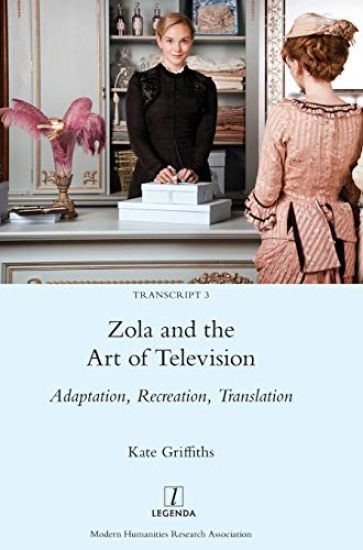
mile Zola (1840-1902) has become one of the most adapted authors of all time, but while much has been made of his adaptation into cinema and theatre, television has largely been overlooked. Yet television, with its serial structures and popular reach, is uniquely suited to the adaptation of a novelist who eagerly reworked his writing for the broadest audiences possible. It is not for nothing that broadcasters such as the BBC return to Zola so often - most recently with The Paradise (2012). In older productions, particularly, sweeping panoramas disappear, to be replaced by the boxy interior shots of studio-produced pieces heavy with dialogue. But television fulfils Zola's intention to provide, in close-up, a dissection of the characters' entrapment as they struggle beneath the weight of their heredity, era and environment.The passage from book to television is also the passage from a single author to a collective one, in a process which challenges many of the simple binaries which have dominated and limited key debates in the history of adaptation. Different identities commission, fund, write, direct and produce programmes which are then shown and re-shown in different contexts, forms, times and media packages. This volume brings translation theory into dialogue with adaptation studies to open new debates. It does so in relation to an author of key import to adaptation studies. Zola and the myriad television adaptations of his work ask us to reconsider the boundaries of authorship, adaptation and the artistic artefact.Kate Griffiths is Professor of French and Translation Studies at Cardiff University.
Adapting Nineteenth-Century France
Kate Griffiths; Andrew Watts
University of Wales Press
2015
nidottu
This book uses six canonical novelists and their recreations in a variety of media to argue a reconceptualisation of our approach to the study of adaptation. The works of Balzac, Hugo, Flaubert, Zola, Maupassant and Verne reveal themselves not as originals to be defended from adapting hands, but as works fashioned from the adapted voices of a host of earlier artists, moments and media. The text analyses reworkings of key nineteenth-century texts across time and media in order to emphasise the way in which such reworkings cast new light on many of their source texts, and how they reveal the probing analysis nineteenth-century novelists undertake in relation to notions of originality and authorial borrowing. Adapting Nineteenth-Century France charts such revision through a range of genres encompassing the modern media of radio, silent film, fiction, musical theatre, sound film and television. Contents Introduction, Kate Griffiths I Labyrinths of Voices: Emile Zola, Germinal and Radio, Kate Griffiths II Diamond Thieves and Gold Diggers: Balzac, Silent Cinema and the Spoils of Adaptation, Andrew Watts III Fragmented Fictions: Time, Textual Memory and the (Re)Writing of Madame Bovary, Andrew Watts IV Les Misérables, Theatre and the Anxiety of Excess, Andrew Watts V Chez Maupassant: The (In)Visible Space of Television Adaptation, Kate Griffiths VI Le Tour du monde en quatre-vingts jours: Verne, Todd, Coraci and the Spectropoetics of Adaptation, Kate Griffiths Conclusion, Andrew Watts
Adapting Nineteenth-Century France
Kate Griffiths; Andrew Watts
University of Wales Press
2013
sidottu
This book uses six canonical novelists and their recreations in a variety of media to argue a reconceptualisation of our approach to the study of adaptation. The works of Balzac, Hugo, Flaubert, Zola, Maupassant and Verne reveal themselves not as originals to be defended from adapting hands, but as works fashioned from the adapted voices of a host of earlier artists, moments and media. The text analyses reworkings of key nineteenth-century texts across time and media in order to emphasise the way in which such reworkings cast new light on many of their source texts, and how they reveal the probing analysis nineteenth-century novelists undertake in relation to notions of originality and authorial borrowing. Adapting Nineteenth-Century France charts such revision through a range of genres encompassing the modern media of radio, silent film, fiction, musical theatre, sound film and television. Contents Introduction, Kate Griffiths I Labyrinths of Voices: Emile Zola, Germinal and Radio, Kate Griffiths II Diamond Thieves and Gold Diggers: Balzac, Silent Cinema and the Spoils of Adaptation, Andrew Watts III Fragmented Fictions: Time, Textual Memory and the (Re)Writing of Madame Bovary, Andrew Watts IV Les Misérables, Theatre and the Anxiety of Excess, Andrew Watts V Chez Maupassant: The (In)Visible Space of Television Adaptation, Kate Griffiths VI Le Tour du monde en quatre-vingts jours: Verne, Todd, Coraci and the Spectropoetics of Adaptation, Kate Griffiths Conclusion, Andrew Watts
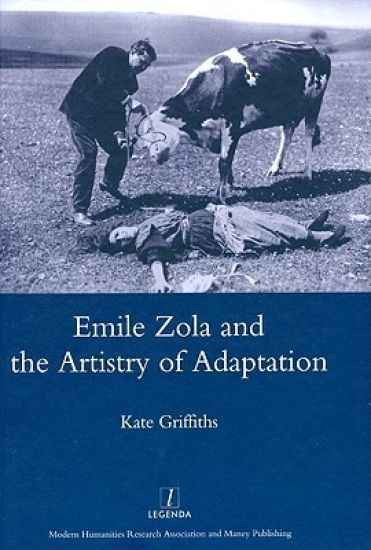
This volume incorporates readings of two adaptations of the novelist's work, Andre Antoine's La Terre and Jean Renoir's Nana, as well as more modern sound versions of Emile Zola's novels. It suggests the sheer breadth of the artistry of adaptation which Zola's work has triggered.
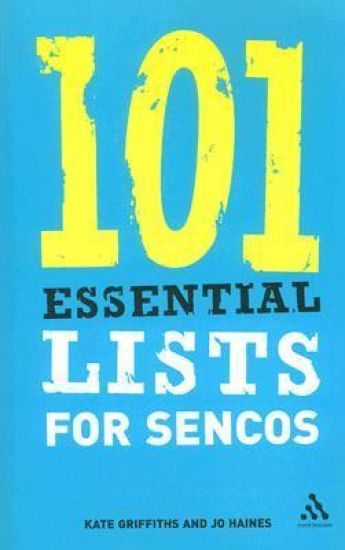
101 Essential Lists for SENCOs
Kate Griffiths; Jo Haines
Continuum International Publishing Group Ltd.
2006
nidottu
FONT size=2, DIVTo all those teachers working in learning support, if you only buy one book this year, make it this one. FONT size=2. It is clear concise and to the point./FONT DIV/DIVFONT size=2Lyn Wright, Cluster Manager Inclusion, Failsworth School/DIV/FONT/FONT In this practical book for SENCOs lists range from the understanding the crucial role of the SENCO?' to detailed overviews of, and strategies to cope with, the common special educational needs.