Kirjojen hintavertailu. Mukana 12 595 353 kirjaa ja 12 kauppaa.

Kirjailija

Kathleen Alcalá

Kirjat ja teokset yhdessä paikassa: 11 kirjaa, julkaisuja vuosilta 2007-2025, suosituimpien joukossa Hotel Angeline. Vertaile teosten hintoja ja tarkista saatavuus suomalaisista kirjakaupoista.

Mukana myös kirjoitusasut: Kathleen Alcala

11 kirjaa

Kirjojen julkaisuhaarukka 2007-2025.

Hotel Angeline

Hotel Angeline

Robert Dugoni; Kevin O'Brien; Garth Stein; Jennie Shortridge; Elizabeth George; Kathleen Alcalá; Erica Bauermeister; Deb Caletti; William Dietrich; Karen Finneyfrock; Stephanie Kallos; Frances McCue; Suzanne Selfors; Craig Welch; Matthew Amster-Burton; Sean Beaudoin; Carol Cassella; Jamie Ford; Mary Guterson; Erik Larson; Jarret Middleton; Julia Quinn; Greg Stump; David Lasky; Susan Wiggs; Kit Bakke; Dave Boling; Maria Dahvana Headley; Kevin Emerson; Clyde W. Ford; Teri Hein; Stacey Levine; Peter Mountford; Nancy Rawles; Ed Skoog

Open Road Media
2011
pokkari
Thirty-six of the most interesting writers in the Pacific Northwest came together for a week-long marathon of writing live on stage. The result? Hotel Angeline, a truly inventive novel that surprises at every turn of the page.Something is amiss at the Hotel Angeline, a rickety former mortuary perched atop Capitol Hill in rain-soaked Seattle. Fourteen-year-old Alexis Austin is fixing the plumbing, the tea, and all the problems of the world, it seems, in her landlady mother’s absence.The quirky tenants—a hilarious mix of misfits and rabble-rousers from days gone by—rely on Alexis all the more when they discover a plot to sell the Hotel. Can Alexis save their home? Find her real father? Deal with her surrogate dad’s dicey past? Find true love? Perhaps only their feisty pet crow, Habib, truly knows.Provoking interesting questions about the creative process, this novel is by turns funny, scary, witty, suspenseful, beautiful, thrilling, and unexpected.
New Suns 2

New Suns 2

Daniel H. Wilson; K. Tempest Bradford; Darcie Little Badger; Geetanjali Vandemark; John Chu; Nghi Vo; Tananarive Due; Alex Jennings; Karin Lowachee; Saad Hossain; Hiromi Goto; Minsoo Kang; Tlotlo Tsamaase; Rochita Loenen-Ruiz; Malka Older; Kathleen Alcalá; Christopher Caldwell; Jaymee Goh; Walter Mosley; Grace Dillon

Rebellion Publishing Ltd.
2023
pokkari
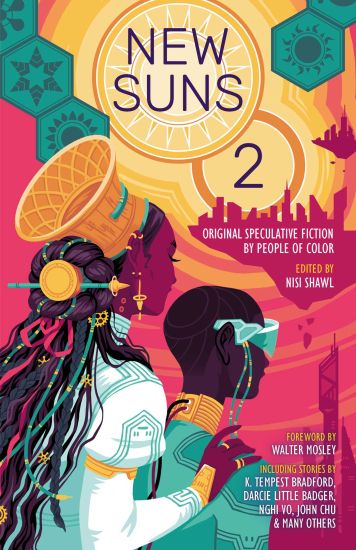
Octavia E. Butler said, “There’s nothing new under the sun, but there are new suns.”New Suns 2 brings you fresh visions of the strange, the unexpected, the shocking—breakthrough stories, stories shining with emerging truths, stories that pierce stale preconceptions with their beauty and bravery. Like the first New Suns anthology (winner of the World Fantasy, Locus, IGNYTE, and British Fantasy awards), this book liberates writers of many races to tell us tales no one has ever told.Many things come in twos: dualities, binaries, halves, and alternates. Twos are found throughout New Suns 2, in eighteen science fiction, fantasy, and horror stories revealing daring futures, hidden pasts, and present-day worlds filled with unmapped wonders.Including stories by Daniel H. Wilson, K. Tempest Bradford, Darcie Little Badger, Geetanjali Vandemark, John Chu, Nghi Vo, Tananarive Due, Alex Jennings, Karin Lowachee, Saad Hossain, Hiromi Goto, Minsoo Kang, Tlotlo Tsamaase, Rochita Loenen-Ruiz, Malka Older, Kathleen Alcalá, Christopher Caldwell and Jaymee Goh with a foreword by Walter Mosley and an afterword by Dr. Grace Dillon.
Spirits of the Ordinary

Spirits of the Ordinary

Kathleen Alcalá; Rigoberto González

Raven Chronicles
2021
pokkari
Set in northern Mexico in the 1870s, Spirits of the Ordinary tells interweaving stories centered on Zacar as Carabajal, who leaves his comfortable city home to prospect for gold in the wilderness while his abandoned wife, Estela, struggles to build a new life. Visions, dreams, and portents are part of the everyday world of Spirits of the Ordinary. Estela's siblings, the enigmatic and supernaturally beautiful twins Manzana and Membrillo, discover their gift for water divining. Zacar as's mother, Mariana, has been silent all her adult life after experiencing an apocalyptic vision of angels in her teens. His father, Julio, is an apothecary devoted to Torah study and Jewish mysticism, practicing his religion in secret as generations before him have done. Meanwhile, Zacar as's wanderings turn into a spiritual quest that takes him to the ancient cliff dwellings known as Casas Grandes.Presenting a tapestry of fascinating lives as well as the story of a reluctant mystic in a spectacular desert landscape, Spirits of the Ordinary demonstrates that, as Alcal writes in her introduction, "magic and holiness are all around us."
New Suns

New Suns

Rebecca Roanhorse; Silvia Moreno-Garcia; Darcie Little Badger; Tobias S Buckell; Minsoo Kang; Jaymee Goh; Indrapramit Das; E. Lily Yu; Karin Lowachee; LeVar Burton; Kathleen Alcalá; Steven Barnes; Chinelo Onwual; Alex Jennings; Alberto Yáñez; Anil Menon; Andrea Hairston; Hiromi Goto

Solaris
2019
pokkari
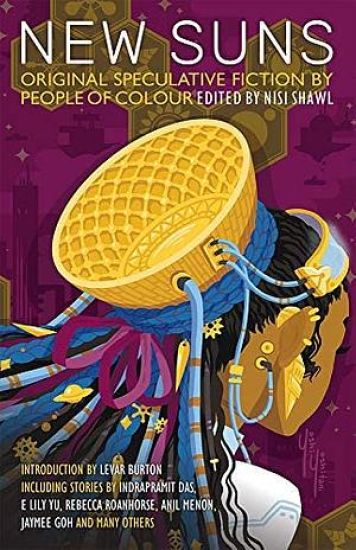
Winner of the 2020 Locus, World Fantasy, British Fantasy, Ignyte, and Brave New Words Awards.“There’s nothing new under the sun, but there are new suns,” proclaimed Octavia E. Butler.New Suns: Original Speculative Fiction by People of Color showcases emerging and seasoned writers of many races telling stories filled with shocking delights, powerful visions of the familiar made strange. Between this book’s covers burn tales of science fiction, fantasy, horror, and their indefinable overlappings. These are authors aware of our many possible pasts and futures, authors freed of stereotypes and clichés, ready to dazzle you with their daring genius.Unexpected brilliance shines forth from every page.Includes stories by Kathleen Alcala, Minsoo Kang, Anil Menon, Silvia Moreno-Garcia, Alex Jennings, Alberto Yanez, Steven Barnes, Jaymee Goh, Karin Lowachee, E. Lily Yu, Andrea Hairston, Tobias Buckell, Hiromi Goto, Rebecca Roanhorse, Indrapramit Das, Chinelo Onwualu and Darcie Little Badger.
Treasures in Heaven

Treasures in Heaven

Kathleen Alcalá; Miriam Herrera

Raven Chronicles
2025
pokkari
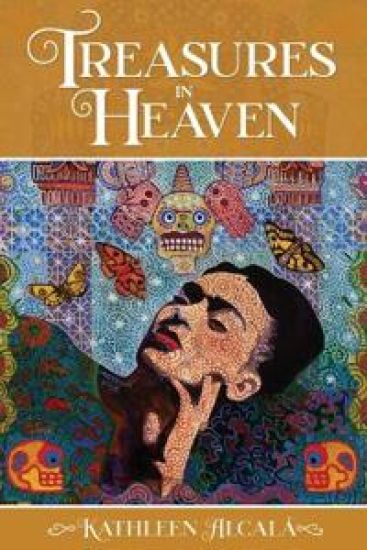
Kathleen Alcal "This is a story about women organizing across class lines to benefit one another-a story that is more relevant than ever right now. These Mexican women braved a lot of scorn, prison, and physical danger to live out their ideals."Treasures in Heaven is a turbulent tale of love and political awakening set in Mexico a century ago. The protagonist, Estela, finds herself swept into a world of politics and entangled in secret relationships. What starts as lessons to educate poor children grows into a school for prostitutes. The school leads to a radical underground newspaper and a dangerous movement for social change that foreshadows the Mexican Revolution.Treasures in Heaven is one of three stand-alone books set in nineteenth-century Mexico and based on Kathleen Alcal 's family's stories-stories both historical and universal. The first two books, Spirits of the Ordinary and The Flower in the Skull, stick pretty closely to the author's family lore, while Treasures in Heaven explores the feminist movement that arose in Mexico. We hope that this new edition brings some well-deserved recognition to an important Chicana author. Originally published in 2000 by Chronicle Books, Treasures in Heaven is a story, inspired by true events, that is especially relevant today. The new foreword is written by M. Miriam Herrera, Senior Lecturer, Department of Writing and Language Studies, University of Texas Rio Grande Valley.
The Flower in the Skull

The Flower in the Skull

Kathleen Alcalá

Raven Chronicles
2023
pokkari
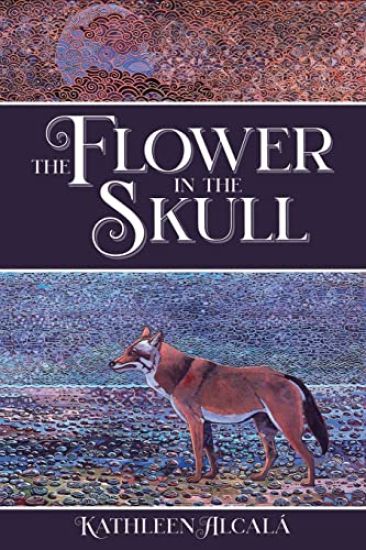
A riveting novel from acclaimed author Kathleen Alcal , this second edition of The Flower in the Skull, from Raven Chronicles Press, begins in the Sonoran Desert in the late 19th century, where an pata village is attacked by Mexican soldiers. Her family scattered, Concha makes her way to Tucson, where the stories she tells her daughter lead to Shelly-a troubled Latina in modern-day Los Angeles, increasingly fascinated by her ancestry. A powerful tale of heritage, loss, and acculturation, Alcal spins her most lyrical and moving work yet. The Flower in the Skull stands perfectly apart even as it continues the epic begun with Spirits of the Ordinary. The second part of a planned trilogy that began with Spirits of the Ordinary (1997), The Flower in the Skull spans more than a century in offering a view of three women linked by Indian blood and their dreams, and seared by the violent transgressions of men. Childhood comforts in her pata village in Sonoran Mexico cease for Concha when her father is seized by Mexican soldiers and never seen again. First abandoning home with the remainder of her family, then herself abandoned by her mother, Concha walks in a daze across the desert to Tucson, where she's taken in as a nanny by a prospering Mexican family. A measure of peace returns to her. But when she's raped by an Anglo and bears his child, nothing can ever be the same. A brief marriage to the family doctor fails to produce more children, so her husband abandons her for someone else, leaving Concha and daughter Rosa to fend for themselves. Over the years, Rosa picks up the burden when her mother grows too weak to continue the dawn-to-dusk housecleaning work that has sustained them, but then Rosa catches the eye of a young minister and receives Concha's blessing to marry him just before Concha dies. Busy starting her own family and keeping her own house, Rosa still wonders about her mother's past- pata and the father she never knew. Two generations forward, Shelly, an editorial assistant for an L.A. publisher, jumps at the chance to escape her stalking, harassing boss by going on a research trip to Tucson, where she finds not only a mystery involving her mother's family and her people in a broader sense, but also the will to survive the horror waiting for her when she returns to Los Angeles.Like her previous novel Spirits of the Ordinary, The Flower in the Skull is set along the Mexican/U.S. border and deals with three generations of pata Indian women--ranging from the turn of the century to the present day. All are based on members of Kathleen's family, the book recreating both the magic and hard work of survival. The story is heartbreaking in places, but the prose is even more gorgeous, and there is a richness to Alcal 's characterization and settings that invite re-reading passages, simply to re-experience their resonance.This book is not to be missed, especially by students of Native American Studies, border studies, and American history.
The Deepest Roots

The Deepest Roots

Kathleen Alcalá

University of Washington Press
2019
pokkari
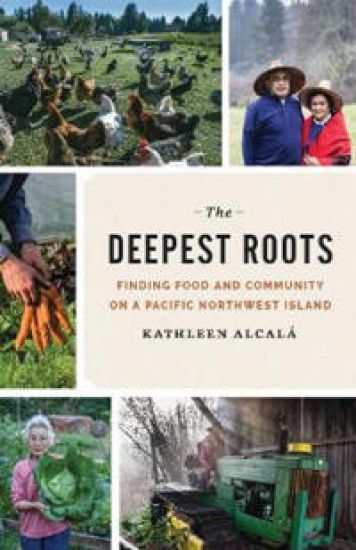
As friends began "going back to the land" at the same time that a health issue emerged, Kathleen Alcalá set out to reexamine her relationship with food at the most local level. Remembering her parents, Mexican immigrants who grew up during the Depression, and the memory of planting, growing, and harvesting fresh food with them as a child, she decided to explore the history of the Pacific Northwest island she calls home. In The Deepest Roots, Alcalá walks, wades, picks, pokes, digs, cooks, and cans, getting to know her neighbors on a much deeper level. Wanting to better understand how we once fed ourselves, and acknowledging that there may be a future in which we could need to do so again, she meets those who experienced the Japanese American internment during World War II, and learns the unique histories of the blended Filipino and Native American community, the fishing practices of the descendants of Croatian immigrants, and the Suquamish elder who shares with her the food legacy of the island itself.Combining memoir, historical records, and a blueprint for sustainability, The Deepest Roots shows us how an island population can mature into responsible food stewards and reminds us that innovation, adaptation, diversity, and common sense will help us make wise decisions about our future. And along the way, we learn how food is intertwined with our present but offers a path to a better understanding of the future.Watch the book trailer: https://www.youtube.com/watch?v=OFG8MpTo_ZU&feature=youtu.be
Ink

Ink

Sabrina Vourvoulias; Kathleen Alcalá

Rosarium Publishing
2018
pokkari
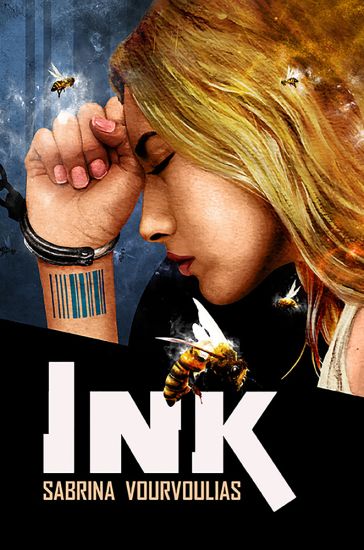
Her name is Mother of Exiles. From her beacon-hand glows world-wide welcome. "Give me your tired, your poor, your huddled masses. Send these, the homeless, tempest-tost to me." America has lost its way. The strongest of people can be found in the unlikeliest of places. The future of the entire country will depend on them. All across the United States, people scramble to survive new, draconian policies that mark and track immigrants and their children (citizens or not) as their freedoms rapidly erode around them. For the "inked"-those whose immigration status has been permanently tattooed on their wrists-those famous words on the Statue of Liberty are starting to ring hollow. The tattoos have marked them for horrors they could not have imagined within US borders. As the nightmare unfolds before them, unforeseen alliances between the inked-like Mari, Meche, and Toño-and non-immigrants-Finn, Del, and Abbie-are formed, all in the desperate hope to confront it. Ink is the story of their ingenuity. Of their resilience. Of their magic. A story of how the power of love and community out-survives even the grimmest times.
The Deepest Roots

The Deepest Roots

Kathleen Alcalá

University of Washington Press
2016
sidottu
As friends began "going back to the land" at the same time that a health issue emerged, Kathleen Alcalá set out to reexamine her relationship with food at the most local level. Remembering her parents, Mexican immigrants who grew up during the Depression, and the memory of planting, growing, and harvesting fresh food with them as a child, she decided to explore the history of the Pacific Northwest island she calls home. In The Deepest Roots, Alcalá walks, wades, picks, pokes, digs, cooks, and cans, getting to know her neighbors on a much deeper level. Wanting to better understand how we once fed ourselves, and acknowledging that there may be a future in which we could need to do so again, she meets those who experienced the Japanese American internment during World War II, and learns the unique histories of the blended Filipino and Native American community, the fishing practices of the descendants of Croatian immigrants, and the Suquamish elder who shares with her the food legacy of the island itself.Combining memoir, historical records, and a blueprint for sustainability, The Deepest Roots shows us how an island population can mature into responsible food stewards and reminds us that innovation, adaptation, diversity, and common sense will help us make wise decisions about our future. And along the way, we learn how food is intertwined with our present but offers a path to a better understanding of the future.Watch the book trailer: https://www.youtube.com/watch?v=OFG8MpTo_ZU&feature=youtu.be
The Desert Remembers My Name

The Desert Remembers My Name

Kathleen Alcala

University of Arizona Press
2007
nidottu
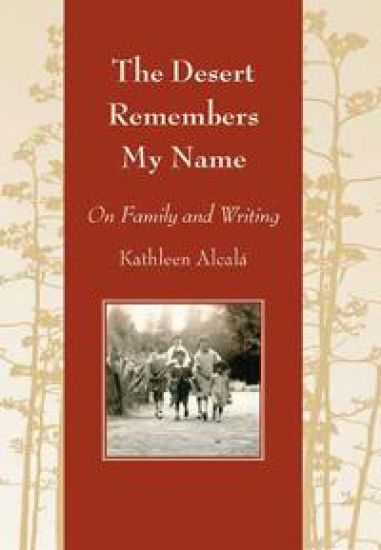
My parents always told me I was Mexican. I was Mexican because they were Mexican. This was sometimes modified to ?Mexican American, since I was born in California, and thus automatically a U.S. citizen. But, my parents said, this, too, was once part of Mexico. My father would say this with a sweeping gesture, taking in the smog, the beautiful mountains, the cars and houses and fast-food franchises. When he made that gesture, all was cleared away in my mind's eye to leave the hazy impression of a better place. We were here when the white people came, the Spaniards, then the Americans. And we will be here when they go away, he would say, and it will be part of Mexico again. Thus begins a lyrical and entirely absorbing collection of personal essays by esteemed Chicana writer and gifted storyteller Kathleen Alcala. Loosely linked by an exploration of the many meanings of family, these essays move in a broad arc from the stories and experiences of those close to her to those whom she wonders about, like Andrea Yates, a mother who drowned her children. In the process of digging and sifting, she is frequently surprised by what she unearths. Her family, she discovers, were Jewish refugees from the Spanish Inquisition who took on the trappings of Catholicism in order to survive. Although the essays are in many ways personal, they are also universal. When she examines her family history, she is encouraging us to inspect our own families, too. When she investigates a family secret, she is supporting our own search for meaning. And when she writes that being separated from our indigenous culture is , form of illiteracy, we know exactly what she means. After reading these essays, we find that we have discovered not only why Kathleen Alcala is a writer but also why we appreciate her so much. She helps us to find ourselves.
The Desert Remembers My Name

The Desert Remembers My Name

Kathleen Alcala

University of Arizona Press
2007
sidottu
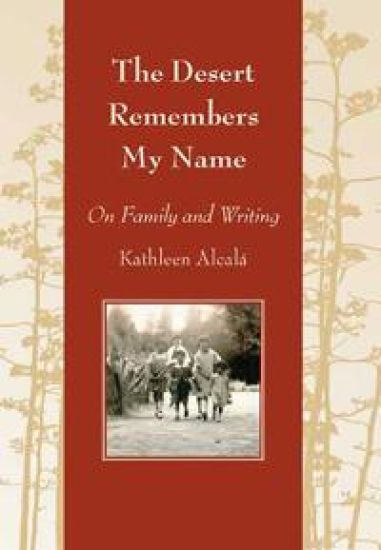
My parents always told me I was Mexican. I was Mexican because they were Mexican. This was sometimes modified to ?Mexican American, since I was born in California, and thus automatically a U.S. citizen. But, my parents said, this, too, was once part of Mexico. My father would say this with a sweeping gesture, taking in the smog, the beautiful mountains, the cars and houses and fast-food franchises. When he made that gesture, all was cleared away in my mind's eye to leave the hazy impression of a better place. We were here when the white people came, the Spaniards, then the Americans. And we will be here when they go away, he would say, and it will be part of Mexico again. Thus begins a lyrical and entirely absorbing collection of personal essays by esteemed Chicana writer and gifted storyteller Kathleen Alcala. Loosely linked by an exploration of the many meanings of family, these essays move in a broad arc from the stories and experiences of those close to her to those whom she wonders about, like Andrea Yates, a mother who drowned her children. In the process of digging and sifting, she is frequently surprised by what she unearths. Her family, she discovers, were Jewish refugees from the Spanish Inquisition who took on the trappings of Catholicism in order to survive. Although the essays are in many ways personal, they are also universal. When she examines her family history, she is encouraging us to inspect our own families, too. When she investigates a family secret, she is supporting our own search for meaning. And when she writes that being separated from our indigenous culture is , form of illiteracy, we know exactly what she means. After reading these essays, we find that we have discovered not only why Kathleen Alcala is a writer but also why we appreciate her so much. She helps us to find ourselves.