Kirjojen hintavertailu. Mukana 12 390 323 kirjaa ja 12 kauppaa.

Kirjailija

Kathleen Coyne Kelly

Kirjat ja teokset yhdessä paikassa: 5 kirjaa, julkaisuja vuosilta 2000-2026, suosituimpien joukossa Thoreau's Journal Drawings. Vertaile teosten hintoja ja tarkista saatavuus suomalaisista kirjakaupoista.

5 kirjaa

Kirjojen julkaisuhaarukka 2000-2026.

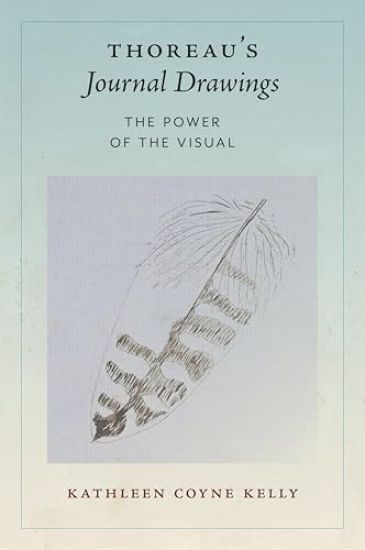
Thoreau's Journal Drawings

Thoreau's Journal Drawings

Kathleen Coyne Kelly

UNIVERSITY OF MASSACHUSETTS PRESS
2026
sidottu
Examining journal drawings as an integral—and often delightful—feature of Thoreau’s work In 1850, Henry David Thoreau began to draw in his Journal—a hedgehog’s quill, a locust’s wing, a goldenrod leaf. The sketches reflect his efforts to train his eye to observe more carefully, to look closely enough that he could see what was in front of him—with intention and attention. As Thoreau worked to combine the vivid language of a writer with the precision of a scientist, his drawings became more vital to the process. For him, writing and drawing were not separate activities; they were part of the same active, hands-on process of learning about the natural world. Thoreau’s Journal Drawings offers a sustained examination of an understudied aspect of the Journal, emphasizing visual as well as textual analysis. It places Thoreau’s illustrated entries in the broader context of nineteenth-century scientific illustration, nature writing, and visual culture, while also offering close readings of key passages in which text and image work in tandem. The book opens up new possibilities for interpretation—both within the Journal and in the larger project of Thoreau’s thinking. Ultimately, Thoreau’s illustrated Journal offers a case study in the complexities of representing the natural world through both language and image. His practice raises enduring questions about how we document, interpret, and mediate the more-than-human world across different forms of expression. To read the later volumes of Henry David Thoreau’s Journal without attending to his drawings is to overlook a vital dimension of his practice as both writer and observer.
Thoreau's Journal Drawings

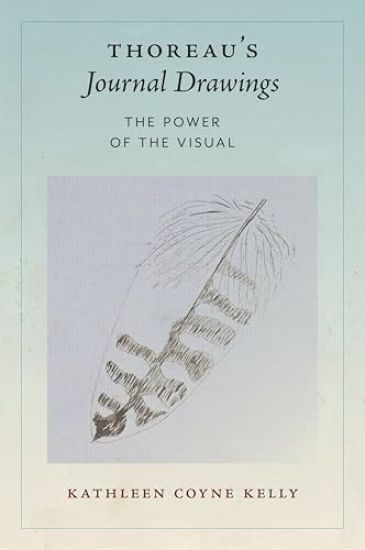
Thoreau's Journal Drawings

Kathleen Coyne Kelly

UNIVERSITY OF MASSACHUSETTS PRESS
2026
nidottu
Examining journal drawings as an integral—and often delightful—feature of Thoreau’s work In 1850, Henry David Thoreau began to draw in his Journal—a hedgehog’s quill, a locust’s wing, a goldenrod leaf. The sketches reflect his efforts to train his eye to observe more carefully, to look closely enough that he could see what was in front of him—with intention and attention. As Thoreau worked to combine the vivid language of a writer with the precision of a scientist, his drawings became more vital to the process. For him, writing and drawing were not separate activities; they were part of the same active, hands-on process of learning about the natural world. Thoreau’s Journal Drawings offers a sustained examination of an understudied aspect of the Journal, emphasizing visual as well as textual analysis. It places Thoreau’s illustrated entries in the broader context of nineteenth-century scientific illustration, nature writing, and visual culture, while also offering close readings of key passages in which text and image work in tandem. The book opens up new possibilities for interpretation—both within the Journal and in the larger project of Thoreau’s thinking. Ultimately, Thoreau’s illustrated Journal offers a case study in the complexities of representing the natural world through both language and image. His practice raises enduring questions about how we document, interpret, and mediate the more-than-human world across different forms of expression. To read the later volumes of Henry David Thoreau’s Journal without attending to his drawings is to overlook a vital dimension of his practice as both writer and observer.
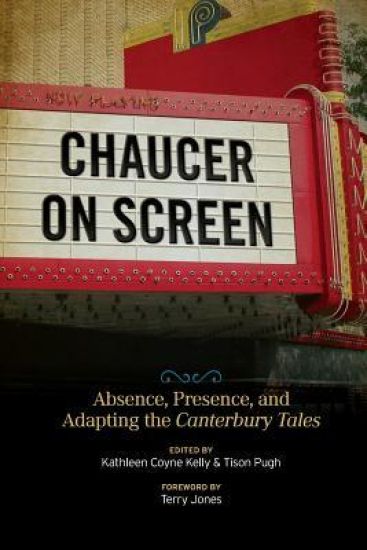
Chaucer on Screen

Chaucer on Screen

Kathleen Coyne Kelly; Tison Pugh

Ohio State University Press
2016
pokkari
Unlike William Shakespeare, Jane Austen, Charles Dickens, and other great authors who have enjoyed continued success in Hollywood, Geoffrey Chaucer has largely been shunted to the margins of the cinematic world. Chaucer on Screen: Absence, Presence, and Adapting the Canterbury Tales, edited by Kathleen Coyne Kelly and Tison Pugh, investigates the various translations of Chaucer and the Canterbury Tales to film and television, tracing out how the legacies of the great fourteenth-century English poet have been revisited and reinterpreted through visual media. Contributors to this volume address the question of why Chaucer is so rarely adapted to the screen, and then turn to the occasional, often awkward, attempts to adapt his narratives, including such works as Michael Powell and Emeric Pressburger's lyrical A Canterbury Tale (1944), Pier Paolo Pasolini's still-controversial I racconti di Canterbury (1972), Bud Lee's soft-core The Ribald Tales of Canterbury (1985), Brian Helgeland's A Knight's Tale (2001), and BBC television productions, among others. Chaucer on Screen aims to rethink some of the premises of adaptation studies and to erase the ideological lines between textual sources and visual reimaginings in the certainty that many pleasures, scholarly and otherwise, can found in multiple media across disparate eras.
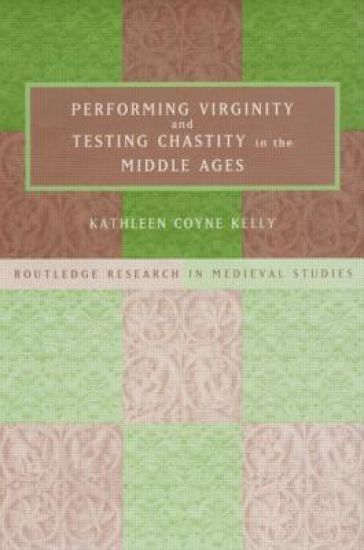
Performing Virginity and Testing Chastity in the Middle Ages
This book challenges the belief that female virginity can be reliably and unambiguously defined, tested and verified. Kelly analyses a variety of medieval Western European texts - including medical treatises and their Classical antecedents - and historical and legal documents. The main focus is the representation of both male and female virgins in saints' legends and romances. The author also makes a comparative study of examples from contemporary fiction, television and film in which testing virginity is a theme. Performing Virginity and Testing Chastity in the Middle Ages presents a compelling and provocative study of the parodox of bodily and spiritual integrity as both presence and absence.
Performing Virginity and Testing Chastity in the Middle Ages
This book challenges the belief that female virginity can be reliably and unambiguously defined, tested and verified. Kelly analyses a variety of medieval Western European texts - including medical treatises and their Classical antecedents - and historical and legal documents. The main focus is the representation of both male and female virgins in saints' legends and romances. The author also makes a comparative study of examples from contemporary fiction, television and film in which testing virginity is a theme. Performing Virginity and Testing Chastity in the Middle Ages presents a compelling and provocative study of the parodox of bodily and spiritual integrity as both presence and absence.